
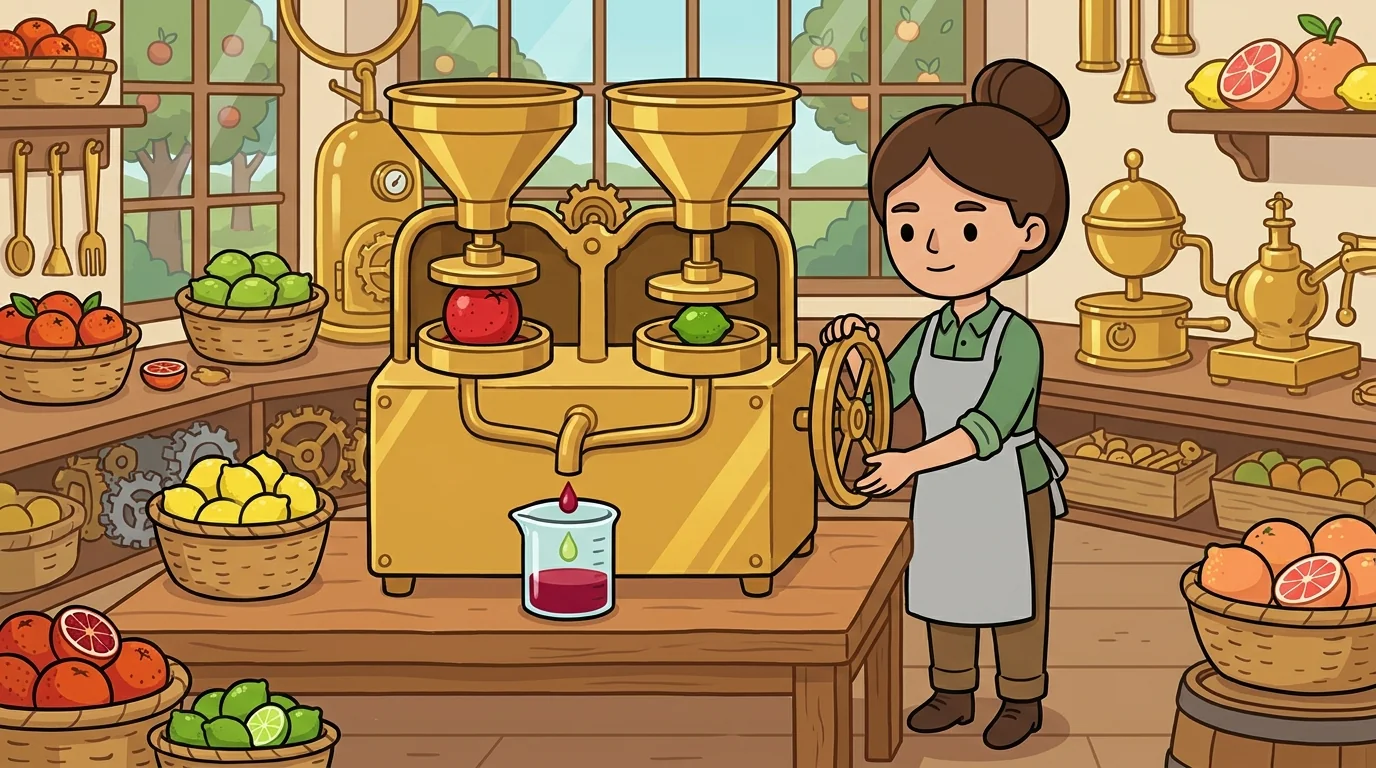
The Squeezer
SQUEEZE — late in the hand, an opponent who guards two suits must let one go.
Listen along — The Squeezer
Loading audio…
Press play to listen along. The line being read lights up as you go.
Show full transcript
Loading transcript…
Chapter 2 — The Squeezer and the Two-Suit Choice
Two tricks left in the hand, and The Squeezer had not moved in a very long time.
They sat coiled on their stool, a small pewter-grey pangolin in a dealer-vest that was a size too big, amber stripes catching the lamplight. Across the table sat a player who guarded their good cards like a locked drawer. The room had gone quiet the way a room does when everyone senses something is about to happen and nobody knows what.
The Squeezer’s own cards looked like nothing. Ace of hearts. One small, limp heart. Ace of clubs. Not much to win two tricks with.
But they had been counting all night. Every card played, every suit followed, every card thrown away. And so they knew — the way you know the last stair in the dark — that their opponent held both the King of hearts and the Queen of clubs, and was the only person left who could stop either of The Squeezer’s low cards from winning.
The Squeezer laid down the Ace of hearts. Thwack.
Their opponent had to follow with a heart. Their King was precious, so they kept it and played a small one instead. The Squeezer took the trick with a nod so slight you could have missed it. One trick to go. And still, in their hand, the Ace of clubs.
They played it. Thwack.
The opponent froze. Keep the King of hearts, and the bare Queen of clubs had to be thrown — so The Squeezer’s small club would win. Keep the Queen, and the King had to go — so The Squeezer’s small heart would win. They could guard one suit. They could not guard both. A long, held breath, and then the Queen of clubs slid onto the table with a defeated little sigh.
The Squeezer played their limp, useless heart. It won. Two tricks, out of what had looked like one.
“That was barely anything in your hand,” their opponent said, shaking their head.
“It wasn’t in my hand,” The Squeezer said quietly. “It was in yours. You just couldn’t keep both.”
They had not always been the calm one at the table.
When The Squeezer was small, they lost the same way every time. They would clutch their strong cards, wait too long, and watch a hand fall apart because they were guarding everything at once — every suit, every winner, every worry — and could truly protect none of it. It felt like standing between two doors, both of them closing, arms out, unable to reach either. After a bad hand they would sit hot-faced and stuck, certain the trouble was bad luck.
An older player — patient, dry, unbothered — watched them lose one afternoon and did not tell them to try harder.
“You feel pulled in two directions, don’t you,” they said. “Like you have to save two things and there’s only enough of you for one.”
The Squeezer nodded, miserable.
“That feeling isn’t your enemy. That’s the whole game — for both sides.” The old player tapped the table. “You keep trying not to be squeezed. Learn what it feels like from the inside, and one day you’ll be the one doing the squeezing. You won’t take the trick. You’ll make them give it up.”
The Squeezer did not win that day. But the tight, torn, two-doors feeling had a shape now, and something to become. That made it possible to sit with.
They walked to Cardforge at twelve, because a place that studied the craft of the game ought to understand the kind of win that happens in someone else’s hand.
The mentor met them at the table and did not ask them to prove they were clever. They dealt out a strange half-finished hand, two tricks left, and asked one thing. “What is a squeeze?”
The Squeezer did not answer with words. They studied the layout, picked up an ace, and laid it down. They watched the mentor be forced to choose which of two guarded cards to abandon. Then they took both remaining tricks — one directly, one because a card had been let go.
“You never played a card higher than theirs on that last trick,” the mentor said, testing.
“I didn’t need to,” The Squeezer said. “They were guarding two suits with one hand. I made the hand too small. They chose which door to close. I walked through the other one.”
The mentor looked at the finished hand a long moment. “You belong here,” they said.
The Squeezer’s corner of Cardforge was full of players who thought the game was about grabbing.
A boy sat down one afternoon, frustrated, cards fanned tight against his chest. “I keep losing at the end,” he said. “I hold my best cards, I wait, and somehow I still can’t win the last two tricks. It feels like the cards just hate me.”
The Squeezer knew that slump. They had felt it, small and hot-faced, years ago.
“Show me your hand,” they said, and laid the boy’s cards face-up beside their own. “Look — your opponent is the only one left holding hearts and the only one left holding clubs. That’s the whole thing. You don’t have to beat them.”
“But I have to win the trick.”
“You have to make them lose it.” The Squeezer nudged an ace forward. “Play this. Now watch them. They have to follow suit, and they have to keep their good card in the other suit. There’s only one card in their hand they can afford to throw — so they throw it, and the card they gave up was the one guarding you.” They let the boy play it out himself.
The opponent card that had looked unbeatable a moment ago had to be discarded. The boy’s small, forgotten card was suddenly the highest one left. He blinked. “It won. I didn’t even do anything.”
“You did the hardest thing there is,” The Squeezer said. “You counted, you waited, and you left them one card too few. A deferred winner — a card that’s useless now and deadly later. A threat — a card that makes them sweat. Line the threats up, cash your other winners, and their hand runs out of room.” They almost smiled. “You don’t need to take the trick. You need to force the discard.”
The boy laughed out loud. “I made them throw away their own King.”
“You made them choose,” The Squeezer said. “That’s the whole craft. Give someone a choice where every answer costs them something they wanted to keep.”
Later, when the tables were empty, the boy came back with one more question. Quieter now.
“When you’re just sitting there, not moving, watching,” he said, “how do you know it’s working? You don’t play a big card. You don’t even talk.”
The Squeezer thought about the two closing doors. About the hot-faced small version of themself, and the dry voice that had named the feeling instead of fixing it.
“You feel it before you see it,” they said. “There’s this coiled, waiting, about-to-tip feeling — like everything at the table is leaning toward one moment and you’re the only one who knows it’s coming. It isn’t nothing. It’s every card you counted, packed and patient, holding still until it has somewhere to go.” They looked toward the lamplit table. “The whole game runs on that. Not on grabbing. On patience, on paying attention, on leaving the other player one door too few — and then waiting, calm, for them to walk through the one you left open.”
The boy nodded slowly, and The Squeezer watched the slump lift off his shoulders — the same way, years ago, theirs had.
They didn’t say the rest out loud, but they thought it, warm and certain: the moments that feel most stuck, most pulled-in-two, are usually just the loaded ones. The work is already done. It’s only waiting for somewhere to go.
The CardForge ensemble
The Squeezer is part of CardForge's distributed-narrative cast. Each character embodies a different curricular primitive; together they teach the full subject.
-

The Finesseur
Finesse (force an opponent's high card via positional play; bridge / hearts / spades)
-
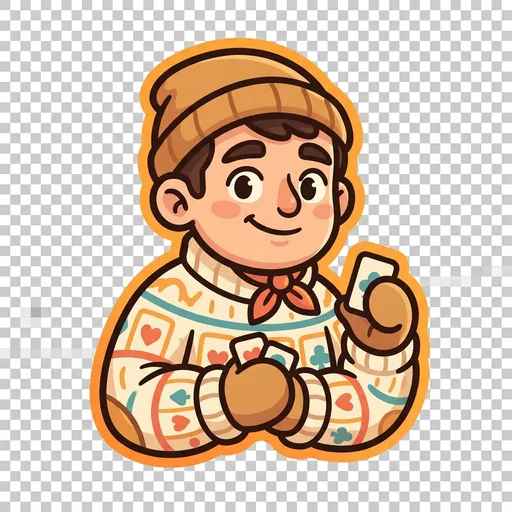
The Endplayer
Endplay (throw opponent in to force a losing lead; bridge / hearts / whist)
-
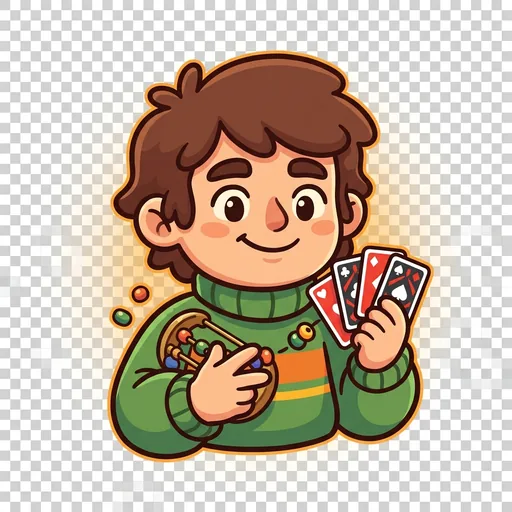
The Counter
Card-counting / pip-tracking (track played cards to deduce remaining hands; gin / bridge / blackjack-style)
-
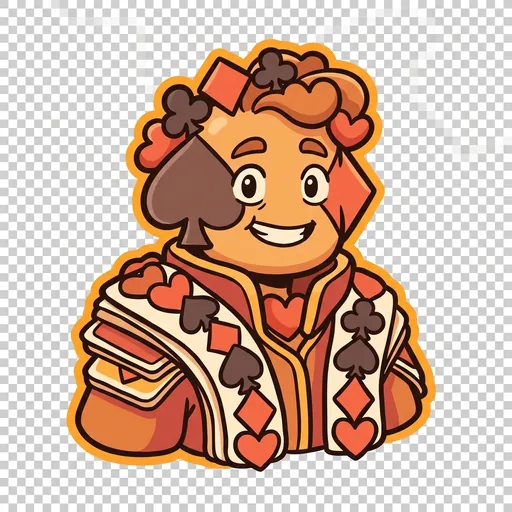
The Long-Suit
Suit establishment (set up a long suit to run for tricks late in the hand; bridge / whist / spades)
-

The Bluffer
Deception under uncertainty (poker betting; representing a hand you don't have)
-
The Discarder
Strategic discard (hearts: avoid points; spades / gin / rummy: shed dead wood)
-

The Trumpkeeper
Trump management (when to ruff, when to hold; whist / spades / euchre / pinochle)
-
The Forcer
Magic forcing (the spectator "freely chooses" the card you intended)
-
The Shuffler
False-shuffle / stack management (control card order while appearing to randomize; mathematical card magic)