
Sample
SAMPLE — *a small careful look that stands in for the whole.*
Press play to listen along. The line being read lights up as you go.
Show full transcript
Loading transcript…
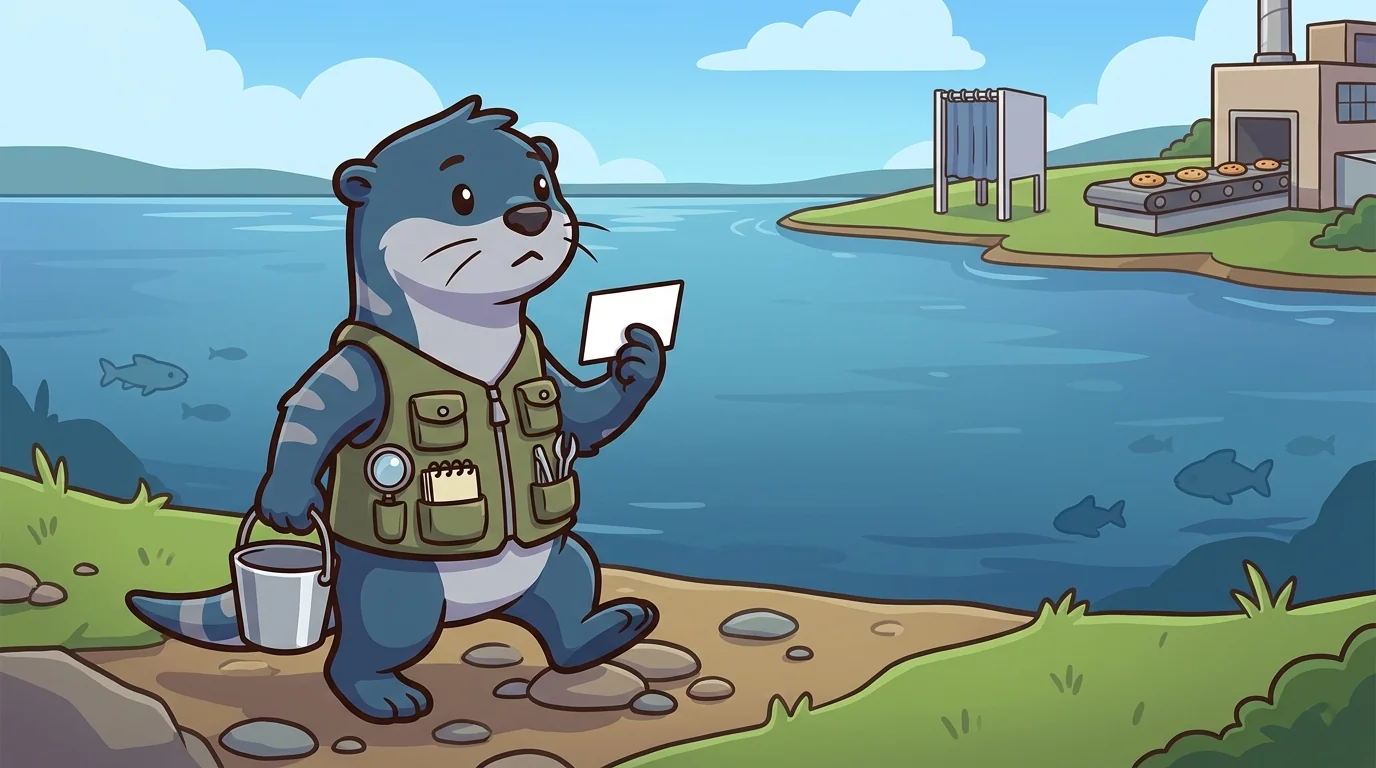
The cafeteria was the loudest room Sample knew, and he had come to love it for exactly that reason. An otter in a stats-vest, he stood just inside the main doors with a small metal bucket in one paw and a crisp estimate-card in the other, and he watched the river of students pour past him the way another animal might watch weather. Every fifth kid, he stopped. "Excuse me — quick question. Pizza on Tuesdays, yes or no?" A check for yes. An X for no. He never raised his voice, and he never rushed, and by the end of lunch his card held a small, honest crowd of marks.
Sixty percent. He looked at the number for a long moment before he trusted it.
The trick was not the counting. Anyone could count. The trick was who walked through the door. Sample had learned, over a long time, that the answer to almost any big question lived not in the number you got but in the crowd you got it from. Ask the pizza line, and the pizza line answers. Ask the whole doorway, and something closer to the whole school answers. He tucked the card into a vest pocket and rattled the counting-pebbles softly in his bucket, the way some people hum. Same school. Different handful. Different truth.
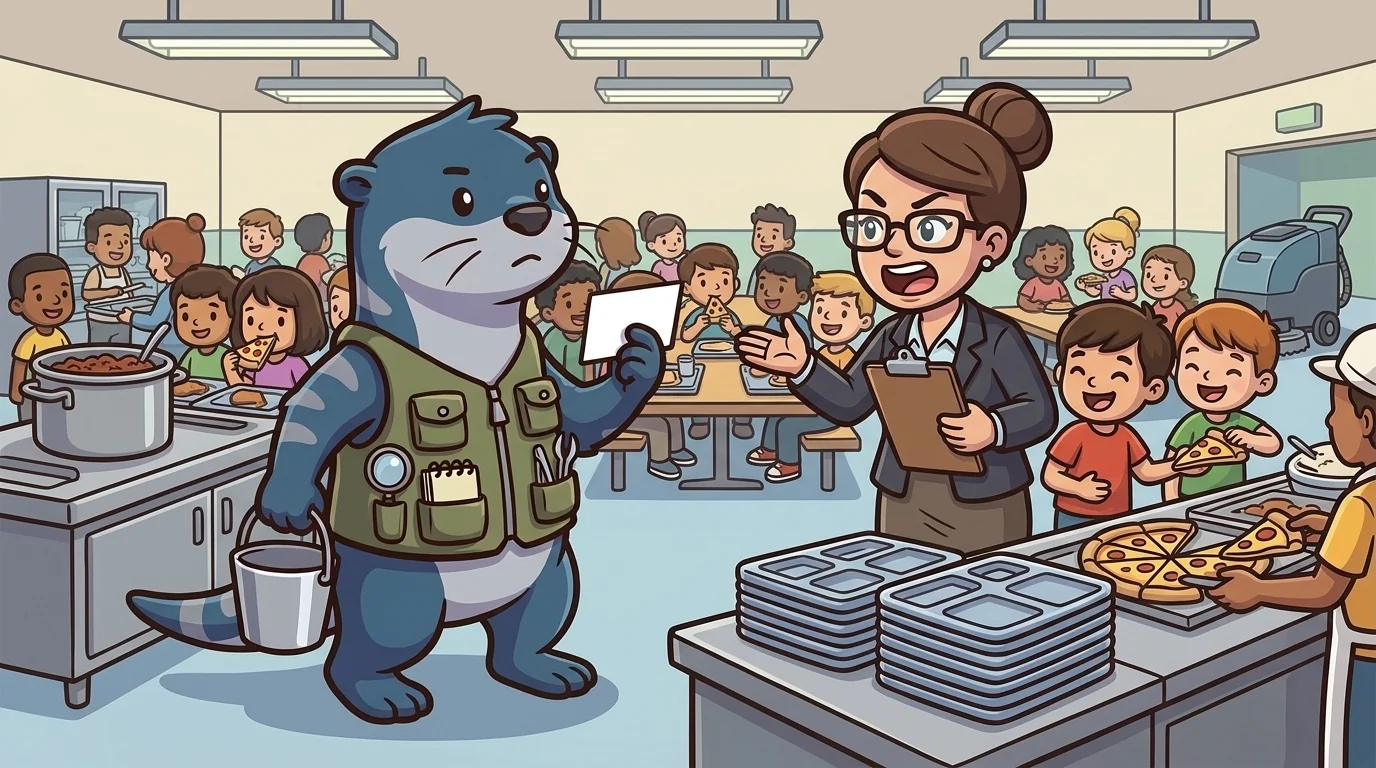
He had not always understood this. When he was small — smaller than he was now, which was already small — he had made the mistake that starts every honest statistician's story: he had believed his own doorway was the whole world.
It happened at a bend in the river where he grew up. The elders wanted to know whether the fish were coming back after a cold season, and young Sample had volunteered, proud and quick, to find out. He scooped a handful from the shallow, sunny water near the bank because it was easy and warm and close, and he came back beaming. "Hardly any fish," he reported. "The river's empty."
An old heron who fished the deep channel tilted her head at him. "Empty where?" she asked.
"Everywhere," said Sample, because that is what a shallow handful always tells you — that its own little corner is the entire world.
The heron took him out to the deep, cold middle, where the current pulled and the light went dim, and she showed him the fish — dense, silver, thriving, exactly where the water was hard to reach. Sample's face went hot. He had not lied. He had been careless. He had let the easy water pick his answer for him. "The fish weren't gone," the heron said, not unkindly. "You just never looked where they were. How you pick," she said, "changes what you find." He carried that sentence out of the river with him and never once set it down.
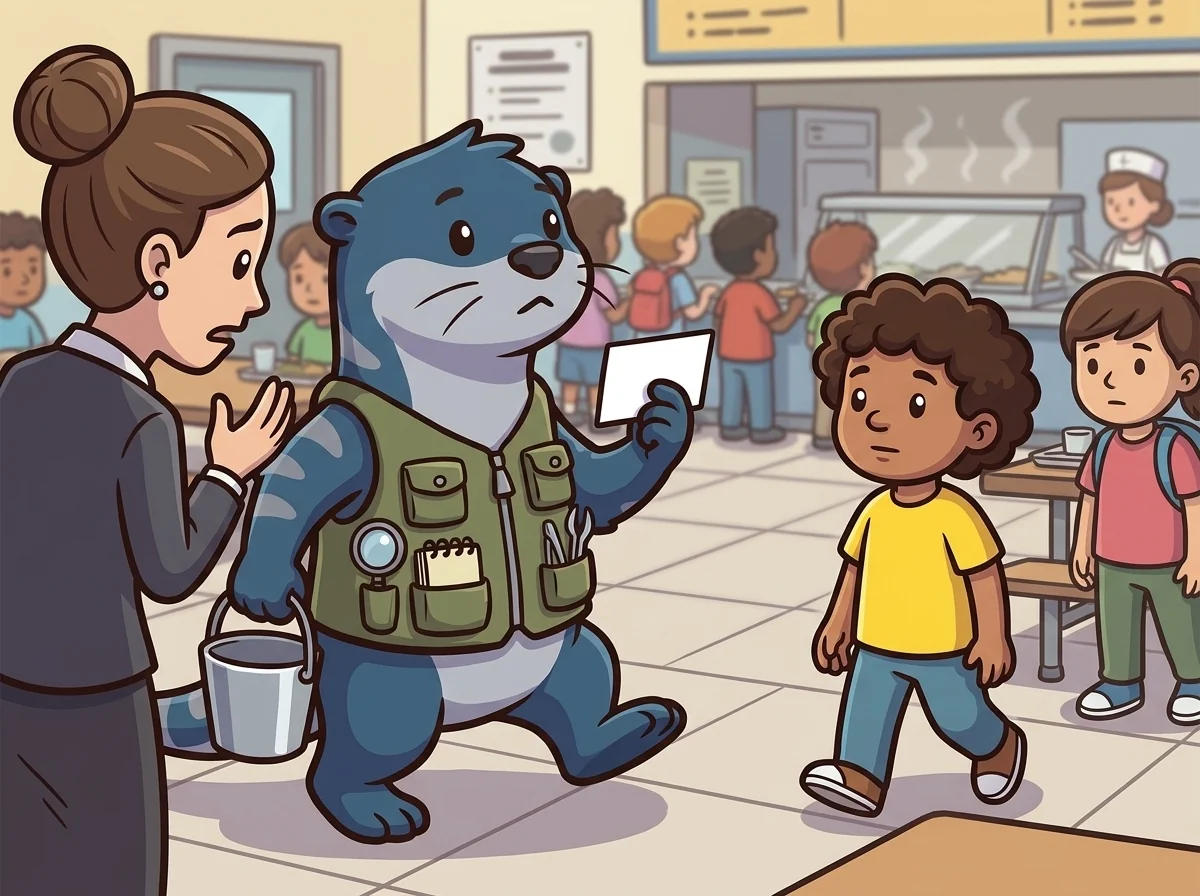
He walked to ChanceForge many seasons later, because a place obsessed with numbers was exactly the place most likely to fool itself with them, and Sample had made it his whole craft not to be fooled.
Tally met him at the door — Tally, who tracked every count with cheerful precision — and asked the question the academy always asked a newcomer. "Sample. What is it you actually do?"
Sample didn't recite a definition. He set his bucket on the floor between them and drew out a single handful of pebbles. "You have a jar of a thousand stones," he said, "and no time to count them all. So you take this." He opened his paw. "A careful handful. Drawn fairly. Not the ones on top, not the ones that are easy to grab — a fair scoop. And from this," he closed his paw gently around the pebbles, "I can make a careful guess about the thousand." He looked up. "I never pretend the handful is the jar. I only promise it's an honest window into it. That's the whole job. The rest is just being careful about the scoop."
Tally studied him, then the bucket, then him again. "Center finds the middle. Display draws the picture. But you," she said slowly, "you're the one who remembers the picture came from a handful."
"Somebody has to," Sample said. "Otherwise everyone starts believing the chart is the world."
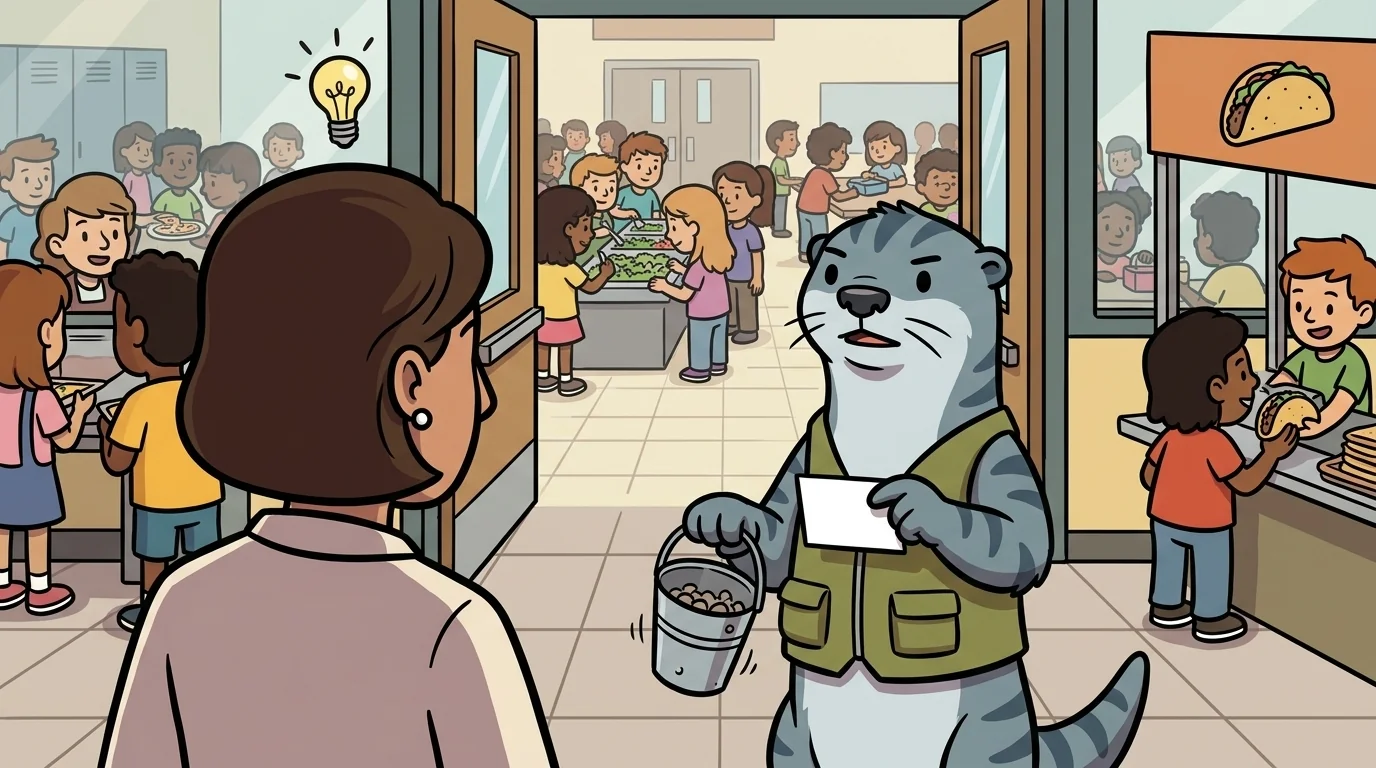
His corner of the academy soon filled with people who had gotten a number and then gotten confused by it — and the day he remembered longest was the day Principal Higgins came in, still holding the pizza survey that would not stop arguing with his.
"One hundred percent," she said, waving her own card. "I stood by the pizza line myself and asked every kid there. They all said yes. And you got sixty. One of us has to be wrong."
"Neither of us is wrong about our handful," Sample said. "We just scooped from different water." He laid his estimate-card beside hers on the table. "You asked the pizza-line kids. So you got a pizza-line answer — a true answer, about pizza-line kids. I asked the door-kids, every fifth one, whoever they were. So I got an answer that's closer to the whole school." He tapped her hundred, then his sixty. "Same question. Different scoop. That gap between our numbers is the lesson."
Higgins frowned at the two numbers as if they were quarreling children. "So which one do I believe?"
"The one drawn from the crowd you actually care about," Sample said. "You care about the whole school, not the pizza line. So you want the scoop that let salad-bar kids and lunch-from-home kids and taco kids walk through it too." He nudged his card forward. "And even then — even mine — I'll only ever call it a careful guess. Not a fact. A bigger handful would pull it closer to the truth. But it stays a guess." He said it plainly, without apology. "How you pick changes the answer. The real question was never how much pizza. It was who did you ask."
Higgins was quiet a long time. Then, slowly, her eyes lifted off the pizza line for the first time — over to the salad bar, the home-lunch tables, the taco crowd — all the doorways she had never scooped from. "Oh," she said softly. "Oh."
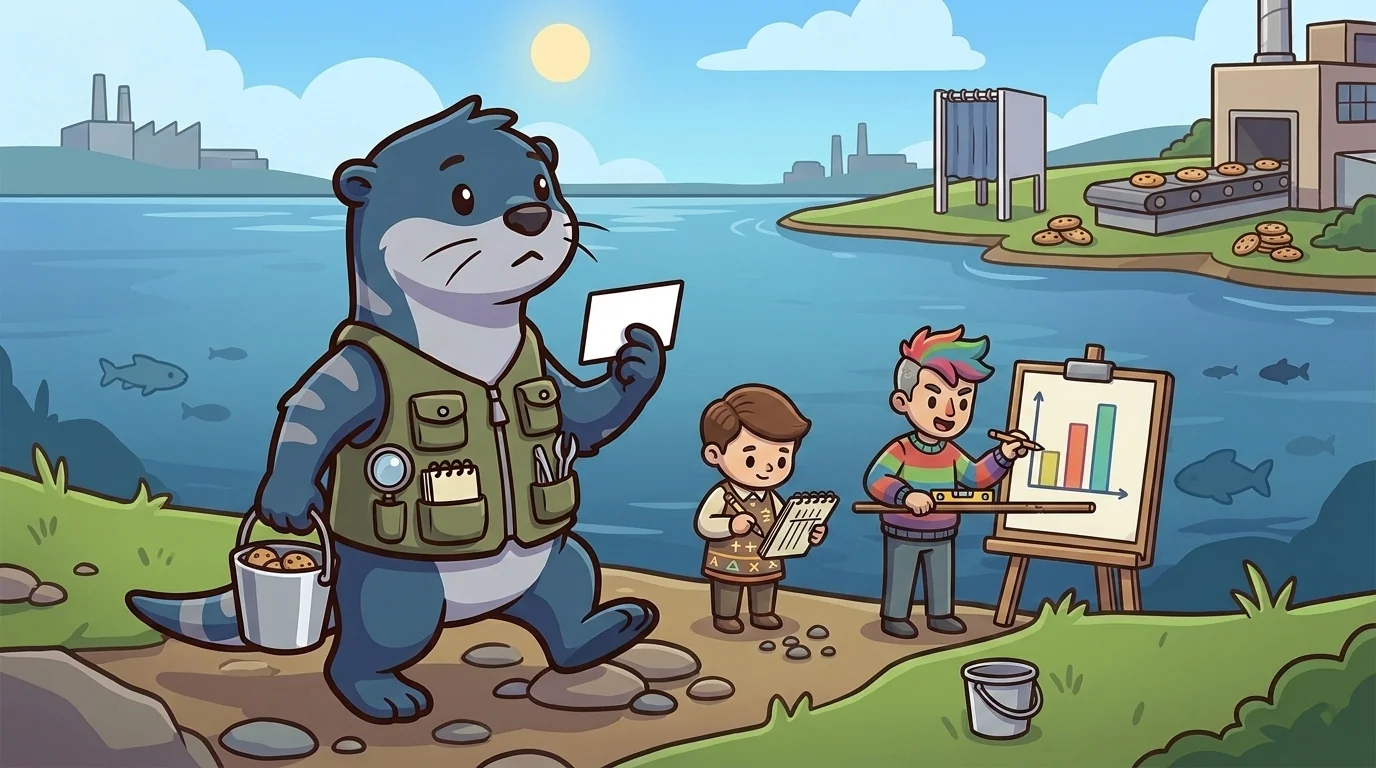
That evening, when the cafeteria had emptied and gone dim, a younger student lingered by Sample's stool with a question that had clearly been waiting all day.
"Doesn't it bother you?" she asked. "Always saying 'it's just a guess'? Wouldn't you rather just — know?"
Sample rattled the pebbles in his bucket once, gently, and thought about the cold deep water where the fish had been all along. "I used to want that," he admitted. "To sound certain. To hand someone a number and let it feel like a stone — solid, done, no arguing with it." He shook his head slowly. "But a number that pretends to be certain is a trap. The kind of trap that tells a whole river it's empty. Saying 'this is a careful guess' isn't me being weak about it. It's me being honest about it. And honest is stronger than certain, every single time."
The girl turned that over. "So the 'guess' part isn't the embarrassing part."
"The 'guess' part is the brave part," Sample said.
And she felt it, then — a small unclenching somewhere under her ribs, the tight place where she'd always thought not-knowing was something to hide. It loosened. She took a slow breath and found she wasn't ashamed of the word guess anymore; it sat easy in her now, warm and steady, like something true finally allowed to be its own honest size. Sample tilted the bucket so the pebbles settled, and the two of them sat in the dim cafeteria a while longer, neither one certain of much, both of them entirely at peace with that.
The ChanceForge ensemble
Sample is part of ChanceForge's distributed-narrative cast. Each character embodies a different curricular primitive; together they teach the full subject.
-

Tally the Counter-of-Outcomes
Data collection + frequency counting (the foundational "what happened, how often?" move)
-

Display the Picture-Maker
Graphs and visual displays (bar charts, histograms, dot plots, line graphs — turning numbers into pictures)
-

Center the Middle-Finder
Central tendency — mean, median, mode (the "what's typical?" question)
-

Tree the Compound-Brancher
Compound events and probability trees — multiplication rule for independent events, addition for disjoint, conditional dependencies
-

Odds the Likelihood-Reader
Basic probability — placing a chance on the 0-to-1 scale from impossible to certain
-
Scatter the Spread-Reader
Spread and variability — how far apart the data is (range), not just the middle
-

Flipside the Other-Outcome-Counter
The complement rule — find the chance it doesn't happen and subtract from 1
-
Clew the Clue-Follower
Conditional probability — how chances change once you learn a new fact
-
Evens the Long-Run-Settler
Expected value and the long run — results settle toward the average over many tries