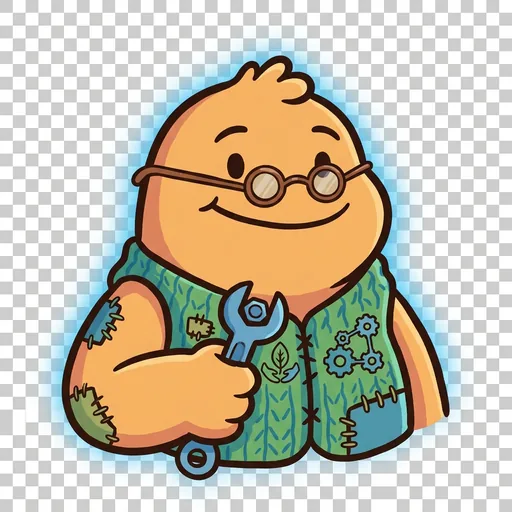
Blanket
GREENHOUSE EFFECT — *some gases trap heat. that's a blanket. blankets are not bad — too-many blankets are too-warm.*
Press play to listen along. The line being read lights up as you go.
Show full transcript
Loading transcript…
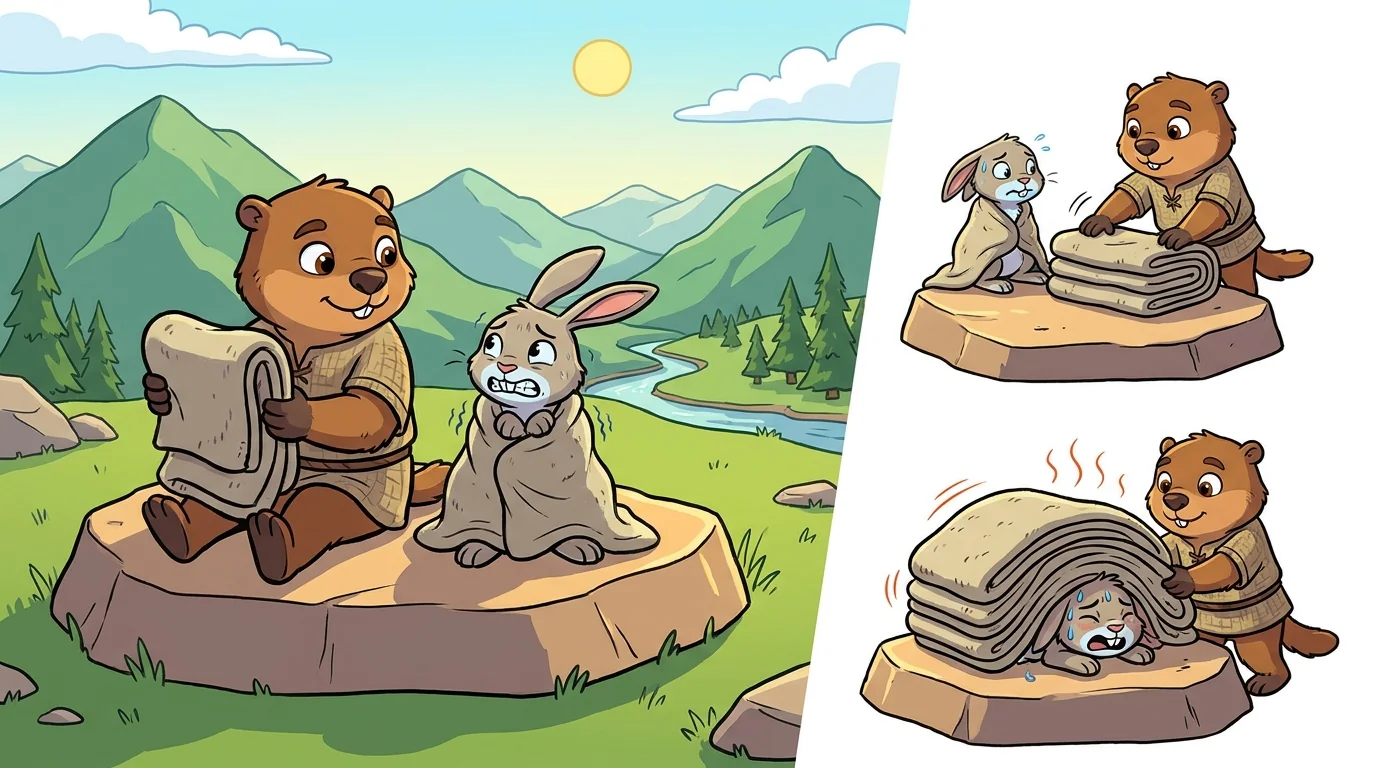
High in the meadow above ClimateQuest, on a morning cold enough to see your own breath, a small marmot-tween shook out a worn tan blanket and laid it flat over a flat grey stone.
He climbed on top and lay down. Nothing happened. He waited. The stone was cold, the air was colder, and Blanket lay there under one thin layer, perfectly comfortable, watching the sun come up over the ridge.
A younger marmot scrambled up beside him, teeth chattering. "You're just — lying there? It's freezing."
"I'm not freezing," Blanket said. "I've got the right amount." He folded a corner of the blanket back and offered it. "Here. One layer. Try it."
The younger one crawled under. After a moment his shivering slowed, then stopped. He looked genuinely surprised, the way people always were.
"See?" Blanket said. "The blanket isn't warm. It doesn't make heat. It just keeps your heat from running off into the sky." He patted the wool. "The whole planet does the same trick. There's a blanket around the Earth made of air. Without it we'd be a frozen rock. With it, we get mornings like this — cold, but livable." He grinned. "People hear greenhouse effect and picture an oven. It's not an oven. It's this."
Blanket had learned about the right amount the way his whole family had — one layer at a time.
His people were blanket-weavers, generations of marmots who made fleece-blankets by hand and lined their burrows with grass laid down in careful layers. When he was small, his job had been to fetch layers on cold nights. One for a chilly evening. Two for a genuinely cold night. Three when a winter storm came howling down the pass.
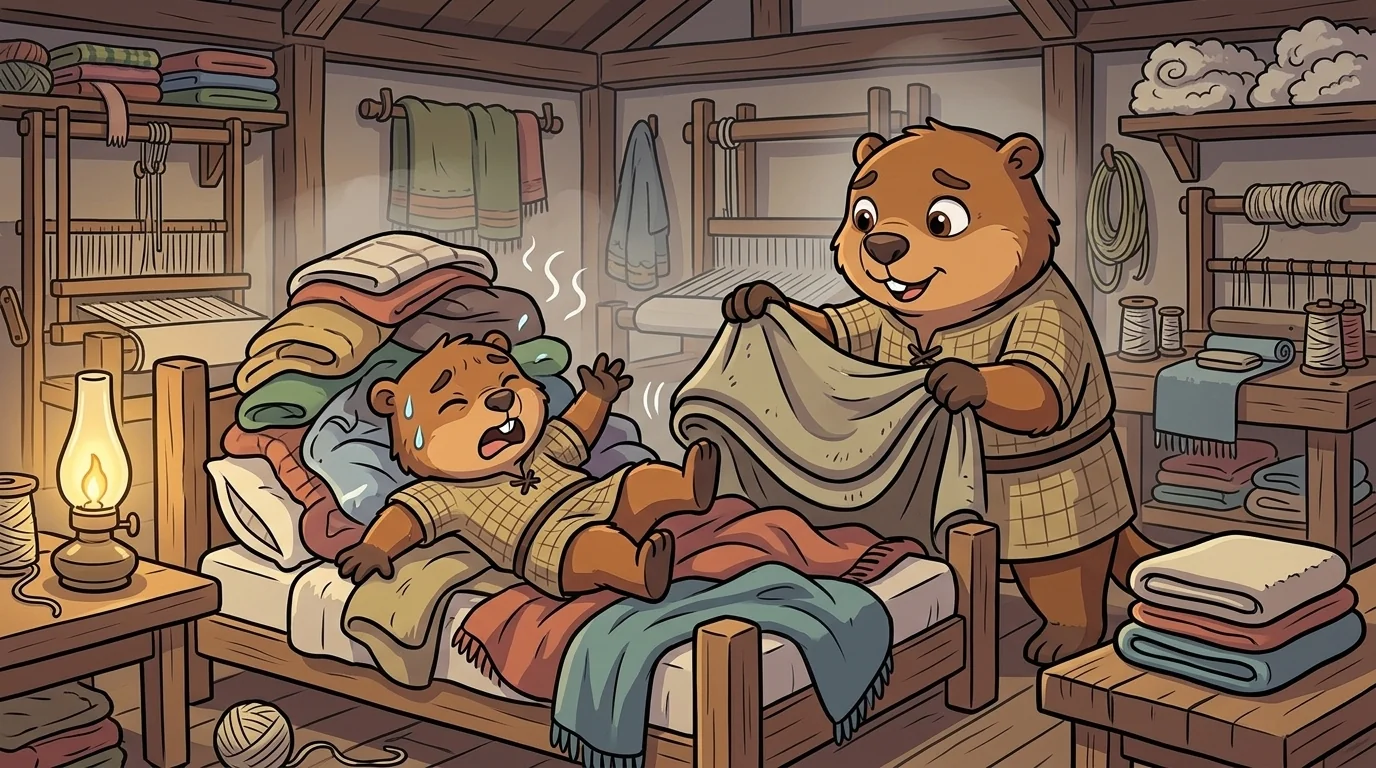
The first hard winter he could remember, he'd been frightened by the cold, and he'd done what frightened people do — he'd overcorrected. He'd dragged five, six, seven blankets onto his sleeping brothers, certain that more was safer. By midnight they'd kicked every layer off, sweating and tangled and miserable, and he'd lain awake feeling like he'd gotten something badly wrong.
His grandmother had found him there. She hadn't scolded him. "You weren't wrong to want them warm," she'd said, folding the extra layers away. "You were only wrong about the number. A blanket is not bad, little one. Too many blankets are too warm." She'd tucked one layer back over the sleeping pile, and the fidgeting stopped. "The blanket was never the problem. The amount is the whole thing."
Blanket lay there in the dark and felt that click into place. Not blankets are dangerous. Just how many. It was such a small, careful difference — and somehow it made the cold, and the fear of the cold, both feel manageable. He never forgot it.
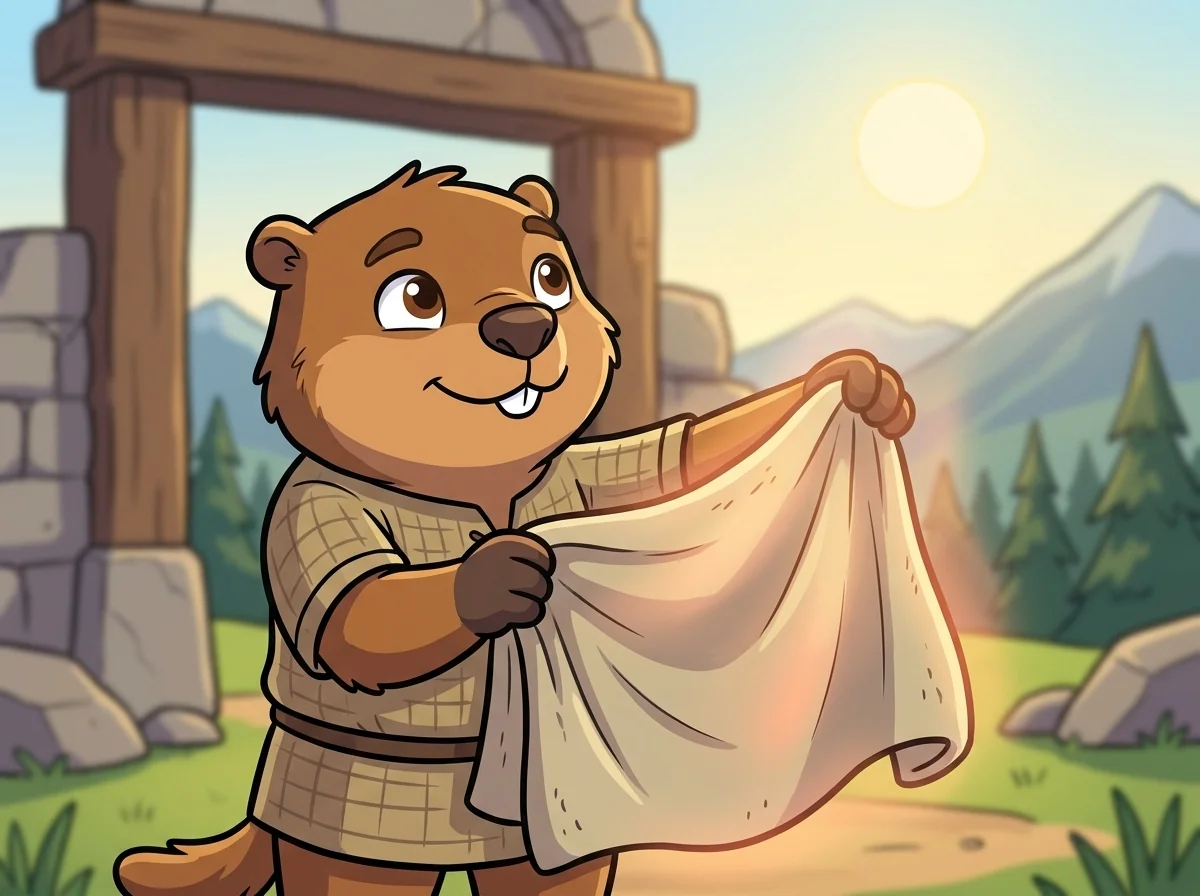
He walked down to ClimateQuest when he was thirteen, his blanket folded under one arm, because a place that studied the warming of the whole world ought to be run by people who could tell the difference between a blanket and too many blankets.
Cirrus, the mentor who ran the school, met him at the gate and asked one calm question. "What is the greenhouse effect?"
Blanket didn't rush. He set his blanket on the frosted grass and smoothed it flat. "Some gases in the air trap heat," he said. "That's a blanket. The Earth needs one — with no greenhouse gases at all, the planet would sit around eighteen below zero, frozen solid." He folded the wool once, doubling it. "We've been adding layers. Since about 1850 we've put roughly half again as much carbon dioxide into the air, mostly from burning fossil fuels. So the blanket got thicker, and the world got warmer." He looked up. "The blanket isn't evil. We just added too many layers."
Cirrus was quiet for a moment, watching the breath rise off the boy in the cold. Then he nodded slowly. "You belong here, Blanket."
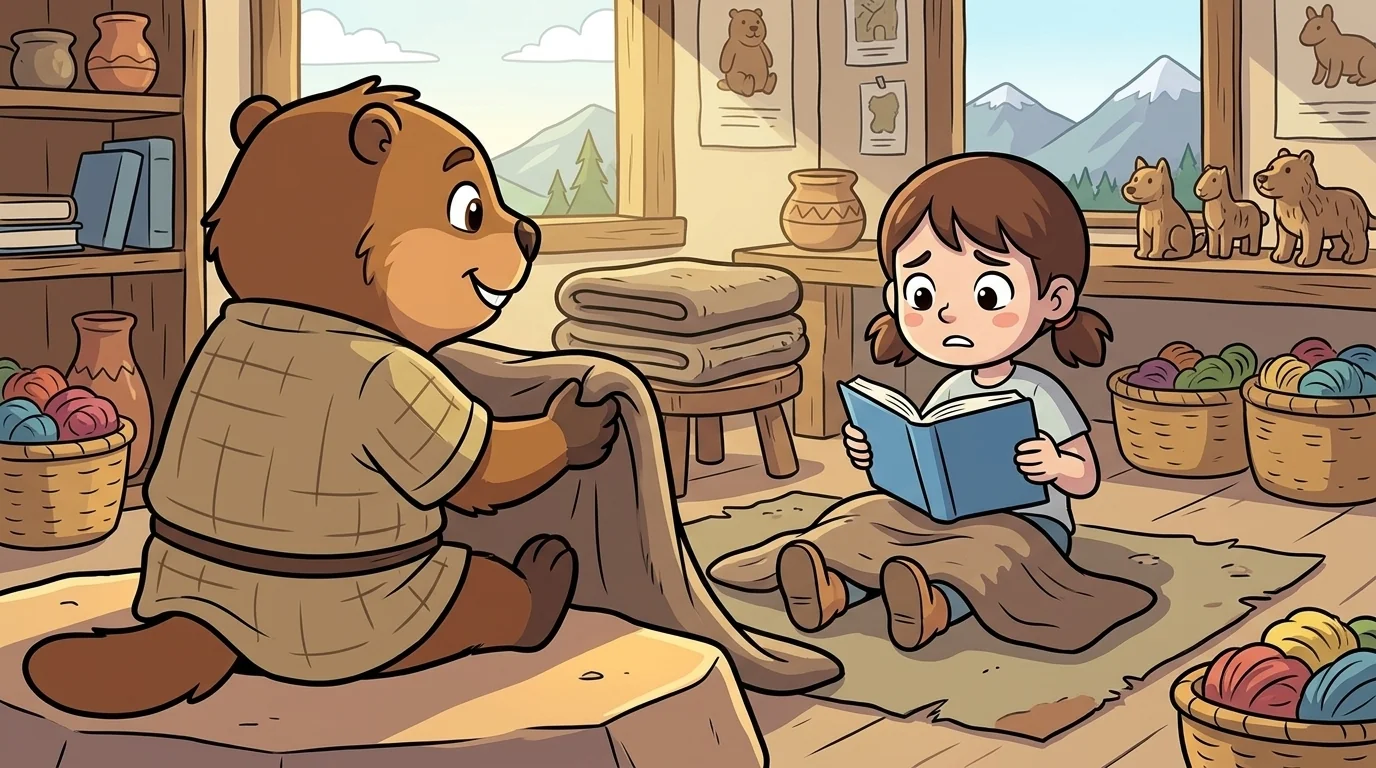
Blanket's workshop was warm — one-blanket warm, on purpose — and it filled up, most afternoons, with kids who'd arrived scared.
A girl came in one day and sat down hard, arms crossed. "My cousin says the greenhouse effect is going to cook the whole planet," she said. "He says it's basically an oven and we're all done for." Her voice was trying to sound tough and not quite managing.
Blanket knew that flavor of fear. He'd felt it under seven blankets once.
"Come here a second," he said, and laid his teaching-blanket flat on the low table. "One layer. Put your hand under." She did. "Cold or warm?"
"...Warm. Comfortable."
"That's the atmosphere we've had for most of history. That warmth is why anything lives here at all." He folded the blanket over, doubling it. "Now."
"Warmer."
"Right. Not scary. Just — more." He tripled it into a thick plush mound and let her feel the difference. "Now it's too warm. You'd toss all night." He sat back. "So — is the blanket the villain?"
"No," she admitted. "It's just... how much there is."
"That's the honest sentence. Not the greenhouse effect is bad — that's wrong, and saying it wrong makes people either panic or stop listening. The right sentence is too much greenhouse effect is the problem." He tapped the fabric. "The sun warms the ground. The ground gives off heat, and these gases catch some of it on the way out and send it back down. Carbon dioxide does it. Methane does it. Water vapor does the most of all. Catch a little heat, and you get a living planet. Catch too much, and the whole place runs a fever."
The girl uncrossed her arms a little. "So we know exactly what's happening."
"We know the mechanism," Blanket said, and his eyes went bright. "That's the part your cousin skips. This isn't a mystery curse. It's understood down to the numbers. And here's the thing about a problem you understand: you can do something about it. Fewer layers is a thing you can work toward. You can't fix a curse. You can absolutely take a blanket off a bed."
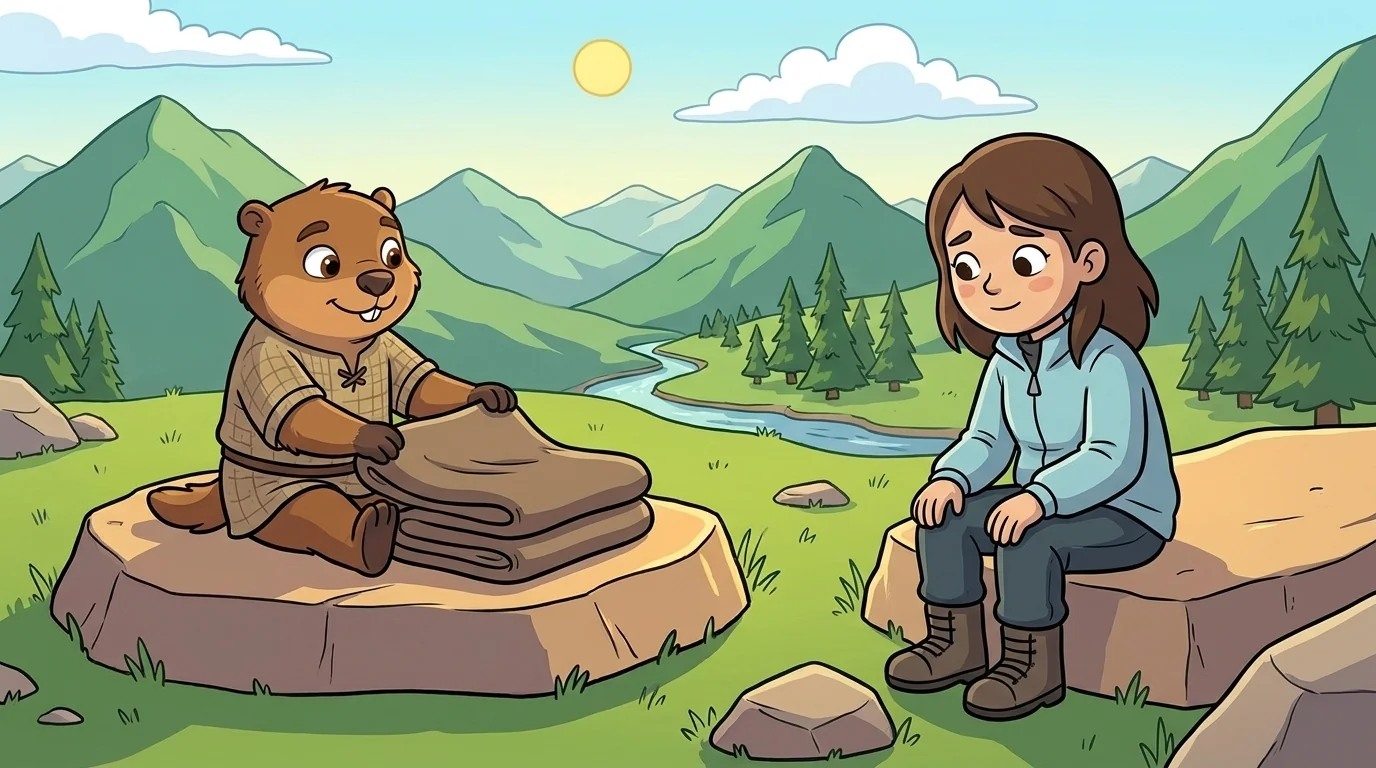
Later, when the room had emptied, the girl came back and lingered in the doorway. She was quieter now, the tough voice gone.
"When it feels this big," she said, "how do you stand it? How come you're not scared?"
Blanket thought about the seven blankets and the tangled sleeping pile and his grandmother folding the extra layers away in the dark.
"I was scared, once," he said. "First cold I remember, I piled every blanket I had on the people I loved, because I thought more was always safer. It wasn't. It made everything worse. And what fixed it wasn't being brave — it was somebody showing me it was just about the number. A thing you can count is a thing you can change." He smoothed the worn wool with one paw. "That's what I hold onto. Not that everything's fine. That it's understood. The scientists have the math. We know which layer is the extra one. Knowing that is the opposite of despair — it's the map."
She let out a breath she'd clearly been holding a while.
Blanket watched her shoulders come down out of her ears, the way his own had, years ago in the cold. He didn't say the rest out loud, but he thought it, warm and certain: the fear comes from feeling like it's a curse you can't touch. The steadiness comes from remembering it's a blanket. And a blanket is a thing you can fold, one careful layer at a time.
The ClimateQuest ensemble
Blanket is part of ClimateQuest's distributed-narrative cast. Each character embodies a different curricular primitive; together they teach the full subject.