
Stitch
COLLECTIVE ACTION — one stitch is small. many stitches make a repair. you are one of the many.
Press play to listen along. The line being read lights up as you go.
Show full transcript
Loading transcript…
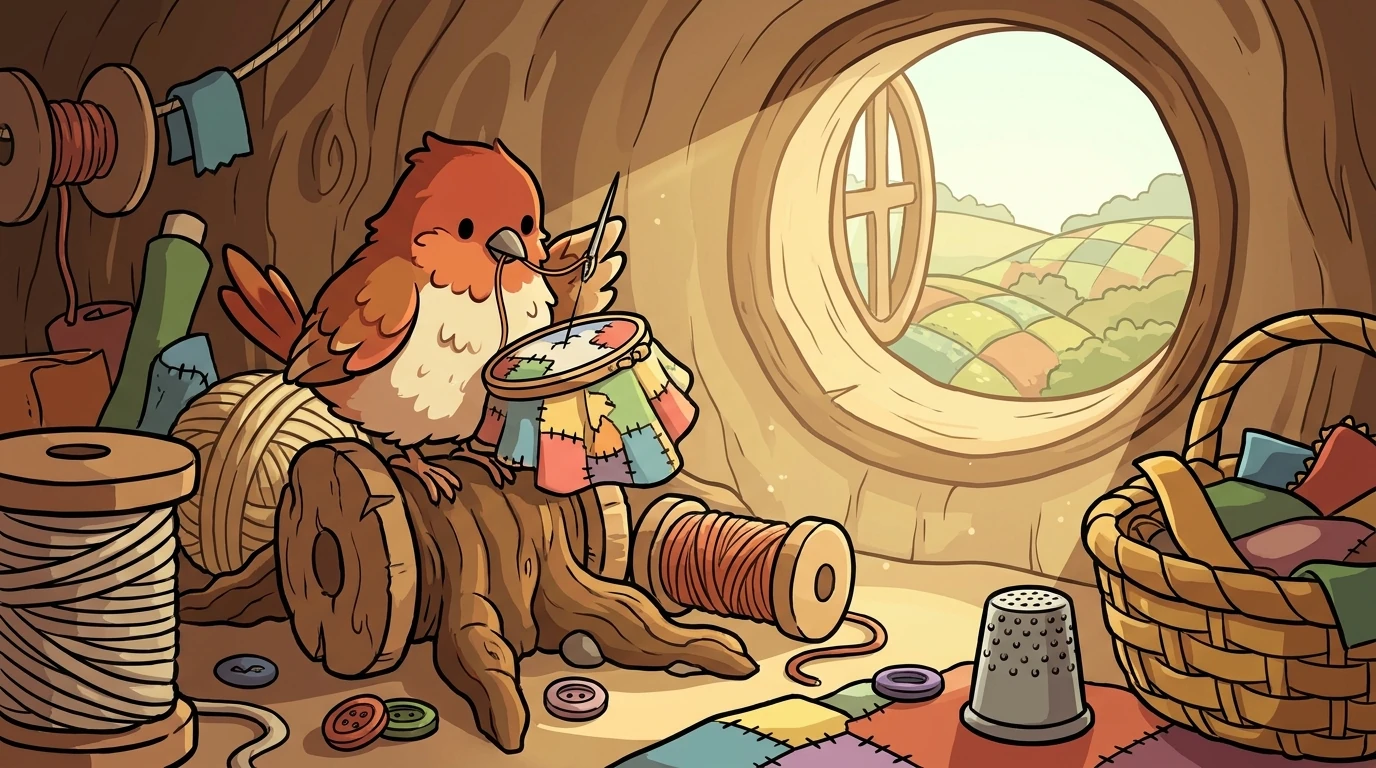
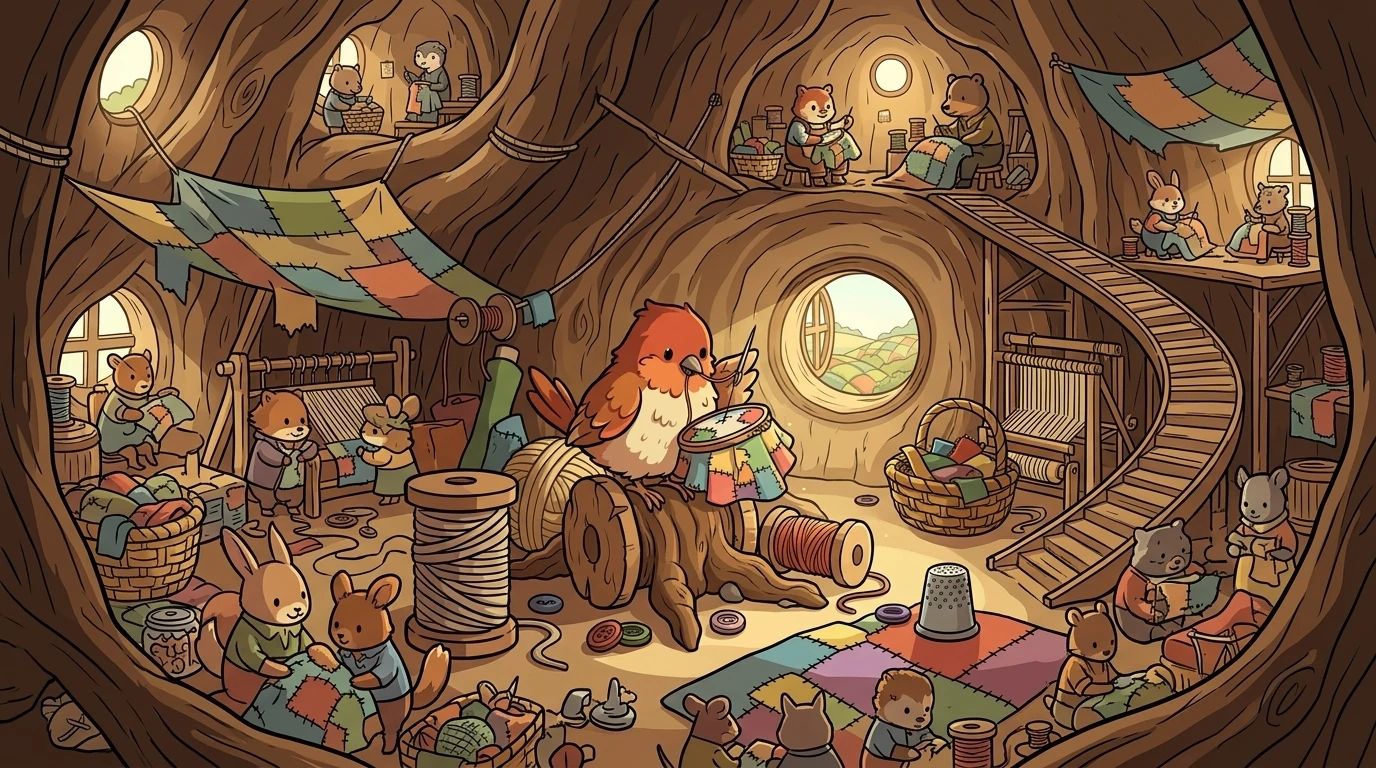
In a quiet corner of ClimateQuest, a small finch-tween named Stitch sat with an embroidery hoop balanced on one knee, pulling a needle through a long tear in a piece of pale cloth.
She worked slowly. One stitch. Then another. Each one was tiny — hardly worth noticing on its own. Her russet-and-cream feathers brushed the fabric as she leaned in close.
A new recruit dropped onto the bench beside her, wings sagging. He'd spent the morning learning about melting ice and rising seas and dying reefs, and now he looked like the weight of all of it was pressing down through his shoulders. "That rip is enormous," he said, staring at the cloth. "One stitch isn't going to fix it. What's the point?"
Stitch didn't argue. She just kept sewing. Ten more stitches. Twenty. And slowly — so slowly he almost didn't see it happen — the two torn edges crept toward each other and began to hold.
"There," she said softly, tying off the thread. "It's not perfect. But it holds now." She turned the hoop so he could see. "Not one of those stitches could have done that alone. Together, they did."
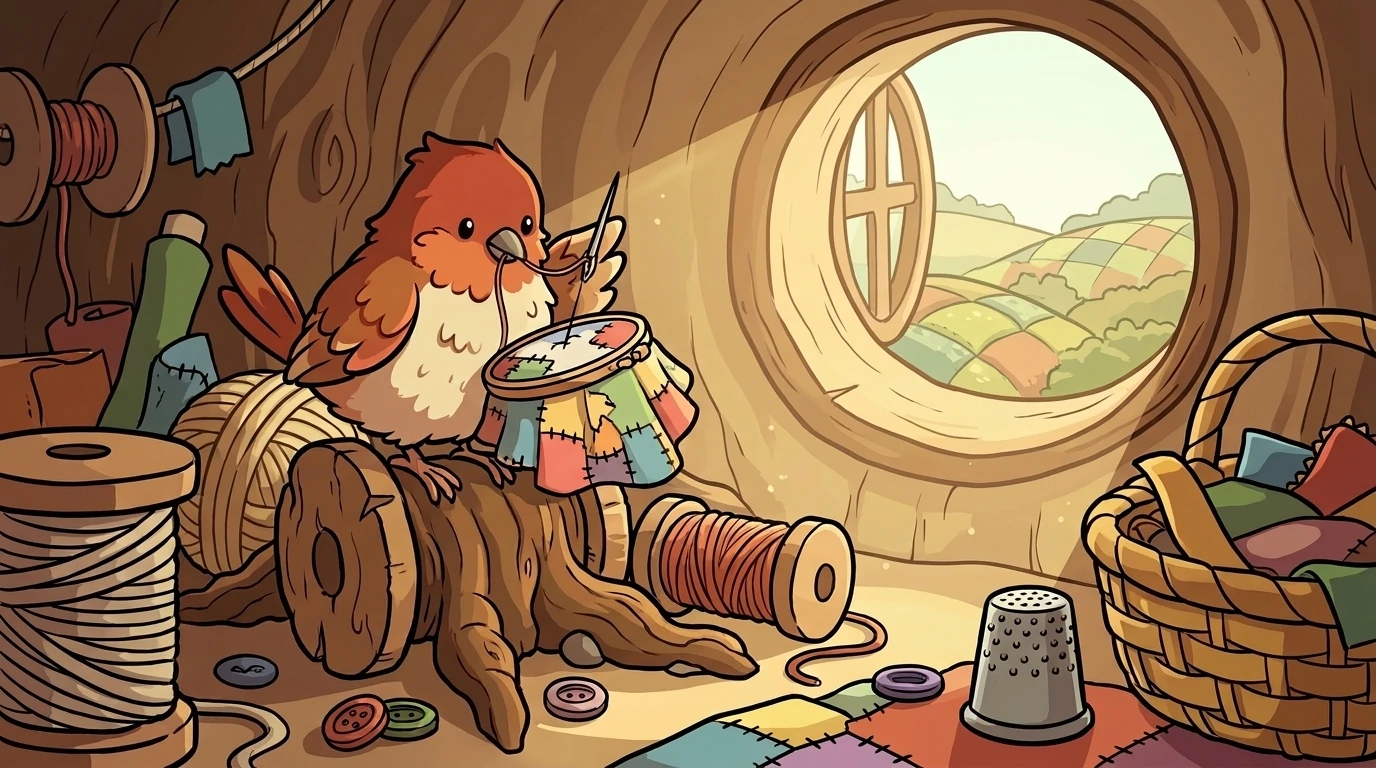
Stitch knew that heavy, sinking feeling better than anyone. She'd felt it herself, once.
When she was younger, she'd overheard the grown finches in her village talking about a flood that had ruined half the farmland downriver. The problem was so huge it made her stomach drop. It's too big, she'd thought, feet locked to her perch. I'm one small bird. Whatever I do won't even show. And underneath that came a sharper sting — a guilty, cold thought: Maybe it's partly my fault. Maybe I should have done more.
Her grandmother, the oldest mender in the village, had sat beside her without a word for a long moment. Then she'd held up a single loose thread. "You feel like you have to fix the whole tear by yourself, don't you? All at once."
Stitch had nodded, miserable.
"That feeling — that's the trap," her grandmother said. "No single thread mends a cloth. And no single bird tore it, either." She'd threaded her needle. "The village doesn't repair by one perfect stitch. It repairs by accumulation. Many small efforts, added up, over time. You put in your stitch. Someone else puts in theirs. That's how anything big ever gets mended."
Stitch hadn't mended the flood that day. But something loosened in her chest. The problem was still huge — but it stopped being hers alone to carry. It had a shape now, and the shape had room in it for other hands. That, she found, was something she could sit with.
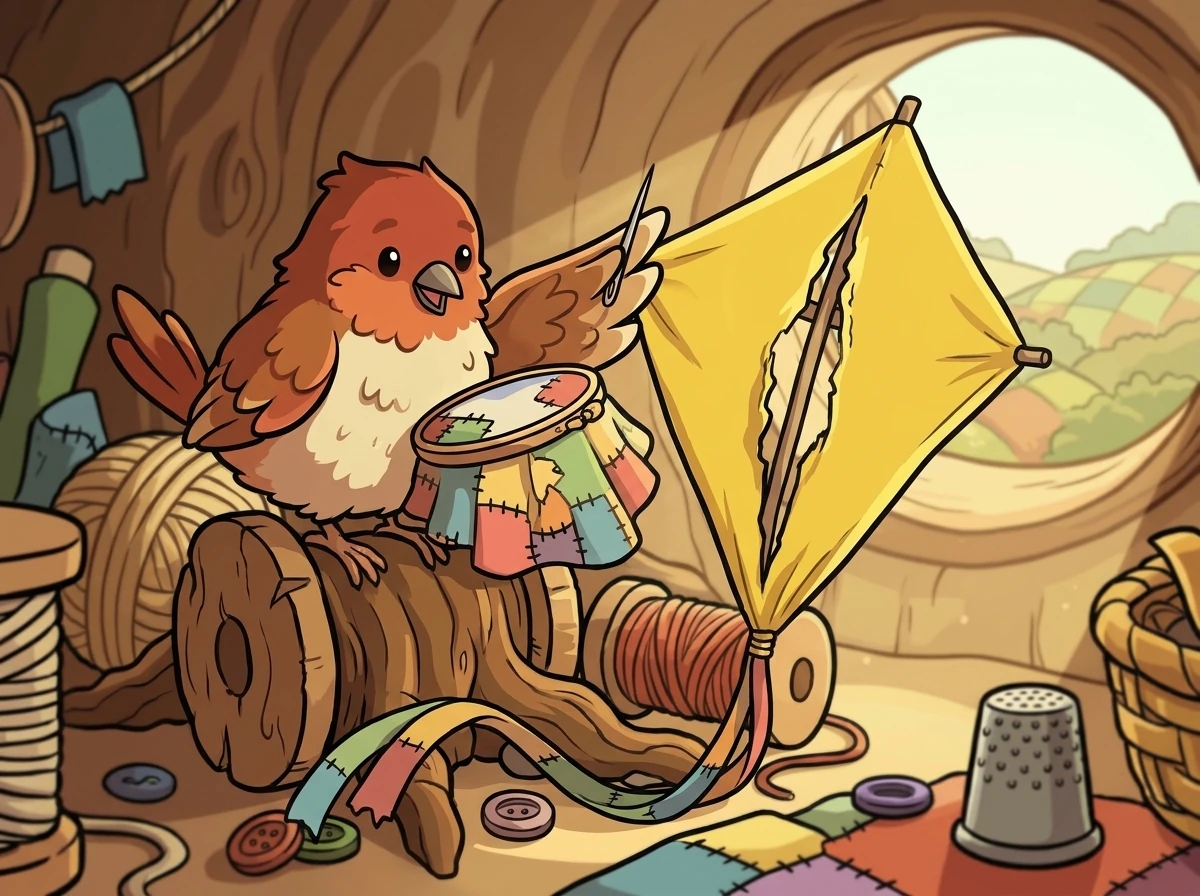
She walked to ClimateQuest at twelve, because a place that studied a problem this big needed someone who understood how enormous things actually get repaired.
Cirrus, one of the mentors, met her at the entrance — calm, direct, watchful. She didn't ask Stitch to prove she was brave. She asked one question. "What holds a torn cloth together?"
Stitch didn't answer with a speech. She lifted her embroidery hoop, took out her needle, and made a single stitch in the frayed edge of Cirrus's sleeve where it had begun to unravel. Then she made another beside it. And another. She kept going until the small fray stopped spreading.
"One is nothing," Cirrus said, testing her.
"One joins," Stitch said. "That's the whole thing. The cloth doesn't wait for a perfect stitch. It mends by all of them together — mine, and the next bird's, and the next. A whole climate is the same. Awareness of the problem, on its own, just turns into despair. But joined to action — many hands, many stitches — it turns into repair."
Cirrus looked at the mended sleeve for a long moment. Then she nodded. "You belong here."
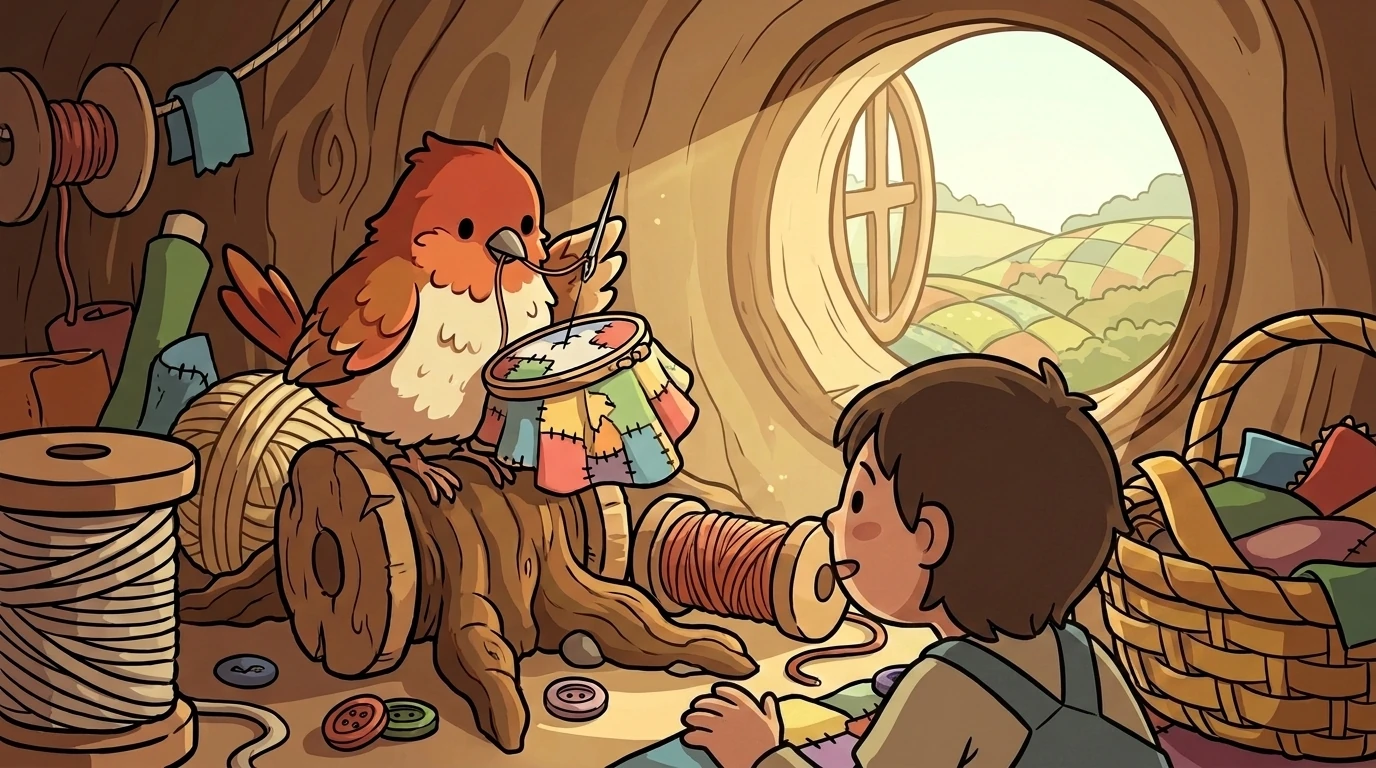
Stitch's workshop was small and warm, full of spools and scraps and half-finished mends.
The slumped recruit found his way there one afternoon, still carrying that morning's heaviness. "I drove to school today," he blurted out. "In a car. Is all of this my fault? It feels like I should be doing everything, and I'm not, and — " He ran out of words.
Stitch set down her hoop. She knew that slump in her bones.
"Come here," she said. "Lift that end of the cloth for me." He did. She took the other end, and together they pulled a long, gaping tear closed enough to pin. "Could you have held that whole thing shut on your own?"
"...No."
"Could I?"
"No."
"Right. So we didn't. We each took one end." She pinned it. "You didn't cause the tear, and you can't close it alone — and neither of those things is a failure. They're just true." She picked up a reusable bottle from her bench and set it beside the pins. "This? One stitch. Small. Real. It joins with millions of others doing the same." She tapped a rolled-up paper — a petition, signed a hundred times over. "Voting for a change to the whole energy grid? A bigger stitch. A city, a school, a government can make one that no single bird ever could. We cheer those on. We ask for them."
The recruit turned the bottle over in his wings. "But some of my stitches are going to be wonky."
Stitch grinned and showed him a line in her cloth that wandered crooked as a river. "See that one? Wonky as anything. And the cloth still holds." She met his eyes. "Don't wait for the perfect plan. Don't shame yourself for a crooked choice. A wonky stitch mends too. And if it ever gets to be too much — " she gestured at the door, gentle " — you pause. You step back. The repair waits patiently. It'll still be here when you come back. That's allowed. That's always allowed."
The recruit sat with that. Slowly, the paralyzed, guilty look drained out of him, and something steadier settled in its place. "So hope isn't just... wishing it were better."
"No," Stitch said. "Hope is shaped like doing. Despair sits still. Doom sits still. But stitch by stitch — that's not sitting still. That's already the repair, happening."
Later, when the workshop had gone quiet, the recruit came back with one last question. He was calmer now, but softer, too.
"When it's all so big," he said, "and I can't see my one stitch making any difference in the whole huge cloth... how do I keep going?"
Stitch thought about the perch of her childhood — the tight chest, the locked feet, her grandmother's loose thread.
"You feel the others," she said. "That's the honest answer. When you put in your stitch, you can't see all the millions of hands stitching alongside you — but they're there, all around the tear, working the same cloth. You're not holding it up by yourself. You never were. That was never your job." She looked toward the window, out over the whole bright, mendable world. "Kids didn't tear this. Kids are part of how it gets sewn back. Every reusable bottle, every vote, every conversation at the dinner table — one stitch, joining the many."
The recruit nodded slowly, and Stitch watched the last of the weight lift off his shoulders — the same way, years ago, hers had lifted from her own.
She didn't say the rest out loud, but she felt it, warm and certain, all through her chunky feathers: the heaviest, most alone-feeling moments are usually just the moments before you notice the other hands. The repair is already happening. You only have to add your stitch, and let yourself feel the many holding the cloth beside you.
The ClimateQuest ensemble
Stitch is part of ClimateQuest's distributed-narrative cast. Each character embodies a different curricular primitive; together they teach the full subject.