
Heed
HEED — *listen first, look second, then we know.*
Press play to listen along. The line being read lights up as you go.
Show full transcript
Loading transcript…
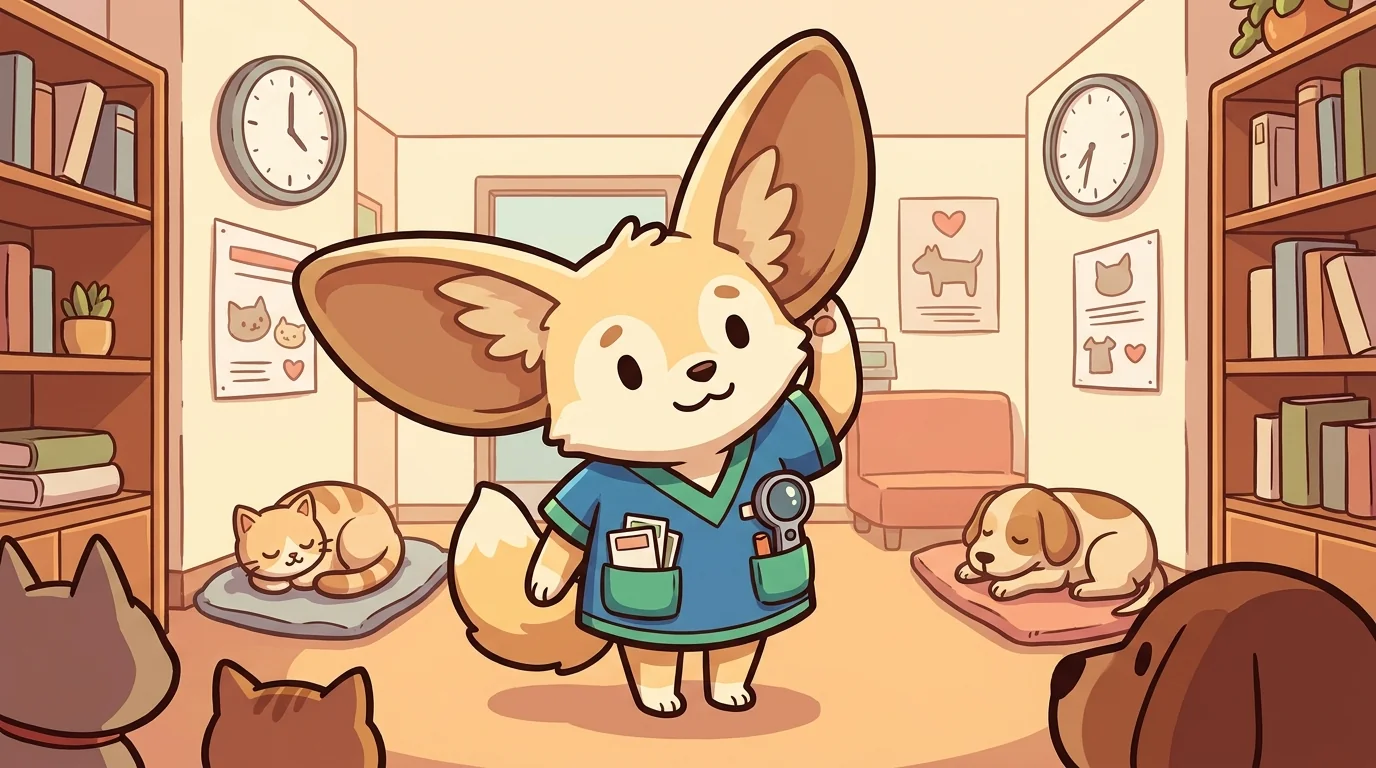
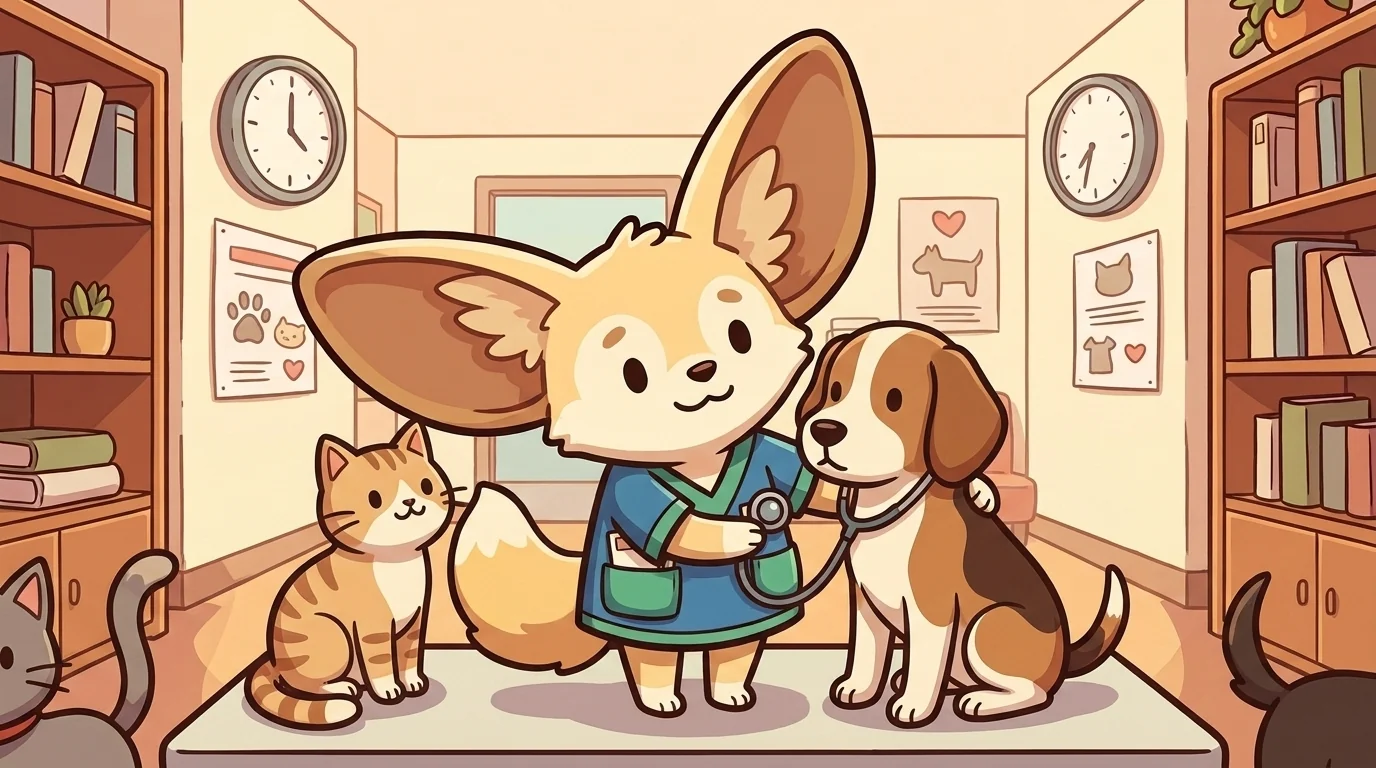
Heed, a fennec fox with ears so big they seemed to listen to the very air, sat quietly on a low stool. Her vet tunic, a practical shade of forest green, was a little rumpled. In her paws, she held a small stack of patient-assessment cards. Her eyes, dark and bright, were fixed on the cage across the room. Inside, a scruffy ginger cat huddled, its tail tucked tight.
The cat, named Marmalade by the shelter staff, was new. It had arrived that morning, rescued from under a busy market stall. Marmalade's fur was matted in places, and one ear had a small tear. But Heed wasn't focused on the visible injuries. She was watching something else entirely.
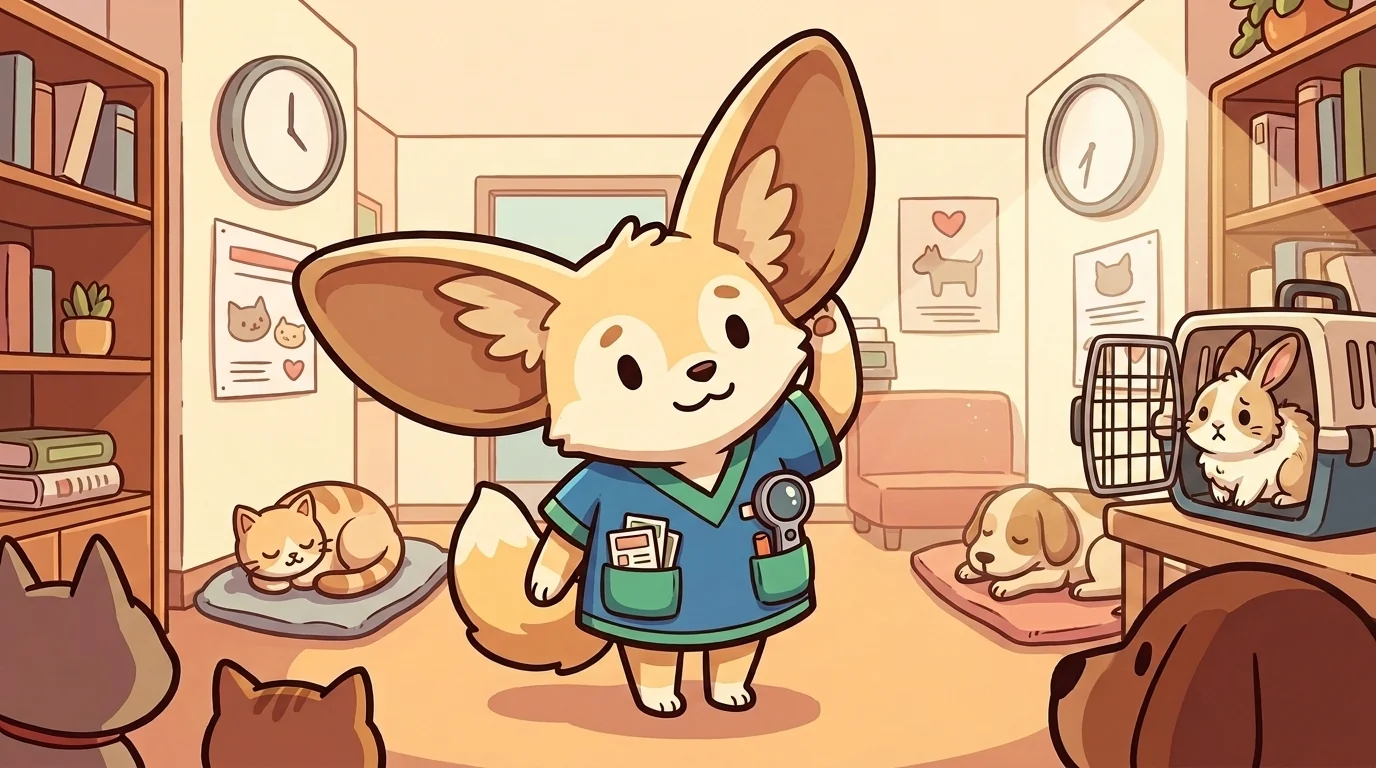
She watched the cat's breathing, shallow and quick. She noted the way its whiskers twitched, almost imperceptibly, every time a door creaked open. Marmalade’s pupils were wide, dark pools in the dim light of the cage. Heed knew these were all messages.
This was her method, her special way of understanding. She called it *patient assessment* – not just checking off boxes, but truly listening to what an animal was saying. This happened long before any instruments came out. It was about building a relationship, even with a scared, silent creature.
Dr. Aris, a tall wolf with kind eyes, walked by. He paused beside Heed. "Still observing, Heed?" he asked, his voice soft.
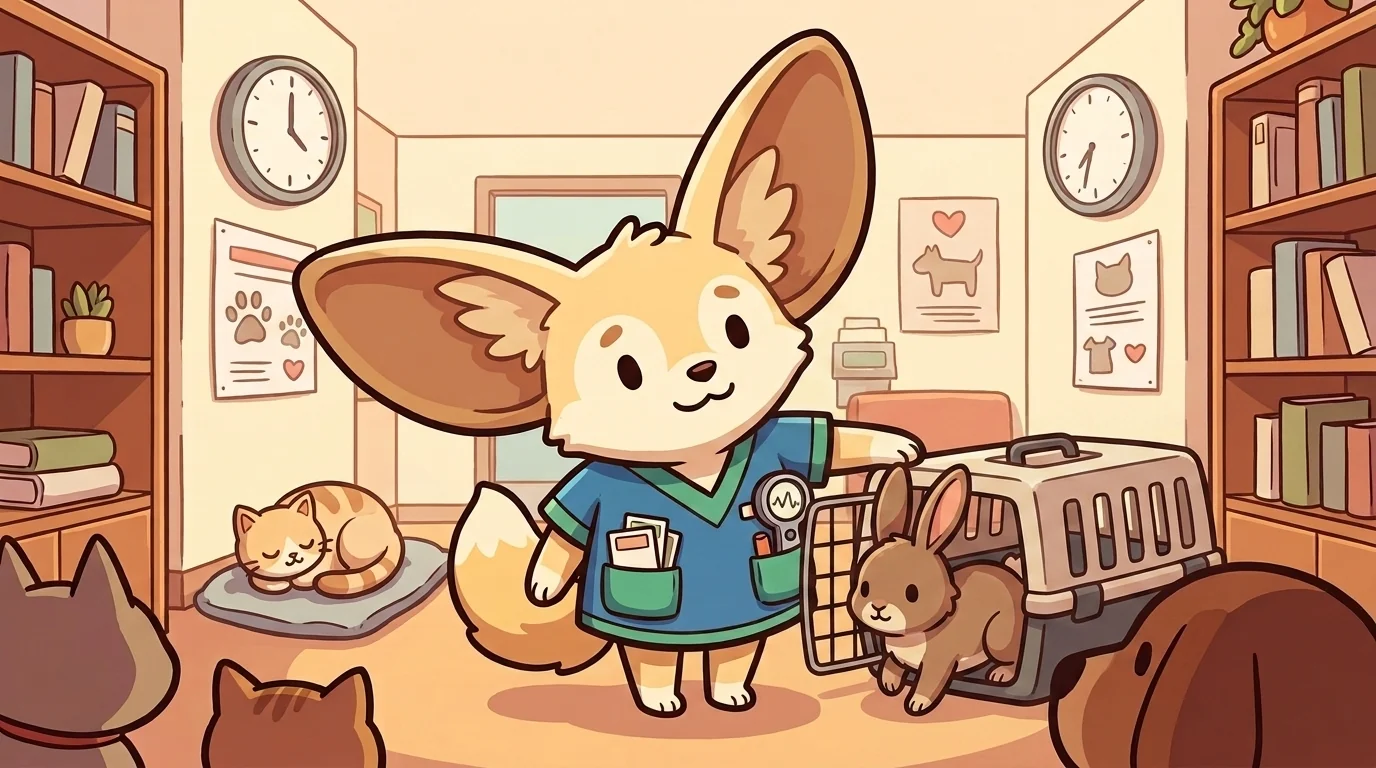
Heed nodded. "Marmalade's telling us a lot. See how her tail is tucked? And the way she keeps flattening her ears?"
Dr. Aris leaned in, peering at the cat. "She's definitely wary."
"More than wary," Heed corrected gently. "She's terrified. Her body is screaming it. If we just rush in with a thermometer, we'll make it worse. We'll get bad data, and she'll remember us as scary."
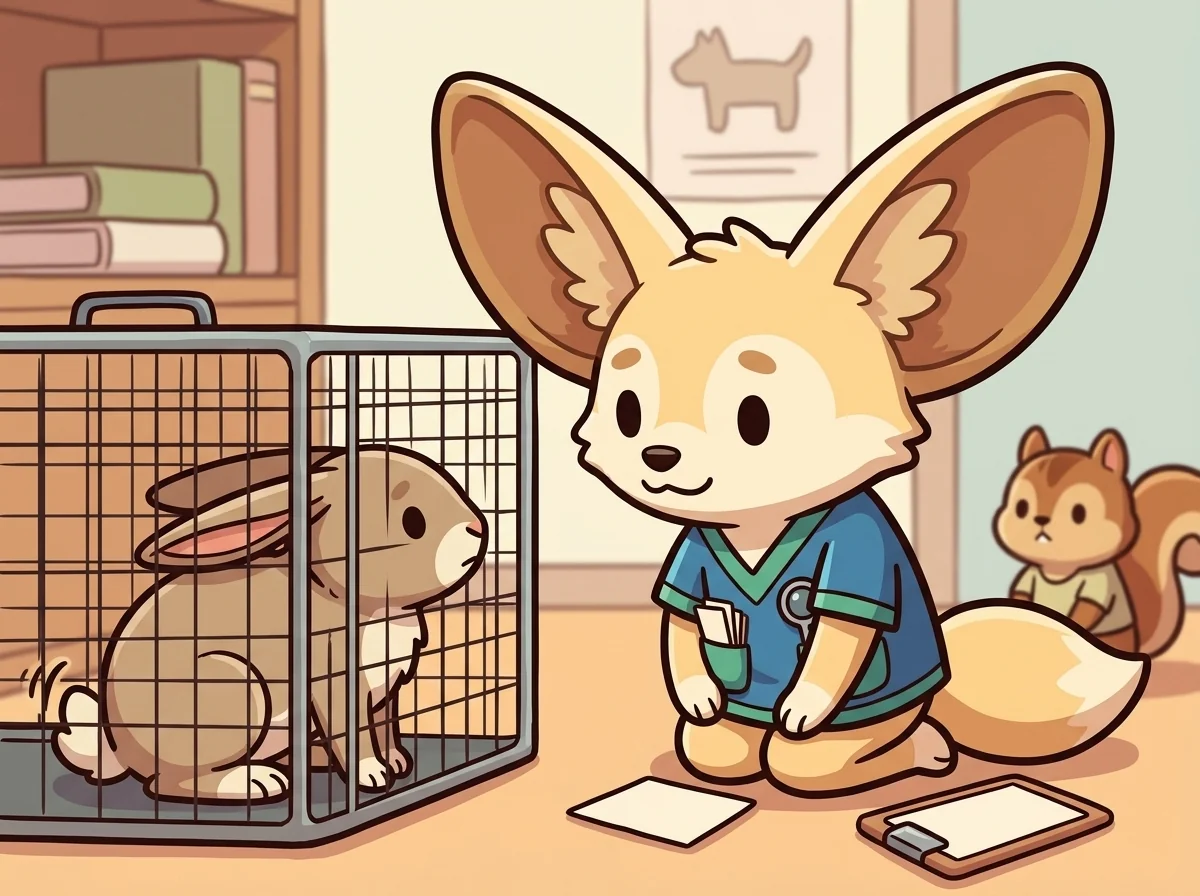
Heed pulled out one of her small patient-assessment cards. On it, a cartoon fennec fox peered intently at a nervous-looking rabbit. Below were prompts: "What is the animal telling me with body language, breathing, posture, sound?"
"This is the first step," Heed explained, tapping the card. "Listen first. What's their story before we even touch them? What do their eyes say? Their breathing? Their posture?"
She pointed to Marmalade's cage. "Her posture is all curled up. Her breathing is fast. She's not making eye contact. She's saying, 'Leave me alone.'"
Dr. Aris smiled. "You're right. Many people just see a cat that needs a check-up. You see a being with preferences and fear-responses."
"Exactly," Heed said. "It's not just data-gathering. It's relationship-craft. We need to earn her trust first. If we don't, everything else will be harder."
She continued to watch Marmalade, occasionally jotting notes on her observation-tracker. She noted how Marmalade flinched when a loud truck rumbled past outside. She saw the cat’s small, hesitant sniff when a bowl of water was placed near the cage door. Each tiny action was a piece of information.
"Okay," Dr. Aris said, "what's next for Marmalade, then?"
"We give her space," Heed replied, her voice firm but quiet. "We let her get used to the sounds, the smells. We talk to her softly from a distance. Then, when she starts to relax, we can try to look closer. Listen first, look second, then we know."
Heed believed this was the most important lesson. Every animal patient communicated. Their body language, breathing patterns, posture, vocalization, eye contact – all of it spoke volumes. Listening to that first made all the difference. The hard data, like temperature or weight, would come later. It would make so much more sense once you understood the animal as a whole being.
The CreatureCare ensemble
Heed is part of CreatureCare's distributed-narrative cast. Each character embodies a different curricular primitive; together they teach the full subject.
-

Chart
Diagnostics — the thoughtful pattern-finder who treats lab data as story-fragments ('numbers are notes; notes are not the song')
-

Tend
Treatment delivery — the steady-handed practitioner who foregrounds consent and explains procedures BEFORE doing them ('slow hands, calm voice, patient first')
-
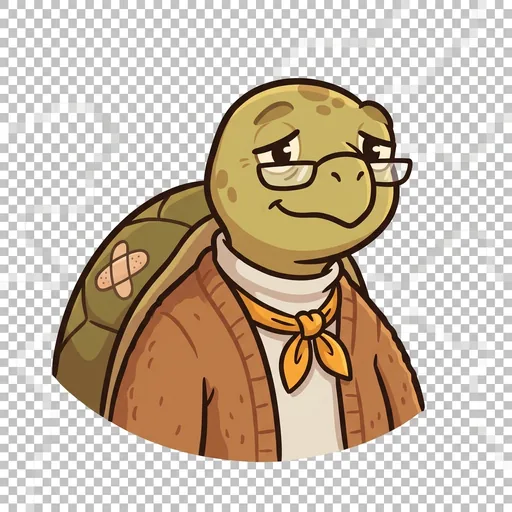
Knit
Recovery + follow-up — the patient tortoise-elder who teaches that healing is slow and that's the point ('days come, bandages come off, walk again — not yet, soon')
-

Bond
Welfare ethics + animal-human relationship — the wise heron-elder who carries the welfare-ethics gate at the kit-12 capstone ('care is more than cure — sometimes care means stopping; always care means seeing')