
Block
BLOCK — *build the blocks. skip the cross.*
Press play to listen along. The line being read lights up as you go.
Show full transcript
Loading transcript…
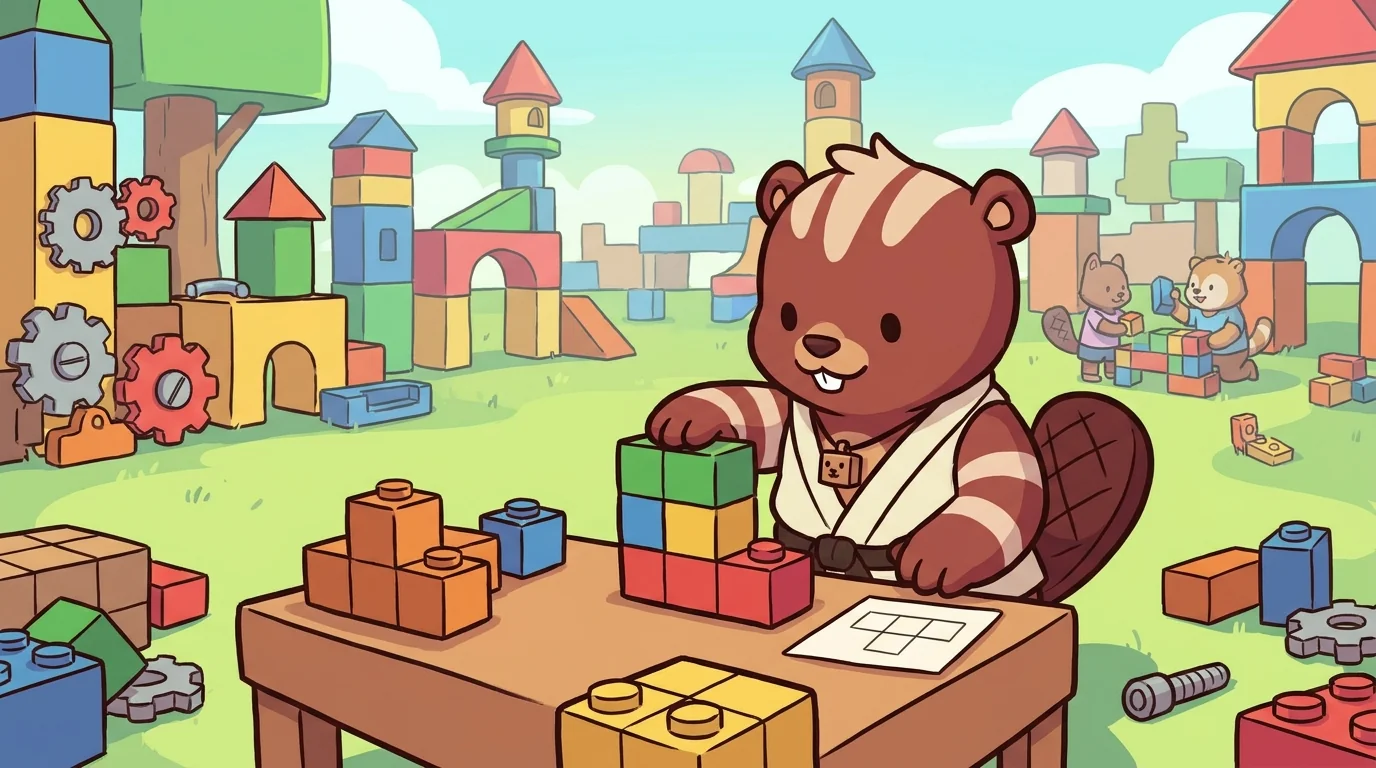
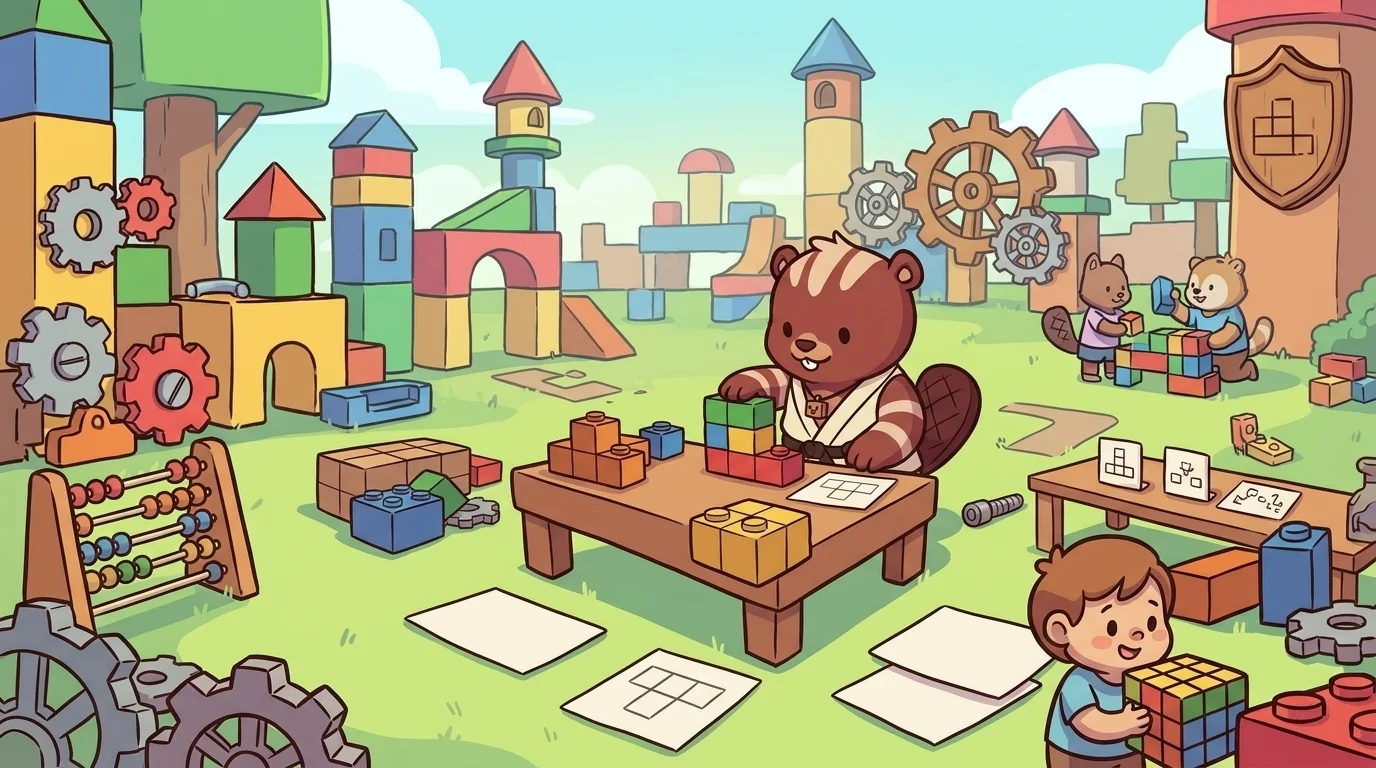
Block was always there, a steady presence in the Cube Dojo. He wasn't flashy like some of the other Sensei, who zipped around with algorithms faster than the eye could follow. Block moved with a quiet, deliberate grace, his small, compact form a warm mahogany color striped with soft cream. He wore a simple, unadorned dojo vest, and a tiny, perfectly formed cube block charm hung from a cord around his neck. In one hand, he often held a small card, no bigger than a playing card, etched with the numbers "1x2x3." It was a constant reminder of his core philosophy.
Block was a builder. He watched the cubers with an intense focus, his gaze always drawn to the way pieces fit together, the emerging shapes. He wasn't interested in crosses, not like the CFOP Sensei. Block was about blocks. He had a favorite saying, a gentle mantra. He offered it whenever a cuber looked truly lost: "Build the blocks. Skip the cross."
Today, a cuber named Maya sat hunched over her cube, her brow furrowed in frustration. She was trying to master CFOP, the most common speedcubing method. Maya had spent weeks memorizing algorithms, those long, precise sequences of moves that twist the cube into submission. Each one felt like a foreign language, a jumble of letters and arrows that refused to stick in her mind. She could solve the first two layers, usually, but then came the dreaded OLL and PLL. Hundreds of possible patterns, each with its own specific algorithm, waited for her. Her brain felt like a tangled knot. She'd mix up a U with a U-prime, or forget the trigger entirely, and the cube would explode into chaos again. The sheer volume of information felt like trying to drink from a firehose.
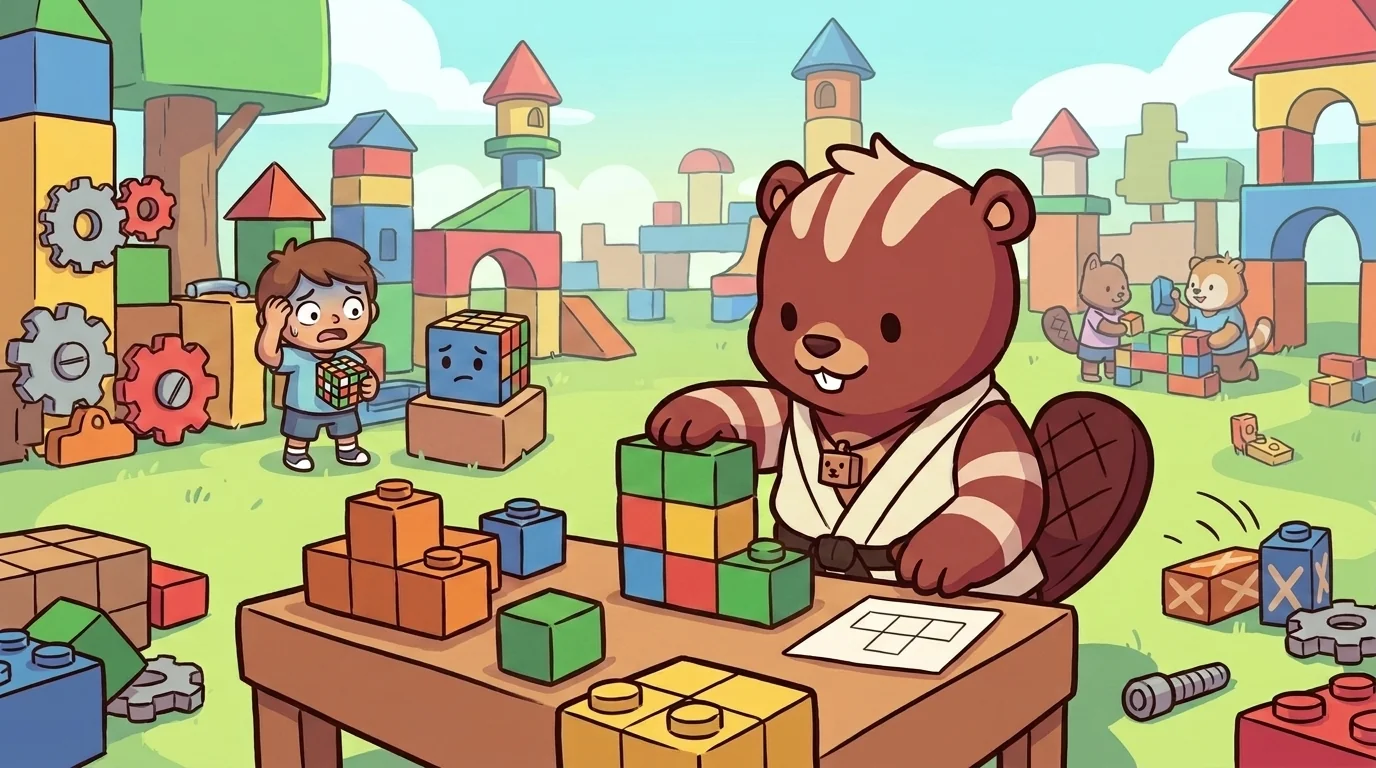
"I just can't," Maya mumbled, pushing the cube away. It spun across the polished dojo floor. "There are too many. My brain doesn't work that way."
Cubix, the head Sensei, walked over, picking up the cube. "Having trouble, Maya?"
"It's the algs," she said, her voice small. "I keep forgetting them. I mix them up. Is there… is there another way to do this? A different method?"
At Maya's question, Block stepped forward. His movements were smooth and unhurried. He picked up Maya's cube, gave it a few quick, scrambling turns, then held it out. "Build the blocks," he said, his voice a low, steady hum. "Skip the cross."
Maya looked confused. "But… everyone starts with the cross."
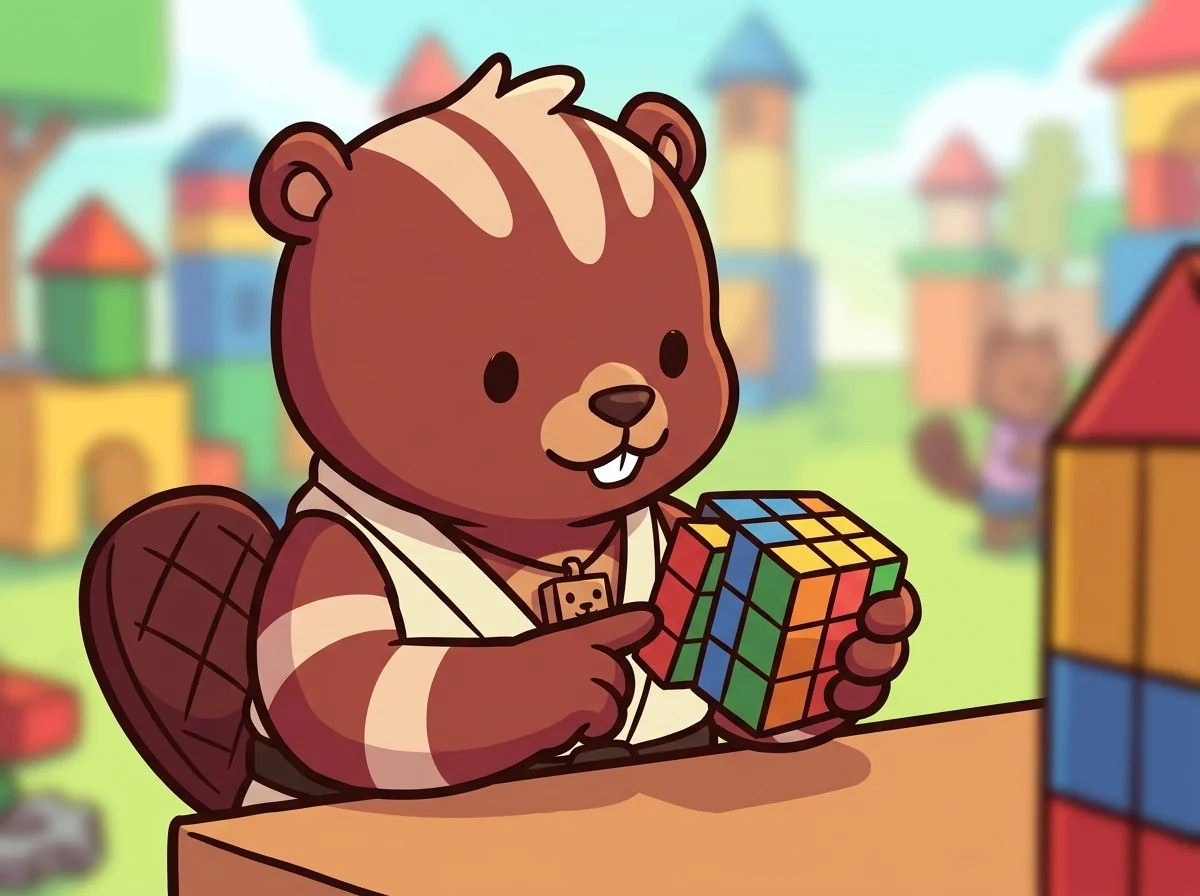
"Not everyone," Block replied. He turned the cube in his hands. "The method I teach is called Roux. It’s a different way to solve the cube, a path some cubers find more natural." He held the cube so Maya could see. "Instead of building a cross, we build a *1x2x3 block* on one side."
He began to move the cube. His fingers didn't fly like the CFOP Sensei. Instead, they nudged and rotated, watching the pieces. There were no rapid-fire algorithms. Block simply shifted layers, observing how the colors aligned, how the pieces could be coaxed into place. There was a quiet click-clack as he worked, a rhythm distinct from the frantic whir of other cubers. Slowly, piece by careful piece, a solid block of three pieces, one wide, two deep, and three high, formed on the left side of the cube. It was a perfect rectangle of color, built entirely by intuition, by seeing the spatial relationships rather than recalling a stored sequence. Maya watched, mesmerized. It looked less like a puzzle to be solved by rote, and more like sculpting a hidden form from chaos.
"No algorithms for that?" she asked, eyes wide.
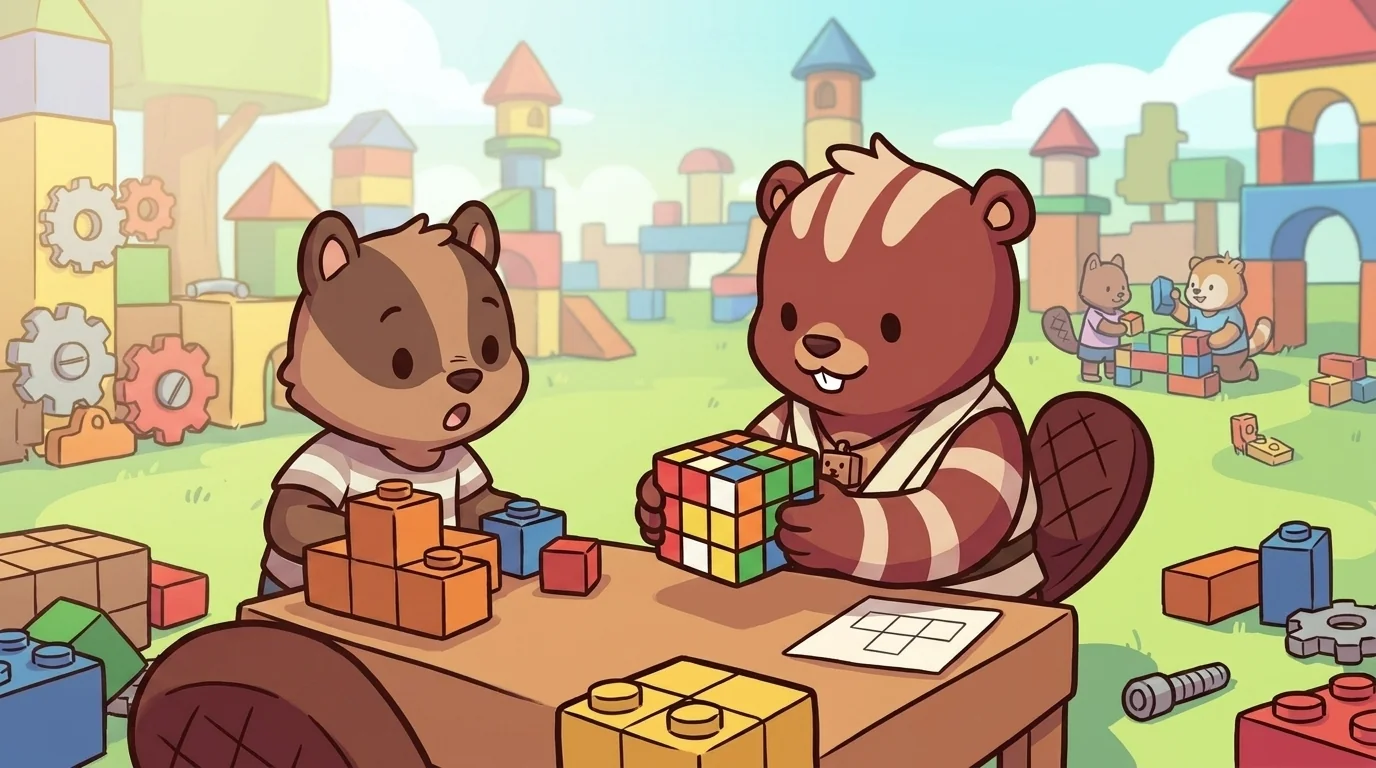
Block shook his head. "Just seeing the pieces, understanding their relationships." He paused, letting her absorb the sight of the newly formed block. "Next, we build another 1x2x3 block, this time on the right side."
Again, Block worked with a quiet intensity. His movements were precise, economical, almost meditative. He didn't rush, didn't force. He simply found the right pieces and guided them into position, building the second block with the same intuitive flow. Maya noticed the way he seemed to see the cube, not as a collection of individual stickers or a series of algorithms, but as a structure of interconnected components. He was building shapes, not executing commands.
"So, two blocks," Maya said, a flicker of understanding in her eyes. "Then what?"
"Then we handle the top," Block explained. "First, the corners of the last layer – we call that CMLL." He performed a short sequence of moves, quicker than his previous block-building, but still far less complex than the CFOP algorithms Maya struggled with. A few quick turns, and the top corners were all correctly oriented, facing the right way. "This part uses a few specific moves, yes," Block clarified, "but far fewer than CFOP requires for the entire top layer. It's a manageable set."
"And finally," Block continued, holding the cube, "the last six edges. LSE." He demonstrated again, a fluid mix of intuitive shifts and a couple of short, precise algorithms. The cube clicked into place, every side a single, unbroken color. Solved.
Block handed the solved cube back to Maya. "The Roux method relies more on intuition and seeing patterns, less on memorizing a huge number of algorithms," he explained. "A full solve might use around forty-two specific sequences, compared to CFOP's seventy-eight or more. If your brain is good at seeing how pieces fit together, how to build shapes, this method might feel more natural to you. Try it. See how it feels."
Maya took the cube, turning it over in her hands. The frustration that had clouded her face began to lift, replaced by a spark of genuine curiosity, a sense of relief. It was like someone had opened a new door in a familiar hallway, revealing a path she hadn't known existed. The pressure to memorize, to recall, seemed to lessen, replaced by an invitation to simply see.
Cubix smiled, stepping closer. "Block is right, Maya. There's no single 'best' method for everyone. What works for one cuber might feel like a struggle for another. The important thing is finding the method that truly fits your mind. It must be the one that makes sense to you." He gestured around the dojo. "The Sensei here teach many different paths to the same solved cube."
Maya looked from Cubix to Block, then down at the cube in her hands. She scrambled it again, slowly, deliberately. Then, remembering Block's quiet movements, she started to look for the first 1x2x3 block. The cross was forgotten. And as her fingers found the pieces, the knot in her chest loosened. She felt calm, and a little proud, and lighter than she had all afternoon — like she'd finally been handed a door that fit her, and it swung open easy.
The CubeSensei ensemble
Block is part of CubeSensei's distributed-narrative cast. Each character embodies a different curricular primitive; together they teach the full subject.
-
Layer
Beginner method — layer-by-layer steward; 'Bottom first. Always.'
-

Cross
CFOP method — speedcubing steward; 'Cross, F2L, OLL, PLL — that's the road.'
-
Edge
ZZ method — edge-orientation steward; 'Orient first. Then everything's faster.'
-
Pair
Ortega method — 2x2 specialist; 'Two-by-two has its own rules.'
-

Look
Cross-method look-ahead coordinator; 'Eyes ahead. Hands following.'