
Edge
EDGE — *orient first. then everything's faster.*
Press play to listen along. The line being read lights up as you go.
Show full transcript
Loading transcript…
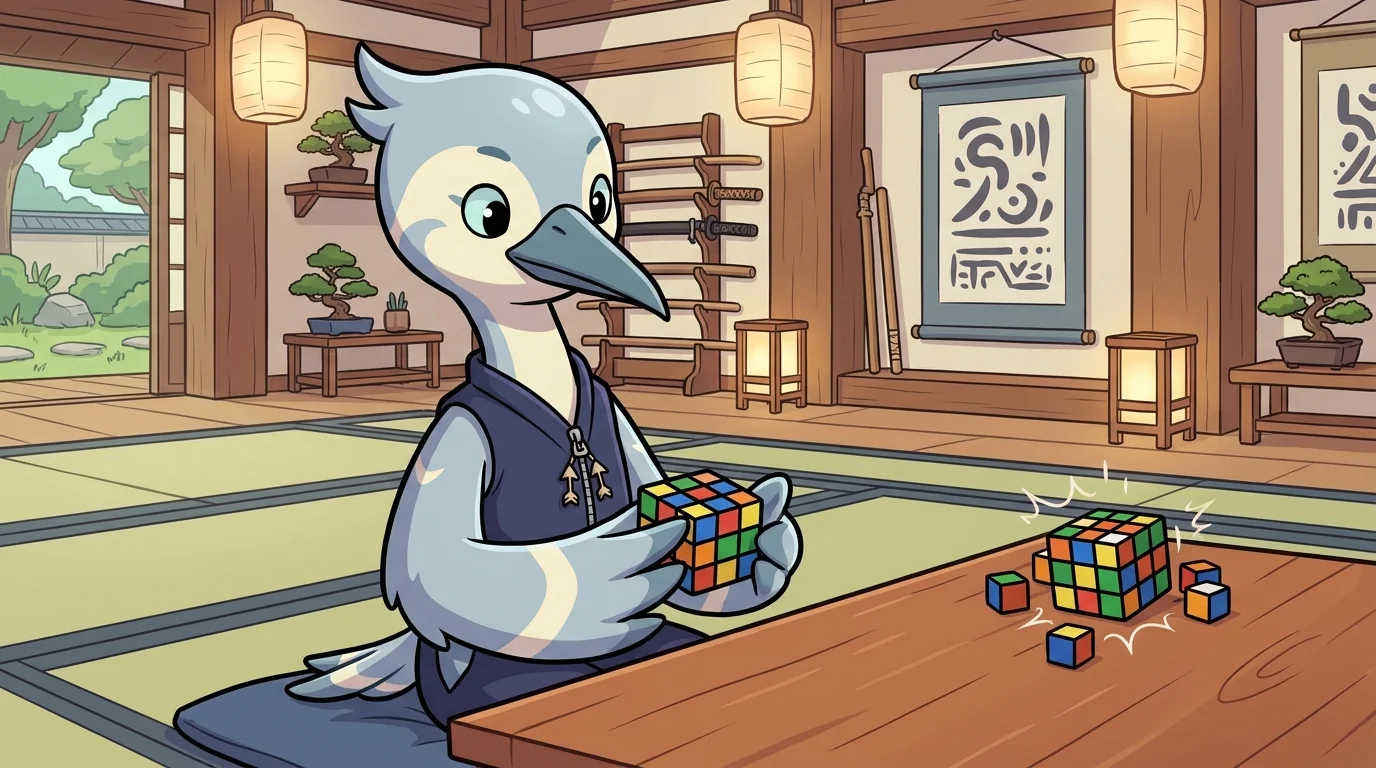
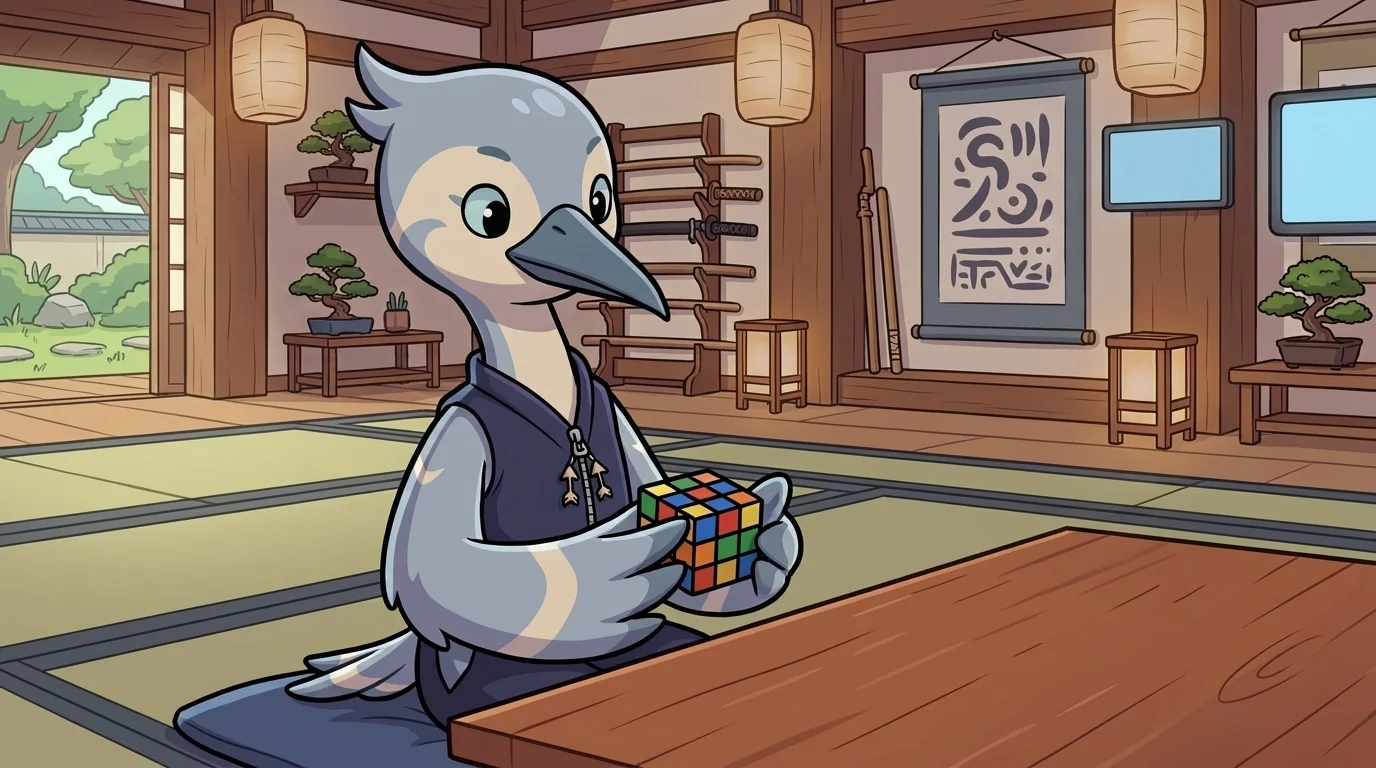
In the busiest corner of the cubing hall, where fingers blurred and timers beeped and everyone chased a faster number, one small egret sat perfectly still. Edge wore a silver-blue vest with cream stripes along the seams, and a smooth alignment-stone hung from a cord at their throat. In their hands a scrambled cube waited, and Edge waited with it — eyes moving over the colors the way a heron reads the surface of a pond, patient, letting the whole shape arrive before touching a single piece.
Then their fingers moved, and the odd thing was how few moves there were. No frantic spinning. No flipping the cube over and over to hunt for pieces. Edge turned only the right side and the top, again and again, and the cube stayed facing outward the entire time, as if it had agreed to hold still and be understood.
Click. Solved.
"You didn't even turn it around," said a girl at the next table, staring. Her name was Maya, and her own cube sat under her hand like something that had personally wronged her.
"I lined up the hardest part first," Edge said quietly. "After that, there isn't much left to hunt for."
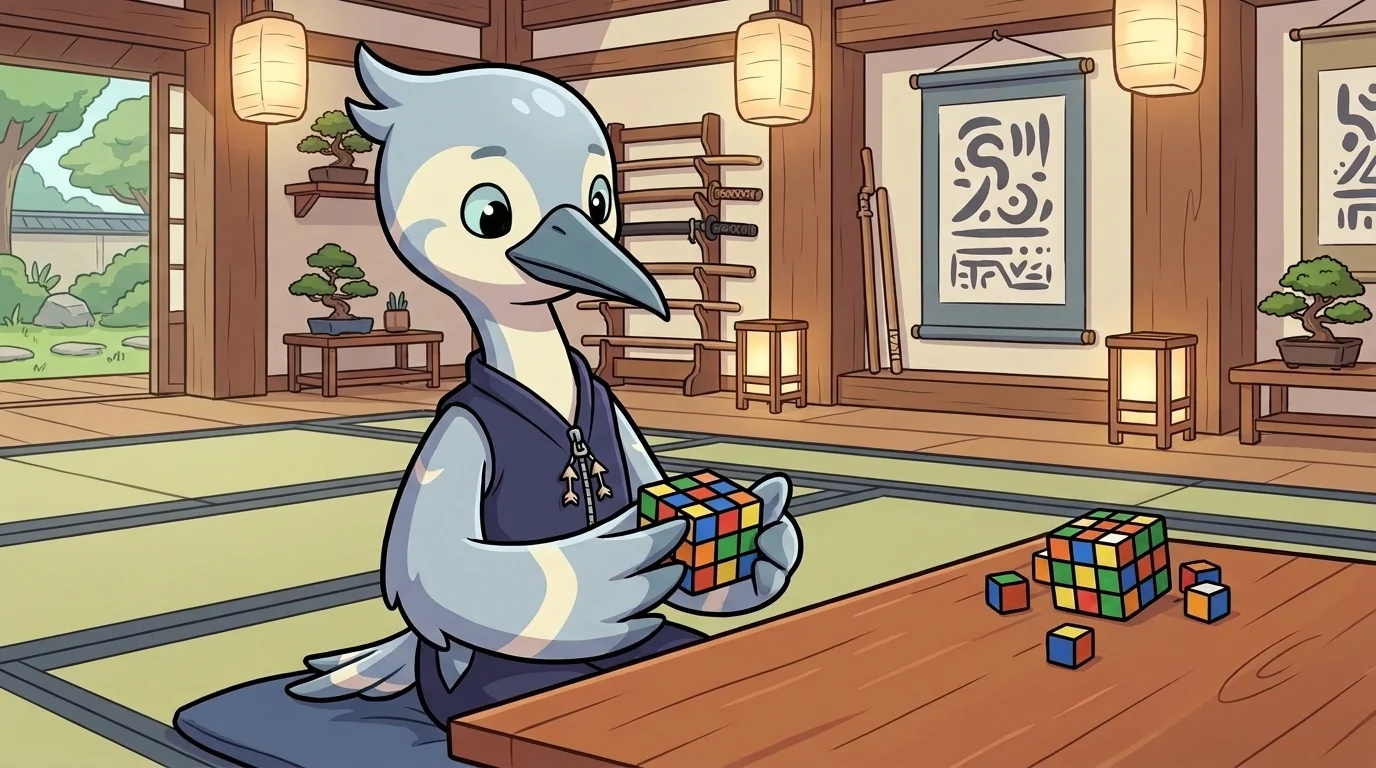
Edge had not always begun with the hard part. As a young egret, they'd solved the way everyone did — build a cross, then chase the pairs, then wrestle the last layer, spinning the cube around and around to find each stubborn piece. It worked. But it always felt like scrambling, like arriving somewhere out of breath.
An old cuber in the river-village had watched Edge fumble through a solve one evening, rotating the cube six, seven, eight times.
"You keep turning it over to look for pieces," the old cuber said. "What if the pieces were already pointing the right way? What would you have left to look for?"
Edge hadn't understood at first. But that night, instead of building a cross, they tried something harder and slower: flipping every single edge the right way up before doing anything else. It took forever. It hurt their brain. Twelve edges, all oriented at once, plus two settled into the bottom-back — a knot of a first step that demanded they see the whole cube before their fingers were allowed to move.
But when the knot came undone, the rest of the solve unspooled like thread off a bobbin. Right side, top side, right, top. No searching. No spinning. Edge sat very still in the dark and felt something they'd never felt after a solve before: not out of breath, but calm. Steady. Like they'd paid the difficulty up front and gotten quiet in return.
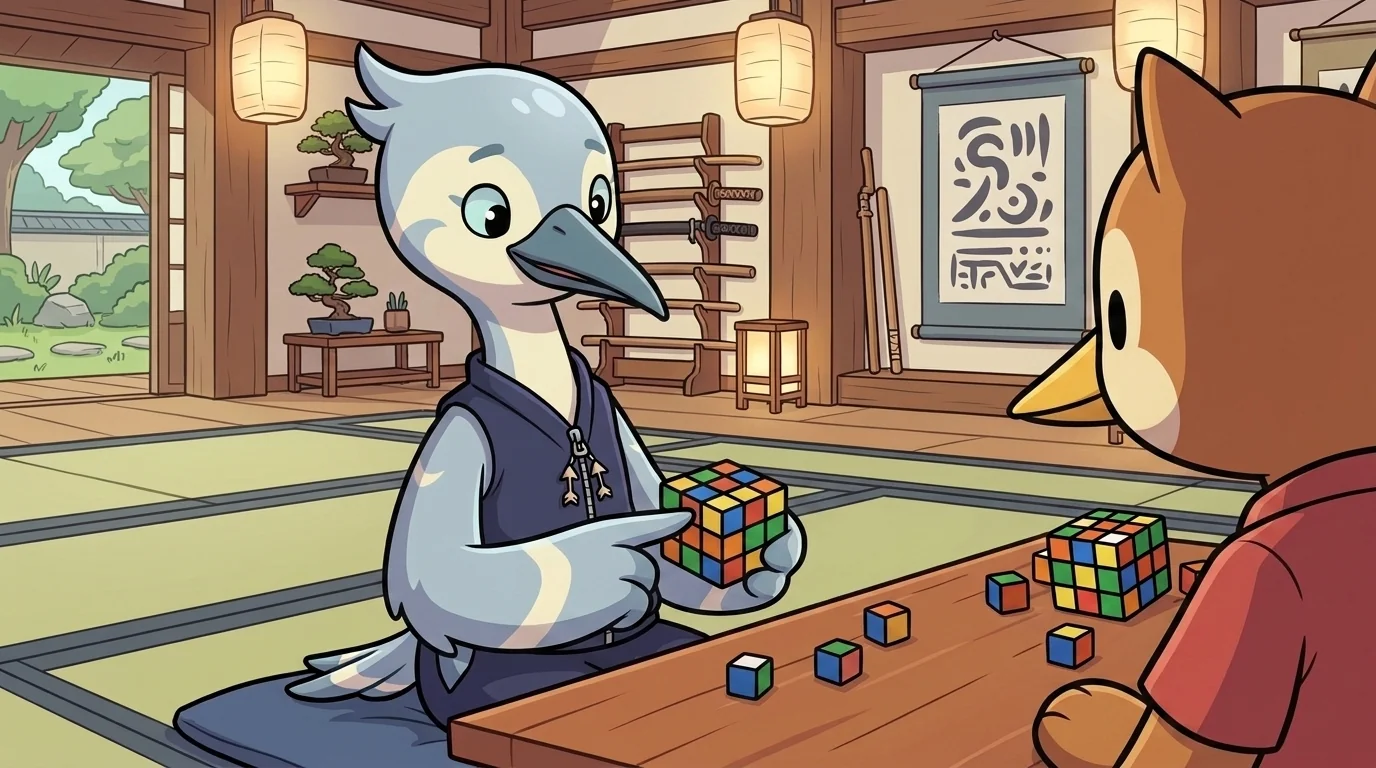
Edge walked to the cubing academy because a hall full of people chasing speed was exactly where somebody needed to teach the value of slowing down at the start.
Cubix, the mentor, met them at the door and asked the question mentors there always asked. "Edge — what is your method?"
Edge didn't recite a definition. They held up a scrambled cube and, without looking away from Cubix, oriented every edge in a handful of unhurried turns — then solved the rest using only two kinds of moves, the cube never once leaving its outward face.
"My method front-loads the hard part," Edge said. "The first step is the toughest thing in the whole solve. After that, there are no rotations, no hunting — just two turns, over and over, until it's done." They set the solved cube down. "It costs the most thinking exactly when a lot of cubers want to rush. That's why I teach it. Somebody has to say the hard part first is worth it."
Cubix nodded slowly. "We have a hall full of racers," he said. "You belong here. You'll teach the ones who want to understand why they're fast, not just that they are."
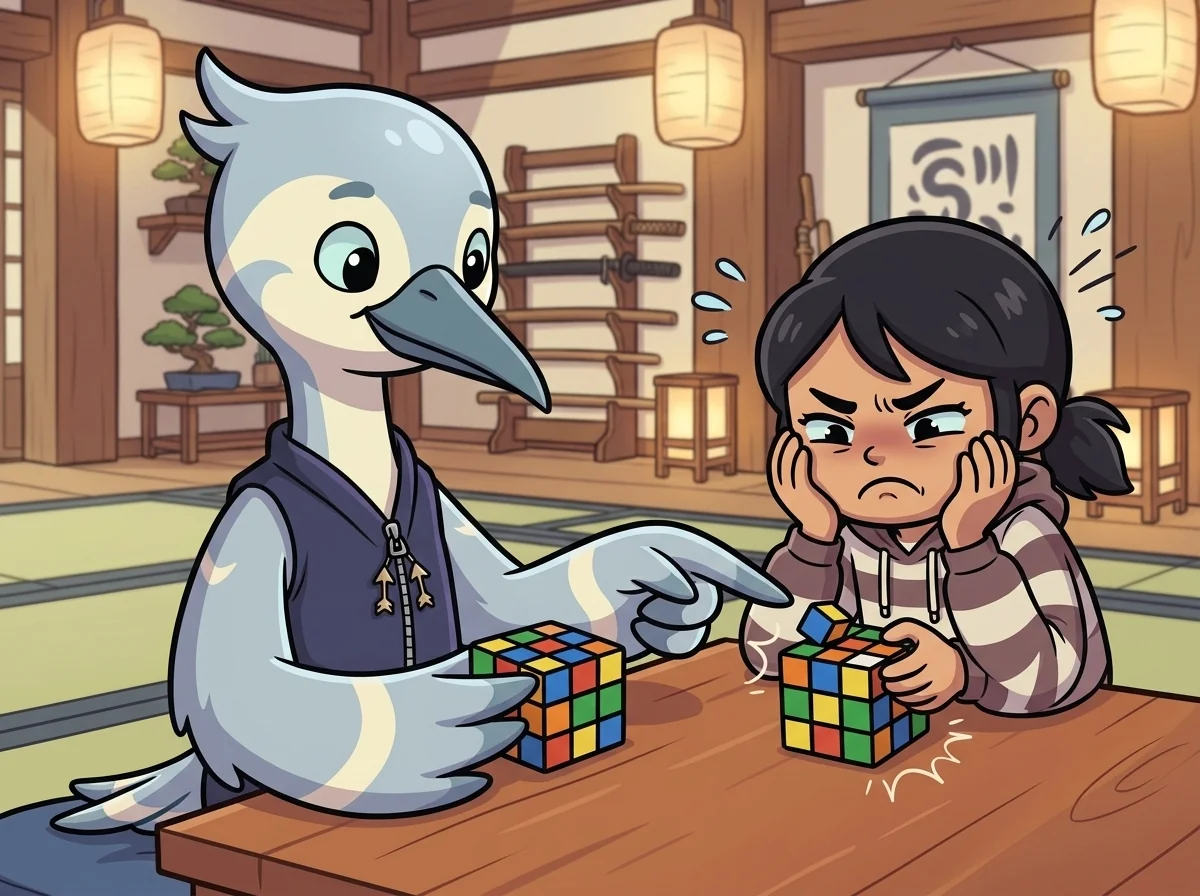
It was Maya, weeks later, who slumped onto the stool across from Edge with her arms crossed. "My times stopped getting better," she said. "My last layer is a disaster. I keep flipping the cube over to find pieces and it eats all my seconds."
Edge slid a scrambled cube toward her. "Have you considered orienting first?"
"Orienting what?"
"Every edge. Before anything else." Edge leaned in. "It's called EOLine. You flip all twelve edges the right way up and place these two at the bottom, all in the same breath."
Maya tried. Her eyes darted everywhere at once and she made three panicked turns before stopping, lost. "I don't even know where to start. This is impossible."
"It feels impossible because you're doing the hardest thinking first," Edge said, gently taking the cube. "That's the trade. You spend the difficulty now so you don't have to spend it later." They guided her fingers to one edge, then another, showing her how to flip pieces without knocking the others loose. It took several tries. Maya felt her brain stretch and ache — and then, all at once, every edge on her cube pointed the right way, the colors still jumbled but somehow lined up, like a half-finished secret code.
"Whoa," she breathed. "Okay. Now the fifty moves to fix this mess?"
"No," Edge said, the smallest smile touching their beak. "Now the easy part. From here, only two moves. Right side. Top side. And their reverses. That's all."
Maya was sure they were teasing. But she tried — right, top, right, top — and the pieces slid home so smoothly it felt less like solving and more like humming a tune she already knew. No spinning. No searching. Her hands just kept going. A few flicks later the cube clicked shut, solved, and the timer read a number she had never once touched.
She stared at it. "That felt like flying."
Maya turned the solved cube over in her hands. It felt warm. Across the hall the racers were still spinning their cubes over and over, chasing pieces, and for the first time she didn't envy the speed — she understood the quiet underneath it.
"Hard step first," Edge said softly, tapping the alignment-stone at their throat. "Then the path gets simple."
Cubix drifted over and looked from Edge to Maya's cube. "There's more than one road to a solved cube," he said. "Some people like an easy start and a tricky finish. Edge likes to meet the hard part head-on and coast home. Neither is the best. They just fit different hands."
Maya nodded, but she was barely listening. She was noticing the knot that usually sat behind her ribs during a slow solve — the tight, hurried, never-fast-enough feeling — and how it had loosened without her seeing it go. Her shoulders had come down from around her ears. She took a slow breath and felt it reach all the way to the bottom of her lungs, and a steady, unhurried gladness settled in her chest and stayed there, warm and certain, like she'd finally stopped rushing toward something and simply arrived.
The CubeSensei ensemble
Edge is part of CubeSensei's distributed-narrative cast. Each character embodies a different curricular primitive; together they teach the full subject.
-
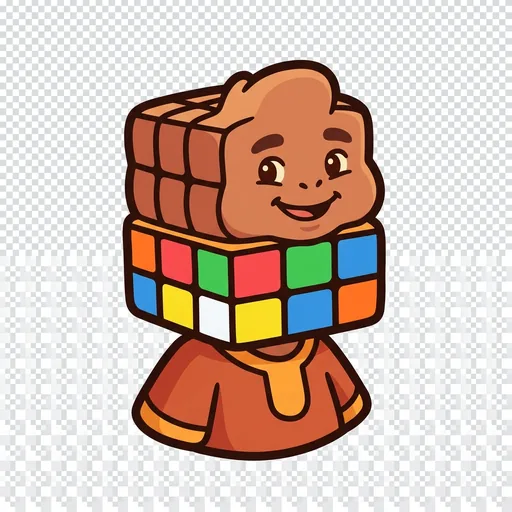
Layer
Beginner method — layer-by-layer steward; 'Bottom first. Always.'
-
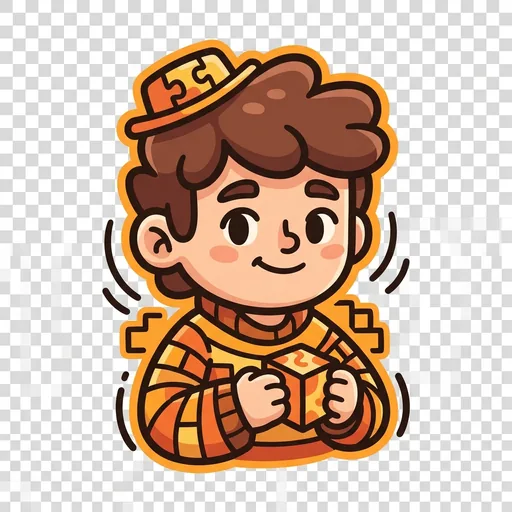
Cross
CFOP method — speedcubing steward; 'Cross, F2L, OLL, PLL — that's the road.'
-
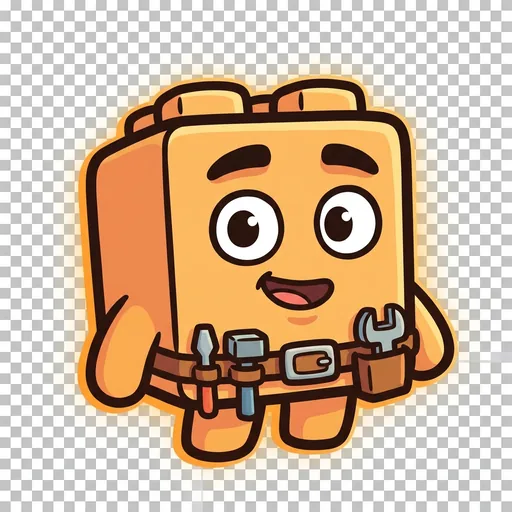
Block
Roux method — block-building steward; 'Build the blocks. Skip the cross.'
-
Pair
Ortega method — 2x2 specialist; 'Two-by-two has its own rules.'
-
Look
Cross-method look-ahead coordinator; 'Eyes ahead. Hands following.'