Chain
FOOD CHAIN / TROPHIC FLOW — *energy moving up levels*. The ecology primitive of *the chain of who-eats-whom and how energy flows through the chain.*
Press play to listen along. The line being read lights up as you go.
Show full transcript
Loading transcript…
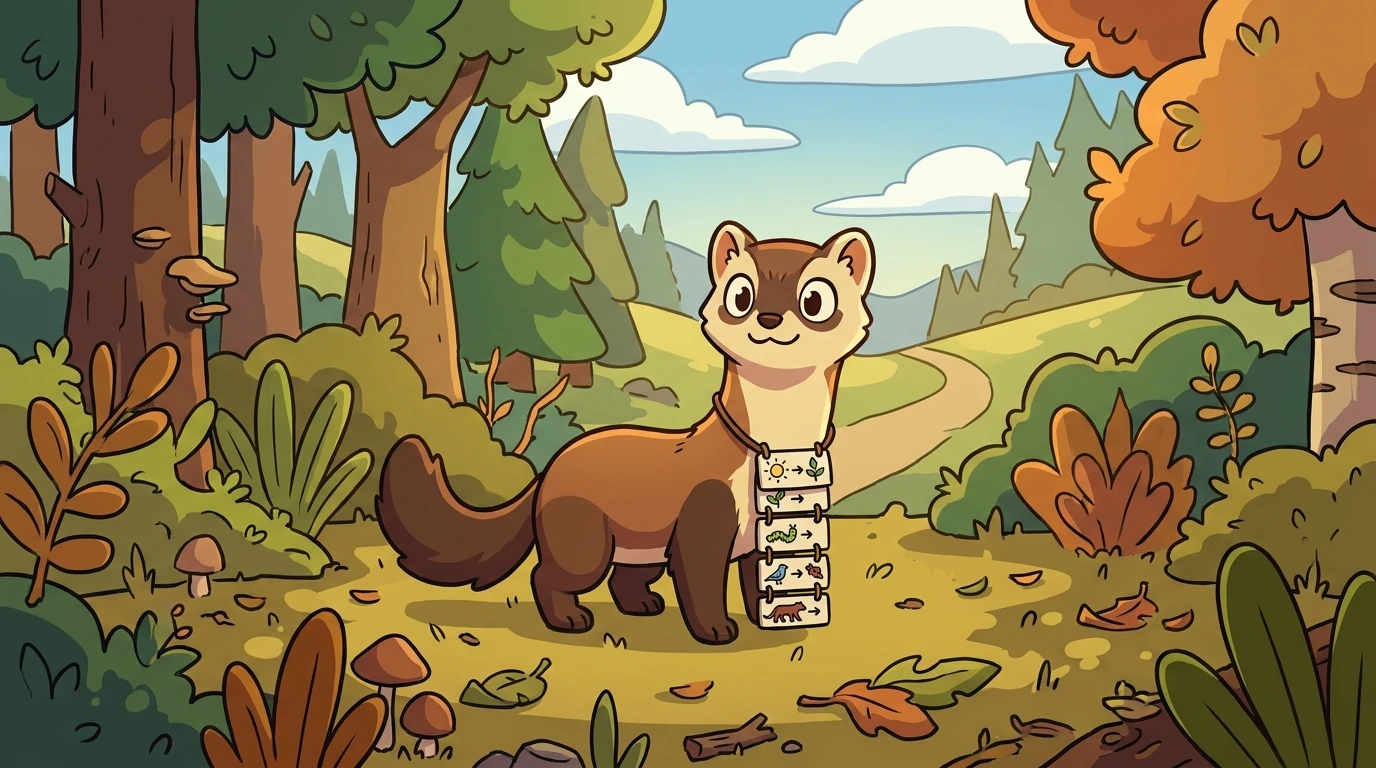
In the sunniest corner of the EcoSphere nature center, a marten-tween named Chain was holding a loop of small painted cards up to the light, and the whole thing was rising together.
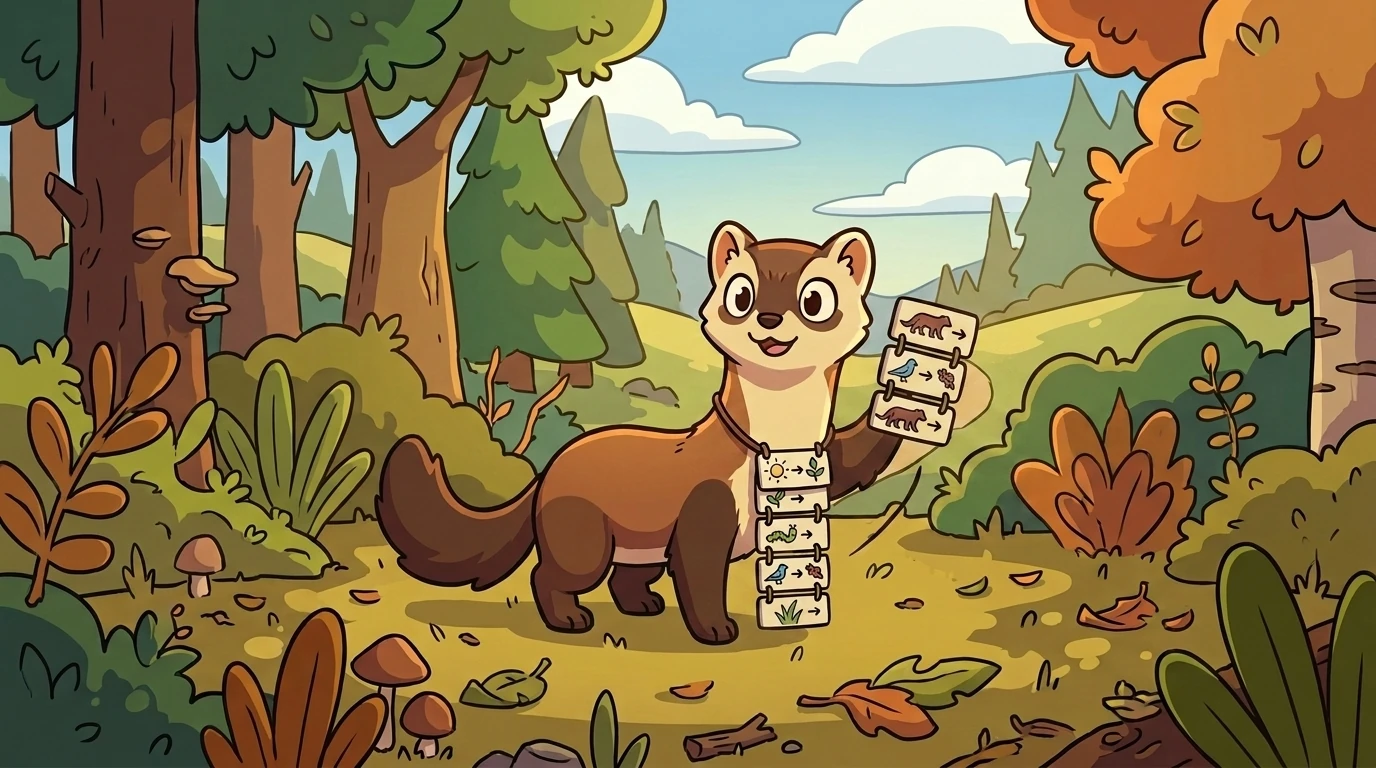
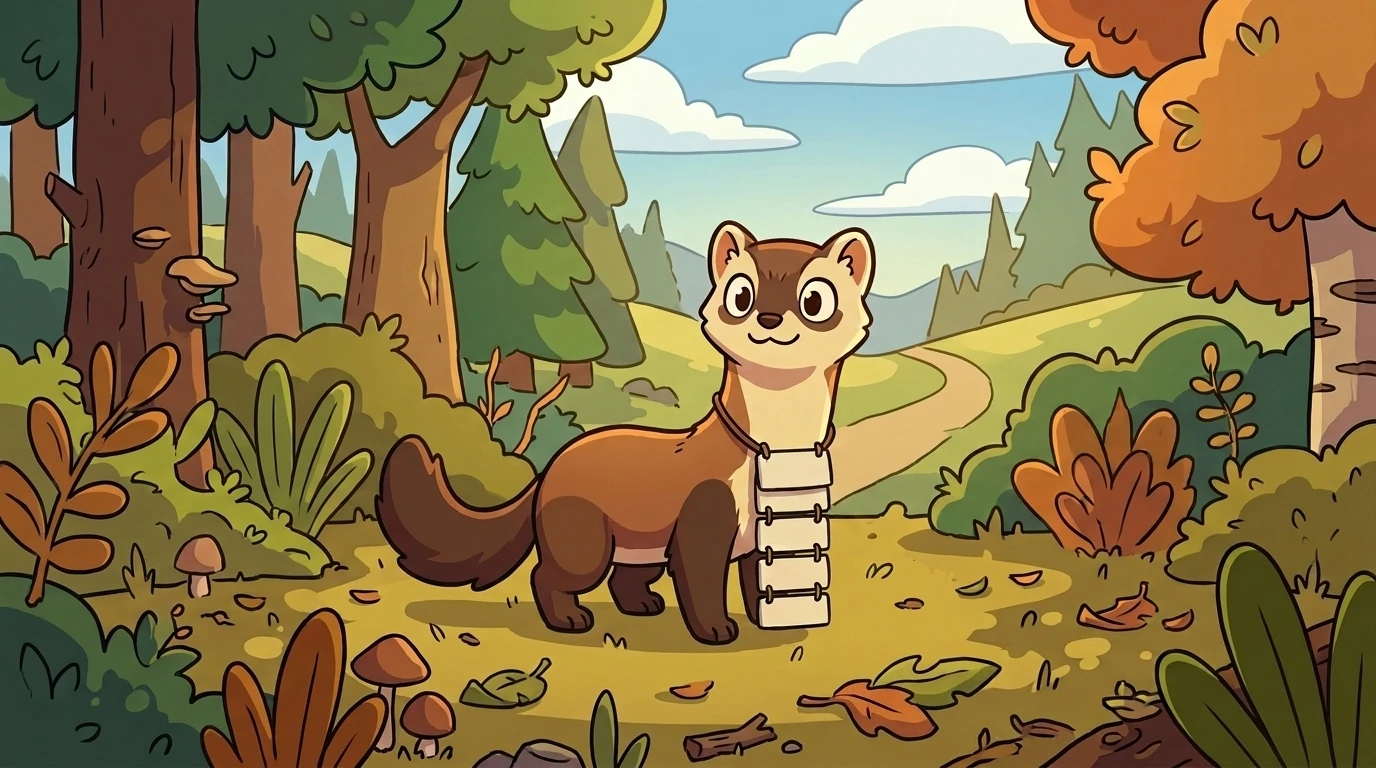
She was long and slender, her fur the warm russet-and-cream of autumn ferns, and around her neck hung a leather thong strung with cards no bigger than postage stamps. Each card was hand-painted with one living thing — a blade of grass, a grasshopper, a sparrow, a hawk — and each was joined to the next by a tiny brass ring. When Chain lifted the hawk card between two fingers, the sparrow rose. The grasshopper rose. The grass rose last of all, dangling at the bottom. They came up as one piece, because they were one piece.
"Watch what happens when I pull the top," she told the ring of visiting students, and she tugged the hawk gently upward. The whole chain swung. "The hawk can't go anywhere the grass doesn't follow. They're linked. Not because the hawk is in charge — because the hawk is made of the grass, if you trace it far enough back."
A boy near the front squinted. "Made of grass? It's a hawk."
"It ate the sparrow," Chain said. "The sparrow ate the grasshopper. The grasshopper ate the grass. And the grass caught sunlight and turned it into something you can eat." She let the cards settle back against her chest, still swinging. "Every bit of that hawk started as sunlight in a grass blade. Pull out the grass, and the hawk has nothing to stand on. Everything above it just — comes down."
Chain had learned about links long before she learned about hawks.
She'd grown up in a river-village where her family were the chain-makers, the ones who crafted the small wooden-link chains people wore at festivals or strung into beads. It was slow, careful work. Each link was carved on its own, each brass ring bent to fit its neighbors, and every finished chain was tested link by link — because a chain was only as whole as its weakest join.
Her grandfather had taught her the family rule when she was six. He'd handed her a half-made chain and asked which link was the most important one.
She'd pointed to the big carved clasp at the top, the fancy one everybody noticed first.
Her grandfather had shaken his head and closed her small hand around the plainest link at the bottom — a rough, unpainted piece she'd have thrown away. "This one," he said. "Take it out and see what you've still got." She'd worked it loose, and the whole chain had fallen apart in her lap, the clasp and all. "The top link only matters because every link underneath is holding it up," he told her. "A chain has no boss. It only has links that all need each other. Forget that, and you'll build something pretty that falls apart the first time it's tested."
She had never forgotten it. It turned out he'd been teaching her ecology without either of them knowing the word.
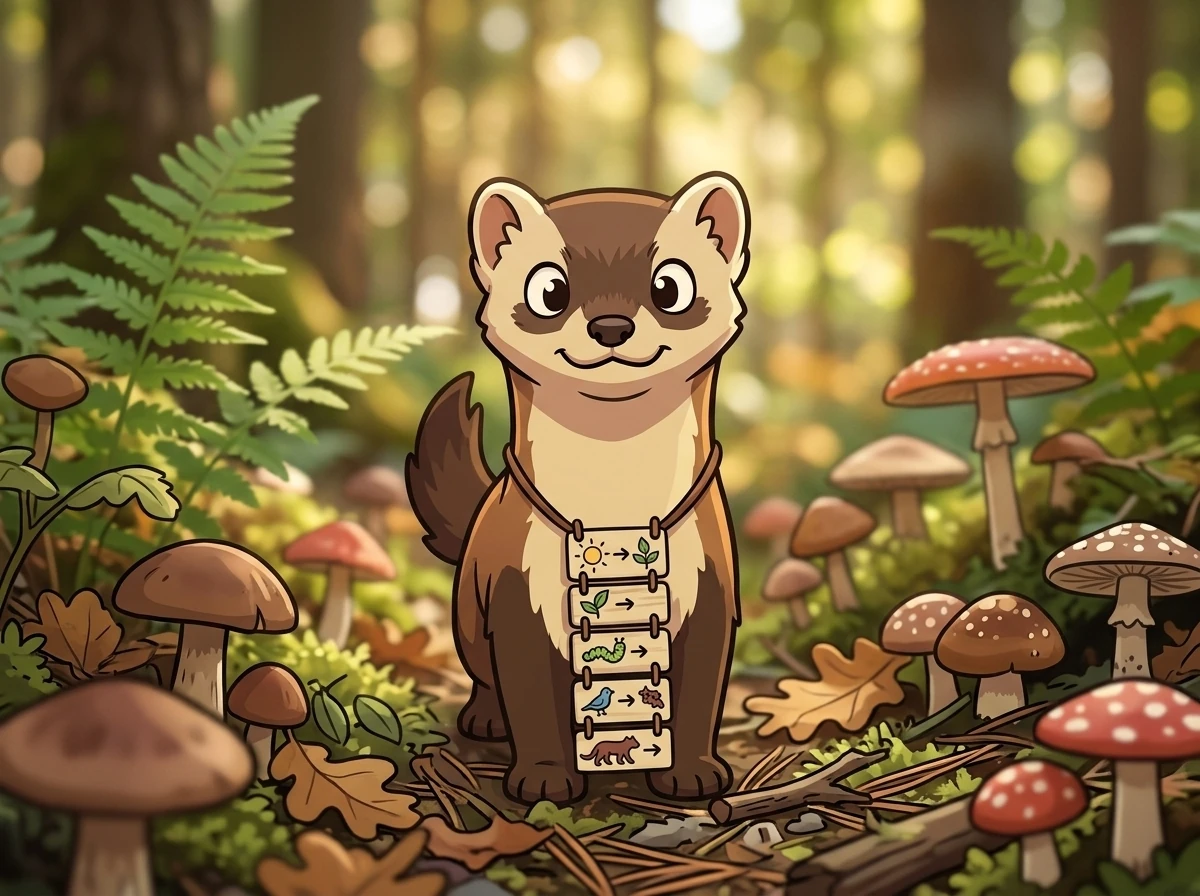
She walked to the EcoSphere academy when she was twenty-two, the neck-cord of cards already worn soft from handling.
Terra, who ran the place, didn't ask for her credentials. She watched Chain's hands instead — the way they never stopped tracing the links even while she talked. "Tell me what a food chain is," Terra said.
Chain unclasped the thong and laid the cards flat on the desk, bottom to top, so the grass sat nearest Terra. "It's energy moving up," she said, walking one finger along the line. "Grass to grasshopper to sparrow to hawk. Each step passes along maybe a tenth of what the step below it had — the rest leaks out as heat, as waste, as the plain effort of staying alive. Energy flows up and never comes back down. Only the matter cycles round." She rested her fingertip on the grass card. "And the important one is always here. Not the hawk. The grass. No producer, no chain."
Terra was quiet a moment, looking at the little painted grass blade at the bottom of the line. Then she looked back at Chain. "Most people who come through that door point at the hawk," she said. "You're appointed."
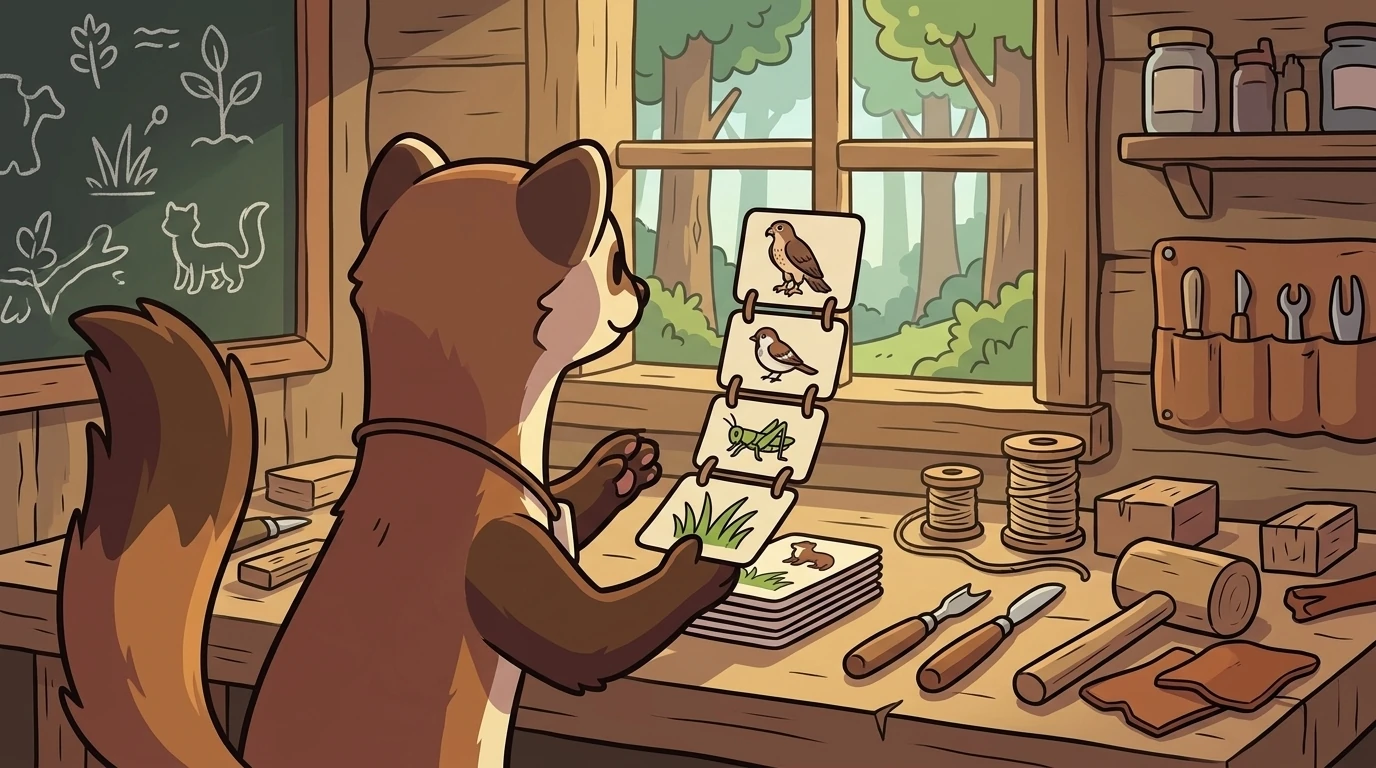
Chain's first-day lesson always started the same way, and it always started with someone getting it wrong on purpose.
She'd lay her cards on the workbench in a standing column — grass at the base, then grasshopper, sparrow, hawk at the crown — and ask the room which animal was the strongest. Hands shot up for the hawk every time.
One afternoon a sharp-eyed girl said it fastest. "The hawk. Obviously. It eats everything else. It's the boss."
"That's the answer almost everyone gives," Chain said, not unkindly. "So let's test it. Watch." She slid the grass card out from the very bottom of the stack. The whole column above it — grasshopper, sparrow, hawk — leaned, wobbled, and toppled off the bench into her waiting palm. "The boss just fell over," she said. "I didn't touch him. I took away the grass."
The girl frowned. "But — the hawk's still the one eating things."
"It is," Chain agreed. "It's just not the one holding things up. Those are different jobs, and people mix them up all the time." She stood the cards back into their column, grass first. "The hawk depends on the sparrow, which depends on the grasshopper, which depends on the grass, which depends on the sun. Depending on something isn't being weaker than it. A whole roof depends on its foundation. That doesn't make the foundation the loser." She tapped the grass card, the plainest one, the one nobody ever picked. "Trace the chain link by link and you stop asking who's the boss. You start asking where the energy came from. And it always came from down here."
The girl looked at the little grass blade for a long time. "So when someone calls the hawk the boss..."
"They're not failing," Chain said, and a small dry smile crossed her face. "That's just the old story leaking in — the one where the big fierce thing wins. Catching it and switching back to where did the energy come from — that's the whole skill. That's the thing I'm actually teaching."
When the lesson ended and the room emptied, the sharp-eyed girl stayed behind, turning the grass card over in her fingers.
"I always thought the hawk was the answer," she said quietly, almost embarrassed. "The whole time. I never once thought about the grass."
"Neither did I, at your age," Chain said. She sat beside her, and the cards swung softly on their thong. "I picked the fancy clasp when I was six, and my grandfather made the whole chain fall apart in my lap to show me. I remember exactly how that felt — like the floor tilting. Like I'd been looking at the wrong thing my whole life and only just noticed."
The girl pressed the little painted grass blade flat against the bench, gently, the way you'd steady something you didn't want to lose.
Chain watched her do it, and felt the old fondness rise up warm and easy in her chest — that quiet gladness of watching the picture flip in someone the way it had once flipped in her, the tight puzzle of it loosening into something that finally fit. Nothing about the world had changed on the bench that afternoon. Only the looking had. And that, Chain thought, breathing slow and easy in the amber light, was the best thing she ever got to feel: the small, steady warmth of a child learning to see the quiet foundation that had been holding everything up all along.
The chain swung gently on its thong. The cards caught the light. Another chain waited, somewhere, to be traced.
The EcoSphere ensemble
Chain is part of EcoSphere's distributed-narrative cast. Each character embodies a different curricular primitive; together they teach the full subject.