
Sparring Tiger
SPARRING TIGER — the tiger leaps when the moment is right. force creates clarity. force misplaced creates ruin.
A story read by Sparring Tiger
Press play to listen along. The line being read lights up as you go.
Show full transcript
Loading transcript…
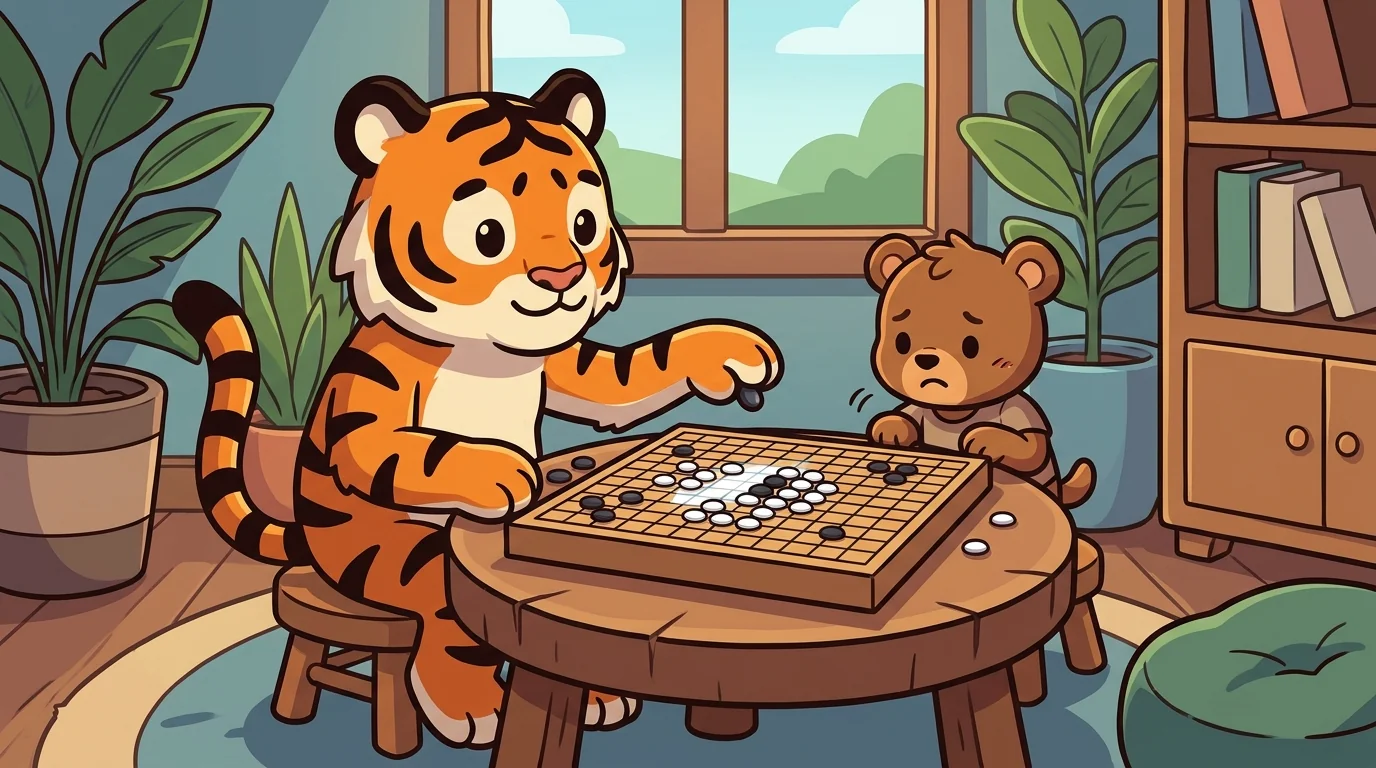
The board was a battlefield the size of a small window, and Sparring Tiger, who was the most powerful player in the room, was doing absolutely nothing.
She sat low over it, compact and coiled, one striped paw resting an inch from the wood. She did not fidget. She did not reach. She only watched, and the watching had a weight to it — the kind of stillness that is not rest but readiness, a held breath that has decided not to be let out yet. Around the board her friends had already spent themselves. Patient Bamboo had grown a slow, calm wall of stones down the left. Hungry Crane had snapped up three enemy stones early and still looked quietly satisfied. Master Snail had set each of his down like he feared it might shatter. And across from them all, their opponent was unrolling a wide, hopeful framework straight across the middle of the board, claiming the whole center as his own.
A young cub beside her could not stand it. "You haven't moved once," he whispered. "Everybody else did something ages ago. Aren't you going to fight?"
"I am fighting," Sparring Tiger said, without looking up. "Waiting is part of the fight. Most people never learn that part."
She let three more of the opponent's stones fall into place. She let the center grow so large it began to look unbeatable — and then, at the exact moment it looked most unbeatable, her paw came down. One black stone, dropped deep inside the enemy framework, in the single spot that seemed most foolish to touch. A lone tiger, alone in the middle of somebody else's plan.
The cub's breath caught. "They'll surround it. They'll kill it."
"Almost certainly," she agreed. "Now watch what killing it costs them."
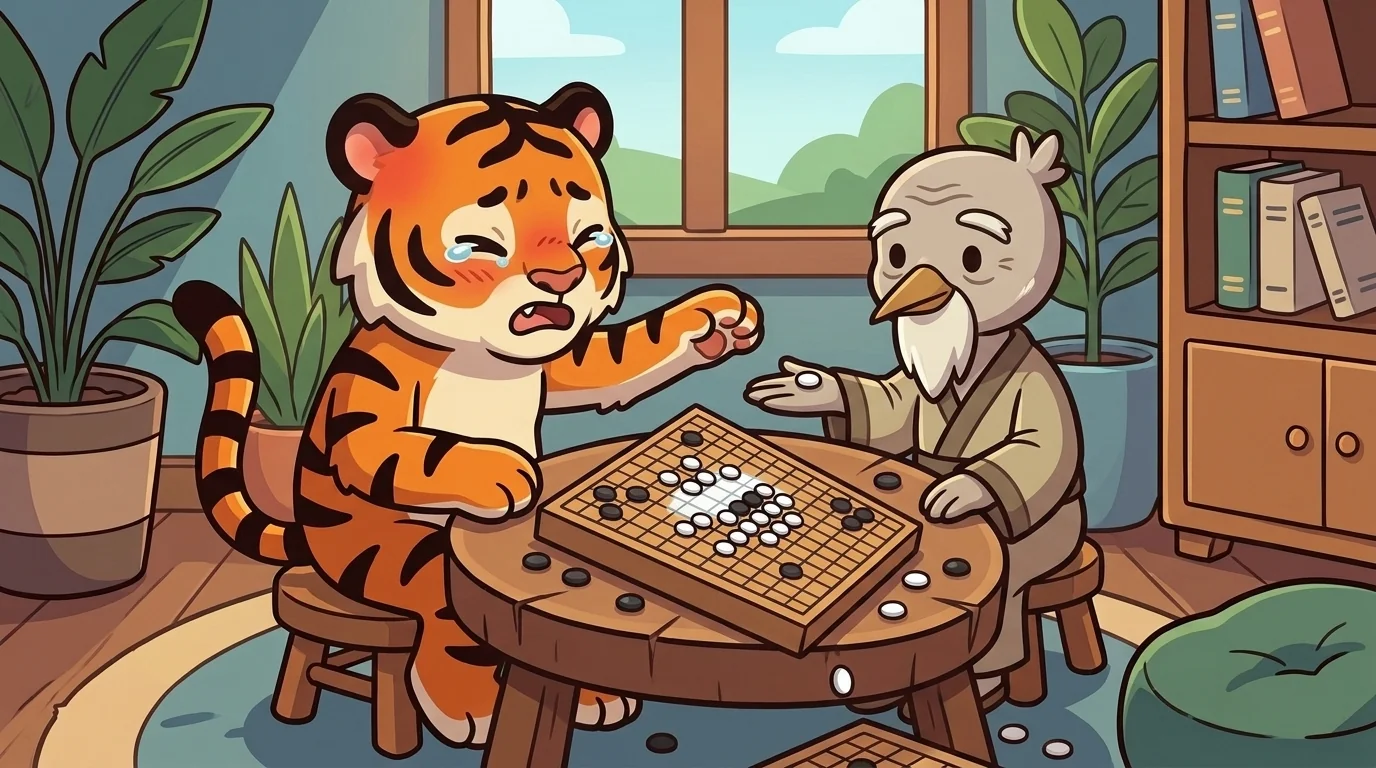
Sparring Tiger had not always known when the moment was right. As a cub she had known only that she was strong, and that being strong felt marvelous, and that the way to enjoy it was to use it immediately and constantly.
So she leapt at everything. First move of the game, she was already attacking. She fought in the corners, fought in the center, fought when there was nothing worth fighting over, because holding still made her feel like her strength was going to spoil, like it would curdle inside her if she didn't spend it right away. And she lost. She lost so often and so badly that she could not understand it, because she hit harder than anyone and everyone kept beating her anyway, and that made no sense at all to a cub who believed strength was the only thing that counted.
One evening, after a loss she could not swallow, she flipped the whole board off the table. Stones went everywhere, clicking across the floor like scattered teeth. "I'm the strongest," she said, and hated how thin her voice came out. "I hit hardest. So why do I keep losing to players softer than me?"
An old teacher gathered the fallen stones one by one, taking her time, saying nothing until every last one was back in the bowl. Then she held a single stone out on a flat, open paw.
"Your strength is not the problem," the teacher said. "You have more force than any cub I've taught. That is a gift. But force is only ever half of a move. The other half is when. You leap because leaping feels brave, and you have mistaken the feeling of bravery for the fact of being right. They are not the same." She set the stone down softly, deliberately, so Sparring Tiger could watch how unhurried a strong move could be. "Misplace your force and it ruins you. Place it at the moment the board is actually asking for it, and it decides everything. The strength was never the hard part, little one. The waiting is."
Sparring Tiger's ears went hot with the shame of being seen so clearly. She did not want to believe it. But that night, lying awake with the words turning over in her, she felt something settle — not a scolding weight but a steadying one. It was not that her power was wrong. It was that she had been throwing it away the instant she felt it, afraid it would go stale if she held it. So, for the first time in her life, she let a whole moment pass without pouncing. Nothing terrible happened. The strength was still there when she looked for it — patient now, coiled, waiting for a moment that would actually deserve it.
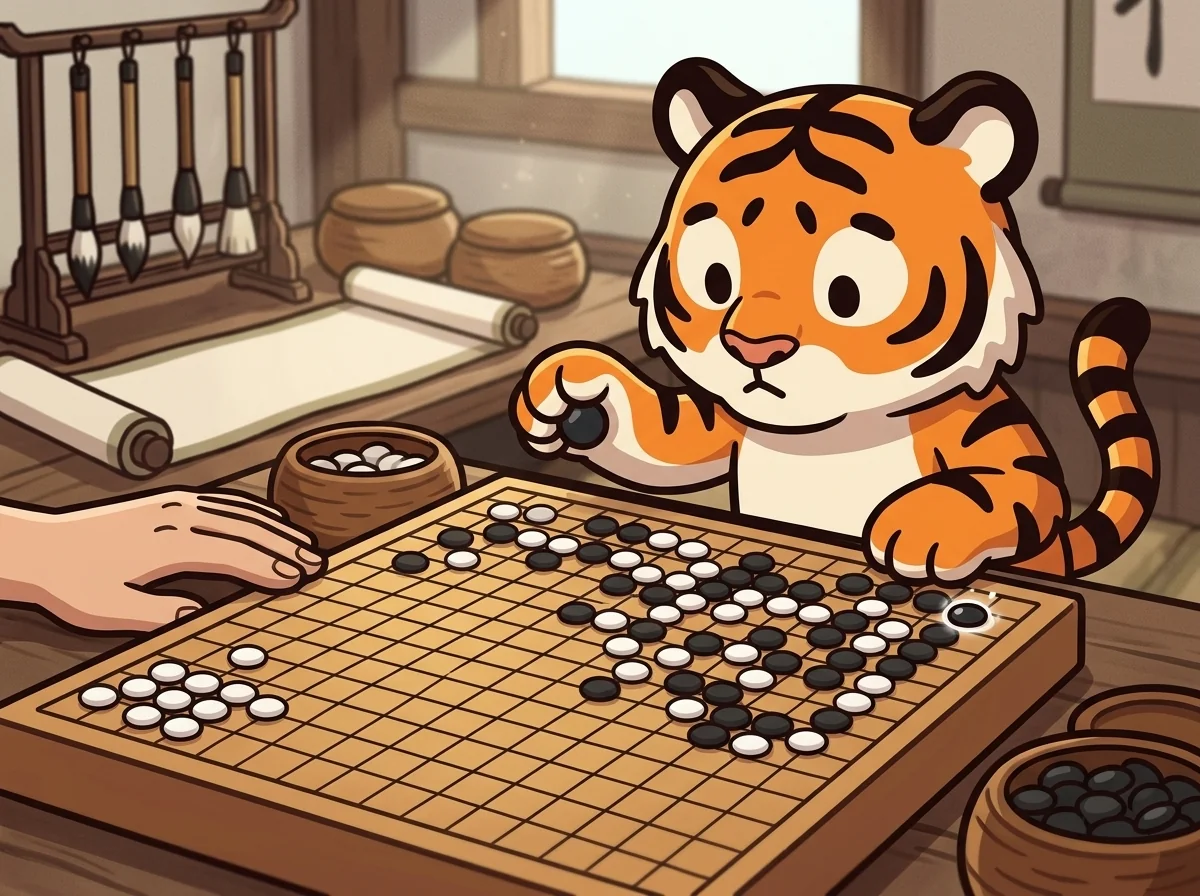
She came to Stonesong at twelve, because she had heard it described as a place that studied the game of when — and when was the only thing she had never been taught and desperately wanted to understand.
Stone, the mentor, met her at the door. He did not ask her to demonstrate how hard she could strike, which was what she had braced herself for. Instead he set a half-played board between them and pointed to a snarl of stones in one corner. "Your opponent is strong right here," he said. "What do you do?"
The old Sparring Tiger would have leapt before he finished the question. This one looked. She read the shape of it, the way the stones leaned and where they were thin, and she waited — waited until the answer arrived not as a thought but as a feeling, a quiet click, like a held breath finally allowed to go out.
"Not the corner," she said. "In the corner my stone dies for nothing and hands them exactly what they want." Her paw traveled to the far side of the board. "But here — if I strike here, now, they can't defend without letting the corner collapse. This moment is real." She placed the stone. "So the tiger leaps."
Stone studied the board a long while, and then studied her longer. "Almost every player your age leads with their strength," he said at last. "They show me how hard they can hit and hope it's enough. You led with your timing. You had the leap in your paw the whole time and you held it until the board earned it." He nodded once, slowly. "That restraint is rarer than power. You belong here."
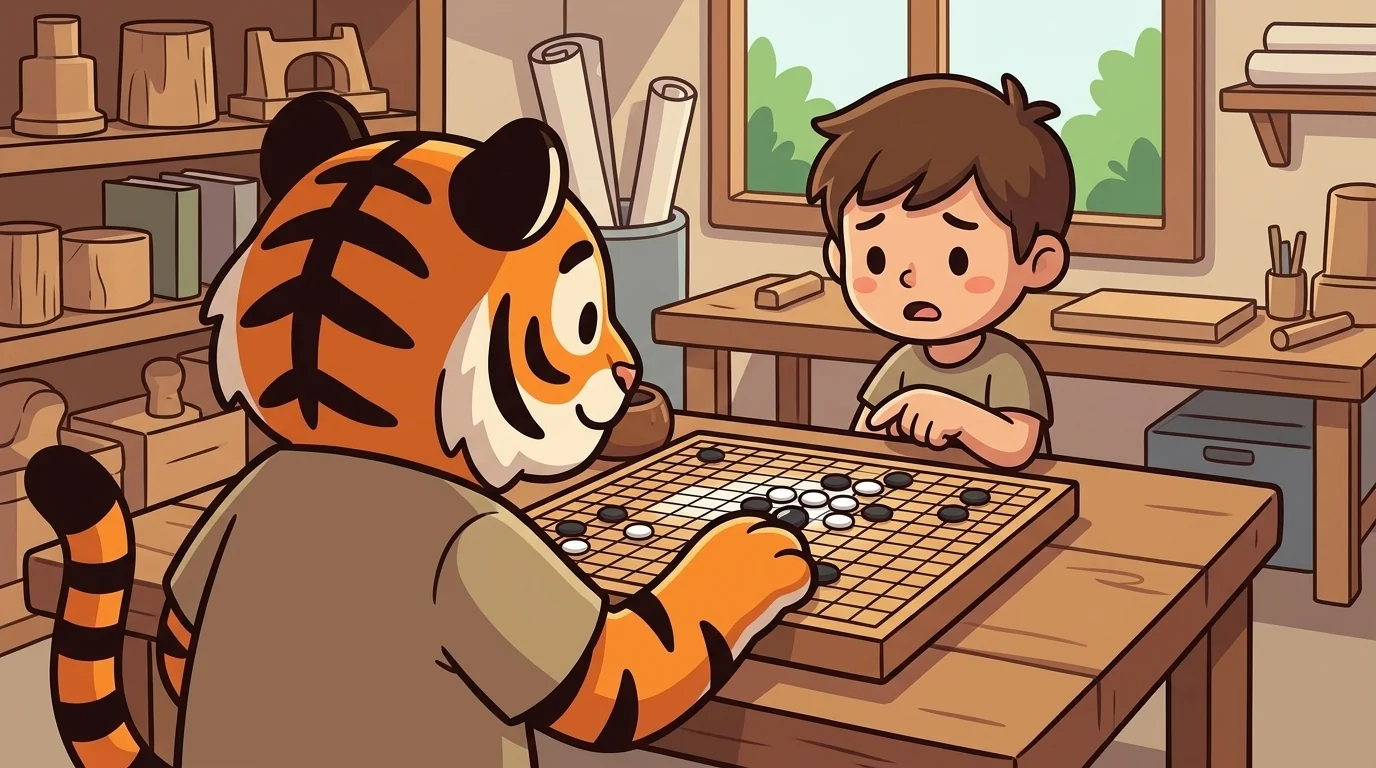
A boy came to her workshop one grey afternoon, scowling over a game he had clearly lost, the stones still sitting in their defeat.
"I attacked," he said, before she had even sat down. "I attacked everywhere. I was aggressive, I fought for every inch, I never once backed off — everything you're supposed to do. And I still lost. So being strong just doesn't work, does it."
She knew that scowl from the inside; she had worn it herself, years ago, in the seconds before an old teacher pressed a single stone into her paw. "Show me your very first attack," she said.
He jabbed a claw at the board. She winced, but gently, the way you wince at something you recognize. "There's your whole game right there. The moment wasn't ripe yet. Look — your opponent was thin, stretched, wobbling. One more patient move and they'd have been begging you to strike. But you leapt before they were ready to be caught, and a leap into empty air just spends your strength on nothing."
"So I should've been patient," he said, sourly.
"Then. Not forever. That's the whole secret and everyone gets it backwards." She reset a handful of stones with quick, sure taps. "Watch. In this position Patient Bamboo would have grown something quiet, and she'd have been right. Master Snail would have set down one careful stone and waited, and he'd have been right. But now—" her paw came to rest on a spot where the opponent's line had grown overstretched and hollow, "—now they're weak here. Now the leap does what a leap is for. Same tiger. Same force. A different moment. That difference is the entire game."
The boy set his stone where her paw had been. Across the board the whole shape simply came apart — the opponent had no clean answer anywhere.
"Whoa," he breathed. "It just... folded."
"Force creates clarity," she said. "At the right moment. Force at the wrong moment only creates a mess you have to clean up. Patience isn't the opposite of strength — it's how you aim it." She smiled at him. "You were never too aggressive. You were too early. Those feel the same from the inside, but they are not the same thing at all, and learning to tell them apart is most of what I have to teach."
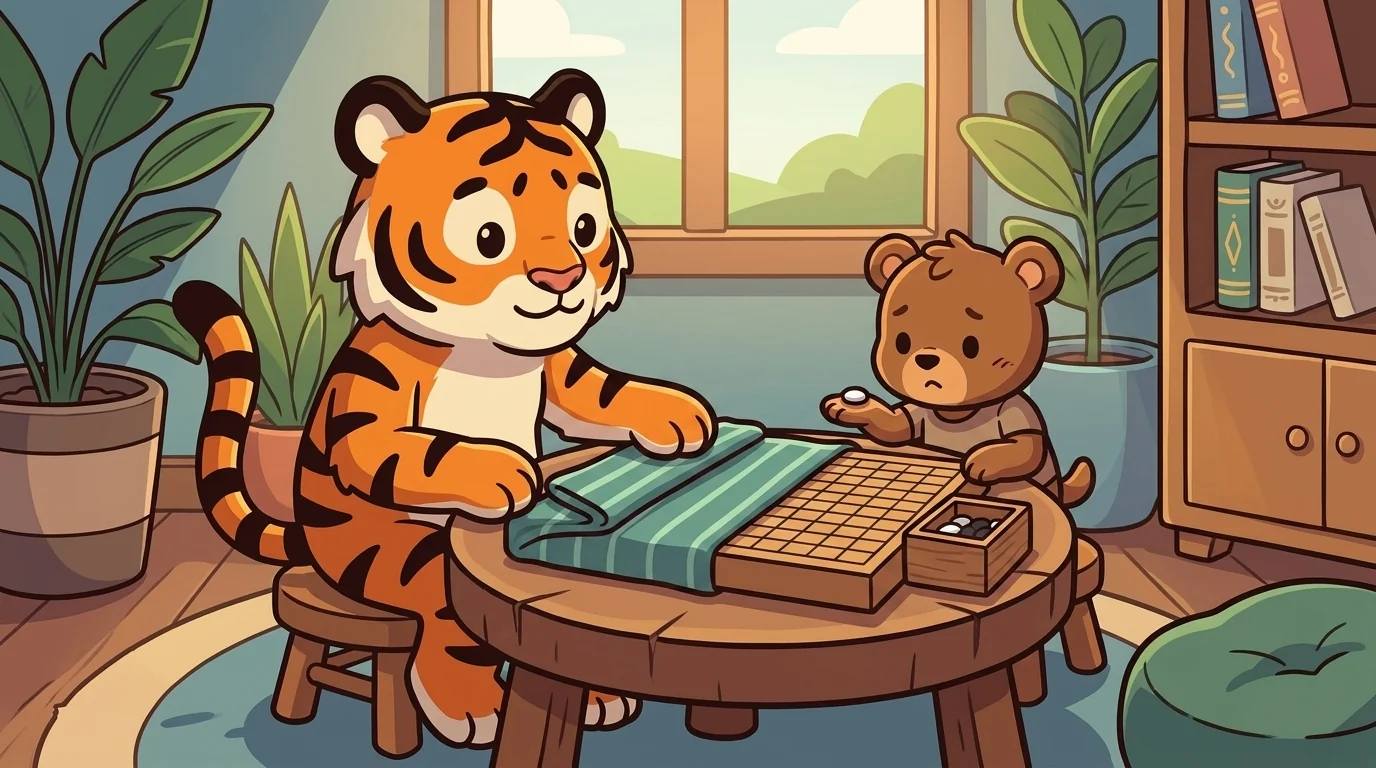
Later, gathering the stones back into their bowls, the boy paused. "But how do you know," he asked, quieter now, the sourness gone out of him. "Which moment is the one?"
Sparring Tiger thought about the flipped board and the scattered stones and the single stone held out to her on an old teacher's flat, patient paw.
"You feel it," she said. "Before the right moment there's a stretch where everything is loud and itchy and your whole body is screaming move, move, move — and that noise is exactly how you know it isn't time. That's the one you have to sit through." She looked toward the window, the grey light softening. "And then, if you can bear the waiting, a different feeling comes. Quiet. Level. Like the board goes still and every stone on it leans toward one square, and your paw already knows where to go before your mind has caught up. Bamboo grows slow. Crane captures quick. Snail thinks it through. I leap. Not one of us is right on every move — the board has its own moments, and it hands each of us the ones that are ours. The whole craft, the only craft, is learning to feel which moment you're standing in."
The boy nodded, and she watched the frustration lift clean off his shoulders — the same unhurried way, years ago, it had lifted off hers.
The last part she did not say aloud. She only felt it, and it moved through her warm and slow and completely calm, a certainty that had taken her whole young life to earn: the strength was never the hard part. The hard part was trusting myself to wait for it — and knowing, in the quiet of my own steady chest, the exact moment the waiting was done. She breathed it out, and her shoulders came loose, and she felt, sitting there in the grey afternoon light, entirely at peace with the tiger she had become.
The StoneSong ensemble
Sparring Tiger is part of StoneSong's distributed-narrative cast. Each character embodies a different curricular primitive; together they teach the full subject.