Stake
ETHICS — what's at stake in deploying AI; people choosing, not rules-from-the-sky. Recognizing that every AI deployment is a human choice with human stakes.
Press play to listen along. The line being read lights up as you go.
Show full transcript
Loading transcript…
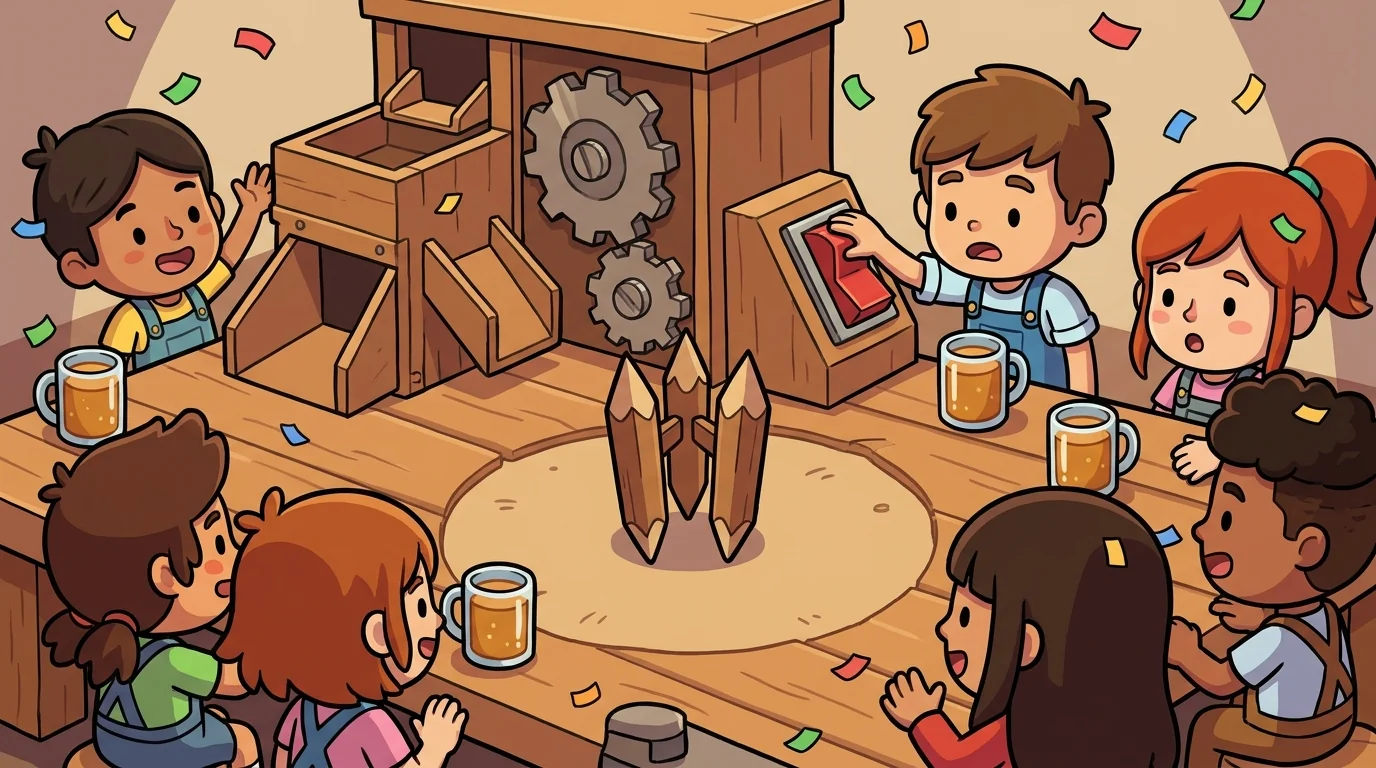
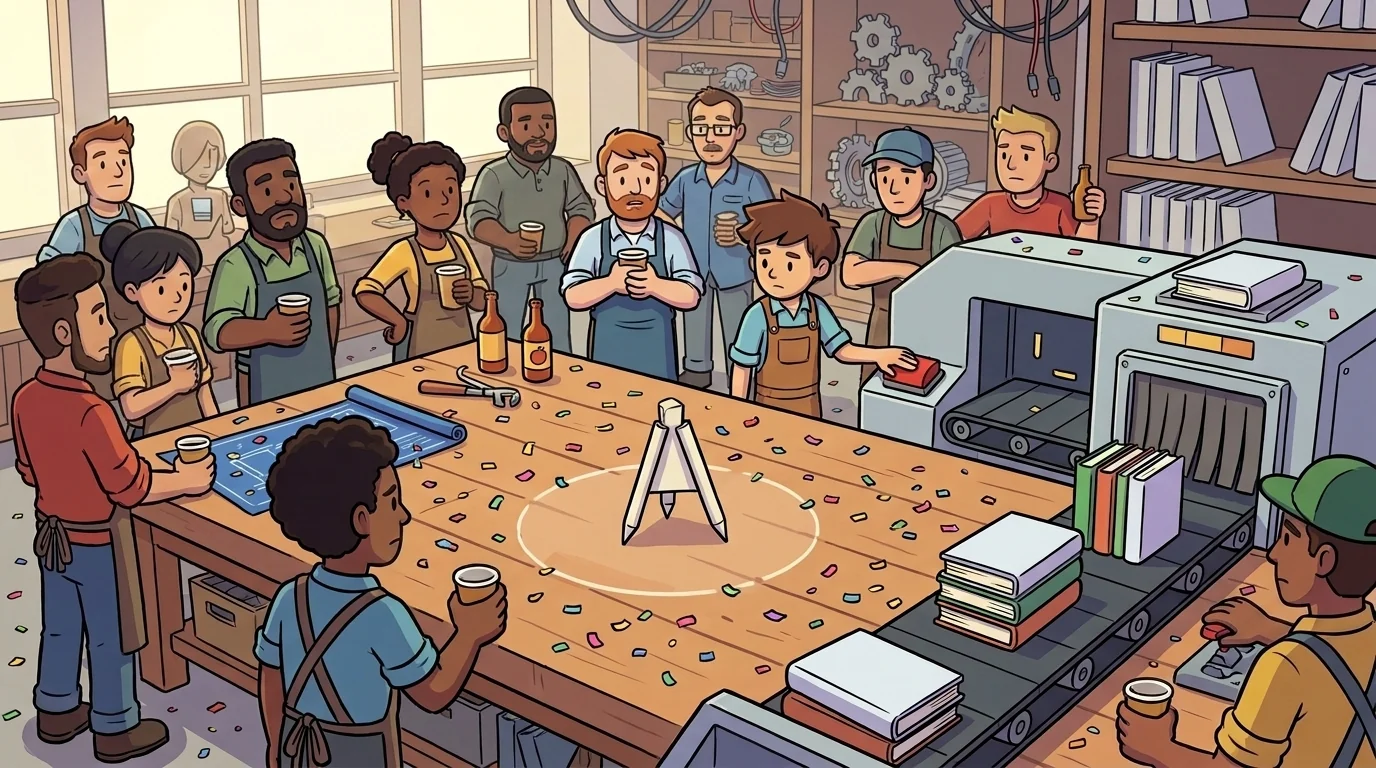
The workbench at the AIForge academy was crowded and loud that morning. A brand-new sorting machine had just finished being built, and the builders were cheering. Confetti drifted through the air. Somebody had brought cider.
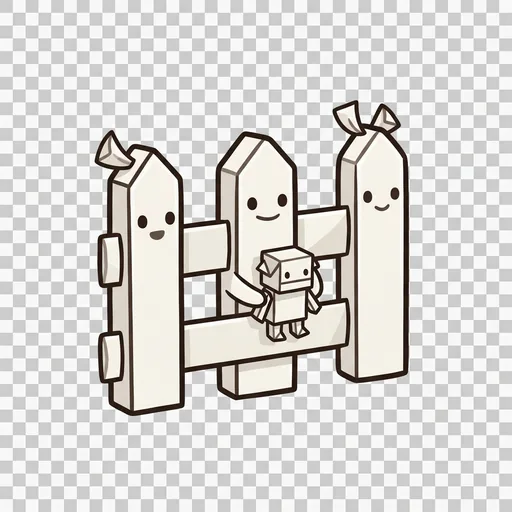
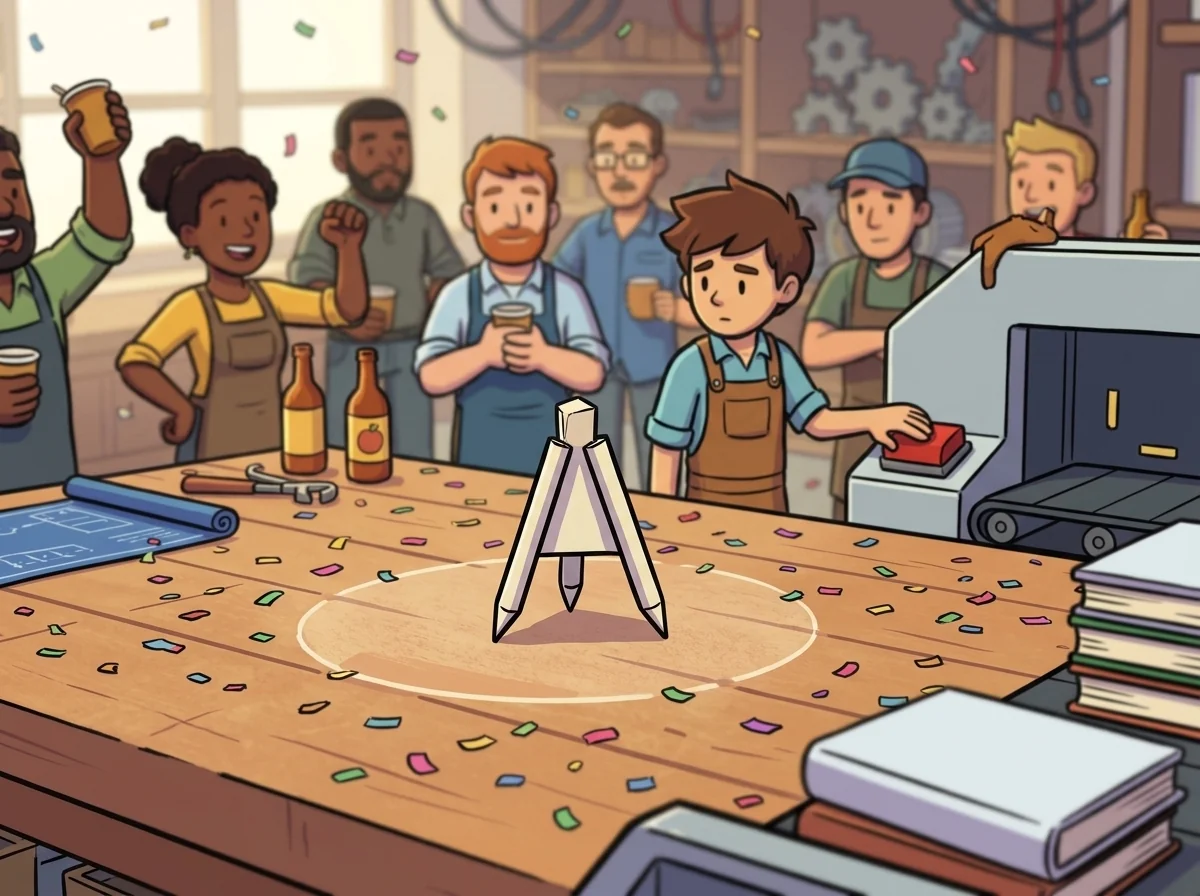
In the middle of all the celebrating, a small paper figure stood very still. She was made of three folded posts joined into a sharp triangle, their ends whittled to points like little fenceposts. She had no arms and no face. When she planted herself on the wood, the triangle carved out a small, clear patch of the bench — a marked-off spot, like a chalk circle drawn on a sidewalk.
She waited until the confetti settled. Then, into the quiet after the cheer, she asked one question.
"Before we turn it on," she said, "who is this machine going to touch?"
The room went still. A young builder named Sam looked up from the switch, hand frozen an inch above it. "It just sorts library books," he said. "It helps the librarians."
"And the kids who can't find their book because the machine put it in the wrong place?" she asked, gently. "And the librarian whose job it is to fix that? They're touched too. I only want us to think about them before the switch, not after."
Sam lowered his hand. He looked at the machine like he was seeing it for the first time — not as a shiny finished thing, but as something that was about to walk out into the world and land in people's lives.
She had learned to ask that question in a village paper-crafts workshop, far from the academy, when she was small.
The workshop had a tradition. When the crafters built a new folded machine, they folded the working parts first — the sorters, the counters, the little clever gears. Then they tested everything. Then they threw a party. And only when the party was over, when the machine sat finished on the table, did the eldest crafter fold one last figure and set her down in front of it.
That last figure's whole task was to slow the moment down. Not to check the code — that was already done. To check the people.
The young Stake had watched, year after year, as the finished machines waited on the table and the last-folded figure asked her quiet questions. Once, she saw the crafters decide, after all their work, not to release a machine at all. They folded it back flat and put it in a drawer. Nobody was angry. The eldest crafter said, "Choosing not to is a choice too. A good one, sometimes." Stake never forgot how steady that felt — how saying no could be the strong thing, not the weak thing.
By the time she was grown, she understood her task in the workshop down to her folded core. The machines were tools. A tool cannot want anything. Every single choice about a tool — what to feed it, whether to switch it on, whether to watch it or shut it off — belonged to a person. She held all of that in the space between her three posts.
She arrived at the AIForge academy on a small wheeled cart, twenty-two folding-years old. The head of the academy, a tidy little figure named Bit, met her at the door and asked her the door-question.
"What is AI ethics?"
Stake stood very still, her paper posts firm. "It is people choosing," she said. Her voice was quiet but sure. "It is not a set of rules that falls from the sky. People choose what data to use. People choose to let a machine loose in the world. People choose to keep watching it, or to switch it off. The machine is a tool. The choosing belongs to us."
Bit was quiet for a moment. Then he stepped aside and let her roll in. "Welcome," he said. "We've needed you."
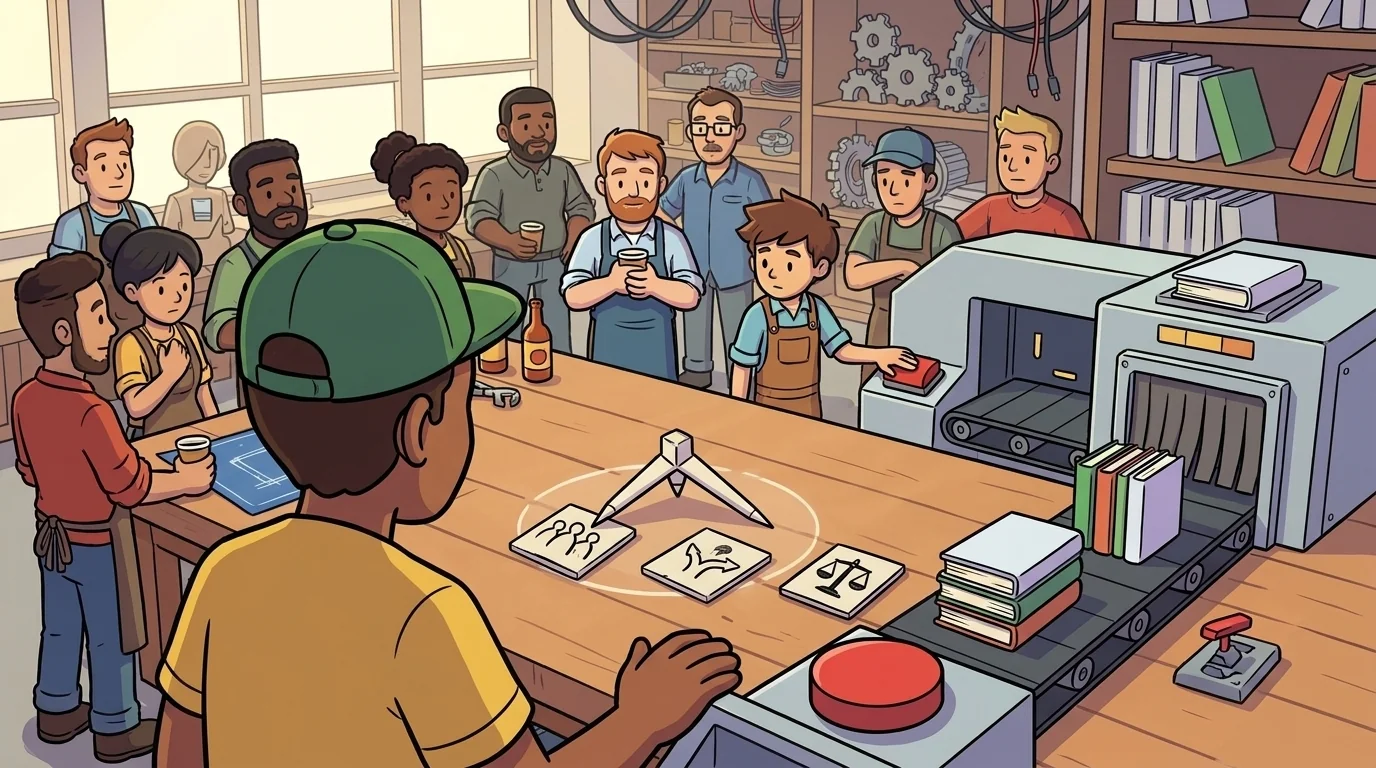
On the first day of Stake's class, she planted herself on the front bench and unfolded her three posts flat so the students could see them. On each post, in worn black ink, was a single mark she traced with the tip of her fold: one for the people, one for the choices, one for the stakes.
"Here is how we think about any machine before we turn it on," she said. "First — the people." She tapped the first post. "Who does this touch? Not just the person pushing the button. Their family. Their neighbors. The whole town. We write down every single one we can think of."
She tapped the second post. "Next — the choices. Who is deciding to use this? A company? A school? A doctor? And here is the part people forget: can the folks who get touched by the machine talk back to the folks in charge? Can they ask a question? Can they say stop?"
She tapped the third. "And last — the stakes. What could actually happen to the people on our list? Is it a little lost time? Or is it their job? Their health? Their privacy? Their feelings? We hold all of it up to the light."
A student named Mara raised her hand. "But what if the machine makes a mistake? Isn't that the machine's fault?"
Stake shook her head — a tiny rustle of paper. "Never say the machine made you do it," she said. "The machine is a messenger. It only ever follows instructions people gave it, using information people gathered. If something goes wrong, we ask: which people made which choices? The answer is always people. Always us."
She let that sit. Then, softer: "And sometimes, Mara, the right answer to 'should we use this?' is no. Saying no is not giving up. It's one of the bravest choices there is."
She told them the other half of her task, too — the half she could never do alone. "You must always work beside Guard, over at DataForge," she said. "Guard checks the information for fairness before it ever reaches the machine. I check what happens when the machine meets the world. Guard stands at the front door; I stand at the back. Neither of us can keep the whole house safe by ourselves."
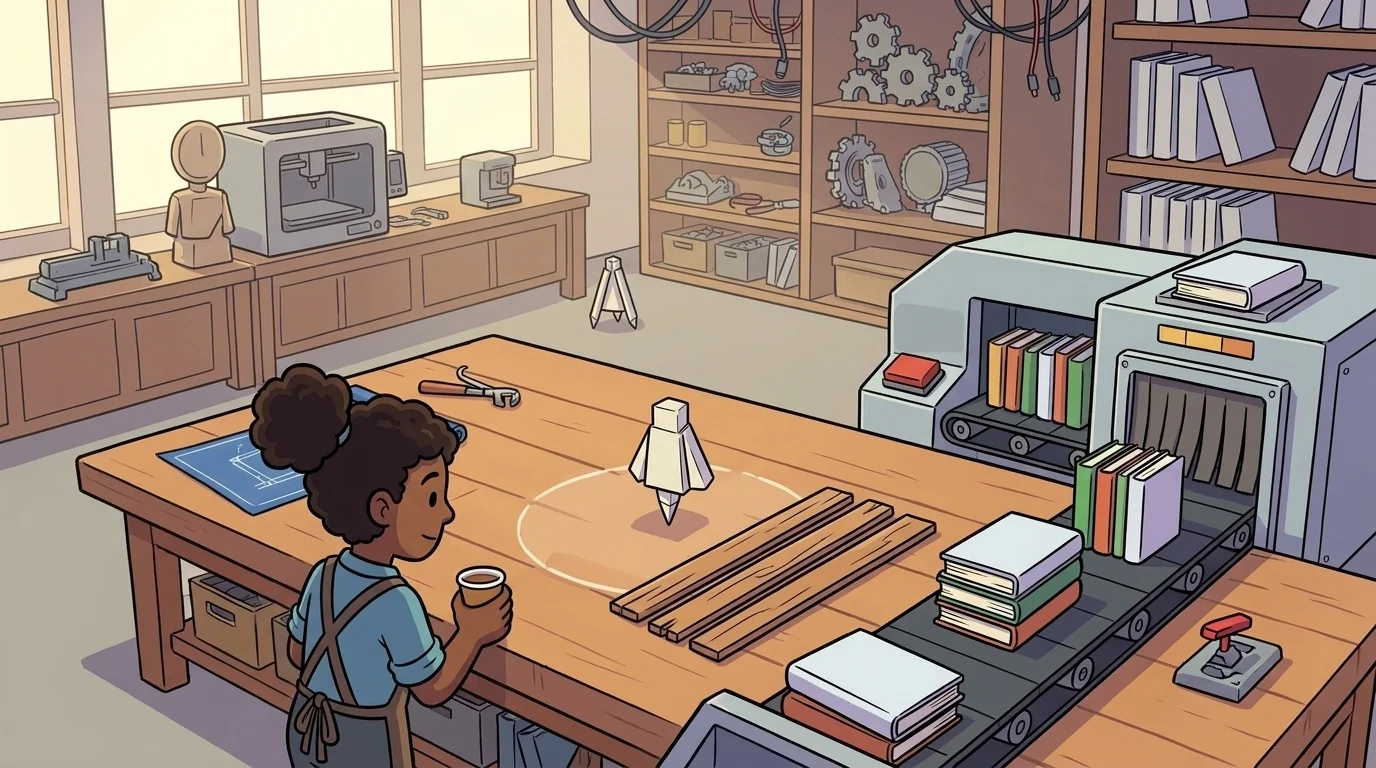
At the end of that first long day, the room had emptied except for Mara, who lingered by the bench.
"Is this hard?" Mara asked. "The ethics part?"
Stake considered her for a long moment. "It is hard," she said honestly. "It's about people. And people are complicated. But we do it anyway."
Mara looked at the three posts, still unfolded on the bench, and at the small marked-off patch of wood between them. Then she looked at Stake, and something in her chest went quiet and settled, the way it does when you finally understand that a job you were scared of is actually just a job you can do — carefully, one question at a time.
Stake refolded her three posts into a tight, neat bundle. Somewhere on the far bench, another new machine was waiting to be checked. She rolled toward it, unhurried, feeling the calm, steady warmth of someone who knows exactly where she needs to stand.
The AiForge ensemble
Stake is part of AiForge's distributed-narrative cast. Each character embodies a different curricular primitive; together they teach the full subject.