Tilt
TILT — weight off the expected beat. pull + forward motion.
Press play to listen along. The line being read lights up as you go.
Show full transcript
Loading transcript…
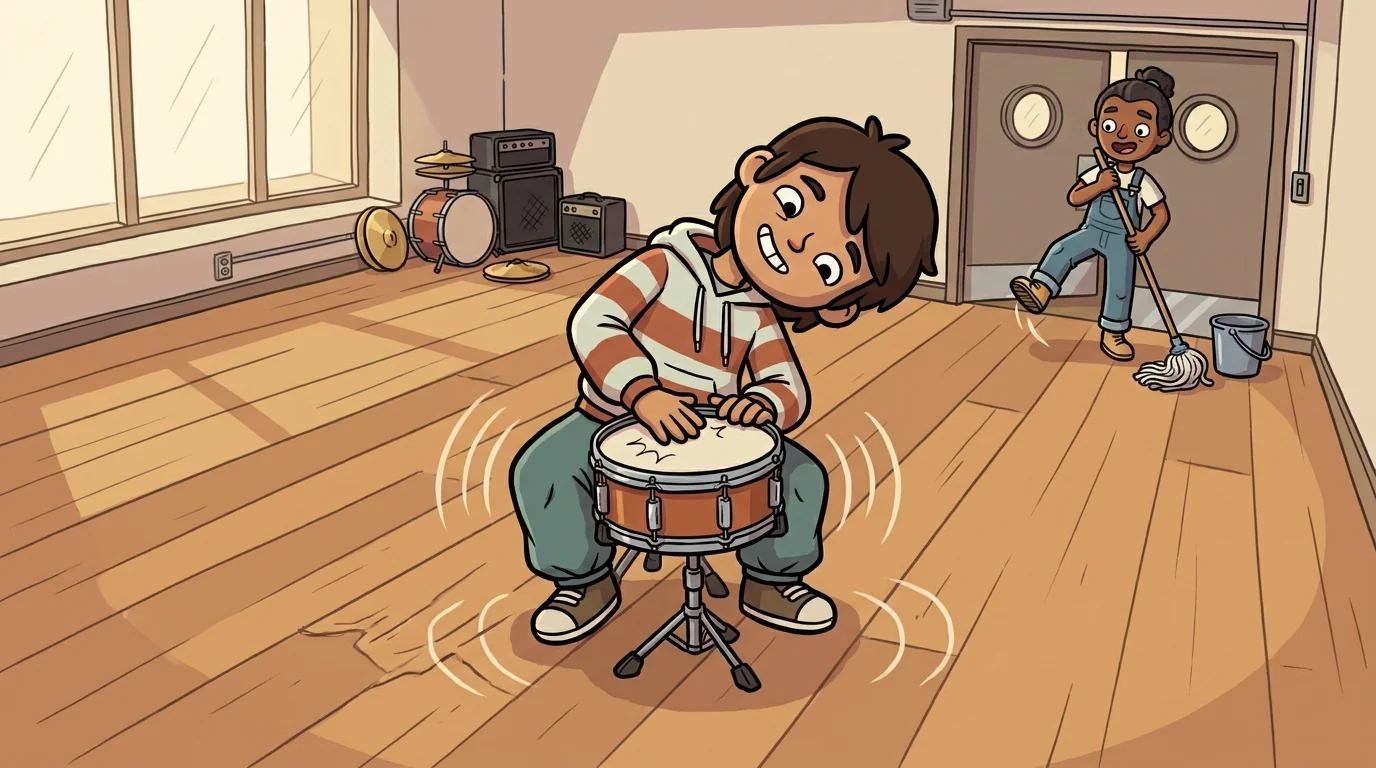
The studio was nearly empty when Tilt slid a snare drum to the center of the floor and set about knocking the whole room quietly off balance.
She struck the drum four times, dead even. Tap. Tap. Tap. Tap. It was the sound a hallway makes when nobody is dancing in it — a clock that had stopped telling time and settled for merely being loud. Then she played it again, except the second stroke arrived a hair too soon, sliding into the gap where no stroke belonged. Tap. ta-Tap. Tap. And the room tilted. The floorboards seemed to breathe. Her own shoulders began to sway, her head canting off to one side the way it always did, as though she spent her life listening around a corner.
A cleaner mopping by the door stopped mid-stroke. "Do that again," he said.
She did. The early stroke, the small pull, the tug forward. The cleaner's foot began tapping before he noticed it was tapping, and when he noticed, he laughed and gave up trying to stop it.
"See," Tilt said. "I didn't play louder. I didn't play faster. I moved one stroke to a place you weren't waiting for it." She leaned, balanced on the exact edge of falling and not falling, coral-and-cream feathers going soft in the flat light. "Everybody hears the strokes that arrive on time. Nobody's feet move for those. It's the one that comes early — the one you didn't expect — that reaches down and grabs you by the ankles."
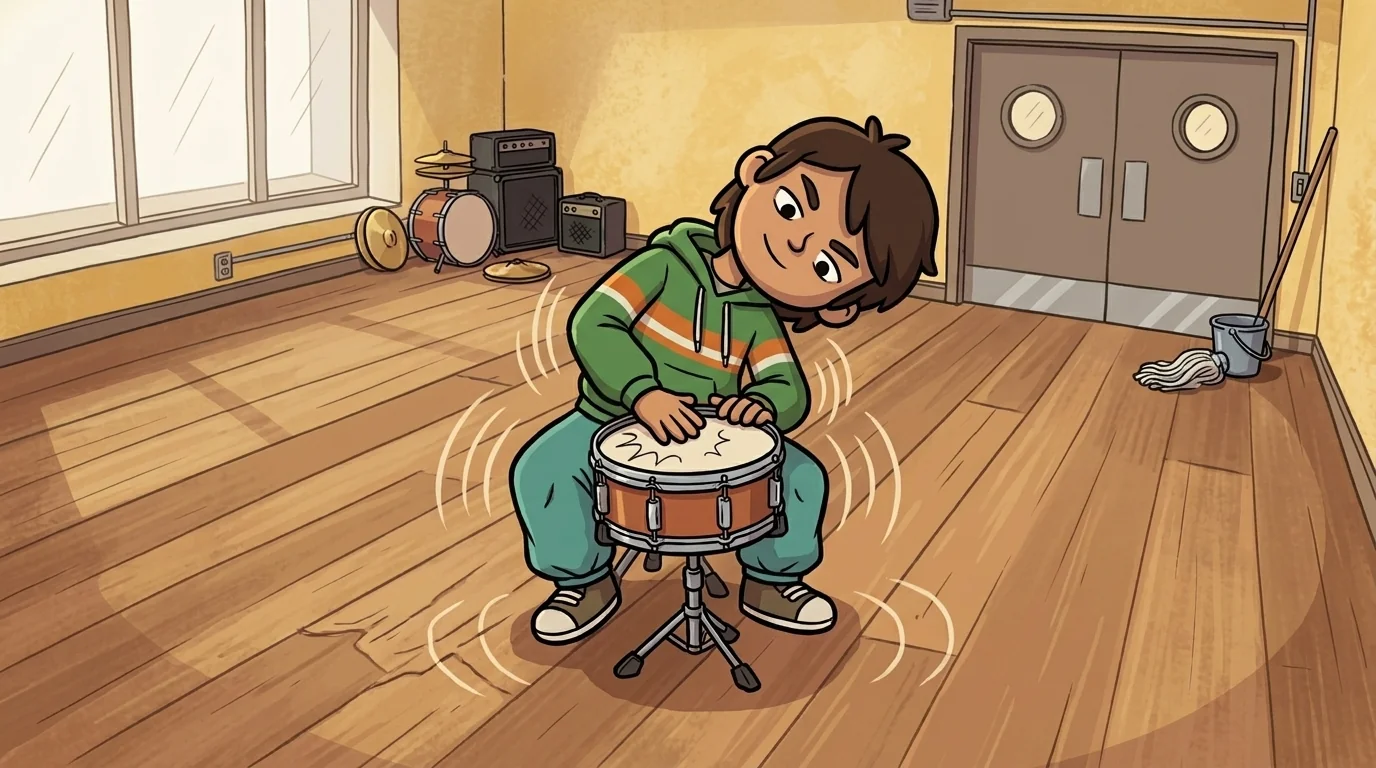
Tilt had not always leaned. When she was small she played everything perfectly on the grid, every stroke square on the line, and she was the best in her class at it, and she hated exactly how that felt.
Her first teacher loved a clean beat above all else. Every note where the count said, every clap nailed to its spot. Tilt could deliver that flawlessly and feel nothing at all — flat and correct, like coloring carefully inside lines she had never drawn. She would finish a whole song right and stand there hollowed out, tired in a way that had nothing to do with her arms.
One evening she stayed late and alone, too frustrated to go home, hammering the same even beat over and over, waiting for it to become something. And she was so worn down that her hand slipped — one stroke fell in early, a sloppy accident, a plain mistake.
But the mistake had a kick in it. A little forward lurch, like missing a stair and catching yourself before you knew you'd fallen. Her whole body snapped awake.
She froze. Then, deliberately, she made the mistake again. And again. The early stroke, the wrong-place weight, the pull. For the first time all year her feet wanted to move to her own drum. She sat in the dark with her heart knocking, thinking a thought that felt almost forbidden: the perfect version was the dead one. The thing I got wrong is the thing that's alive. Nobody had ever told her a beat could lean. She'd found it out only by leaning herself, too exhausted to stay upright.
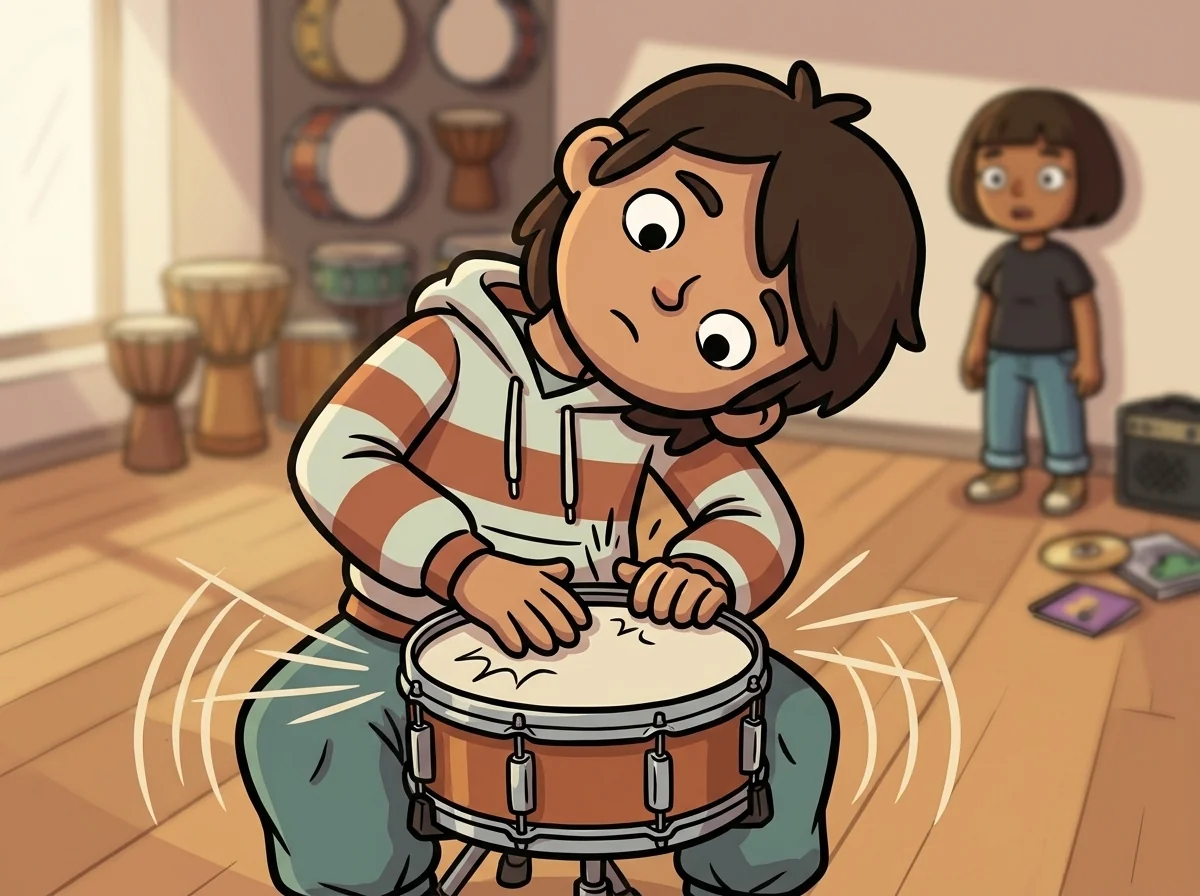
She came to Beatforge because it was the one place that studied the beats hiding between the beats.
The old studio kept a whole wall of drums, and the mentor there met her beside it and did not ask her to run a scale or prove she could keep time. He asked one thing. "What makes music move?"
Tilt didn't answer in words. She crossed to the snare and played four flat strokes — Tap. Tap. Tap. Tap. — and watched him stand perfectly still. Then she slid the weight of a single stroke early. ta-Tap. His head bobbed, once, before he could catch it.
"There," she said. "The second one moved you and the first one didn't. Same drum. Same speed. I only changed where the weight came down."
The mentor considered his own head, which had betrayed him, and smiled. "You'll fit here," he said, and cleared her a corner by the drums that same afternoon.
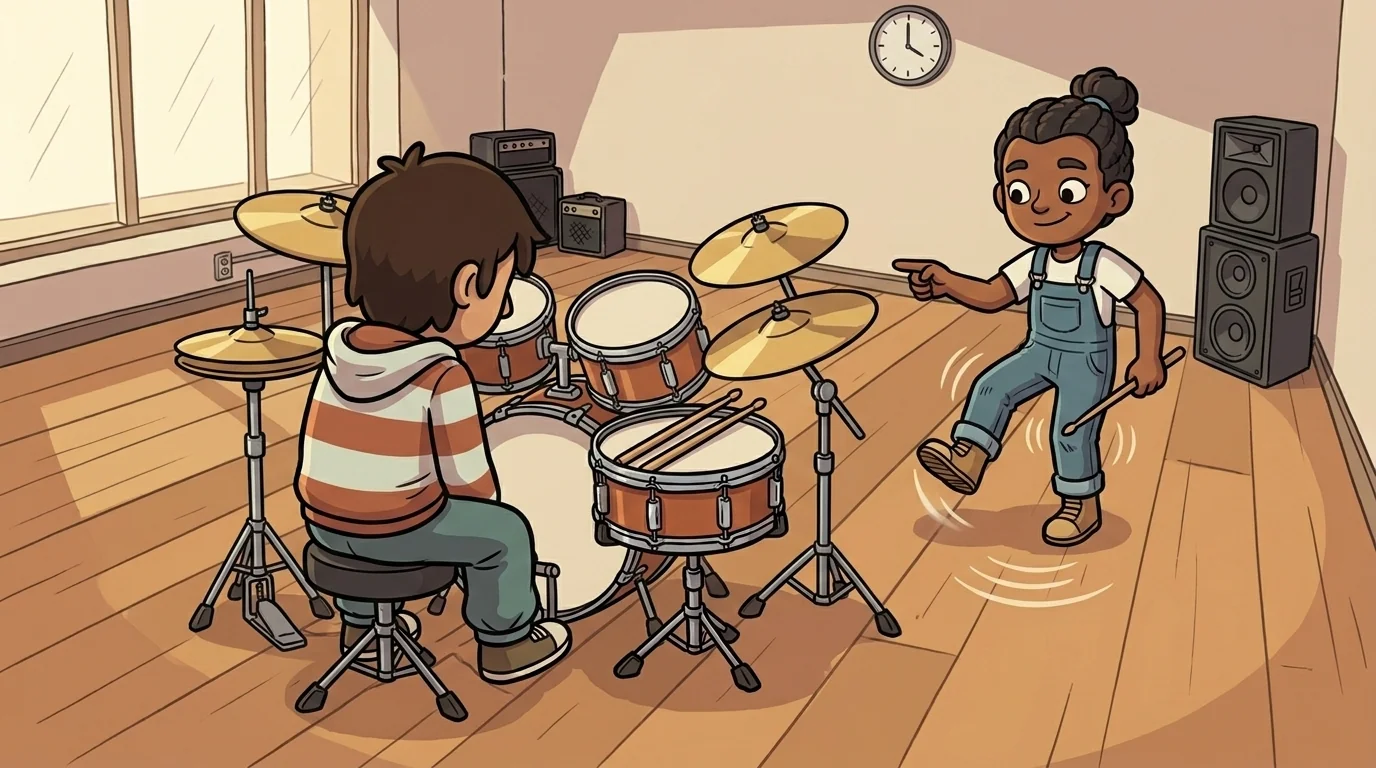
Her corner filled up with kids over the years, and one autumn it filled up with a boy named Leo, slumped over the kit and glaring at it like it owed him money.
Thump-thump-CLAP-thump. His sticks were a blur, his song was flawless, and his face was pure boredom. Every beat landed precisely where you already knew it would.
"This is useless," Leo said, dropping the sticks. "It sounds like a giant angry clock."
Tilt picked up a fallen stick. She did not tell him he was wrong. "Your beat is very polite," she said. "It arrives right on time. Every single time." She tapped it flat for him. Tap. Tap. Tap. "Now watch my feet." She took a normal step. Thump. Then a second step, except her foot landed a fraction early — a small skip, a hitch that broke the walk clean in half. "Feel that little surprise? It pulls you forward before you're ready. Put your clap a hair before where your brain wants it."
Leo tried. His first attempt sounded like a sack of marbles going down a staircase. "My brain keeps shoving the beat back where it belongs," he muttered.
"Everybody's does. Brains love neat." She tapped a slow pulse on her knee. "Don't chase the stroke. Lean toward the next one — like you're already tipping off a curb before the light has changed."
Leo shut his eyes and tried again. Thump-thump... CLAP-thump. The clap slipped in early. Not perfect — but the beat kicked, sprang, pushed off the floor.
His eyes flew open. "Whoa. It's bouncier."
"That's the pull," Tilt said. "Jazz lives on it. Funk is built out of it — reggae and salsa and hip-hop all set the weight where you don't expect it, and it lands in your bones instead of your ears." She swayed, leaning of course. "Without it, music stands stiff inside a box. With it, the whole thing starts to breathe." Leo played his song once more and stopped trying to be perfect, and the moment he let the early skips in, the song came loose and began, unmistakably, to move.
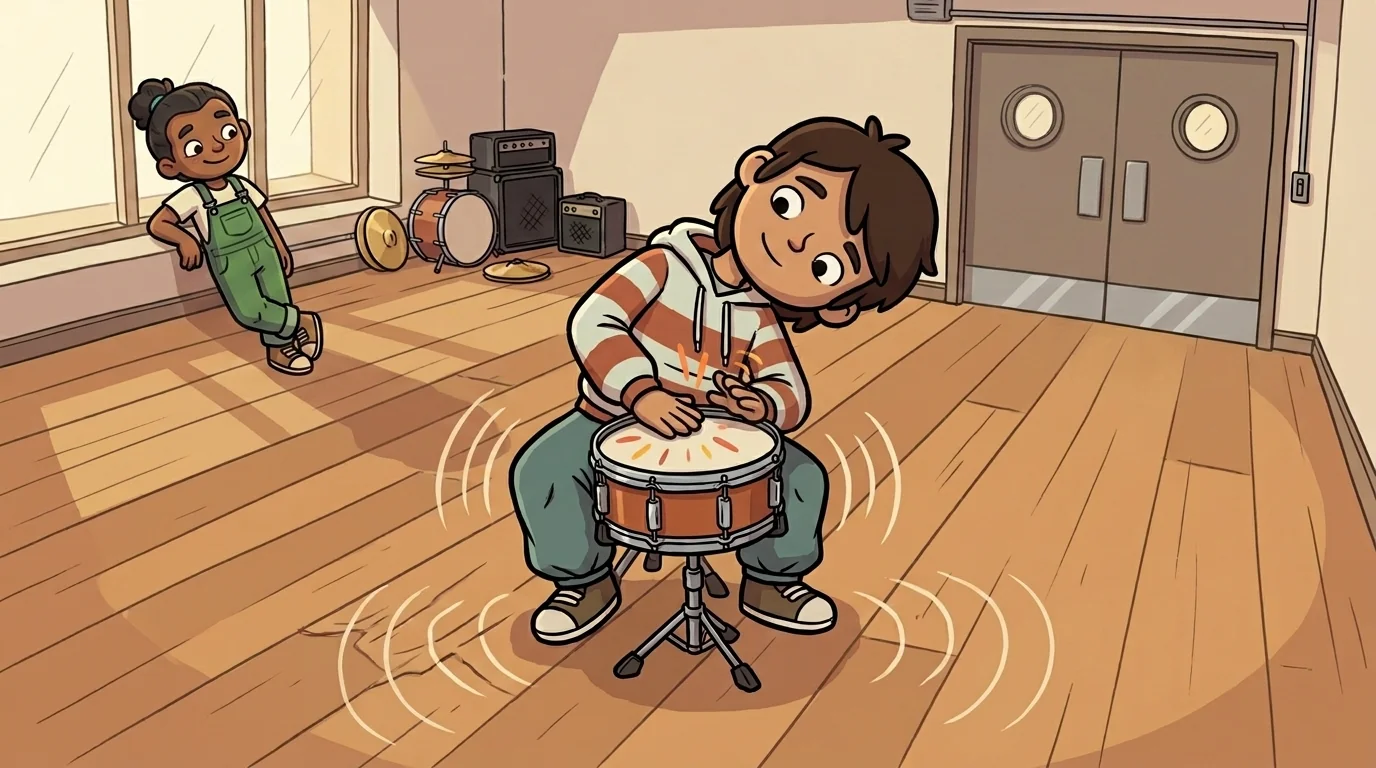
When the studio had emptied and the light had gone gray-gold, Leo stayed behind, quieter now, still tapping, thinking.
"How'd you find this?" he asked. "The leaning thing."
Tilt thought about the tired night, the slipped hand, the mistake that woke her. "I got it wrong," she said. "I was too worn out to keep the beat straight, my hand fell early, and instead of a mistake it felt like a door coming open." She tipped into the doorway, half-falling, catching herself the way she always did. "The straight version was the one I couldn't stand. The crooked one was the one that finally felt like me."
Leo nodded slowly and played one more early clap, and it bounced, and he grinned at it.
Tilt watched his shoulders rise up out of their long slump — the very same lift she had felt that night alone in the dark — and she did not name anything out loud. She simply stood there leaning into his crooked, breathing beat, and felt the old giddy tip-forward jolt come rolling back through her, that ancient almost-falling-and-never-quite-landing feeling loosening warm across her chest, off-balance and completely awake, a small glad wobble she would not have traded for any perfectly upright thing in the world.
The BeatForge ensemble
Tilt is part of BeatForge's distributed-narrative cast. Each character embodies a different curricular primitive; together they teach the full subject.
-

Throb
The steady pulse — the underlying clock every other rhythm hangs from
-

Snap
Subdivision — splitting a beat into equal smaller parts (eighths, sixteenths, triplets)
-

Hammer
Accent — emphasis on specific beats (the downbeat, the backbeat, polyrhythmic emphasis)
-

Spin
Groove — the looping pattern that emerges when pulse + subdivision + accent + syncopation cohere; the thing that makes a beat feel like a particular genre
-
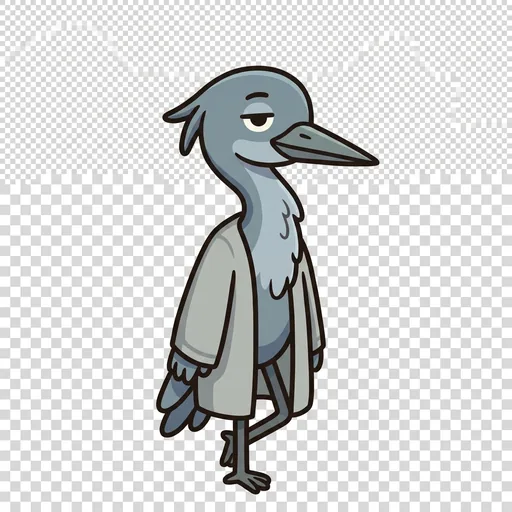
Lull
The rest — the beat you leave empty on purpose; silence counted as part of the music, so the next sound lands bigger
-

Crest
Dynamics — how loud or soft the music is, swelling louder and easing softer to give a song its waves
-

Rush
Tempo — how fast the pulse runs, and speeding up or slowing down to steer the whole mood of a song
-

Volley
Call-and-response — one player calls a phrase and the others answer it back; music as a conversation traded around a circle
-
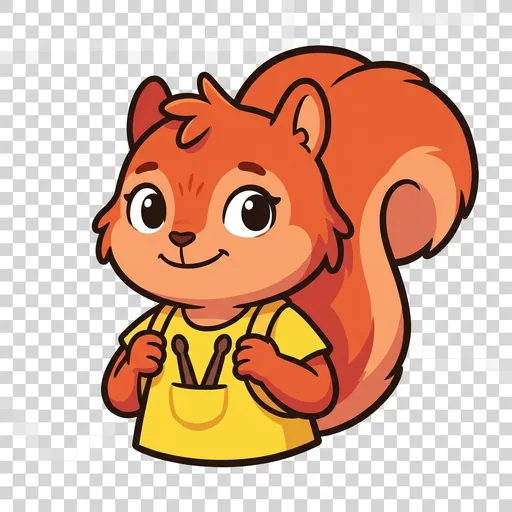
Flurry
The fill — the quick burst of drum notes that carries a song across the turn from one section into the next
-
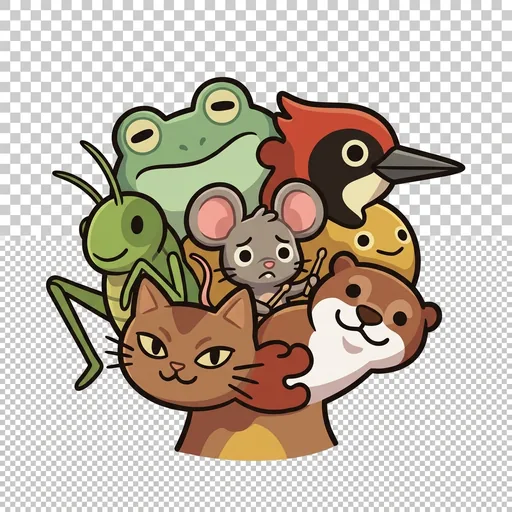
The Jam
The whole rhythm section playing together — how pulse, subdivision, accent, and syncopation lock into one groove that lifts everybody up at once