The Storykeeper
STORYKEEPER — *what wasn't written down? oral tradition is evidence.*
Listen along — The Storykeeper
Loading audio…
Press play to listen along. The line being read lights up as you go.
Show full transcript
Loading transcript…
Chapter 3 — The Storykeeper and the Voices History Forgot to Write Down
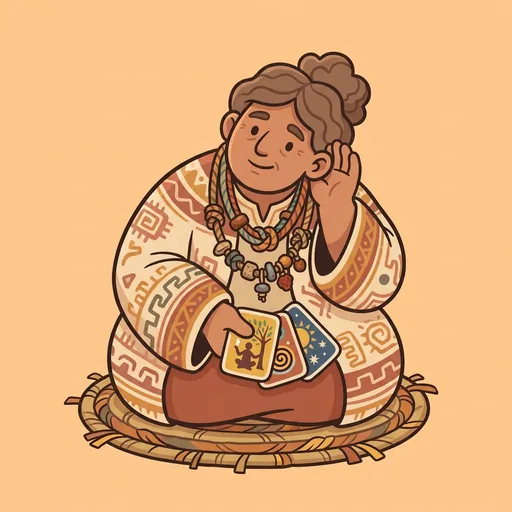
The Storykeeper sat on a plain woven mat with her eyes half-closed and a length of knotted cord resting across her palms. Her cloak was warm cream, threaded with earth tones borrowed from no single place. When a student read aloud from a fat book of history and reached a chapter that simply stopped — of these people, little is known — the Storykeeper opened her eyes.
“Little is written,” she said gently. “That is not the same as little is known.”
The student blinked. “But the book doesn’t say anything else about them.”
“Then the book has a gap.” The Storykeeper ran a thumb over the knots in her cord, one after another. “For most of the time there have been people, almost no one wrote. Knowledge lived in songs. In the order of names in a family line. In stories that told you which plants healed and which river flooded and how to treat a stranger. People carried whole libraries in their memory and handed them, voice to voice, down the years.” She held up the cord. “Every knot here is a place to hang a memory. This is a document too. It just isn’t paper. What wasn’t written down is still evidence — if you learn to listen for it.”
The Storykeeper’s own beginnings were more like a made-up tale than a fact. She had no single homeland. Her cloak carried patterns from many traditions and claimed none of them, because she was never meant to be any of them.
She had been invented — on purpose — to stand for a single idea: respect for the spoken record. The people who dreamed her up worried that if they picked one real elder, one real keeper from one real culture, and made a cartoon of them, they would be doing the very thing history had done wrong for too long — turning living people into decorations, telling other peoples’ stories without asking. So instead they made someone who was clearly a symbol. A teacher of how to listen, who would then step back and say: the actual stories belong to the people who keep them; go and ask them.
That was the shape of her from the start. She could show you that oral tradition was rigorous and real. She could never, and would never, tell you a specific people’s sacred story as if it were hers to give.
She arrived at ChronoQuest quietly, as if she’d always been there. Era, the mentor who watched over the eras, found her already seated on her mat and asked her one question.
“What is the oral-tradition lens?”
The Storykeeper answered without opening her eyes all the way. “It’s remembering that a thing can be true even if no one wrote it. That songs and family-lines and place-stories are careful evidence, not just pretty legends. And it’s knowing where the lens ends — honor the way of listening, then hand the stories back to the people who kept them.”
Era nodded slowly. “Then sit at the crossing of the eras,” she said, “and teach the listening.”
In her corner of the school, a boy named Dov sat cross-legged on the mat across from her, skeptical. “If it’s not written down,” he said, “how do you know it’s not just made up? Stories change every time you tell them.”
“Good question. Ask it always.” The Storykeeper lifted the knotted cord again. “But some traditions built in ways to keep a story steady. The teller memorizes it exactly. Many listeners know it too, so if the teller slips, the room corrects them. A family-line chant is checked by everyone whose name is in it.” She smiled. “That’s not looser than a book. In some ways it’s tighter — a book can sit wrong on a shelf for a century and no one notices.”
She traced a slow arc in the air. “There are songlines that map real land across enormous distances, remembered for a very long time. There are sailing-chants that carry navigators across open ocean by memory alone. There are keepers who hold a people’s royal history for centuries, name by name. Those are histories. They just live in a different shape.”
Dov frowned. “So can you teach me one? A songline?”
“No,” the Storykeeper said, and she said it warmly. “That’s the most important part. Those stories aren’t mine. I can teach you to respect them — to know they’re real, to not mash them all into one blur, to never claim them or twist them. But if you want a specific story, you go to the living keepers of that tradition and you ask, and you accept whatever answer they give, including no.” She set the cord down. “I hold the door open. I do not walk through it into rooms that were never mine.”
Dov was quiet. “So your whole job is to teach people to listen — and then to stop.”
“And then to stop,” she agreed. “Listening that knows when to be quiet is the whole craft.”
The lesson wound down. Dov gathered his things slowly, thinking hard, and thanked her on his way out — really thanked her, all the way through.
And when he did, the Storykeeper’s whole face went calm and glad, the way you feel when someone finally listens to you to the very end. Her chest loosened; a warm quiet settled through her like the last note of a long song.
“What wasn’t written down? Oral tradition is evidence.”
That was the feeling she hoped every listener would carry out the door — a soft warmth for every voice that kept a story alive just by remembering it, and a quiet, steady pride in learning to listen that closely, and to know when to be still.
The ChronoQuest ensemble
The Storykeeper is part of ChronoQuest's distributed-narrative cast. Each character embodies a different curricular primitive; together they teach the full subject.
-

The Cartographer
Frame-setter — where + when before what + why; methodological starting point
-
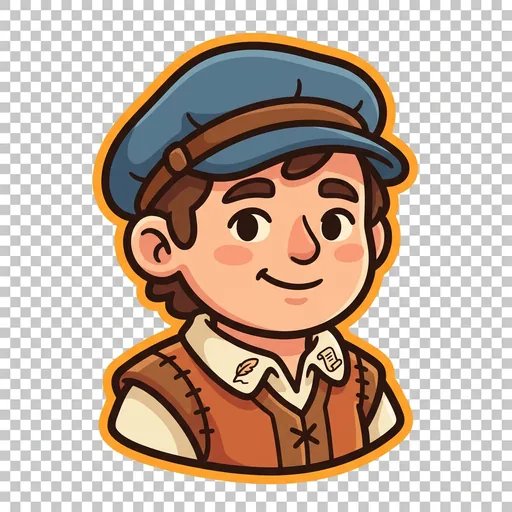
The Witness
Primary-source lens — what did people THERE see + write?
-

The Trade-Wind
Connection lens — what moved between civilizations? goods, ideas, diseases
-

The Counter-Voice
Critical-analysis lens — who benefits from this version? historian's method, NOT cynicism
-

The Chronicler-of-the-Defeated
Stewardship lens — whose story doesn't survive in the winners' archive?
-

The Translator
Cross-language + cross-meaning lens — how do concepts travel between cultures?
-

The Question-Asker
Meta-inquiry lens — what question are we actually asking? late-arriving capstone guide