
Lane
WALKABILITY + MOBILITY — *streets are rooms; cars are guests, not owners.*
Press play to listen along. The line being read lights up as you go.
Show full transcript
Loading transcript…
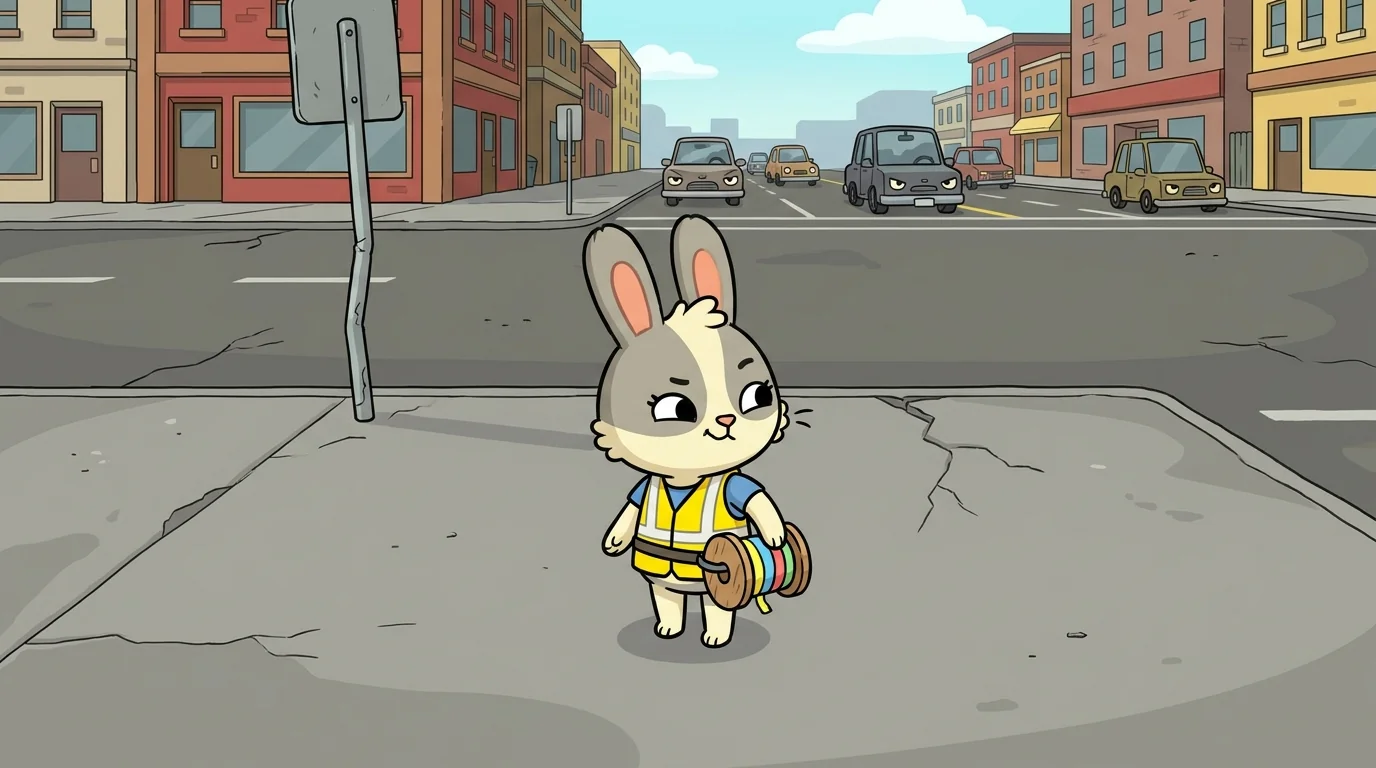
Lane was a small rabbit-tween in a soft-yellow safety-vest with a chalk-spool clipped to her belt. Her fur was cream and grey, her eyes quick, always scanning. She loved marking out spaces for people, a quiet, focused energy in her small frame. Her signature feature was the chalk-spool itself. It was a small wooden cylinder, wound tight with a vibrant stripe of sidewalk chalk, a miniature rainbow ready to unroll.
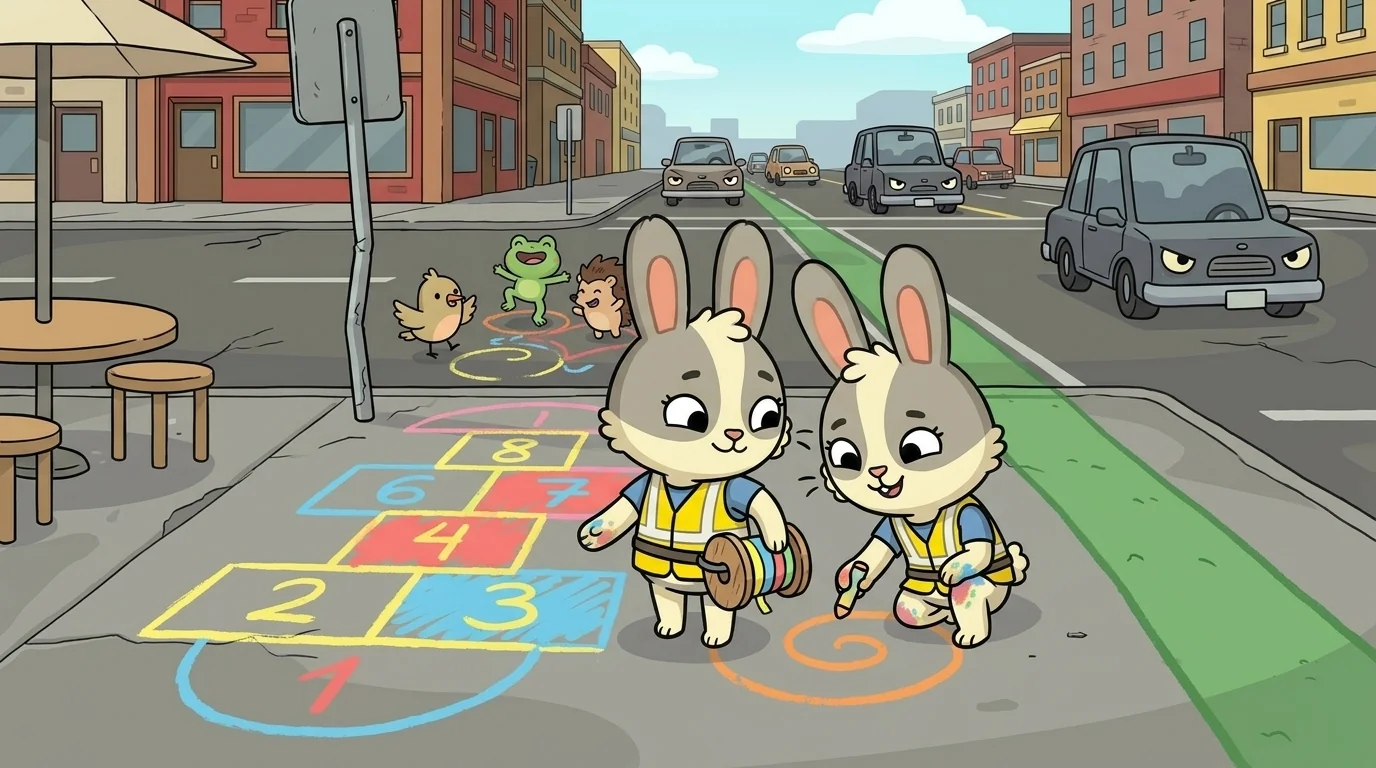
When Lane visited a street, she didn't just walk. She saw possibilities. She unrolled chalk-stripes, turning grey asphalt into a canvas of purpose. Yellow lines became bike lanes, safe passages for cyclists. Wide blue swaths marked out areas for café-tables or bustling market-stalls. Sometimes, she drew cheerful squares, transforming a forgotten patch of pavement into a kid-play-area. She was reclaiming the street, one colorful line at a time. It was her way of making car-dominated spaces useful for everyone.
Lane understood something fundamental about streets. They weren't just for cars. They were rooms. Big, open rooms between buildings, where neighbors could meet, kids could play, and people could walk, bike, or wait for the bus. Cars were guests in these rooms, useful for some trips, but never the sole owners.
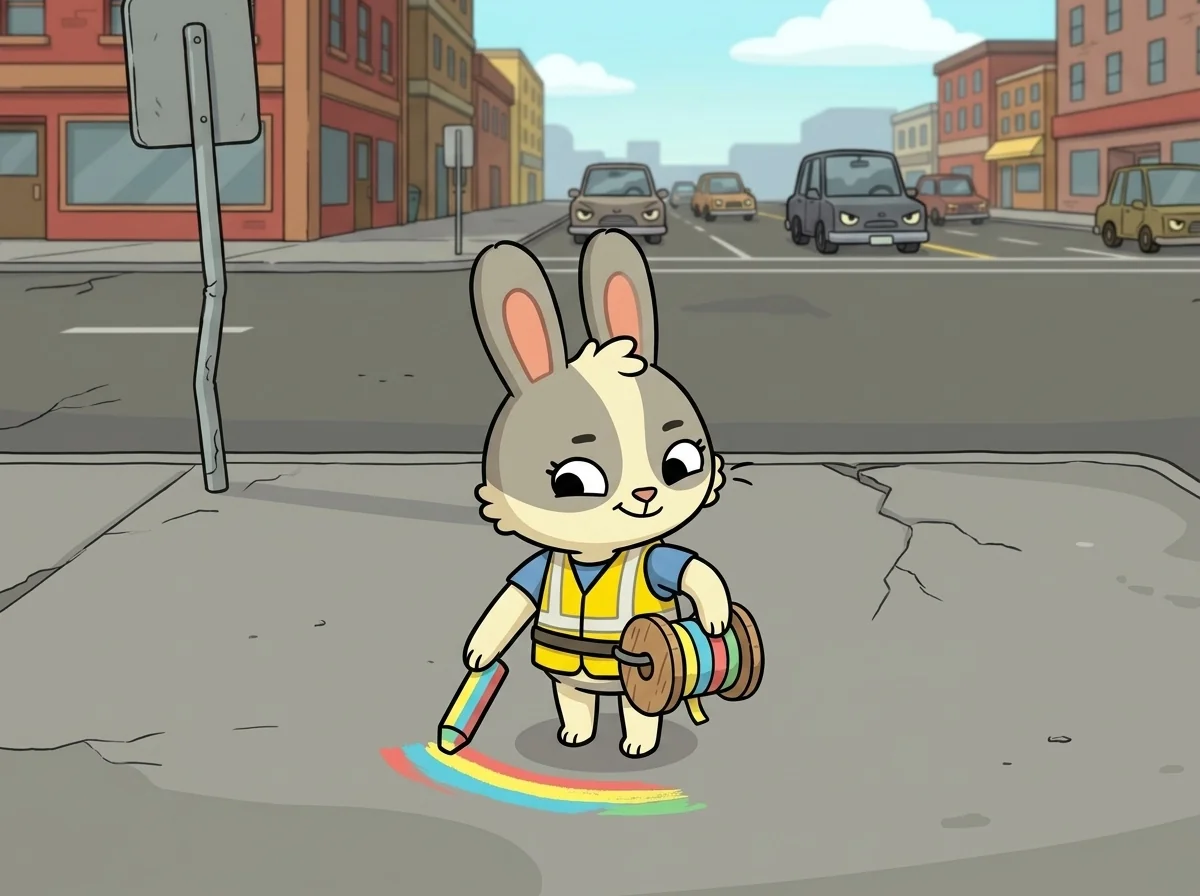
She never saw cars as villains. That was important. A delivery van rumbling past her new yellow bike lane didn't make her angry. It was just a guest, passing through. Lane's work was about balance. It was about showing that walking, biking, transit, sitting, playing, and even selling goods were also legitimate uses of a street. "The street is the room," she'd often say, "and many people share it."
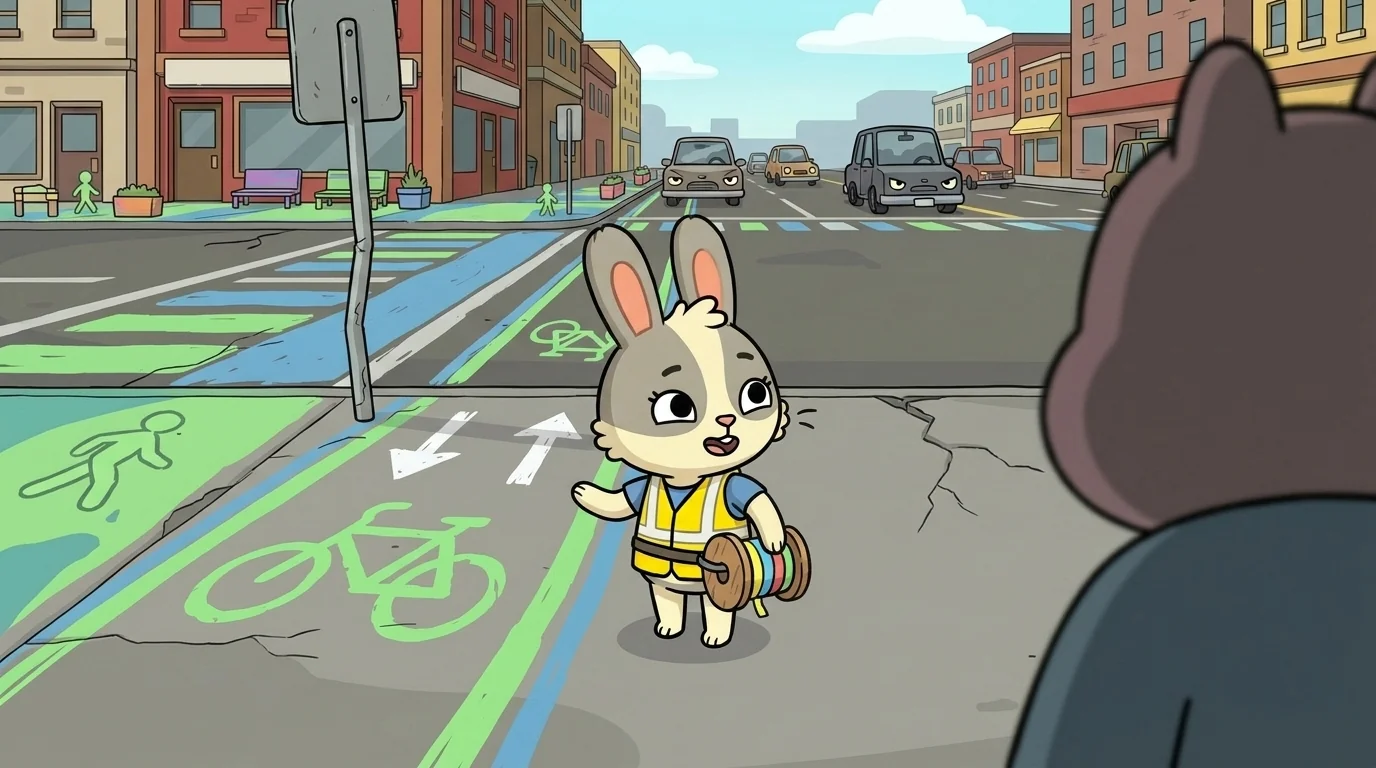
Lane taught the simple truths of walkability: Streets serve multiple uses. They weren't just roads for vehicles. They were places for walking, biking, transit, sitting, and doing business. *Sidewalk width matters. A wide sidewalk felt welcoming, inviting people to linger. A narrow one pushed them aside, prioritizing cars. *Pedestrian crossings and signals. People needed frequent, visible places to cross the street safely. *Bike lanes (protected, ideally). Bicycles were legitimate transportation, and riders deserved safe, separate paths. *Slow streets in residential areas. A twenty-mile-per-hour speed limit meant kids could play safely, and neighbors could chat without shouting. *Café-tables and benches on sidewalks.* These turned a thoroughfare into a social space, a place to pause and connect.
Lane had grown up in a small, quiet village. Her family had been the village's path-keepers for generations. They were the rabbits who maintained the winding pedestrian paths, keeping them clear and welcoming. Their work was always about people-paths, never about the wider cart-paths. By the time Lane was six, she understood that streets worked best when designed for the people who used them most.
She arrived at CityForge when she was twenty-two. Plumb, the formidable leader, had looked her over with sharp, assessing eyes. "What is walkability?" Plumb had asked, her voice like grinding gears.
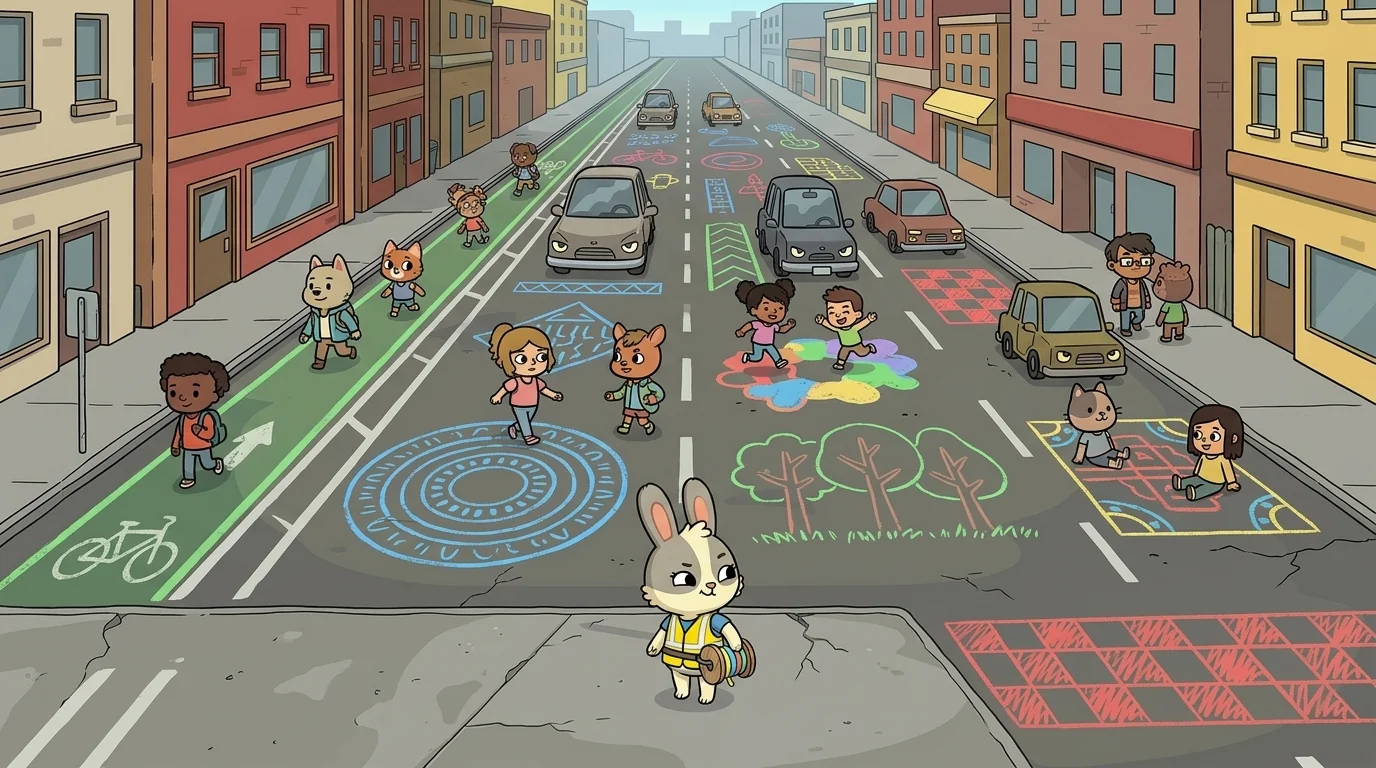
Lane hadn't hesitated. "Streets are rooms; cars are guests. Many users share the street. Sidewalks wide. Bike lanes protected. Crossings frequent. Slow speeds where people walk."
Plumb had simply nodded, a slow, deliberate movement. "You are appointed."
Lane still thought about that day. Sometimes, when a street felt particularly broken, she'd repeat her own words. "It is not hard," she'd whisper to herself, unspooling another line of chalk. "It is streets for all users, cars as guests."
The CityForge ensemble
Lane is part of CityForge's distributed-narrative cast. Each character embodies a different curricular primitive; together they teach the full subject.
-

Block
Zoning + density — the badger-tween with clay-block models who teaches zoning as 'plan for the neighbors first, not the buildings'
-

Stoop
Public space + community — the capybara-elder on a wooden stoop who treats public space as the city's living room, foregrounding existing stoop-cultures (Brooklyn / Latin American plazas / Italian piazzas / West African gathering trees)
-

Hub
Transit nodes — the pangolin-tween in conductor-vest who teaches that transit is about ACCESS, not about cars-vs-trains ('many ways, equal ways; the bus matters as much as the train')
-

Dwell
Housing equity + repair — the owl-elder in a mended quilted-coat who teaches anti-displacement, repair-not-replace urbanism ('repair before replace; listen before plan; the people who live here ARE the design')