Layer
LAYER — *where in the layered earth? context is the data.*
Listen along — Layer
Loading audio…
Press play to listen along. The line being read lights up as you go.
Show full transcript
Loading transcript…
Chapter 1 — Layer and the Earth’s Long Record
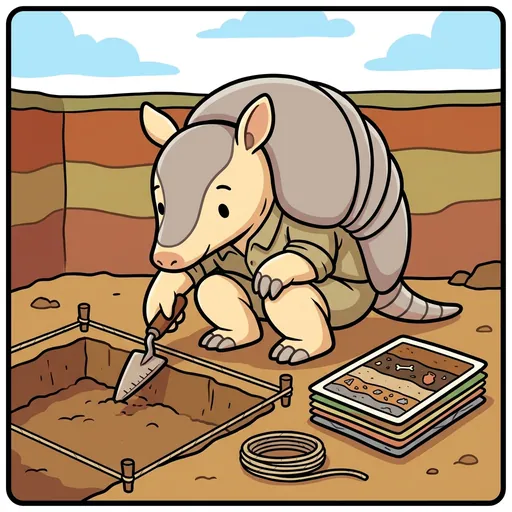
Layer knelt in the corner of a shallow square of dirt, so still that a beetle walked right over her paw. She was a small armadillo, chunky and round, in a tunic the color of fresh soil. Her nose almost touched the ground. Around the square she had stretched white string into a perfect grid, and in her paw she held a trowel no bigger than a spoon.
A boy hung over the edge of the pit, bouncing on his toes. “There’s a shiny bit right there,” he said, pointing. “Just grab it!”
“If I grab it,” Layer said, not looking up, “I lose almost everything it could tell me.” She scraped away a paper-thin sheet of dirt, then another, so slowly the boy groaned. A red curve appeared — the rim of a broken bowl. Layer did not pick it up. She measured how deep it sat. She noted the crumbly dark band of soil above it and the pale sandy band below. She drew the whole side of the pit in her book, band by band, like a map. Only then did she lift the piece free and set it on a card covered in her notes.
“Now it can talk,” she said softly. “Not the bowl. The place it came from. Where in the layered earth — that’s the data. The bowl by itself is just a broken bowl.”
Layer had grown up beside a river with steep, raw banks. Where the water had cut into the bluff, you could read the earth like the edge of a sliced cake — a dark line of old campfires here, a paler line of flood-sand there, going down and down. Her whole burrow-family spent their evenings reading those bands out loud to one another.
“Which is older,” her grandmother would ask her, “the top or the bottom?”
“The bottom,” small Layer always said, “because it got there first, and everything after piled on top.”
Her grandmother nodded but never let it rest there. “Usually. Now — what could fool you?” And Layer would have to think: a burrow that carried old dirt up. A flood that shoved a whole band sideways. Someone long ago digging a hole and filling it back in with mixed earth. The lesson her family passed down, generation after generation, was gentle and stubborn at once: the earth keeps an honest record, but only for a reader patient enough to notice when the record has been disturbed. A hasty reader tears out pages. A patient one finds every chapter.
Layer carried that river-bank quiet with her everywhere. When she got the itch to hurry, she pressed one paw flat to the ground until the itch passed.
When Layer was twelve she walked the long road to DigQuest, her grid-string coiled over her shoulder. Trowel, who ran the digs there, met her at the edge of a practice pit and asked only one question.
“What is context?”
Layer looked down into the pit before she answered — at the layers waiting in the wall of it. “Where in the layered earth,” she said. “The thing matters, but where it sat matters just as much. Dig slow. Write everything down. Or the story’s gone.”
Trowel studied her for a long moment, then handed her the practice square as if handing over something breakable. “Then this one is yours,” was all she said.
Layer’s workshop smelled of damp earth. Along the walls hung her drawings of soil bands, and in the middle sat a big sandbox packed with real layers she had built by hand. On a bright morning a girl named Sable came in, restless, sure that archaeology meant treasure.
“Watch,” Layer said. She laid the grid-string across the sand in neat squares and began to scrape. One thin sheet. Another. Sable sighed loudly. Layer’s paws did not speed up.
A small red sherd appeared. Sable reached for it — and Layer caught her wrist, gently.
“Not yet. First we ask the sherd where it lives.” Layer took a photograph. She sketched the piece exactly where it lay. “Square B, third layer down,” she murmured, writing. “Bit of charred wood beside it. A tiny bone. The dirt here is silty, with flecks of charcoal.” Sable leaned in despite herself. “The charcoal and the bone tell me someone cooked here. The layer above tells me when. The bowl alone couldn’t say any of that.”
Only then did Layer lift the sherd onto its labeled card. “See? Now it’s not a broken bowl. It’s a small chapter in a very long book.” She looked at Sable kindly. “In the old adventure stories, the hero smashes in and grabs the gold. But that isn’t finding history. That’s erasing it — the same as looting. Slow is the only way that keeps the story whole. Around here, slow is actually the fast way, because if you rush and break it, you have to start over with nothing.”
Sable turned the card over in her hands, reading the notes. “So the digging is the small part,” she said slowly. “The writing-it-down is the real thing.”
“Now you sound like an archaeologist,” Layer said.
That evening, after Sable had gone, Layer knelt alone by the sandbox and pressed one paw flat against the cool, packed earth, the way she always had by the river. A warm, quiet gladness spread up through her chest and settled there, steady as the layers themselves. She had left the ground honest. She had let it keep its whole story instead of ripping out the exciting page.
Her shoulders loosened. Her breath came slow and even.
“That feeling,” she said to no one, resting there in the dim, “is why I love the slow way. Where in the layered earth? The context is the data. And the context is safe.”
The DigQuest ensemble
Layer is part of DigQuest's distributed-narrative cast. Each character embodies a different curricular primitive; together they teach the full subject.
-
Shape
Artifact-typological analysis — what family of object? (comparative typology, craft traditions)
-
Past
Dating techniques — when by which method? (dates as ranges with confidence intervals)
-
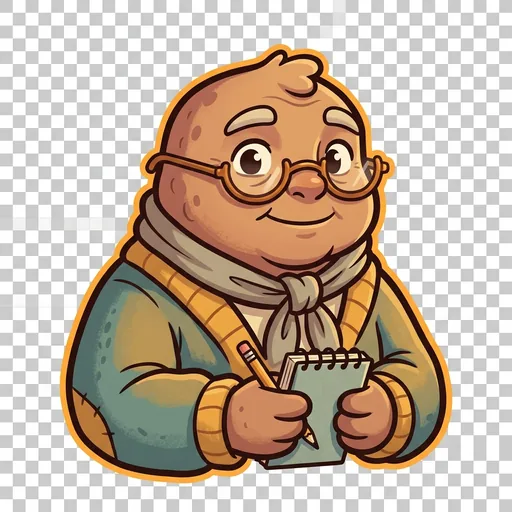
Keep
Cultural-context inference — keep-what-people-said, not invent-what-they-must-have-meant
-
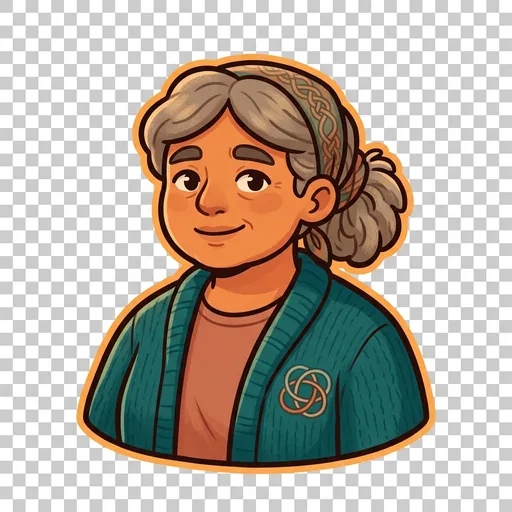
Ask
Community-partnership ethics — whose story is this and who gets to tell it? (NAGPRA + UNDRIP-grounded, descendant-community partnership)