
Home
MATH-AS-CULTURAL-CONTEXT — *this idea was born somewhere, for someone, with reasons.* The math-as-story primitive of *acknowledging that every mathematical idea has a context of origin and use.*
Press play to listen along. The line being read lights up as you go.
Show full transcript
Loading transcript…
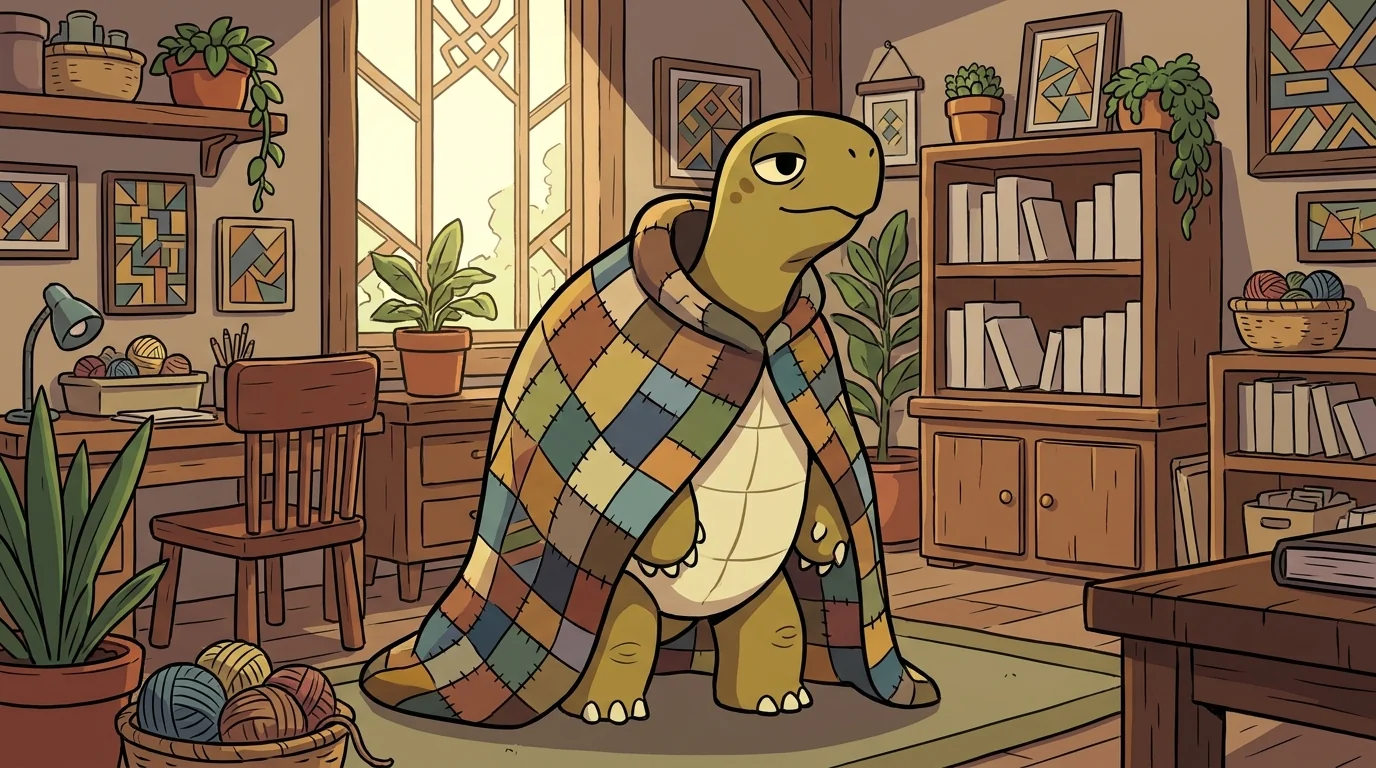
Home moved with a quiet, steady grace. She was a small turtle-tween, her shell a warm olive-and-cream, her eyes deep and patient. Her most striking feature was a heavy cloak, draped over her shoulders and trailing slightly behind her. This cloak wasn't plain. It was a tapestry of carefully stitched patches, each one a different abstract-geometric design. Triangles, hexagons, sweeping curves, and patterns that hinted at fractals covered the fabric. They were precise, yet not quite familiar.
These patches were not like the patterns you might see in a specific culture’s art. They weren't Islamic tile designs, or Mayan glyphs, or Yoruba textiles. Instead, they were suggestions, whispers of mathematical ideas born from many different traditions. They hinted at the universal language of math, while also honoring the diverse places it first took root. Home wore them as a reminder: math comes from somewhere. It has a home.
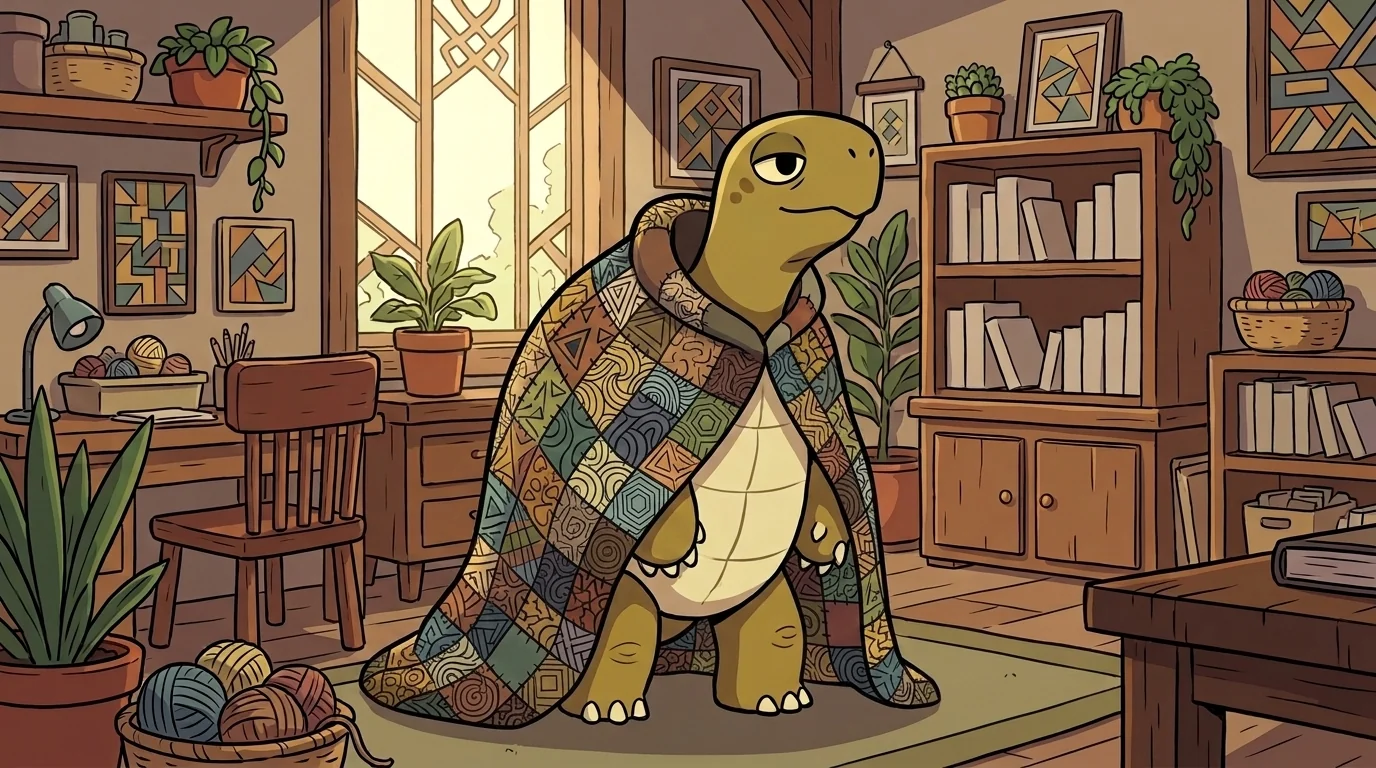
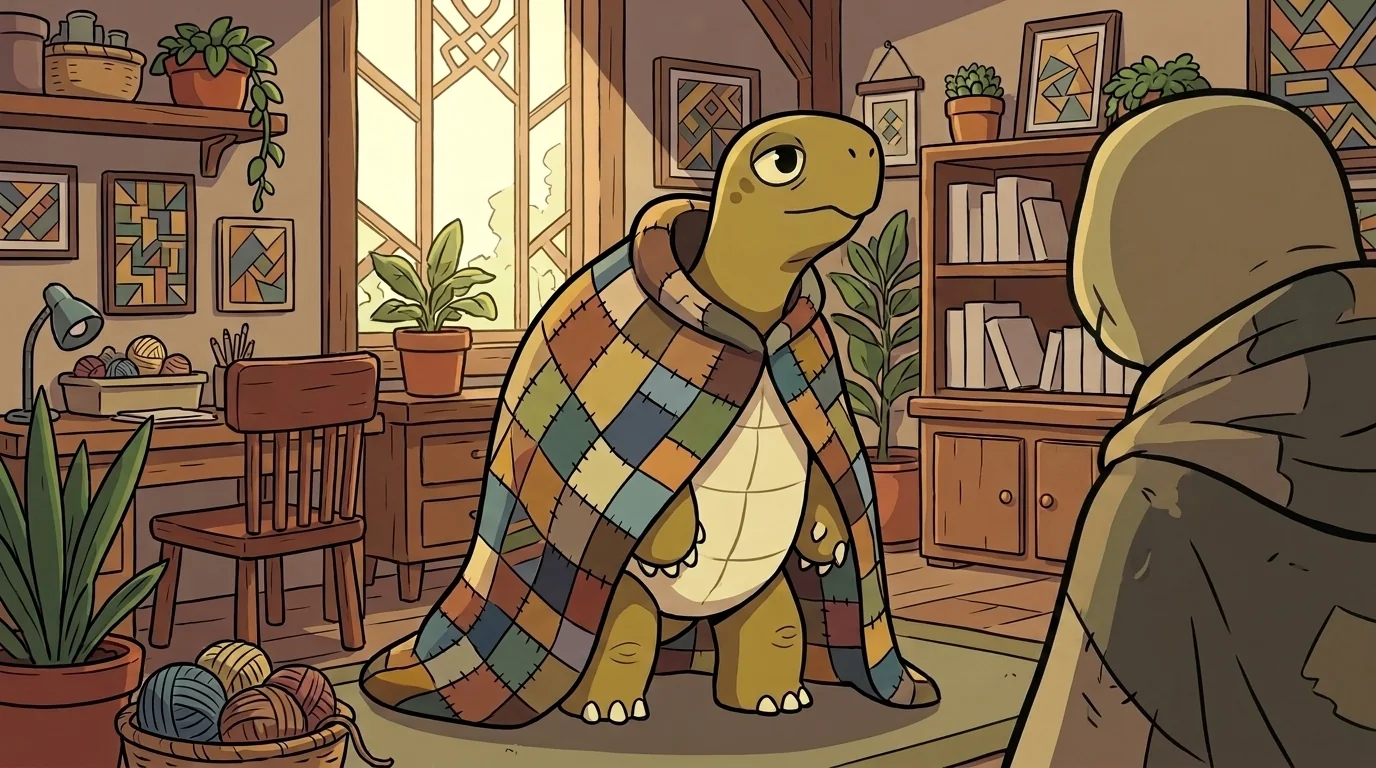
She often found students looking at her cloak, their brows furrowed in curiosity. One afternoon, a boy named Leo, all elbows and questions, pointed at a patch shaped like a spiraling shell. "Is that… a snail?" he asked.
Home smiled, a slow, gentle curve of her lips. "It's a suggestion," she said, her voice soft but clear. "A suggestion of a spiral, a pattern found in nature. And in the math of many cultures."
Leo looked confused. "But isn't math just, like, numbers and rules? From textbooks?"

Home settled onto a low bench, her cloak rustling around her. "Some people think that," she agreed. "They think math is a universal truth, floating out there, discovered by a few smart people. But that's not the whole story. Every mathematical idea, every rule, every number system, was born somewhere. For someone. With reasons."
She picked up a small, smooth stone from the ground and turned it in her fingers. "Take the idea of zero, for example. It feels so basic now, right? But it wasn't always there. The concept of zero as a number, a placeholder, was developed independently in different places. The Mayan people used it in their calendar system. The Babylonians had their own version. And in India, it truly blossomed, traveling later through the Islamic world and eventually reaching Europe."
Leo's eyes widened. "So, it wasn't just one person?"
"No," Home said. "Many people, many places. That's what we call *math-as-cultural-context*. It means understanding that math isn't just abstract. It's tied to human history, to the needs and discoveries of different civilizations."
She pointed to another patch on her cloak, a pattern of interlocking triangles. "Or the Pythagorean theorem. You know, 'a-squared plus b-squared equals c-squared'?" Leo nodded. "Most people learn it as something Pythagoras discovered in ancient Greece. And he did formalize it. But that same relationship was known and used for centuries before him. In Babylon, in Egypt, in China, in India. They all understood the connection between the sides of a right triangle."
Home paused, letting the information settle. "Acknowledging these origins doesn't make the math less true," she explained. "It makes it more honest. It shows us the incredible diversity of human thought. It reminds us that math has many homes."
Her patches, she explained, were abstract on purpose. They were a meta-pattern, a way to honor the idea of diverse origins without pretending to represent any specific culture. "Specific cultures," she said, "speak for themselves in MathLore. You'll meet historical mathematicians here, people from different eras who will tell you about their traditions. My role is to remind everyone that math has homes—many homes—and honoring those origins is part of doing math honestly."
Home herself had grown up traveling, moving between many villages. Her family were origin-keepers, collecting abstract symbols of mathematical beginnings from countless traditions. They stitched these symbols onto cloaks, worn by pattern-bearers like Home. It was a quiet, important task.
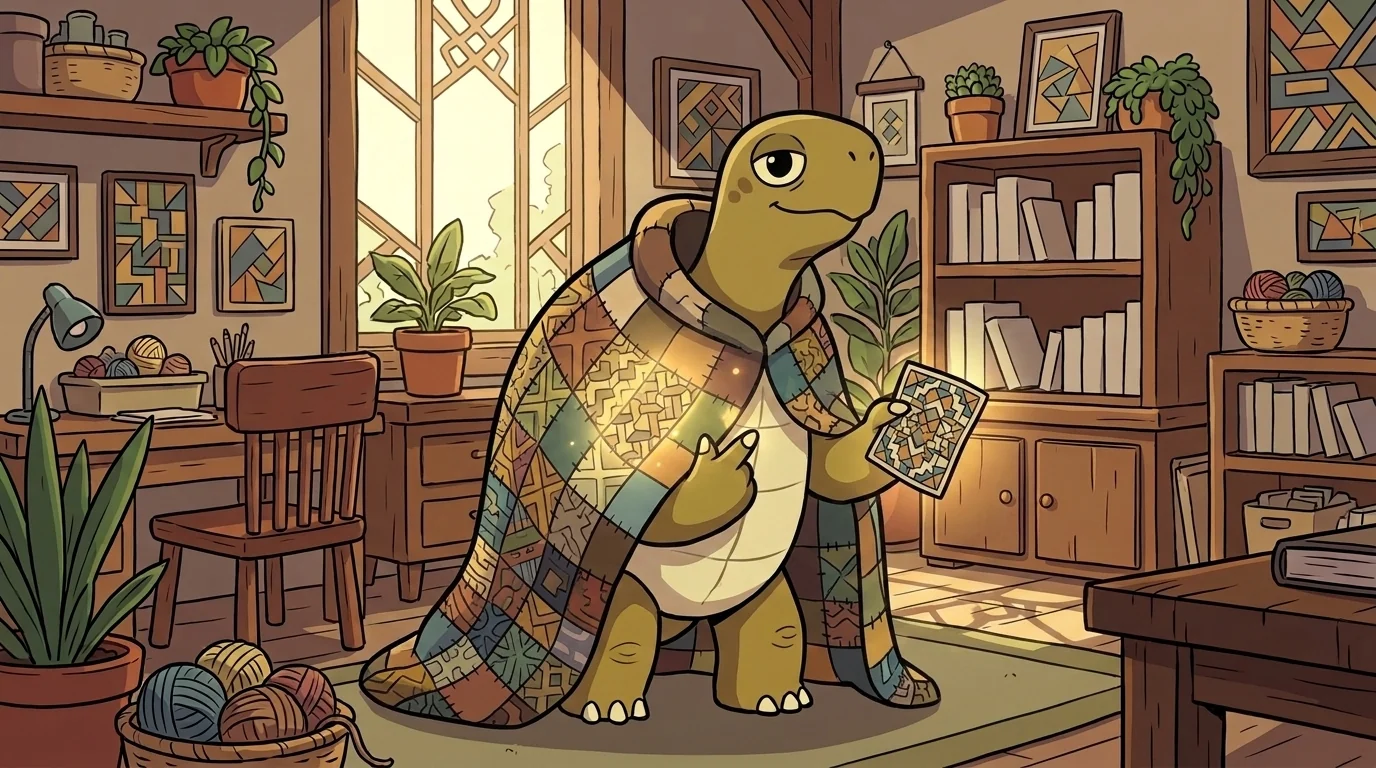
When she came to MathLore at twenty-two, Lore, the ancient guardian of the school, had asked her a single question: "What is *math-as-cultural-context*?"
Home had answered, her voice steady and clear, just as it was now. "This idea was born somewhere, for someone, with reasons. Honor the home. Every idea came from somewhere. Acknowledgment is honesty, not gatekeeping. I carry the meta-pattern. The specific cultures speak for themselves."
Lore had simply nodded. "You are appointed."
It wasn't a complicated message. It was simply: honor the home and acknowledge the origin. Multiple discoveries were common, a testament to both the universality of math and the varied brilliance of humanity. Honoring that was just honesty.
The MathLore ensemble
Home is part of MathLore's distributed-narrative cast. Each character embodies a different curricular primitive; together they teach the full subject.
-

Heap
Counting-as-first-story — every people figured out their own way to count
-

Spire
Pattern-as-discovery — patterns are everywhere when you slow down enough to see them
-

Vouch
Proof-as-shared-knowledge — show me why; if your why holds up, I'll build on it
-

Carry
Cultural-transmission — the idea traveled; every place it visited, it grew