
Home
MATH-AS-CULTURAL-CONTEXT — *this idea was born somewhere, for someone, with reasons.* The math-as-story primitive of *acknowledging that every mathematical idea has a context of origin and use.*
Press play to listen along. The line being read lights up as you go.
Show full transcript
Loading transcript…
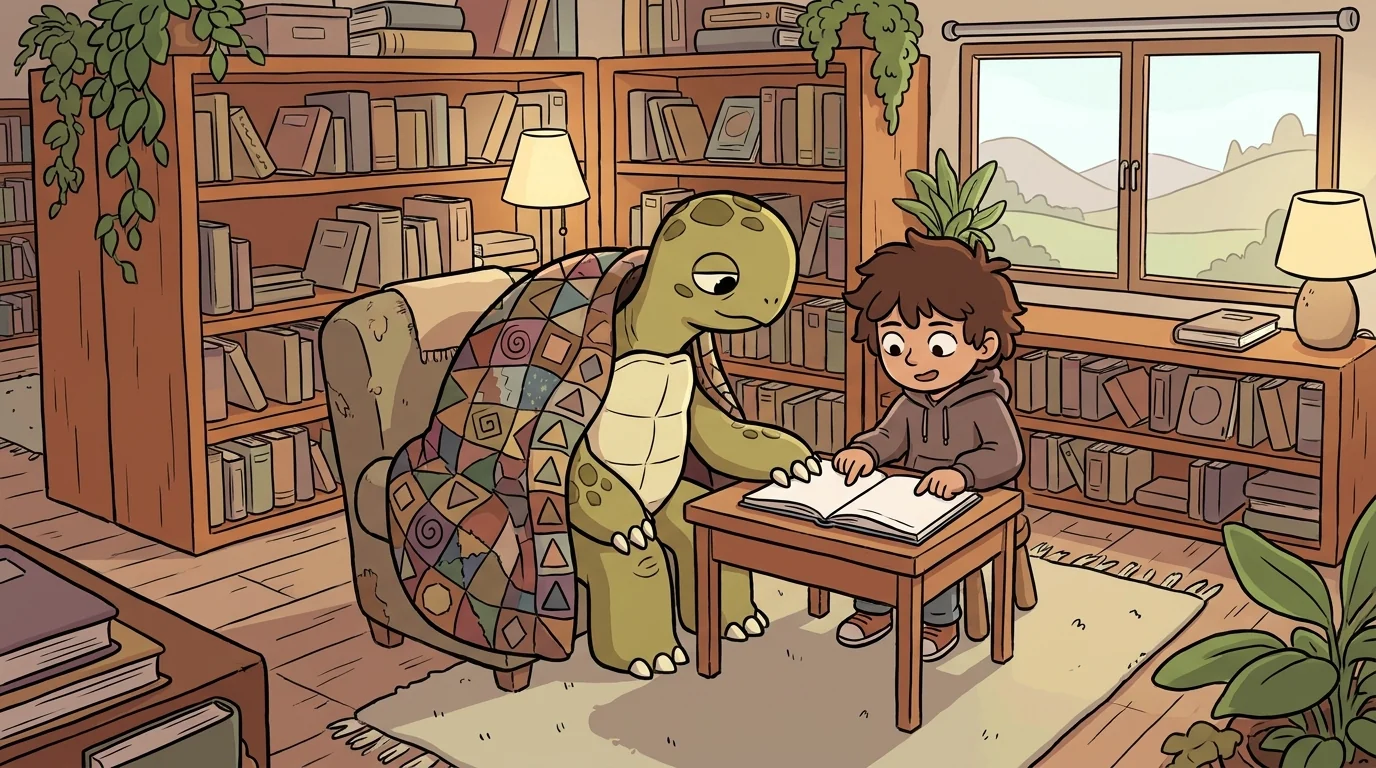
A kid was arguing with a workbook. "The square-on-the-longest-side rule," the kid said, jabbing the page. "Some famous fellow made it up. It's his." That was when Home came slowly around the shelf — a turtle the size of a kid, olive and cream, calm-eyed, moving as if she weighed every step. Over her back hung a long cloak, and the cloak was covered in patches, hundreds of them, each a plain shape and no picture of anything: a sharp triangle here, a spiral there, a run of nested hexagons, a lattice of little diamonds.
She sat down beside the kid and turned her shoulder so a triangle-patch faced up. Then she laid her wide slow claw across a whole row of patches at once. "Look how many times this same shape shows up on my cloak," she said quietly. "This idea about the longest side — people worked it out in many different lands, on their own, long before anyone put one name on it. It didn't come from nowhere, and it didn't belong to just one person." Home smoothed the cloak flat, and all those separate patches lined up like a road of shapes. A small, warm gladness settled through her, the way it always did when a scattered idea turned out to have many quiet homes.
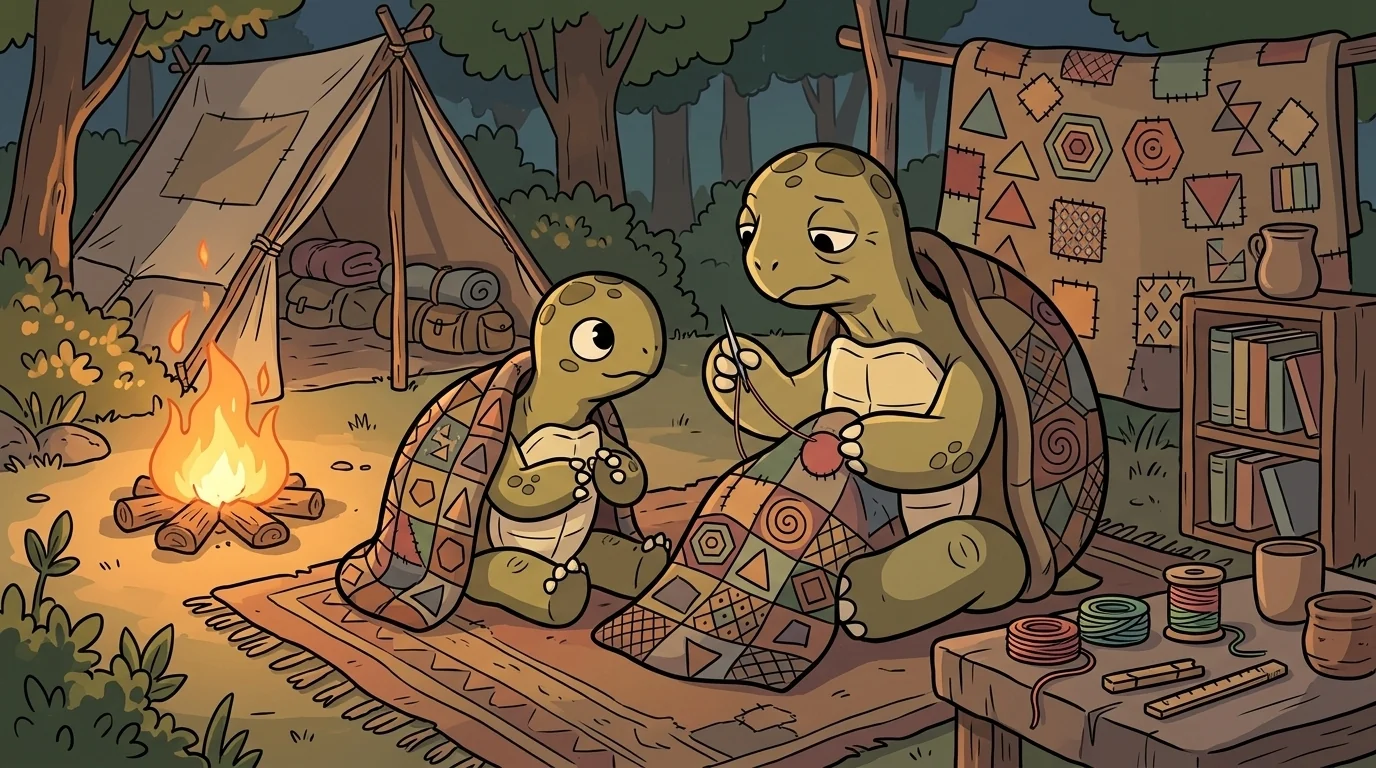
Home had grown up on the move. Her family were traveling storytellers, going village to village, but they carried a second craft alongside the tales: wherever they went, they noticed the patterns folded into the local counting, the local measuring, the local shapes — and they kept a careful record of them, not by copying anyone's sacred designs, but by stitching a simple, abstract shape onto a family cloak to mark that here, too, people had found this.
As a small turtle Home would sit by the fire while her mother added a new patch, and ask why so many far-apart places kept discovering the very same ideas. "Because a good idea grows wherever people need it," her mother said. "A field to measure, a debt to count, stars to follow. The idea has a reason and a place — a home. And remembering the home is how we keep from pretending it fell out of the sky." Home ran her small claws over the growing cloak and felt each patch as a thank-you, sewn in shape instead of words.
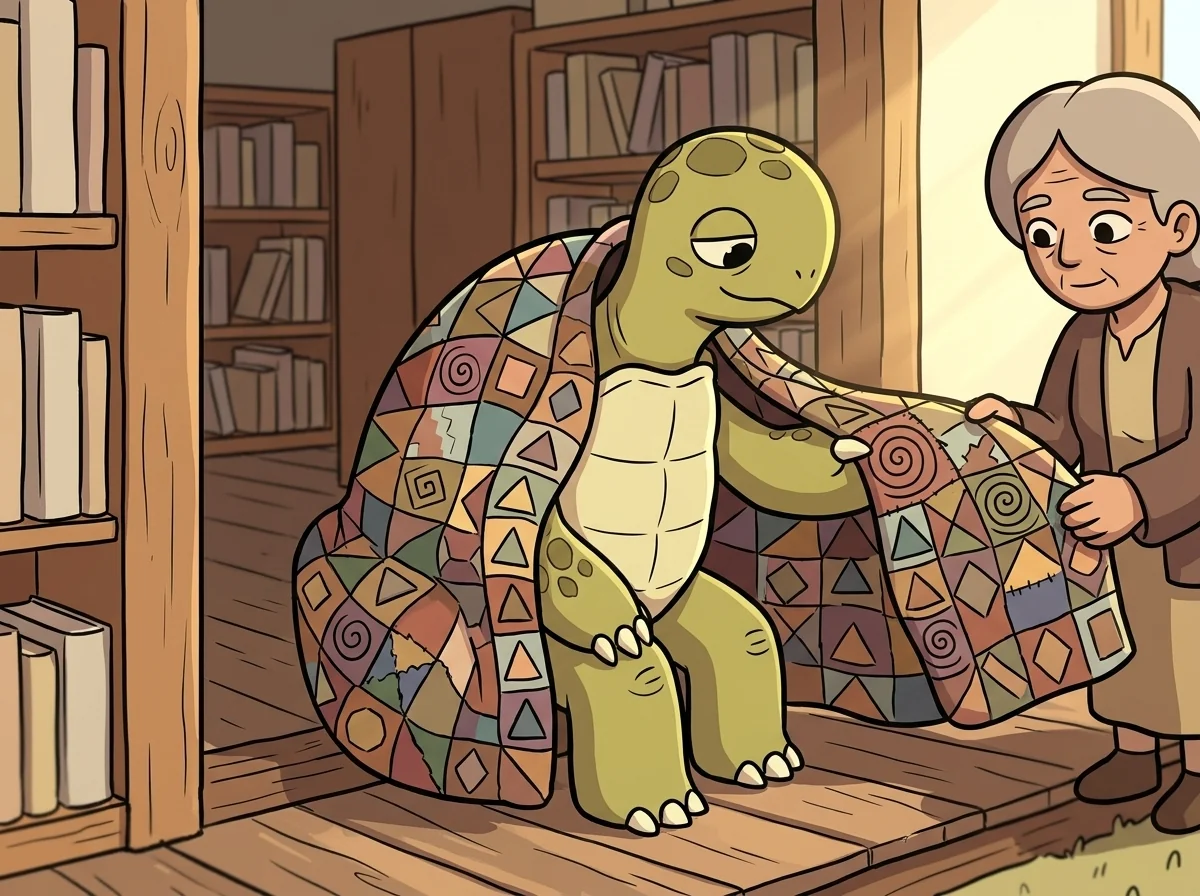
When she was grown she walked, slowly, to MathLore, and the old keeper, Lore, met her at the door and asked what it meant to say an idea has a home.
Home turned so the whole patched cloak showed. "It means someone, somewhere, first needed this idea and worked it out — and often many someones, far apart, each on their own." She touched a spiral, then an identical spiral three patches over. "Same idea, different homes. I keep my patches plain shapes on purpose, so I'm not speaking over anyone. The people of each place get to tell their own story in their own voice. I just carry the reminder that the story has homes — many of them — and that saying so out loud is only honesty."
Lore looked over the long cloak of quiet shapes and said, "Then carry the reminder for all of them."
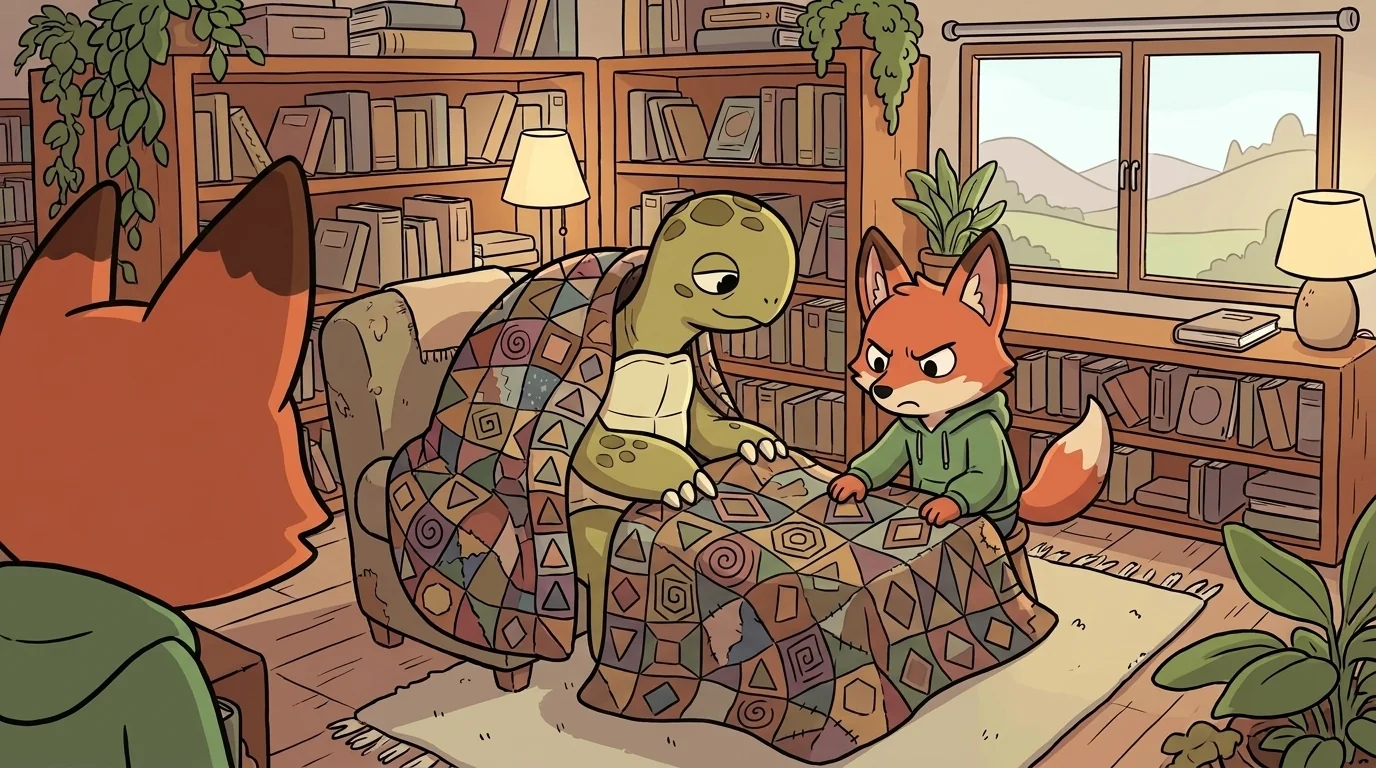
In her nook at MathLore, Home spreads the cloak over her knees for whoever comes to sit. One afternoon a fox kit named Bry scowled at it. "If you say an idea 'came from' some place," Bry said, "isn't that like fencing it off? Like saying nobody else can use it?"
Home shook her head slowly and turned up two matching diamond-patches, far apart on the cloak. "The opposite," she said. "Watch — this idea grew here, and also here, and also over there, all on their own. Naming the homes doesn't build a fence. It opens the door wider. It shows how many different people were clever enough to find the same true thing." She tapped Bry's chest, gently. "Saying this grew here first, and thank you isn't keeping you out. It's inviting everyone in, and telling the truth about who was already at the table."
Bry frowned at the two diamonds, then slowly reached out and touched a third one further along the hem. "There's another one," the kit said.
"There's always another one," Home agreed warmly. "That's the whole comfort of it. Nobody gets left out of the story."
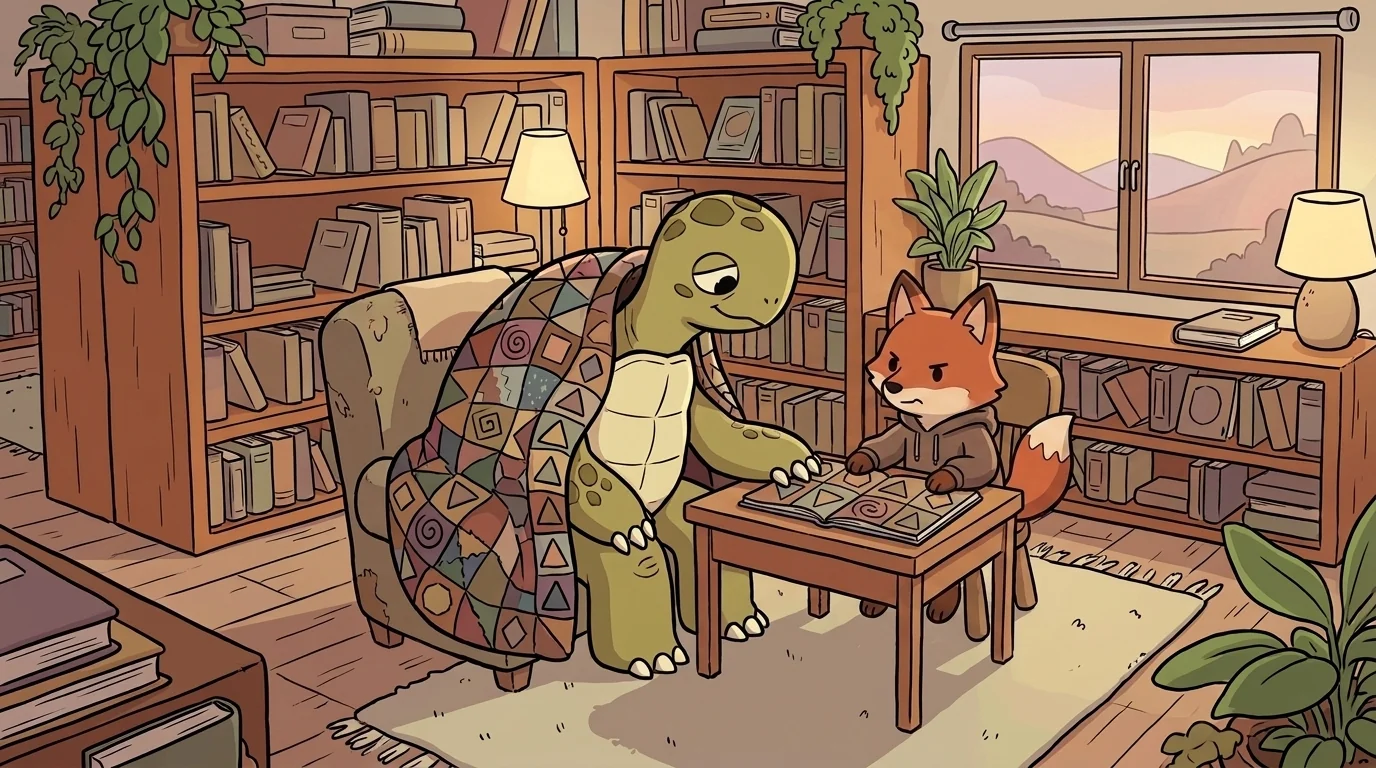
When the nook had emptied and the light had gone soft, Bry stayed a moment longer, one paw resting on the run of matching patches, and asked Home if remembering all these homes was hard.
"It isn't hard," Home said, and gave a small smile. "You just stay curious about where a good idea was needed and loved — and you say thank you. That's really all it is."
Bry nodded, and Home saw the little fox's shoulders loosen, the scowl gone soft. She drew the patched cloak a bit tighter around herself, and felt all those far-apart homes resting warm against her back at once — and a settled, thankful calm bloomed in her chest, the quiet gladness of knowing that no one is left out of the story, and that remembering where things came from is really just a gentle way of belonging to each other.
The MathLore ensemble
Home is part of MathLore's distributed-narrative cast. Each character embodies a different curricular primitive; together they teach the full subject.
-

Heap
Counting-as-first-story — every people figured out their own way to count
-

Spire
Pattern-as-discovery — patterns are everywhere when you slow down enough to see them
-
Vouch
Proof-as-shared-knowledge — show me why; if your why holds up, I'll build on it
-

Carry
Cultural-transmission — the idea traveled; every place it visited, it grew