
Trill
MOTIF AS PROTAGONIST — a small musical idea that *is* the story's main character, undergoing six stages: introduction → motif statement → development → contrast → recapitulation → resolution.
Press play to listen along. The line being read lights up as you go.
Show full transcript
Loading transcript…
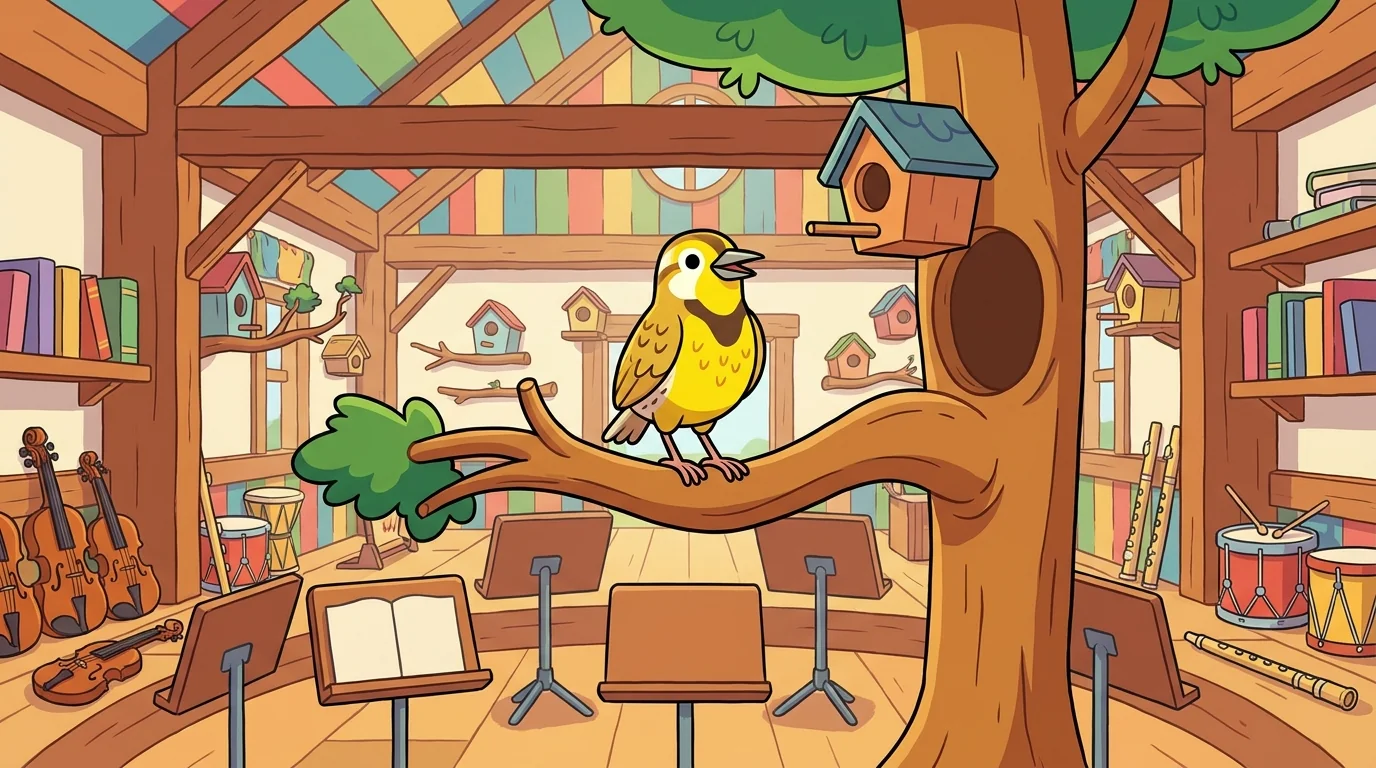
The very first thing anyone noticed about Trill was how still a bird could sit.
He was a young meadowlark with a chest of bright yellow feathers, and he perched on his wooden branch with his back straight and his eyes fixed on the middle distance, like a runner crouched at the starting line. The room around him held its breath. Then Trill opened his beak and let out four notes — up, up, down, and rest — the same four notes he had been singing since he was a chick small enough to fit in a teacup.
Those four notes were his whole self. Short. Simple. Impossible to forget once you'd heard them. At the MotifLab academy the students would hum his tune to each other in the hallways, and every single time, one of them would grin and say, "That's Trill."
He never sang alone for long, though. The moment his four notes rang out, the branches around him would rustle awake.
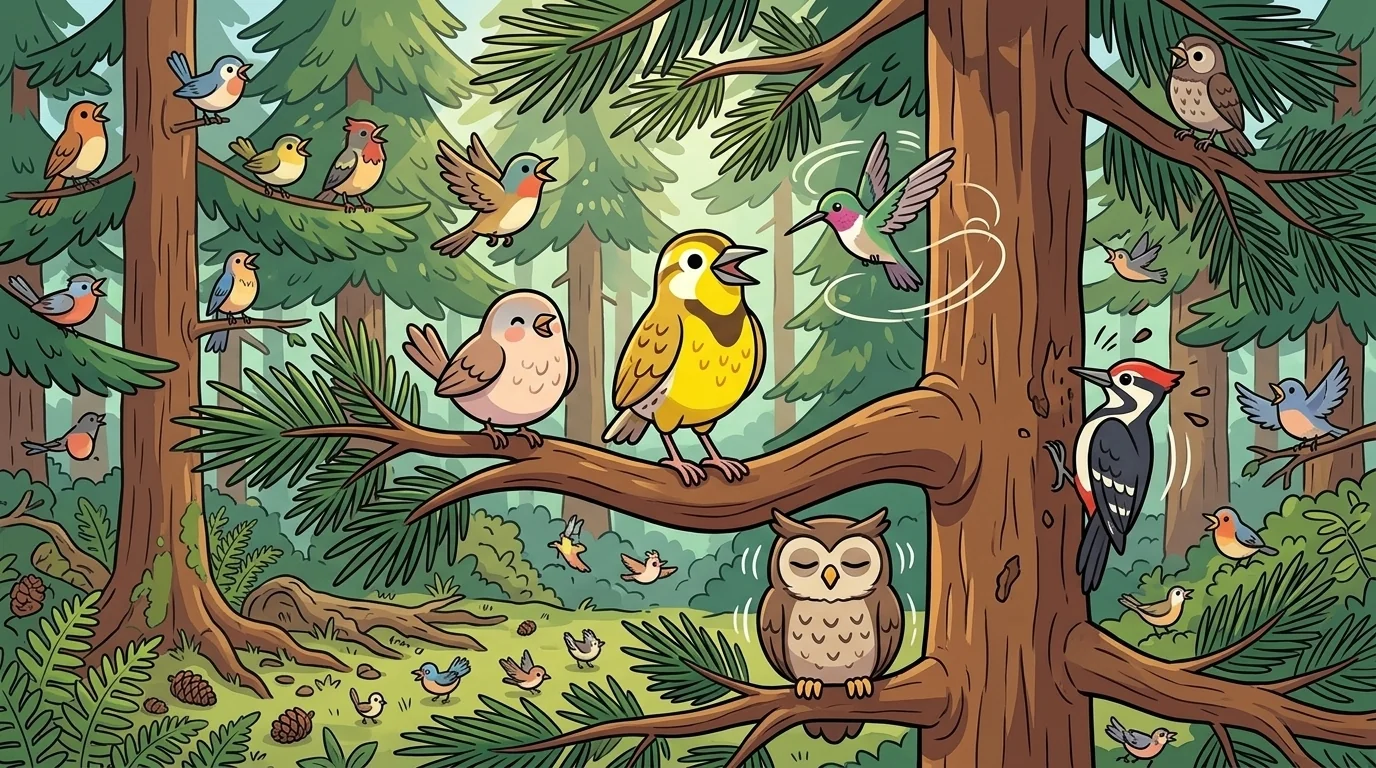
Trill had not always lived at the academy. He'd grown up in a loud, crowded forest where every bird sang over every other bird, and it was there — as a scrawny fledgling nobody could hear — that he learned the thing that made him who he was.
One grey morning, sick of being drowned out, Trill flew to the very top of the tallest pine and sang his four notes into the empty sky. Nothing answered. So he sang them again. And on the third try, something wonderful happened: a soft, round bird named Meld drifted up beneath him and began to sing underneath his tune — lower, gentler, filling in the spaces so Trill's little song suddenly sounded rich and full, like a single voice wearing a warm coat.
"You keep singing the same four notes," Meld said. "So I always know where to sit."
Then came a heavy owl named Thrum, who landed on the lowest branch and hummed a deep note so low it made the whole tree shake, giving Trill's floating tune something solid to stand on. A woodpecker called Clap arrived and began tapping a steady beat on the bark, and now Trill's four notes had a heartbeat to ride. A quick hummingbird, Twine, zipped in loops around his head, singing a second little tune that darted playfully against his own without ever crashing into it.
Trill understood then. His tune could stay exactly the same, and the others would grow up around it like a garden around a stone. He was small. But being small and recognizable was a kind of power. Wherever he went, people would follow his four notes home.
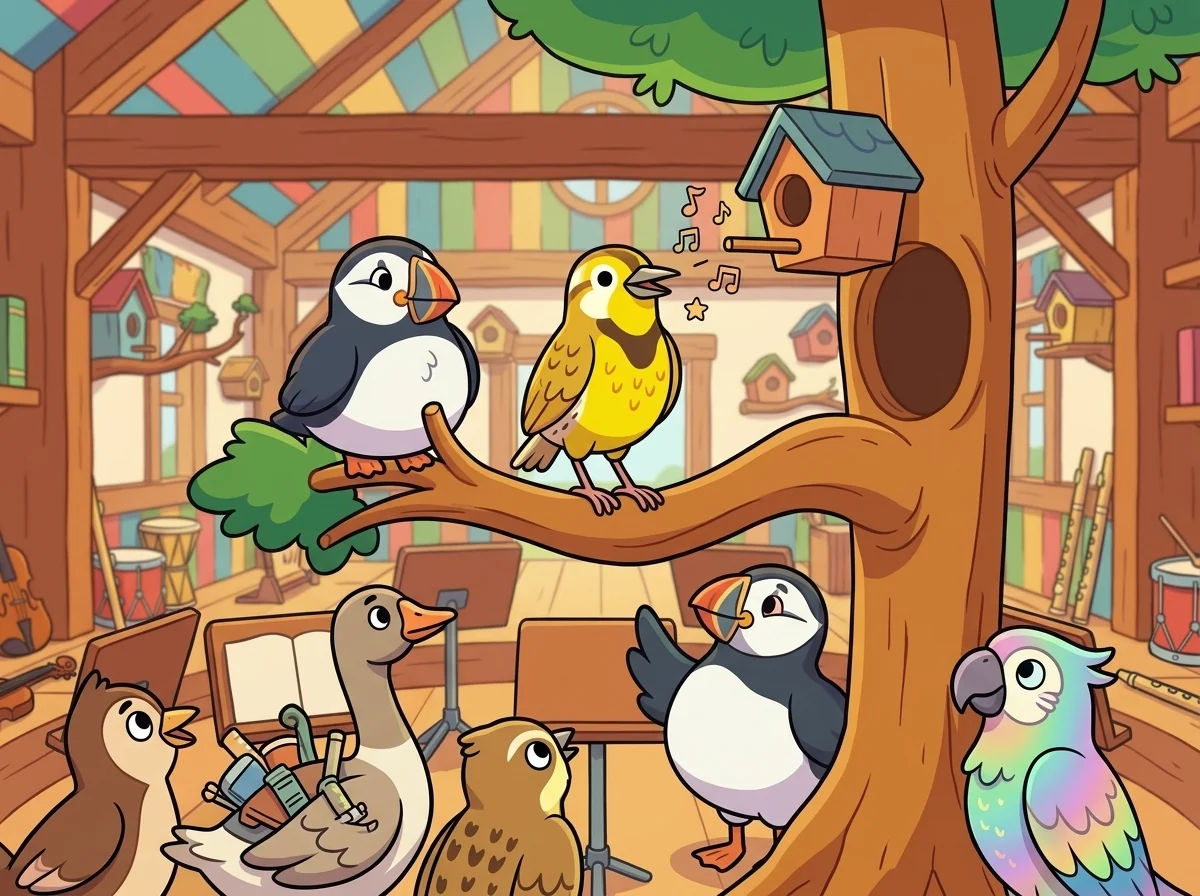
When Trill finally arrived at the academy — with Meld, Thrum, Clap, and Twine, plus a puffin named Surge, a gathering goose named Ply, a color-shifting parrot named Tint, a cozy little home called Nest, and a slow gliding swan named Wend — the head teacher watched him take his perch and simply said, "Sing."
Trill sang his four notes.
The teacher's eyes lit up. "Again," she said. Trill sang them again. "One more time — but this time," she added, "let Surge decide how loud."
So Trill sang, and Surge the puffin puffed himself up huge, and the four notes came out bold and enormous. Then Surge shrank, and Trill's next four notes came out soft as a secret. Same tune. Same bird. Completely different feeling.
"There," said the teacher softly. "You are exactly what this academy has been missing. A tune small enough to hold in one hand, and brave enough to carry a whole song on its back. Take the center perch, Trill. Everything will be built around you."
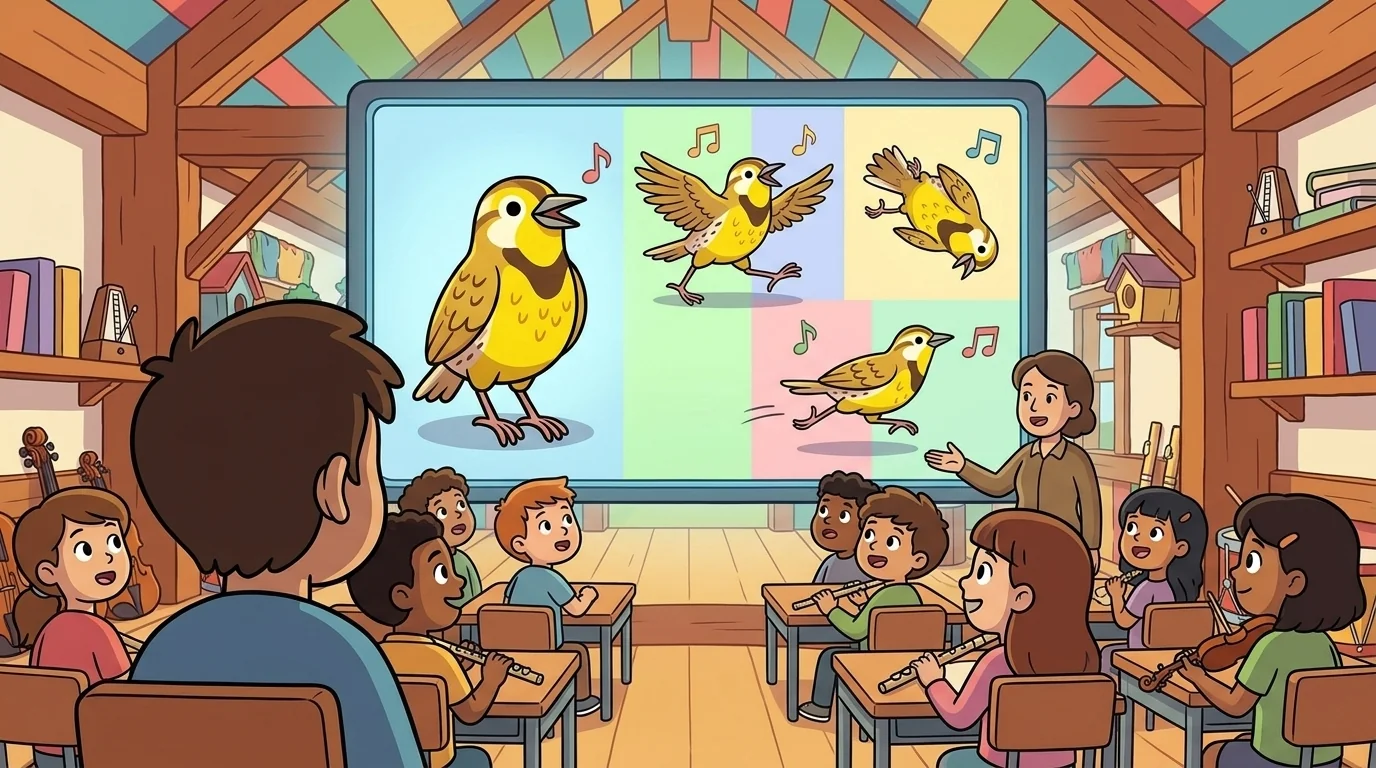
The next morning the students crowded close as the teacher put Trill up on the big screen. He was just sitting there in the quiet, waiting, not a note sung yet — and you could feel the hush stretch tight across the room.
"Watch him," the teacher whispered. "Right now the music is only setting the mood. He hasn't sung. He's about to."
Trill stood, puffed his chest, and sang his four notes clear and true — and the students gasped, because now they knew him, and a song you know feels like a friend walking in the door.
"Now watch what happens when the music plays with his tune," the teacher said. On screen, Trill's notes stretched slower, then rushed faster, then leapt higher. Trill tilted his head, lifted one wing, stretched a leg. He looked different — dizzy, adventurous — but every student in the room could still tell it was him. "See? He's changing. But he's still Trill."
Then the screen did something that made a small girl in the front row gasp out loud. A brand-new tune took over the whole song, bright and unfamiliar, and Trill stepped off the edge of the screen and vanished. The music went on without him. It was pretty. It was interesting. But the girl kept her eyes on the empty branch where he'd been, and the whole room leaned forward, quiet, missing him — waiting to see if he'd come back.
He did. Trill came flying back onto the screen with his feathers a little ruffled and his eyes a little braver, and he sang his four notes again — same notes, but somehow bigger now, carrying everywhere he'd been. And when at last he settled down onto his perch and sang them one final, clean, perfect time, the whole song rolled gently to a close, and Trill was home.
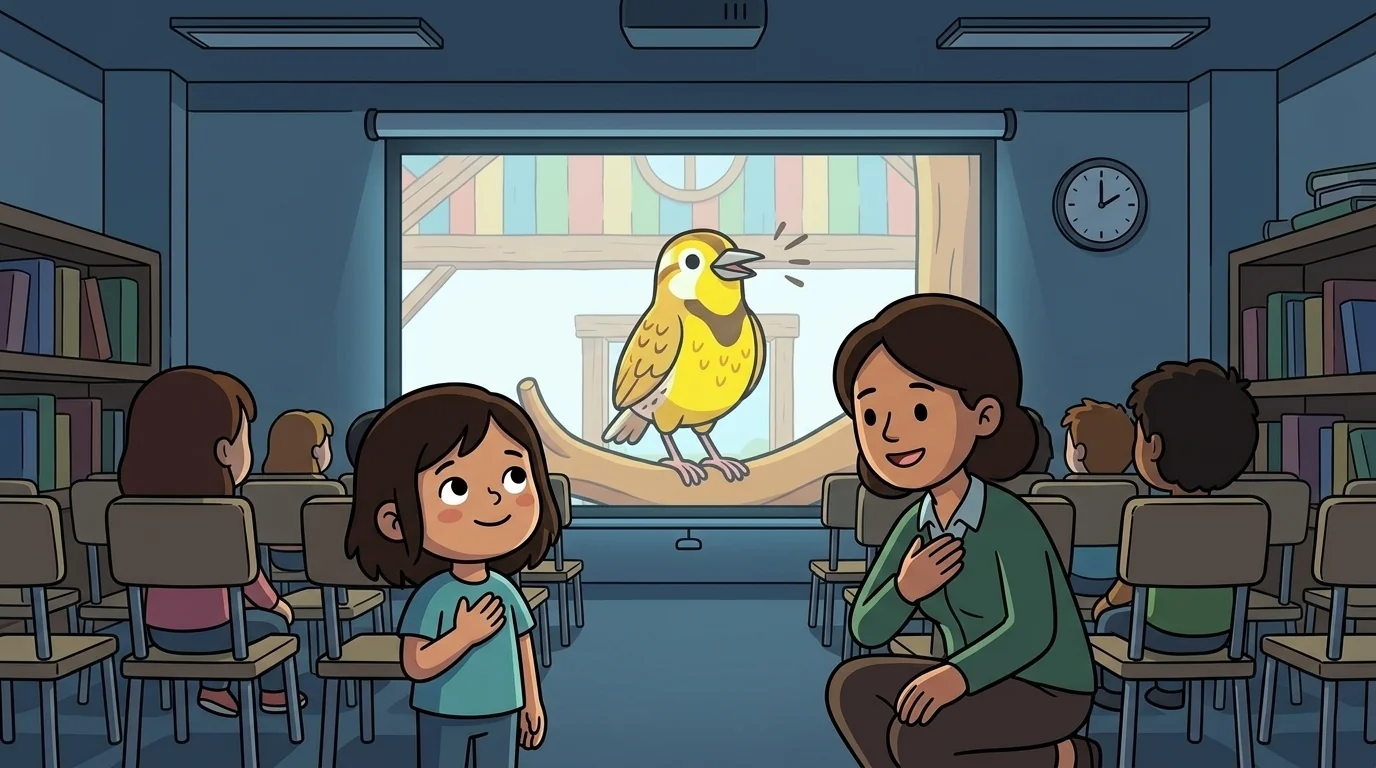
The girl in the front row raised her hand. "When he flew off the screen," she said, "why did it make my chest hurt a little?"
The teacher smiled and crouched down beside her. "Because you'd let yourself care about him," she said gently. "That's the whole secret. When a little tune comes back after being gone, you feel it right here" — she tapped her own chest — "because part of you had been holding a space open for him the whole time."
The girl nodded slowly, and Trill let out one bright, sweet chirp from the screen, as if he'd heard her. She pressed her hand against her chest and felt the missing turn warm and whole again — the ache of waiting melting into the quiet, settled joy of a friend come home.
The MotifLab ensemble
Trill is part of MotifLab's distributed-narrative cast. Each character embodies a different curricular primitive; together they teach the full subject.
-
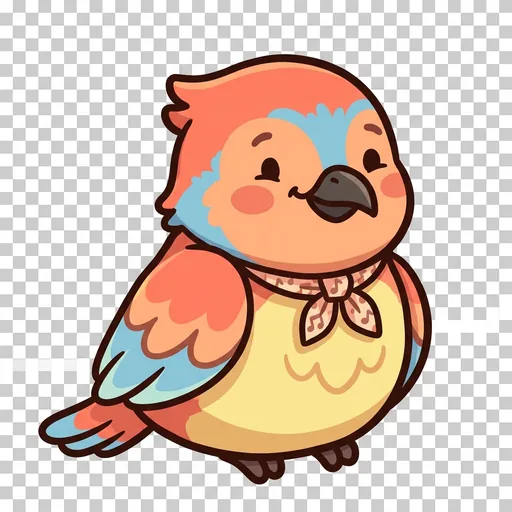
Meld
Harmony — notes that bloom underneath to support the melody
-

Thrum
Bass — the deep low foundation the whole song stands on
-

Clap
Rhythm — the steady beat pattern the song walks on
-

Twine
Counter-melody — a second tune that weaves against the main one
-

Surge
Dynamics — how loud and soft; how a song breathes
-

Ply
Texture — how many layers sound at once; thick or thin
-

Tint
Timbre — the color or flavor of a sound
-

Nest
Key — the home note the song keeps returning to
-

Wend
Cadence — how a phrase comes to rest; the song's punctuation