
Pith
VOCABULARY IN CONTEXT — deriving the meaning of an unfamiliar word from the *surrounding text* rather than from a dictionary. The surrounding sentences usually give enough signal to derive the word's meaning *in this context.*
Press play to listen along. The line being read lights up as you go.
Show full transcript
Loading transcript…
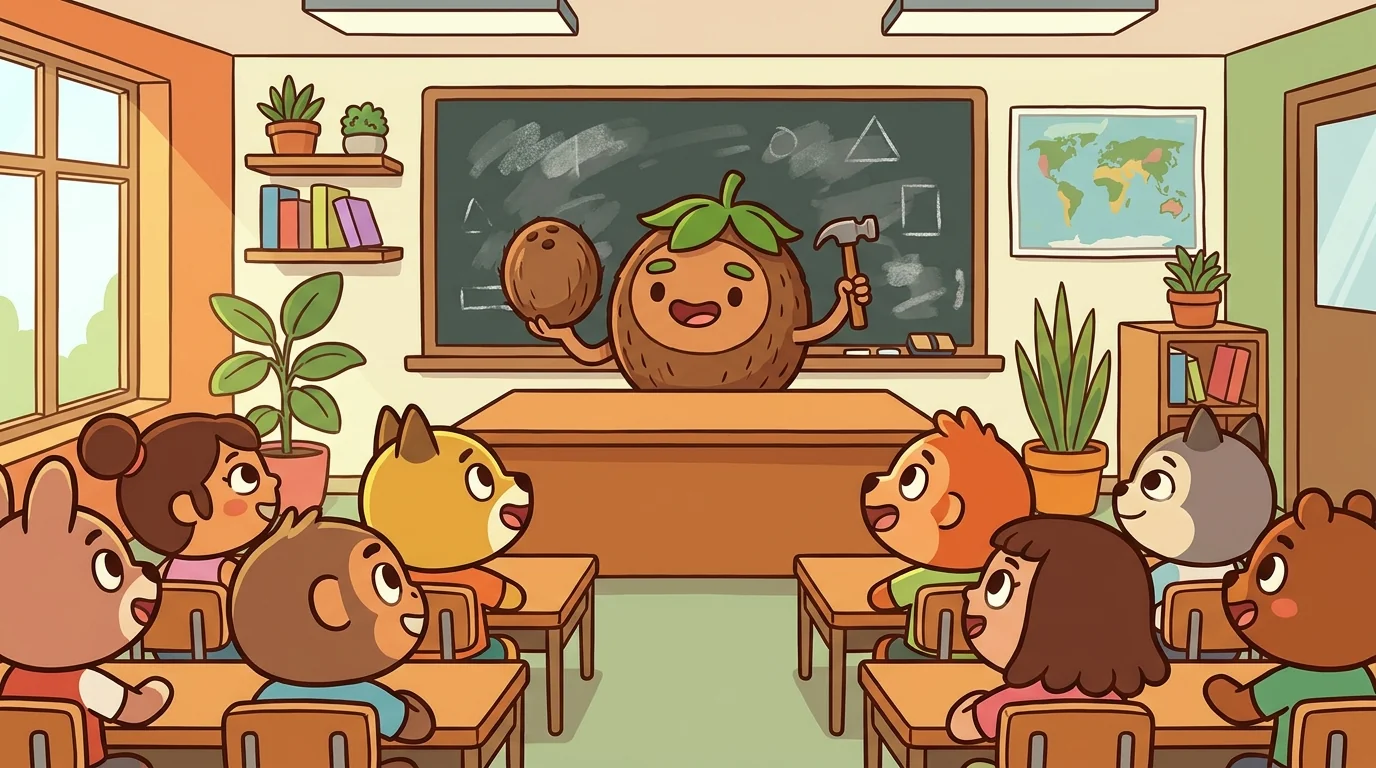
The whole class went silent when Pith set the coconut on his desk and picked up the little hammer.
He was a small, round coconut himself — a coconut-tween, the kids called him, with a bristly brown husk for a body and a wide, friendly face — and every year, on the first day, he did exactly this. He held up a whole, sealed coconut so the students could see it from every side. "Tell me what's inside," he said.
"Meat!" someone always shouted.
"How much? Is it sweet? Is it good?" Pith turned the coconut slowly in his hands. "You can't know yet. You can guess from the outside — the husk, the little eyes, how heavy it feels — but you can't taste it until you crack it open." Then he swung the hammer, and the coconut split with a crack, and there it was: the bright white meat, hidden all along, right there under the surface the whole time.
That crack was Pith's entire heart, because a new word, he liked to say, is exactly like a sealed coconut — and the meaning is the meat you have to work your way in to find.

Pith had grown up in a warm village by the sea, where the coconut palms leaned out over the water and his family split coconuts from sunup to sundown.
As a small coconut himself, he'd spent whole afternoons watching his aunties work. They'd pick one up, weigh it in a palm, thumb the three little eyes, and press the husk to test the fibers — and only then, having read all those outside signs, would they split it open. Half the time they knew what they'd find before the hammer even fell.
"How do you always guess right?" little Pith asked once.
His oldest auntie held a coconut up to the light. "The outside is always telling on the inside," she said. "You just have to learn to listen to it."
That sentence lived in Pith's mind for years. And one afternoon, sitting on the beach with a storybook in his lap, he hit a word he didn't know — and instead of running for help, he found himself doing exactly what his auntie did with coconuts. He stopped. He looked at the words around the strange word. He read them like fibers and eyes and weight. And slowly, without any dictionary at all, the meaning cracked open in his mind, white and clear.
He nearly dropped the book. Words had husks. The sentences around a hard word were the husk, and the meaning was the meat, and the husk was always, always telling on the meat — if you learned to listen to it.

Pith carried that discovery all the way to ReadQuest Academy, and on his first day he wasted no time proving it.
The head teacher had written a sentence on the board and pointed to one long, spiky word in the middle of it. "The younger students are afraid of a word like this," she said. "They freeze. What would you have them do?"
Pith padded up to the board, and instead of answering, he read the whole sentence aloud, slow and steady:
"The hiker felt his quadriceps burning as he climbed the steep slope, the muscles in his thighs straining with every step."
Then he circled the words muscles in his thighs and, without touching the scary word at all, said, "There it is. The meaning was hiding in plain sight." He tapped quadriceps. "This one just means the muscles in your thighs. The sentence told us itself. No dictionary. I only had to read the husk."
The head teacher smiled slowly. "Take the first-day lesson," she said. "Every year."
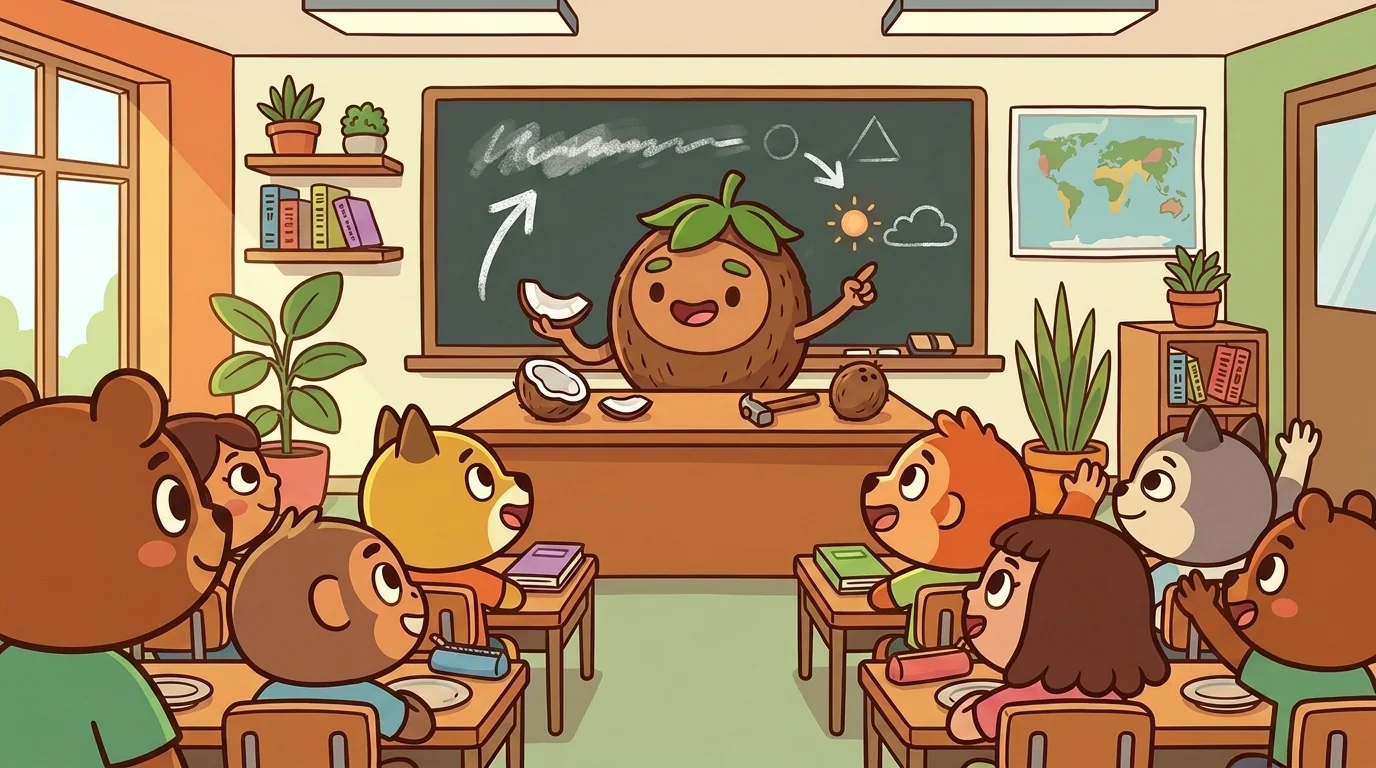
And so, every year, after cracking his coconut and passing pieces around for the students to nibble, Pith would turn to the board and show them how a word gives itself away.
He'd write a fresh sentence — "The sun was beginning to wane as evening approached, its light dimming and the sky darkening" — and point to wane, and refuse, cheerfully, to define it. "Don't look it up," he'd say. "Look around it. Beginning to what, as evening comes? Light dimming. Sky going dark. So — what's the sun doing?" And a hand would shoot up: getting smaller, fading! "Exactly. The words around it just handed it to you."
The students learned there were all kinds of husks, and Pith showed them each one inside a real sentence. Sometimes the text came right out and defined the word for you. Sometimes it gave you an example so clear you couldn't miss it, or dropped in a word that meant nearly the same thing, or set an opposite right beside it so you could feel the difference by contrast. And sometimes there was no single clue at all — just the whole warm feeling of the sentence, telling you which way to lean. Pith called all of these context clues, and every one of them was just another way the husk wrapped around and pointed you toward the meat.
The children always loved this part, because they came in believing that every hard word meant a trip to the dictionary — and left knowing that most of the time, the words already around them were plenty.
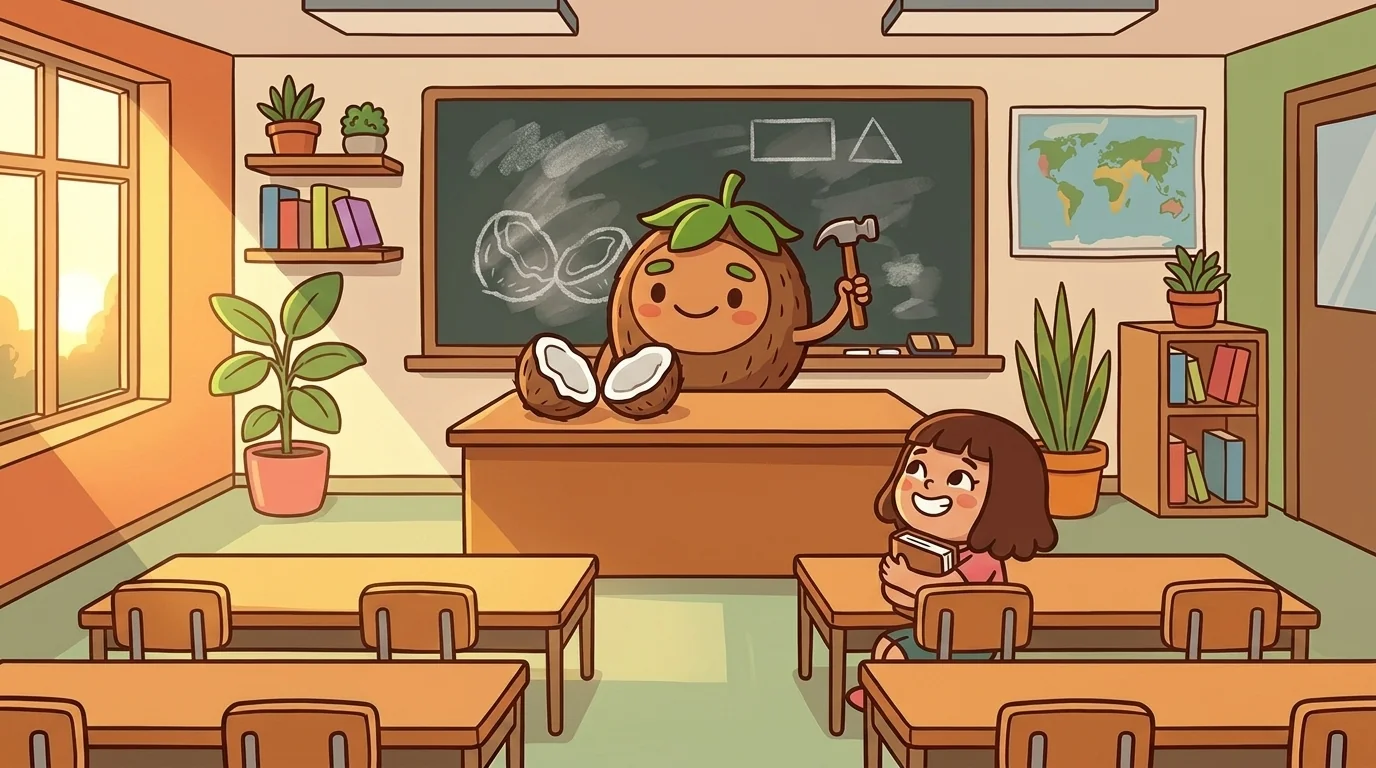
Late one afternoon a girl stayed behind, frowning at a word in her book. Pith waited. She read the sentence again, and again — and then he watched her sit up straighter, her whole face brightening as the meaning clicked into place all on its own.
"I got it," she breathed. "I didn't even look it up. I just... read around it."
"That's the whole secret," Pith said warmly. "The word's the meat. You can't see it alone. But the husk — everything wrapped around it — that you can see. Trust the husk, and the meaning cracks right open."
The girl closed her book and hugged it to her chest, glowing with that small, private pride of having found something entirely by herself — the warm, sure feeling of a mind learning to trust its own hands.
The ReadQuest ensemble
Pith is part of ReadQuest's distributed-narrative cast. Each character embodies a different curricular primitive; together they teach the full subject.
-

Crest
Main idea / central message (the *peak* of the passage)
-

Hunch
Inference (reading between the lines)
-

Anchor
Evidence / textual citation
-

Plume
Author's purpose / voice / tone
-

Frame
Text structure (compare-contrast, sequence, cause-effect, problem-solution, description)
-

Yonder
Predicting — alert young-hare creature who reads the trail's clues to guess what's around the bend; a wrong guess just means the story surprised you
-

Vista
Visualizing — dreamy young-deer creature who turns words into a movie in the mind; the writer gives the words, the reader gives the pictures
-

Nettle
Questioning the text — question-quilled hedgehog who pokes a passage with why/how/what-if; asking questions means you're awake, not that you don't understand
-
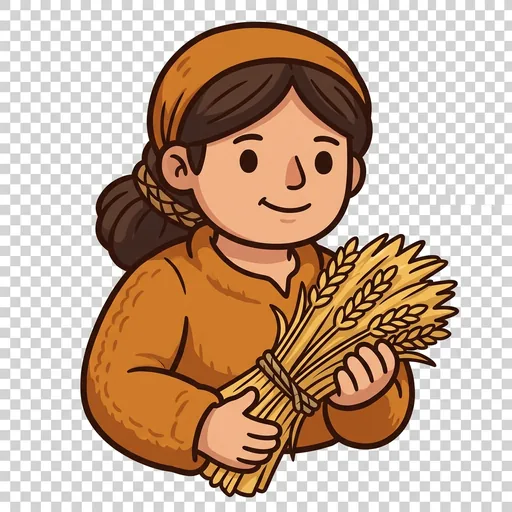
Sheaf
Summarizing — warm-handed harvester who gathers a whole passage into one tidy armful, keeping the important middle and letting loose details fall