
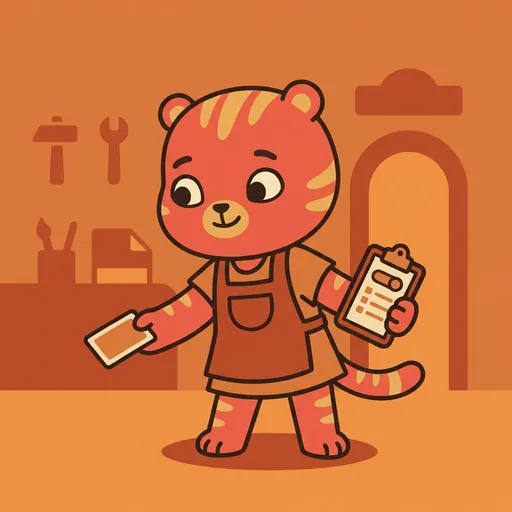
Pitch
PITCH — *tell the story. invite the person in. never push.*
Listen along — Pitch
Loading audio…
Press play to listen along. The line being read lights up as you go.
Show full transcript
Loading transcript…
Chapter 4 — Pitch and the Inviting Story
Sunlight warmed the wooden table at the community garden. Pitch, a small coral-red cardinal kid in a big-pocketed apron-vest, crouched beside a row of seedlings and watched. Three gardeners were watering plants nearby. Pitch didn’t rush over. First they slid a story-card out of a vest pocket and wrote three quiet lines: who needs this, what it does, one gentle question. Then Pitch walked up with a soft wave.
“Hi,” Pitch said, voice low, not loud. “Last week I saw some of you carrying seedlings in your pockets and losing them in the dirt.” Pitch held up a green canvas apron-pouch. “We made this. It keeps little tools safe. Want to see how it works?” Pitch stopped talking there — and waited, hands still, giving the gardeners room to answer either way.
Pitch hadn’t always known how to wait.
When Pitch was younger, they used to blurt. At the school fair, Pitch had a booth of hand-folded paper stars and they wanted every single person to buy one. So they chased. “You NEED a star! Only five cents! Get one before they’re GONE!” Pitch tugged sleeves. Pitch blocked the path. And the more Pitch pushed, the more people stepped backward, smiling politely and edging away.
By the end of the fair the stars were mostly unsold, and worse, Pitch’s stomach felt tight and sour. A neighbor kid named Wren had wandered up earlier, looked interested — then hurried off when Pitch grabbed at her wrist. That was the part that stung. Not the unsold stars. The pushed-away face. Pitch sat in the empty booth and figured out something that would stick: a person you shove never really chooses you. They just leave.
So Pitch practiced the opposite until it became second nature.
The day Build finally got the apron-pouch working — Version 5, the first one that actually held together — Pitch didn’t grab the nearest person and demand a sale. They took the story-card back out. They walked the garden slowly first, just noticing. Who kept dropping their trowel? Who already had a pocketed apron and wouldn’t need one? Pitch was learning the shape of the thing: find the person the idea truly helps, tell them a short true story, then hand them the choice like a gift and step back.
At the table, Ledger watched Pitch scout the garden and raised an eyebrow. “You’re not selling,” Ledger said. Pitch shook their head. “I’m looking,” Pitch said. “The story only works if I tell it to the right person.” Ledger tucked that away. Pitch wasn’t performing at people. Pitch was inviting the ones who’d actually want in.
Back at the seedling row, the gardeners answered.
The tall woman with dirt on her knees nodded. “Sure — I’m always losing my trowel!” The boy in bright red boots piled on: “Mine too!” But the older man in the straw hat shook his head, gentle. “Not looking for one right now,” he said. “But thanks for asking.”
Pitch didn’t flinch. No frown, no wounded look, no second try. Pitch just smiled at the man. “That makes sense,” Pitch said. “Totally fine.” They slid a small folded card from the vest — a drawing of the pouch, a line on where to find them. “If you ever change your mind, here’s us.” The man took the card and smiled back, and because Pitch had let him go easily, he lingered a moment longer instead of fleeing.
Then Pitch turned to the two who’d said yes — no guilt tugging, no hurry-up. Just the pouch, opened up. “See the big pocket? That’s for the trowel. This little one keeps seeds from spilling.” The tall gardener tried it on right there and grinned. The boy in red boots thought it was cool but decided he didn’t need one today, and Pitch said, “Cool either way,” and meant it. The tall gardener bought the first one. The team’s very first sale — and no one had been chased into it.
Later, when the gardeners had drifted back to their rows, Pitch stayed at the table and Ledger sat down across from them.
“Three people,” Ledger said. “One bought. One passed. One’s thinking. And you’re smiling like all three went great.”
“They kind of did,” Pitch said.
Ledger folded his hands. He talked, mostly, about money and fairness — how a good idea has to reach people without tricking them, how the families who most need a tool are usually the ones a pushy pitch scares off first, so a gentle honest story is the fair way in, not just the nice one. “The man might come back,” Ledger said. “Maybe not. Either way you told the truth and let him choose. That’s the kind of thing you can build on for years.”
Pitch nodded, but they weren’t really thinking about years yet. They were noticing their own chest — how light and steady it felt, nothing sour in it, nothing tight. Once, an unsold booth had left them aching. This time three people had made three different choices and Pitch’s heart still felt warm and open, because not one of them had walked away pushed. That quiet, unclenched feeling — knowing you’d invited someone kindly and trusted them to answer — settled over Pitch like sun on the wooden table, and it felt, more than any sale, like the best kind of good.
The VentureQuest ensemble
Pitch is part of VentureQuest's distributed-narrative cast. Each character embodies a different curricular primitive; together they teach the full subject.
-

Spot
Opportunity recognition — noticing problems worth solving for real people
-

Listen
Customer discovery — asking + waiting + watching, never guessing
-

Build
Lean experimentation — rough first drafts, fast iteration, failure-as-learning
-

Weigh
Ethical decision-making — sitting with tradeoffs, holding stakeholder views