Ferry
METAPHOR — *X IS Y. direct comparison. the meaning ferries from one side to the other.*
Press play to listen along. The line being read lights up as you go.
Show full transcript
Loading transcript…
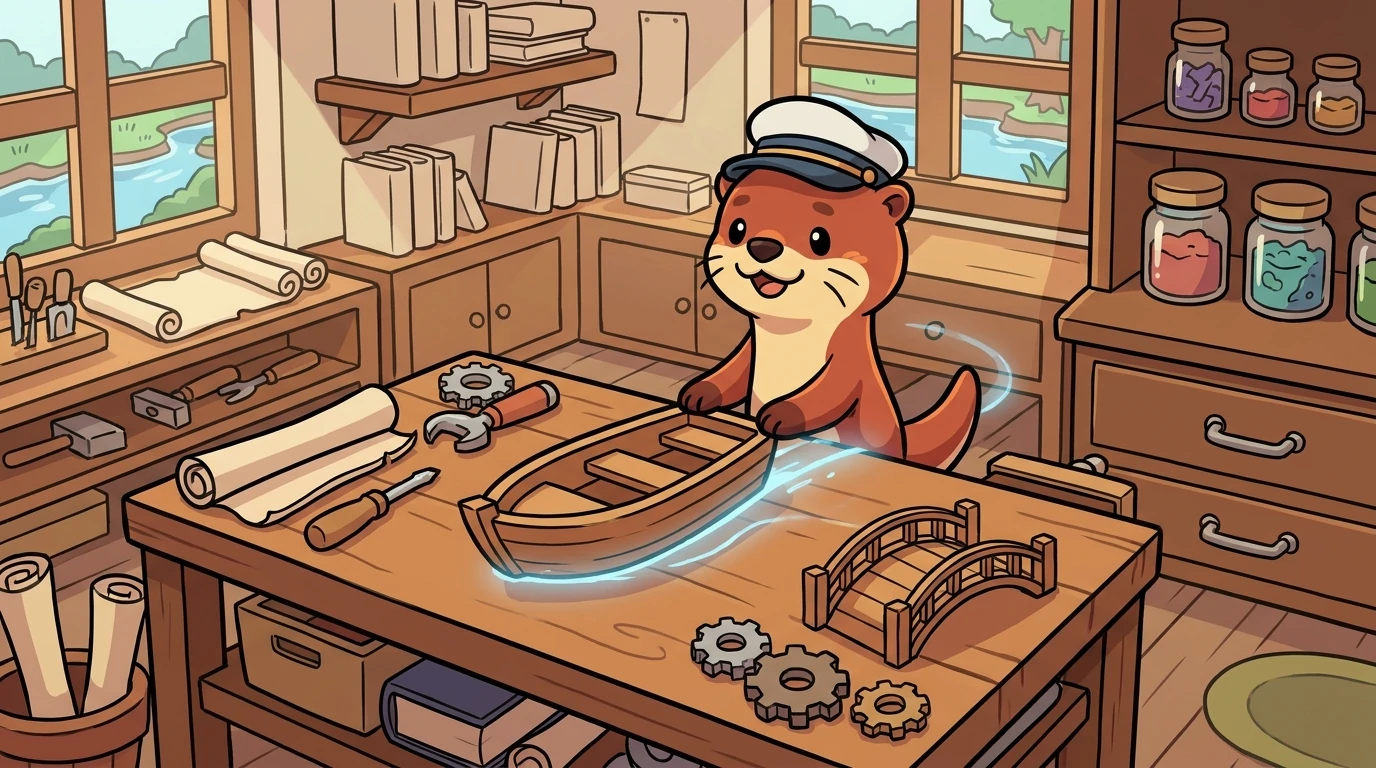
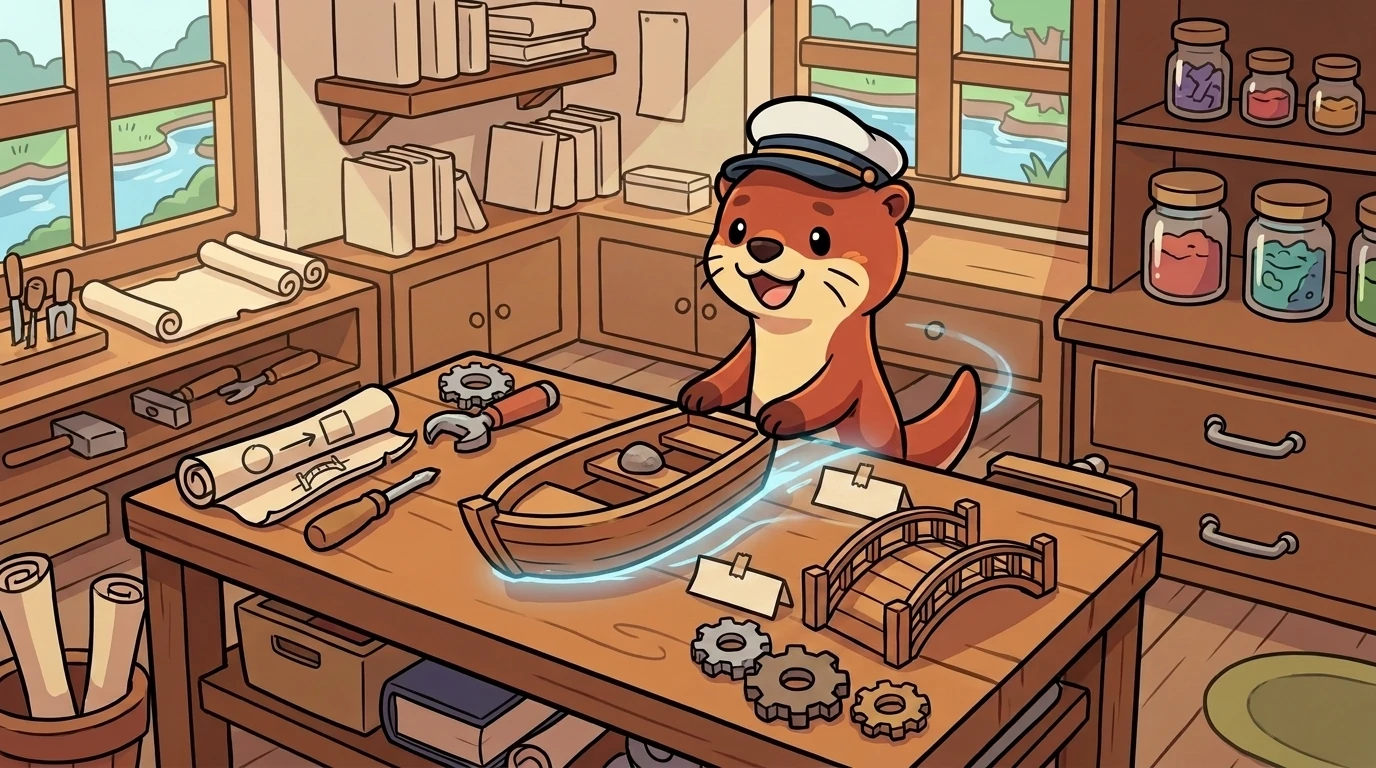
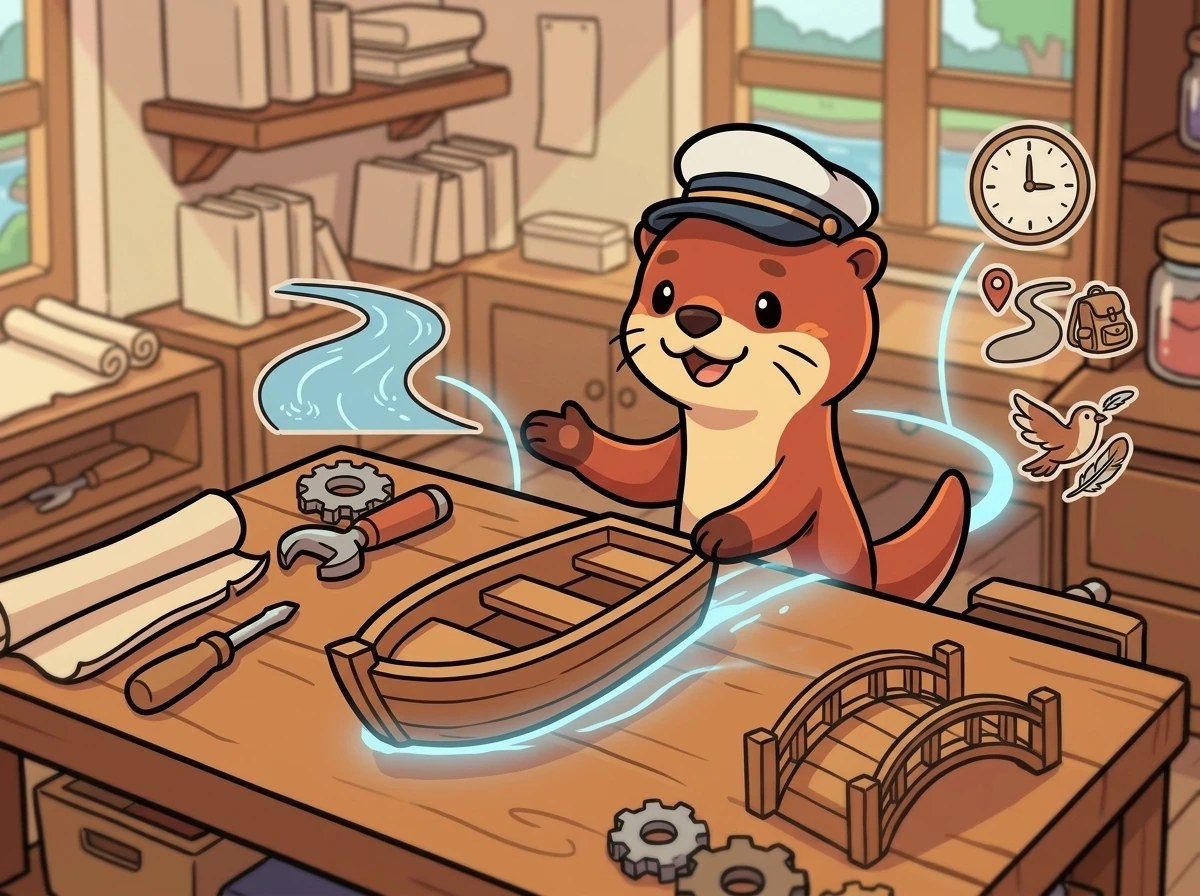
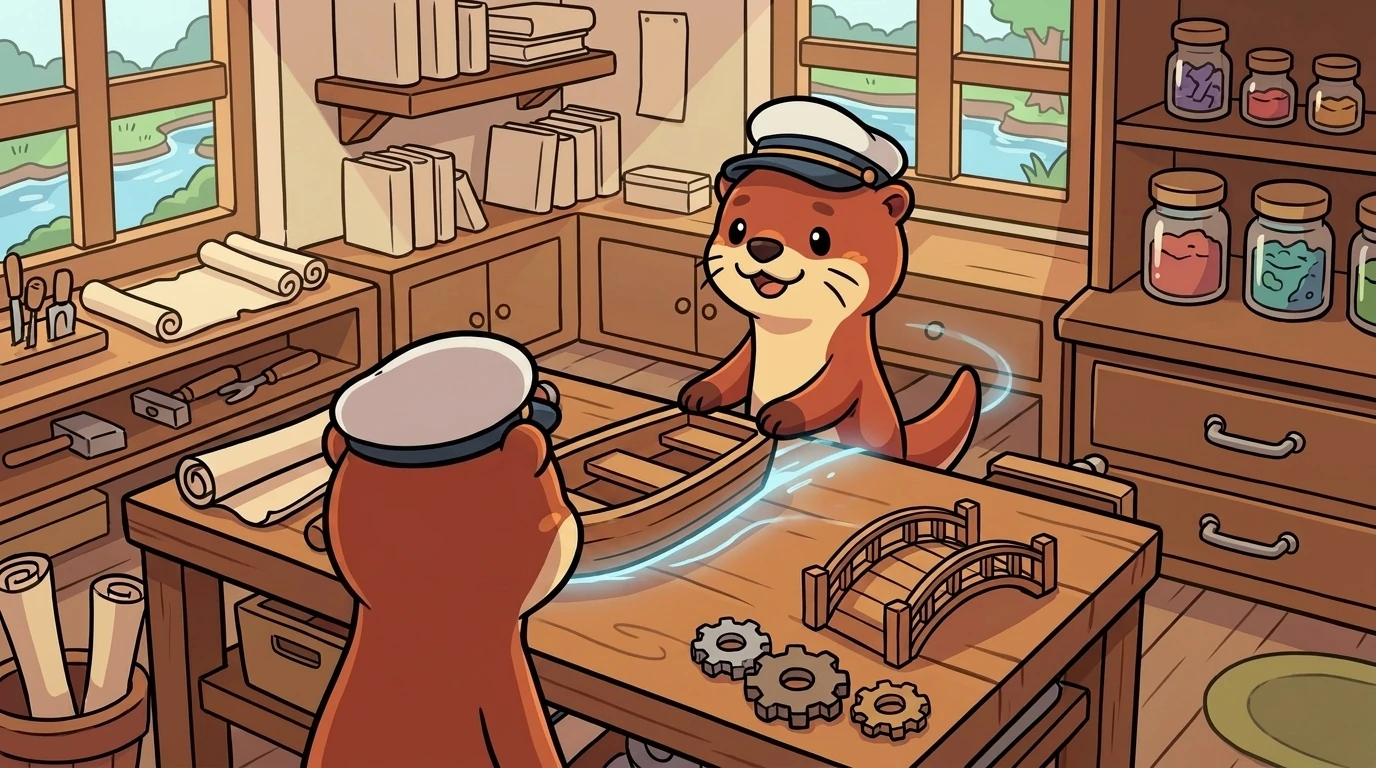
At the edge of the FigureForge workshop, where a real river slid past the open window, a small russet otter in a chunky sailor cap pushed a wooden rowboat across her workbench. There was no water on the bench. There didn't need to be. The boat carried one thing — a smooth grey pebble — from a label that read RIVER to a label that read TIME, and when it arrived, Ferry looked at the pebble as though it had changed on the way.
"Time is a river," she said quietly, to nobody in particular.
A student passing behind her slowed. "It's a pebble in a toy boat."
"It was a pebble." Ferry tapped the RIVER label, then the TIME one. "Then it crossed. Now the word TIME has everything the river had — it flows, it has a current, you can't step in it twice." She nudged the boat a hair closer. "The boat didn't move a stone. It moved a meaning. That's the whole job. When you say one thing is another, you're rowing a cargo of sense from a bank you know to a bank you don't."
The student frowned, half-convinced, and went to fetch a mop for water that wasn't there.
Ferry had not always trusted the crossing. She had grown up on a wide, curving bend of the river, in a village whose otters had ferried people across long before anyone thought to build a bridge. Every morning her family rowed farmers and their baskets and their letters from one side to the other; every evening they rowed them back. It was ordinary, tiring, wet work, and young Ferry thought that was all it ever was.
The bridge changed her mind. She was small when the village finished it — a broad, patient span of stone — and she remembered standing at the foot of it, certain her family's whole purpose had just been made useless. What was a ferry-otter for, once a bridge could carry everyone across for free?
Her grandmother found her sulking at the water's edge. She was old, her whiskers gone silver, and she had ferried more crossings than anyone alive.
"You think the crossing is finished," her grandmother said. "It isn't. You've only stopped rowing water." She turned Ferry gently to face the bridge, where the whole village now walked back and forth. "Every one of them is carrying something across — a message, a promise, a piece of news. The load never stopped moving. Only the boat changed." She touched Ferry's cap. "Words do the same. A word can carry the sense of one thing clean over to another. You come from ferry-folk. You already know how to move a thing that has no weight."
Ferry looked at the crowd streaming over the stone, and the hollow feeling in her chest lifted and turned into something bright.
She walked to FigureForge when she was twelve, her fur still soft, her paws still small, the sailor cap a size too big and worn anyway.
Trope, the workshop's oldest mentor, met her at the door. Trope asked every newcomer one question and listened harder to the answer than to anything else.
"What is metaphor?" she said, her voice like leaves moving.
Ferry did not reach for a definition. She set her toy rowboat on the doorstep, laid the RIVER label on one side and the TIME label on the other, and pushed the boat across with the pebble in it. "This," she said. "You take what everyone already knows about a river — that it flows, that it can't run backward — and you row it straight over to a word that needed it. Time is a river. Not like a river. Is. The load lands, and now the second word means more than it did." She looked up. "No 'like.' No 'as.' Those keep the two banks separate. Metaphor closes the gap and says they're the same shore."
Trope was quiet for a long moment. Then a rare, slow smile touched her mouth. "You're appointed," she said. "This workshop is full of makers reaching for a way to say the impossible thing. You're the one who'll ferry the meaning across."
Years later, a girl slumped onto the stool by Ferry's bench, a page of crossed-out sentences crumpled in her fist. "I have to describe fear for the class," she said, "and everything I write is boring. 'Fear is scary.' 'Fear is bad.' It just sits there."
"Then it hasn't crossed yet." Ferry smoothed the page flat. "Tell me one true thing about how fear feels — not what it is, but what it does in your body."
The girl thought. "It's cold. And it kind of... presses. Like something sitting on my chest."
"Good. Now — what else is cold and presses and sits on a chest?" Ferry set the boat between them, laid down two blank labels.
"...A stone?" the girl said slowly. "A cold stone?"
"Write it." Ferry wrote FEAR on one label and STONE on the other and rowed the pebble from STONE to FEAR. "Watch what crosses. A stone is heavy, cold, silent, hard to lift, older than you are." The boat touched the FEAR bank. "Fear is a cold stone in my chest. Now every one of those — the weight, the cold, the not-going-away — has landed on the word 'fear.' You didn't explain fear. You carried something into it." She sat back. "And notice — no 'like.' If you'd said 'fear is like a stone,' you'd have kept them on separate banks, polite strangers. You said 'is.' You made them one thing. That's the bold claim. That's the whole cargo."
The girl read her own line, and her eyes went wide, and she reached for a fresh page without being asked.
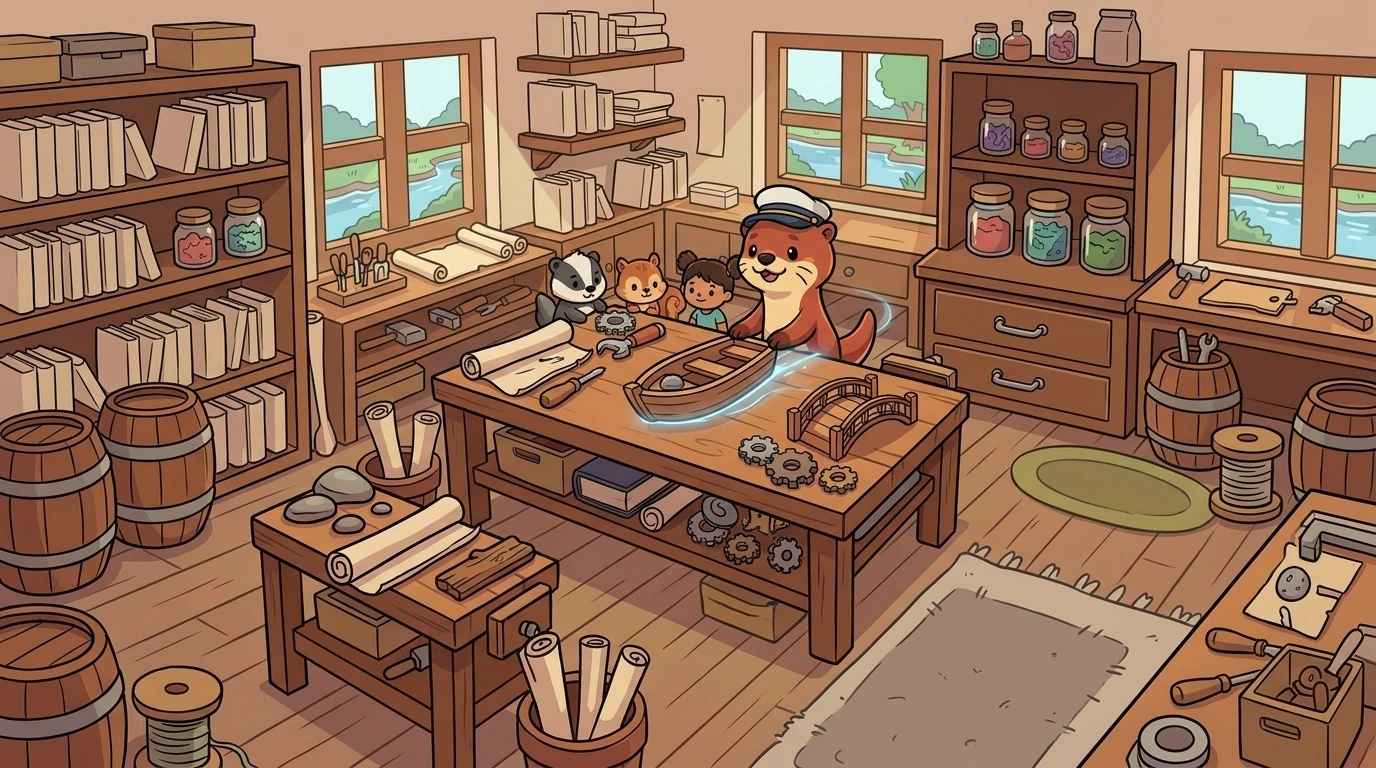
Later, when the workshop had gone quiet and the river outside had turned the color of dusk, the girl came back with a smaller, slower question.
"How do you know when a metaphor's a good one?" she said. "There are so many. 'Time is a river.' 'Life is a journey.' Some feel worn out."
Ferry nodded, unbothered. "Some are worn out. We call those dead — the 'leg' of a table, the 'mouth' of a river, the 'face' of a clock." She tapped the clock on the wall, the table's leg, gestured at the real river's mouth beyond the window. "We rowed those crossings so long ago we forgot there was ever a river to cross. That's fine. Dead metaphors are the bridges — everyone uses them without thinking, and that's exactly why they work."
"But a live one," she went on, and her voice warmed, "a live one you build fresh, on purpose, and the reader feels the boat move. 'Fear is a cold stone.' They didn't expect the crossing, so they ride it with you. That little jolt when the meaning lands somewhere new — that's the whole art. And you'll miss plenty at first, spotting them or making them. Everyone does. It's completely normal." She rested a paw on the small wooden boat. "You just keep rowing. The load learns to arrive."
The girl looked at the boat, and at her page of new sentences, and something behind her ribs came loose that had been clenched all afternoon. The dread of the empty assignment had gone. In its place was a quiet, spreading gladness — the warm certainty you feel when a thing you thought you couldn't do turns out to be a thing you can, and your shoulders drop, and you breathe all the way to the bottom of the breath for the first time in hours.
The FigureForge ensemble
Ferry is part of FigureForge's distributed-narrative cast. Each character embodies a different curricular primitive; together they teach the full subject.
-

Ripple
Simile — 'X is LIKE Y' softer comparison
-
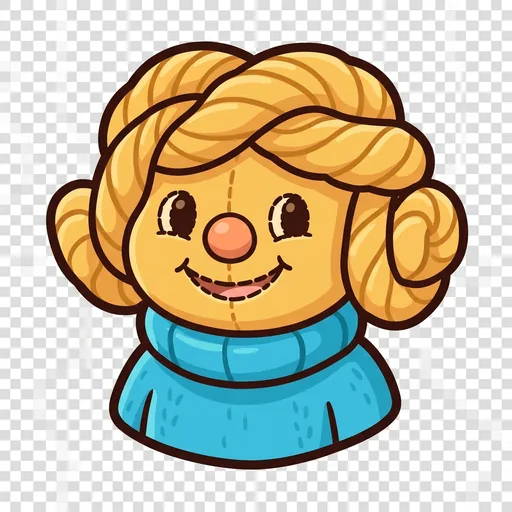
Knot
Idiom — fixed expressions whose meaning isn't literal
-
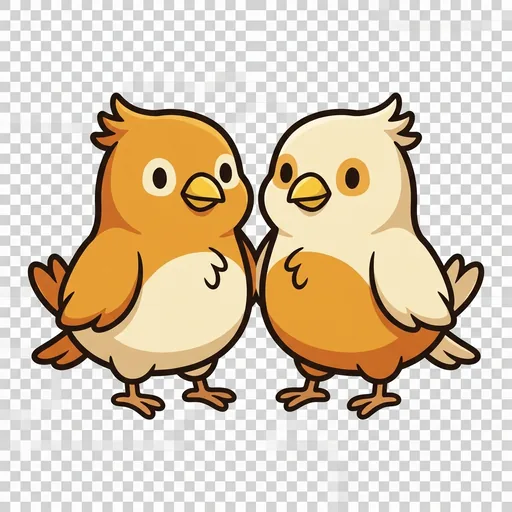
Twin
Analogy — extended comparison / X:Y::A:B parallel mapping
-

Hum
Personification — non-human takes on human qualities
-

Mask
Hyperbole + understatement + irony cluster — say one thing, mean another
-

Clang
Onomatopoeia — copper bell-creature whose words carry the noise they name (buzz, splash, crash); the word reaches past the eyes and touches the ears
-
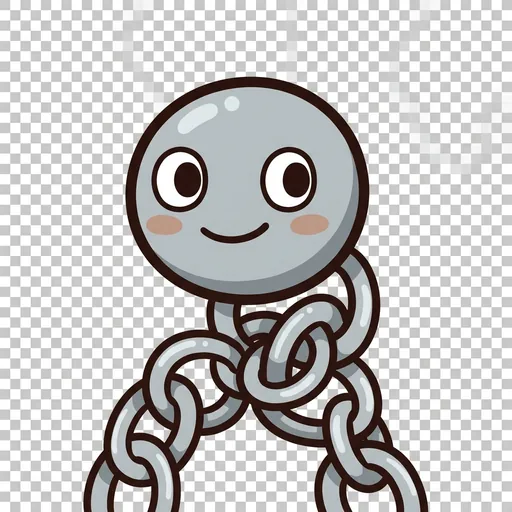
Chain
Alliteration — living-chain creature whose links lock when words share a first sound (big blue balloon); a little is catchy, too much is a tongue-knot
-
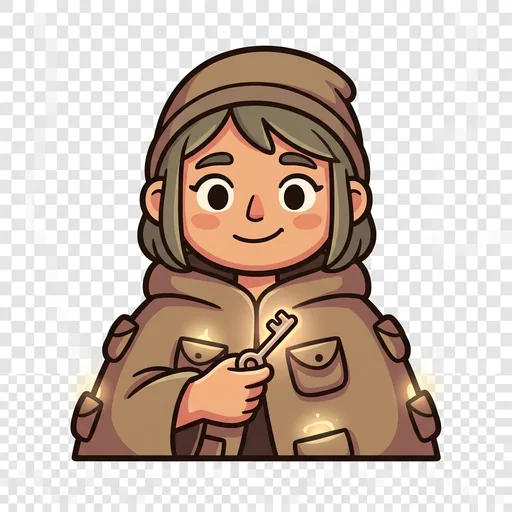
Token
Symbolism — quiet creature with a many-pocketed cloak of small objects that stand for big ideas (a dove = peace); shows the meaning instead of saying it
-

Twain
Oxymoron — two-toned creature (one half warm, one half cool) who places two opposite words side by side (bittersweet); the clash says something truer than either alone