Mask
SAY-ONE-THING-MEAN-ANOTHER — *hyperbole exaggerates. understatement minimizes. irony flips. all three: the words don't match the meaning.*
Press play to listen along. The line being read lights up as you go.
Show full transcript
Loading transcript…
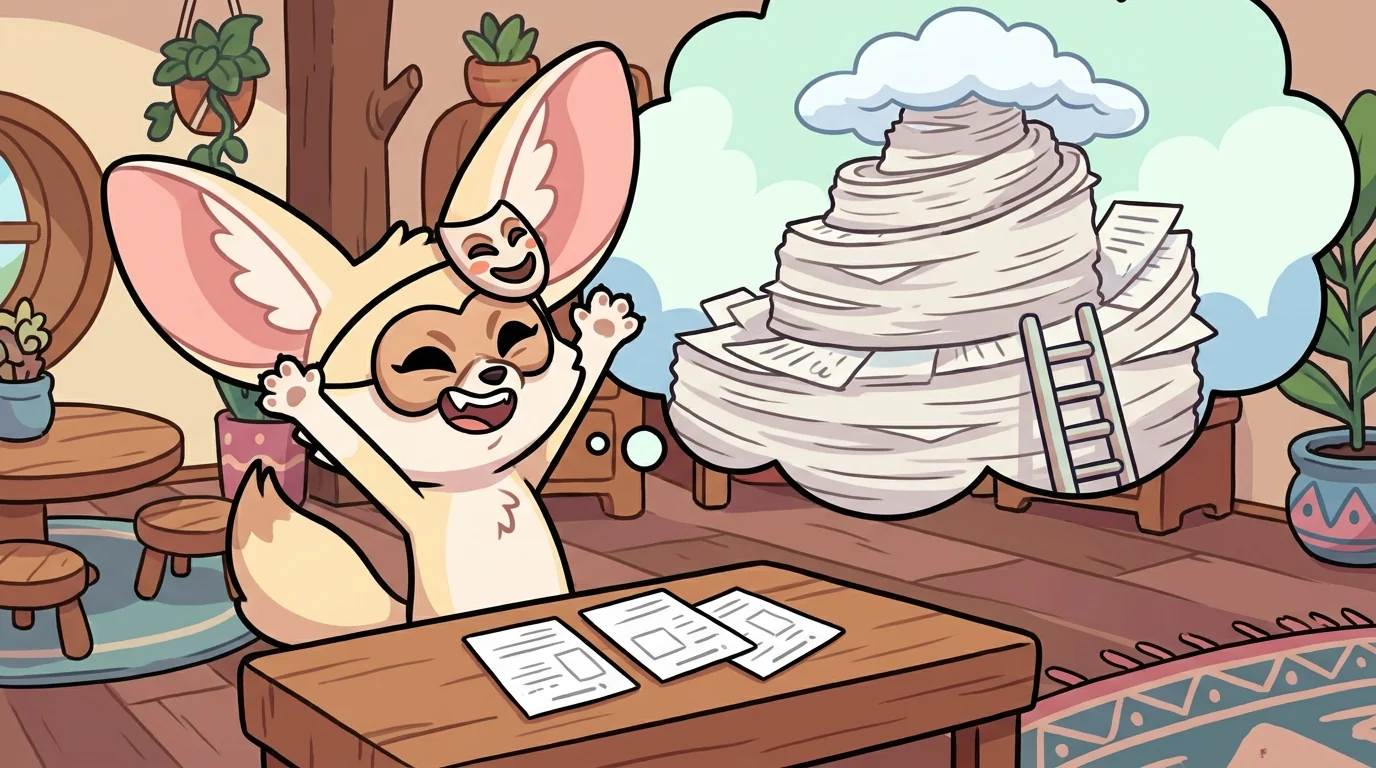
Three worksheets lay on the workbench. Three. Mask, a small fennec fox with big soft pink-lined ears and cream fur, stood over them, flipped the grinning side of her little stage-mask down over her face, threw both paws into the air, and cried, "I have an ENDLESS mountain of homework! It goes up past the clouds! I will be doing it until I am an old, old fox!"
Then she pushed the mask up onto her brow, glanced down at the three lonely worksheets, and let one paw fall. The words she'd flung out had been enormous — and the truth on the bench was tiny. The gap between them hung in the air like a joke waiting to land. That gap was the thing she loved most in the world. She grinned to herself, and her ears flicked, delighted, because the biggest words had ridden right over the smallest pile of paper and everyone in earshot had understood exactly how it felt to be buried in three worksheets.
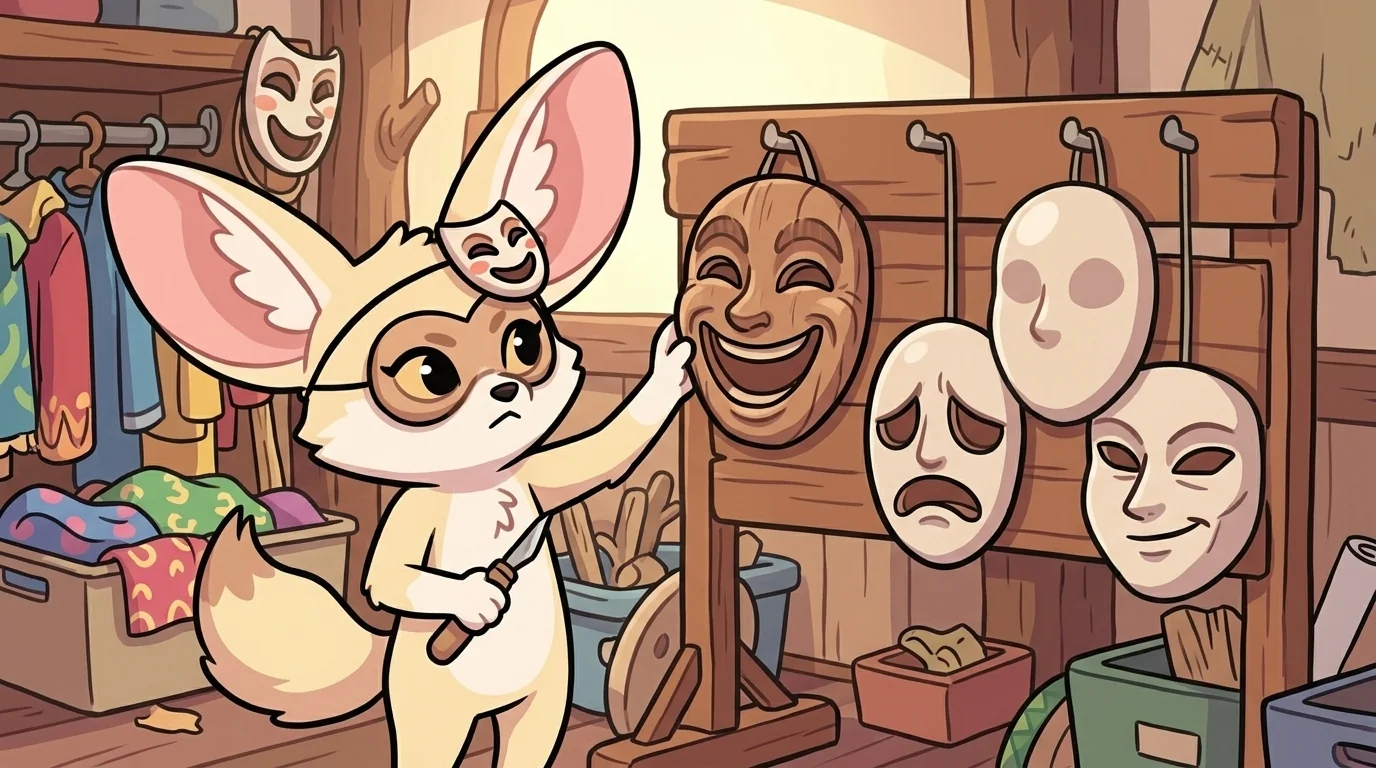
Mask had grown up learning to read two faces at once. Her village put on plays every season, and her family had carved the masks for them for as long as anyone could remember — a grinning face bigger than joy, a flat face emptier than calm, a slantwise face that never quite pointed where it looked.
As a kit she would sit backstage and watch an actor hold a laughing mask over a trembling chin, and she'd understand, without being told, that the mask and the face beneath it were saying two different things at the same time — and that the whole audience read both. The words on the outside. The meaning underneath. She learned that the space between them was never a lie. It was where all the meaning lived, if you were willing to look for it.
By the time she was half-grown she could tell, from three rows back, which mask hid which feeling. It became her favorite puzzle: the wider the outside, the more you had to lean in to find the truth on the inside.
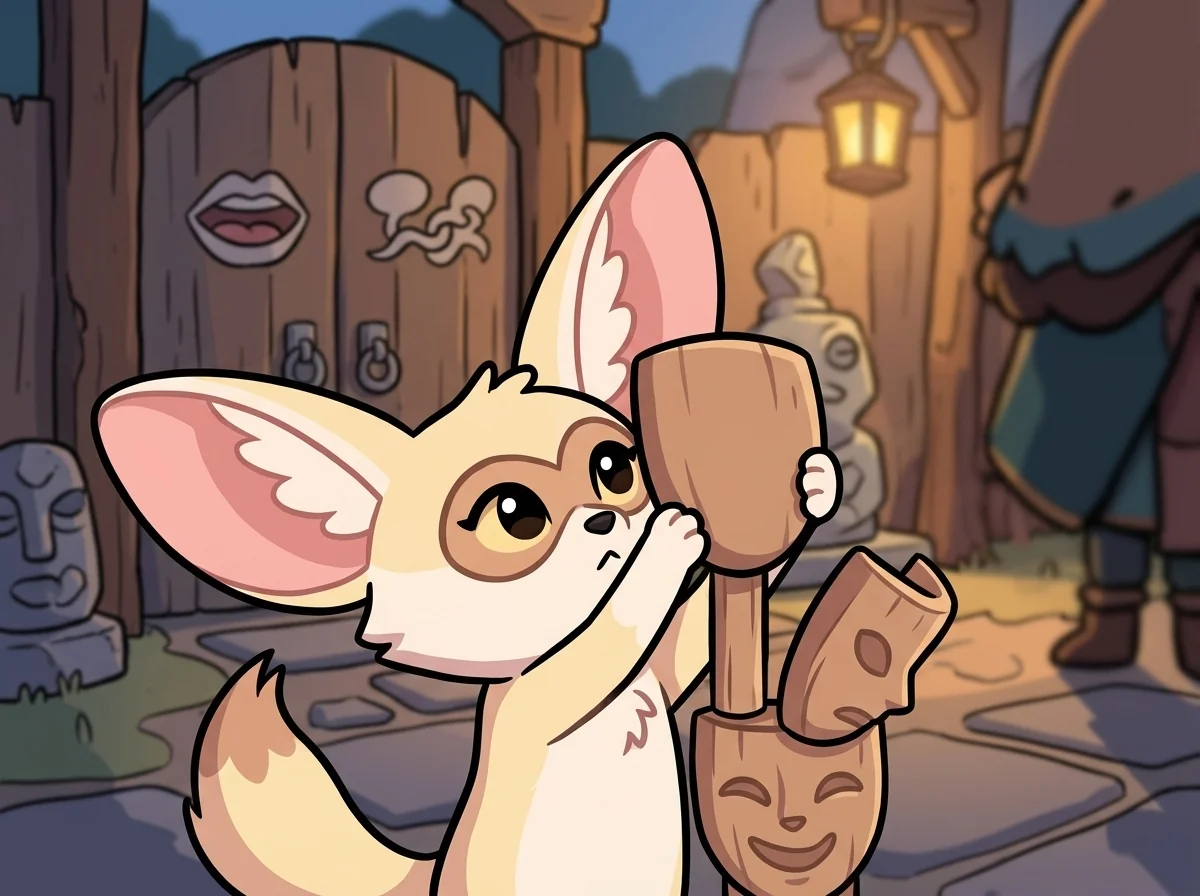
When she was grown she walked to FigureForge, and the old mentor, Trope, met her at the gate holding a plain wooden mask. He asked her to show him how words could wear a face that wasn't their own.
Mask took a breath and showed him three in a row. She flipped the grin down: "This sandwich is the size of a HOUSE!" — then lifted it and shrugged at the ordinary sandwich in her paw. She flipped the mask to its flat, blank side and murmured, in a voice like still water, "Bit of a breeze," while the wind tore a shutter off its hinge behind her. And she tilted the mask sideways, looked at a puddle she'd just stepped in, and said warmly, "Oh, marvelous."
She set the mask down. "Each one says a different-sized thing than it means," she told him. "One puffs the words up huge. One shrinks them down small. One turns them clean around. But it's the same puzzle every time — the outside doesn't match the inside, and you land the meaning by looking at what's really there."
Trope turned the plain mask over in his hands and said, "Then these are yours to teach."
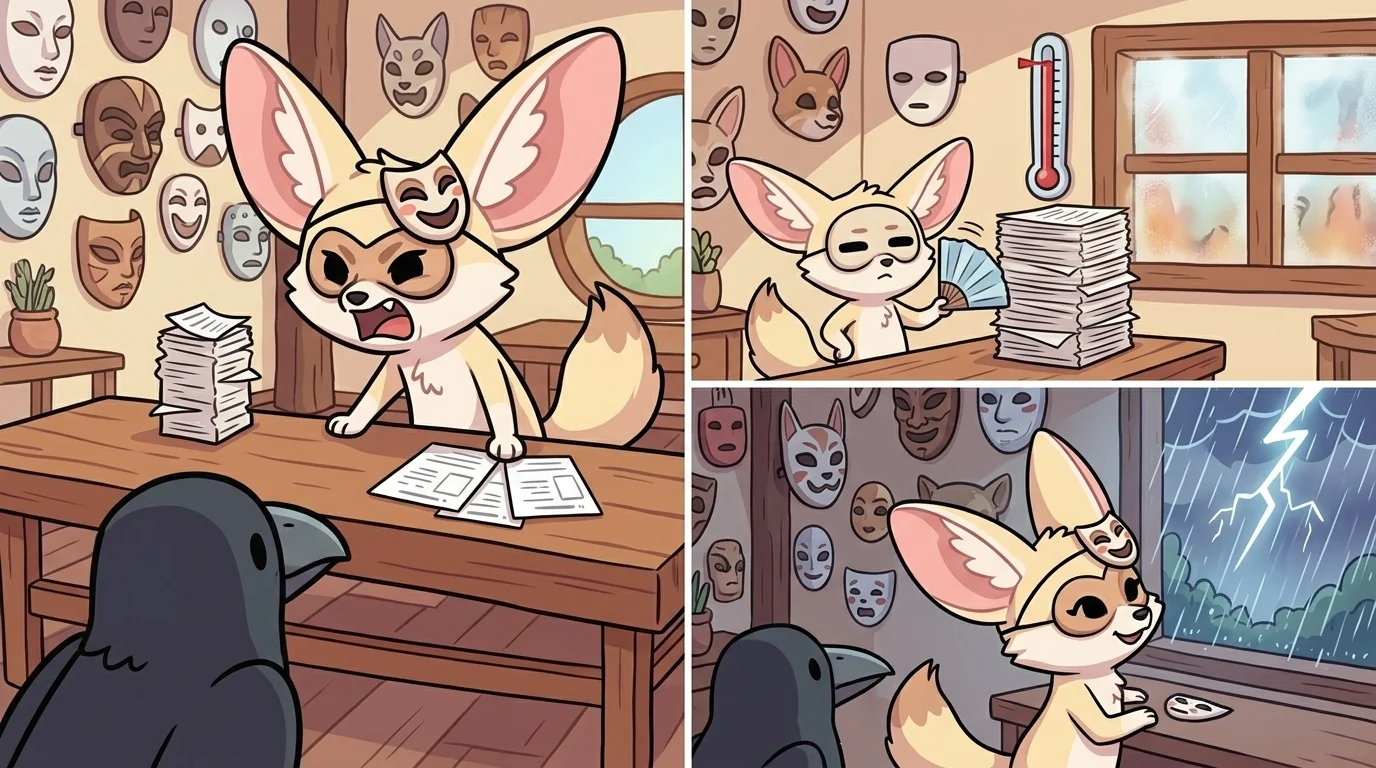
Her workshop was bright and cluttered, masks of every size hung along the walls. One afternoon a young crow named Rook squinted at her and said, "But how do I tell them apart? They all just... lie."
"Not lie — play," Mask said, and her ears perked. She flipped the grin down. "Watch which way the words stretch. Big-side—" she boomed, "—I've asked you a THOUSAND times! That one blows the truth up so you feel how much it matters." She flipped to the flat side and said, dead level, "It's a touch uncomfortable," while fanning herself hard; the wall-thermometer's red line was jammed at the very top and the windows were fogged with heat. "Small-side. It shrinks the truth down so the smallness is the point."
Then she tilted the mask crossways. Thunder cracked; rain sheeted down the glass. She gazed out at the storm with a dry little smile and said, gently, "What a beautiful afternoon."
"You said beautiful," Rook objected.
"And the rain said everything else," Mask replied, straightening the mask. "That's the crossways one — the words point one way, and what's really happening points the other, and you follow the happening to the meaning." She tapped the mask softly. "In writing, you can't hear my voice, so hunt for the clues around the words. And if you can't tell whether someone's playing — a message, a note, no face to read — it's kinder to ask than to guess."
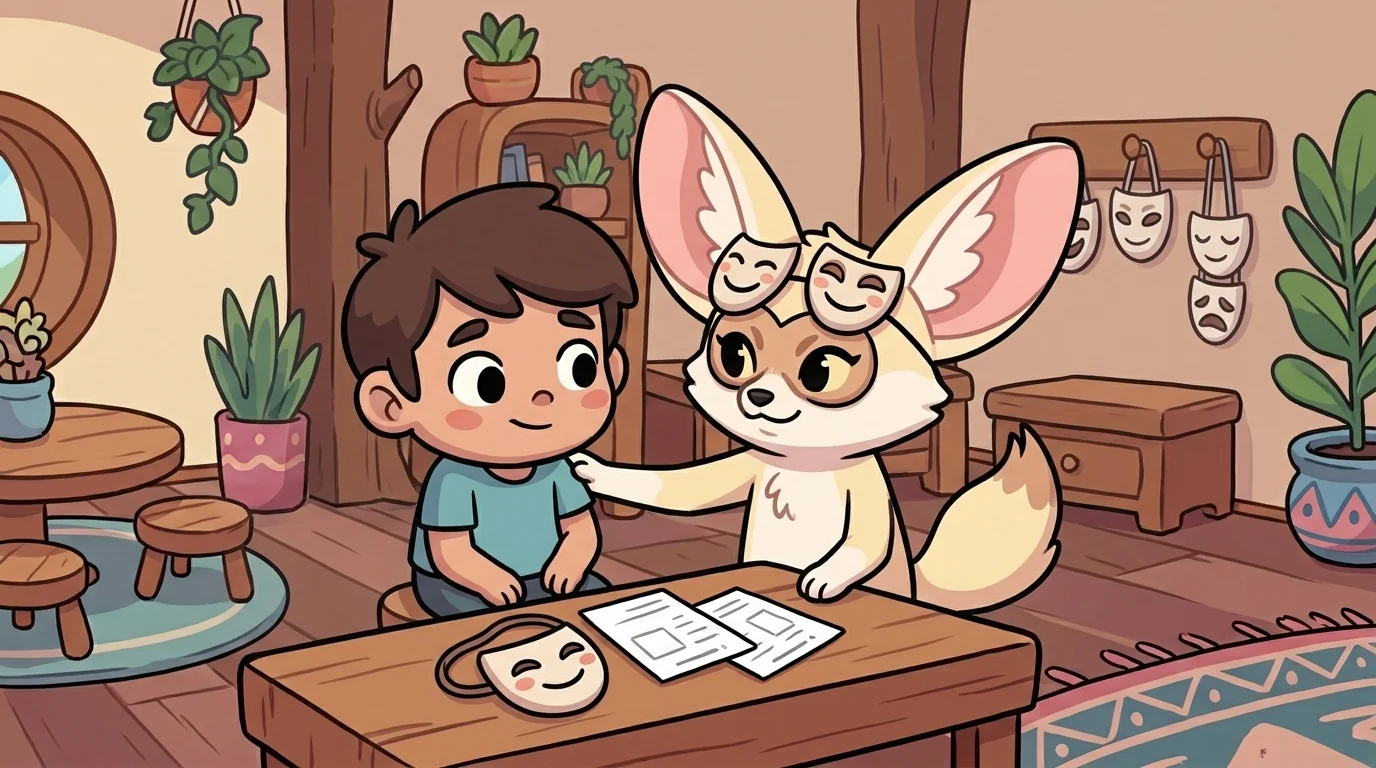
When the storm had passed and the others had gone, Rook stayed at the bench, turning the little flip-mask over, and asked whether he'd always feel foolish for missing one.
"You won't," Mask said, and she said it softly, her big ears settling gentle and warm. "When a word wears a face that isn't its own, don't feel tricked. Get quiet inside, and wonder — kindly — what someone might really be feeling underneath the words. That soft, careful noticing, that little lean-in toward another heart — that's the whole warm center of it."
She hung the mask back on its peg beside all the others. Rook's shoulders, which had been up around his ears, came down easy. And Mask felt it too — that tender, curious calm that comes from caring enough to look past the words and find the true small feeling hiding safe behind them.
The FigureForge ensemble
Mask is part of FigureForge's distributed-narrative cast. Each character embodies a different curricular primitive; together they teach the full subject.
-
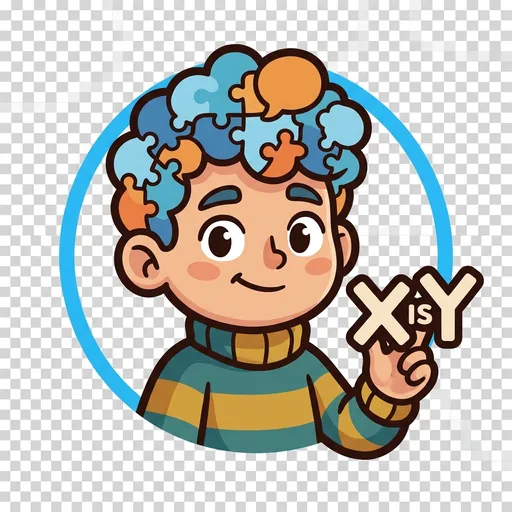
Ferry
Metaphor — 'X IS Y' direct comparison; carries meaning across
-

Ripple
Simile — 'X is LIKE Y' softer comparison
-
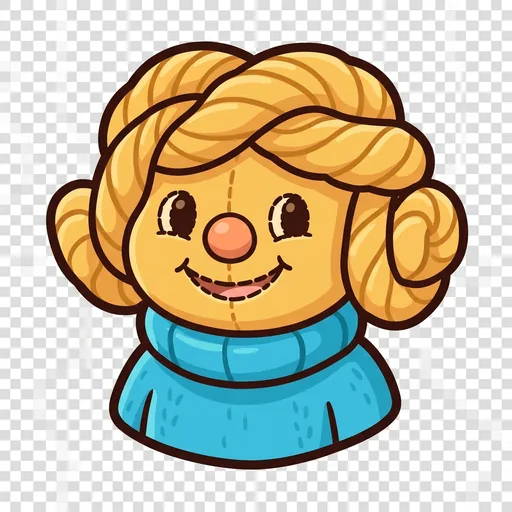
Knot
Idiom — fixed expressions whose meaning isn't literal
-
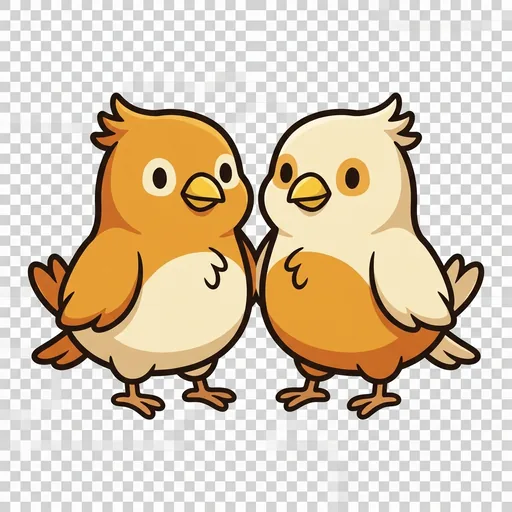
Twin
Analogy — extended comparison / X:Y::A:B parallel mapping
-
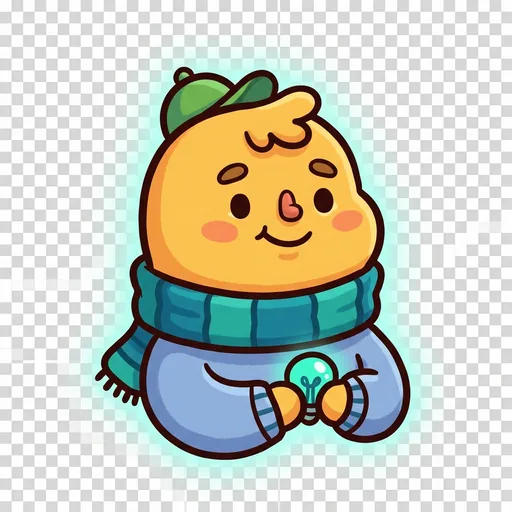
Hum
Personification — non-human takes on human qualities
-
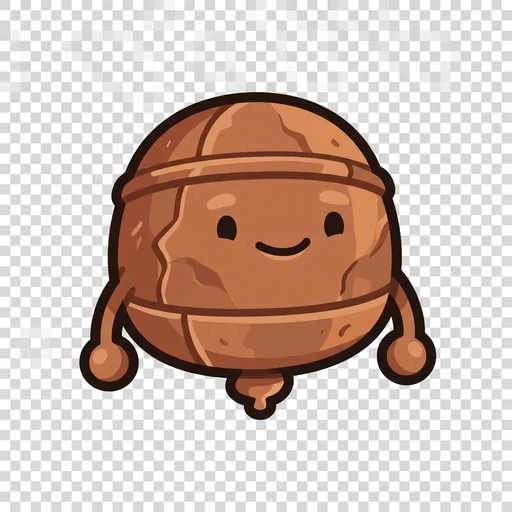
Clang
Onomatopoeia — copper bell-creature whose words carry the noise they name (buzz, splash, crash); the word reaches past the eyes and touches the ears
-
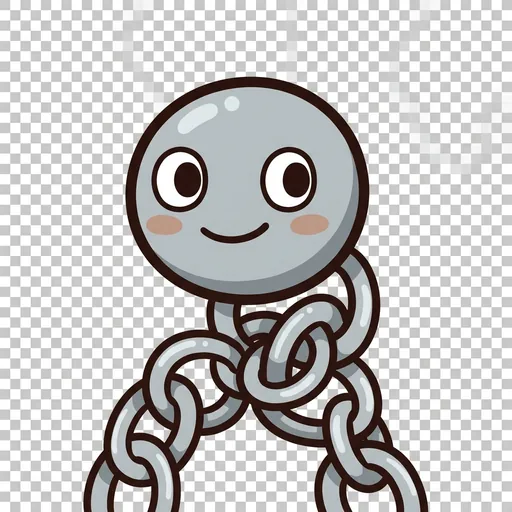
Chain
Alliteration — living-chain creature whose links lock when words share a first sound (big blue balloon); a little is catchy, too much is a tongue-knot
-
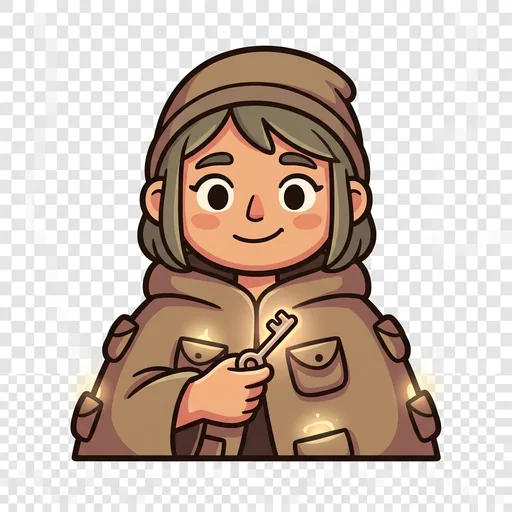
Token
Symbolism — quiet creature with a many-pocketed cloak of small objects that stand for big ideas (a dove = peace); shows the meaning instead of saying it
-
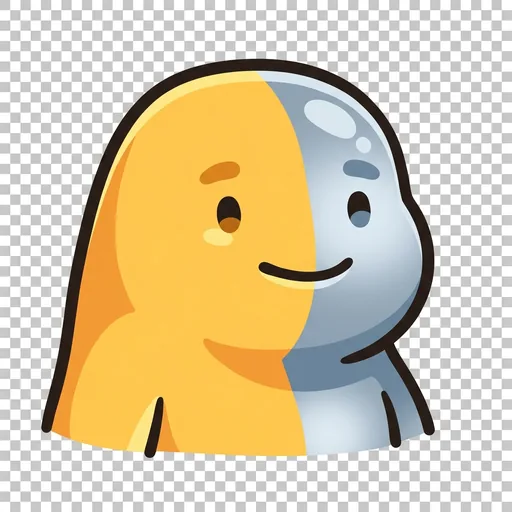
Twain
Oxymoron — two-toned creature (one half warm, one half cool) who places two opposite words side by side (bittersweet); the clash says something truer than either alone