Mask
SAY-ONE-THING-MEAN-ANOTHER — *hyperbole exaggerates. understatement minimizes. irony flips. all three: the words don't match the meaning.*
Press play to listen along. The line being read lights up as you go.
Show full transcript
Loading transcript…
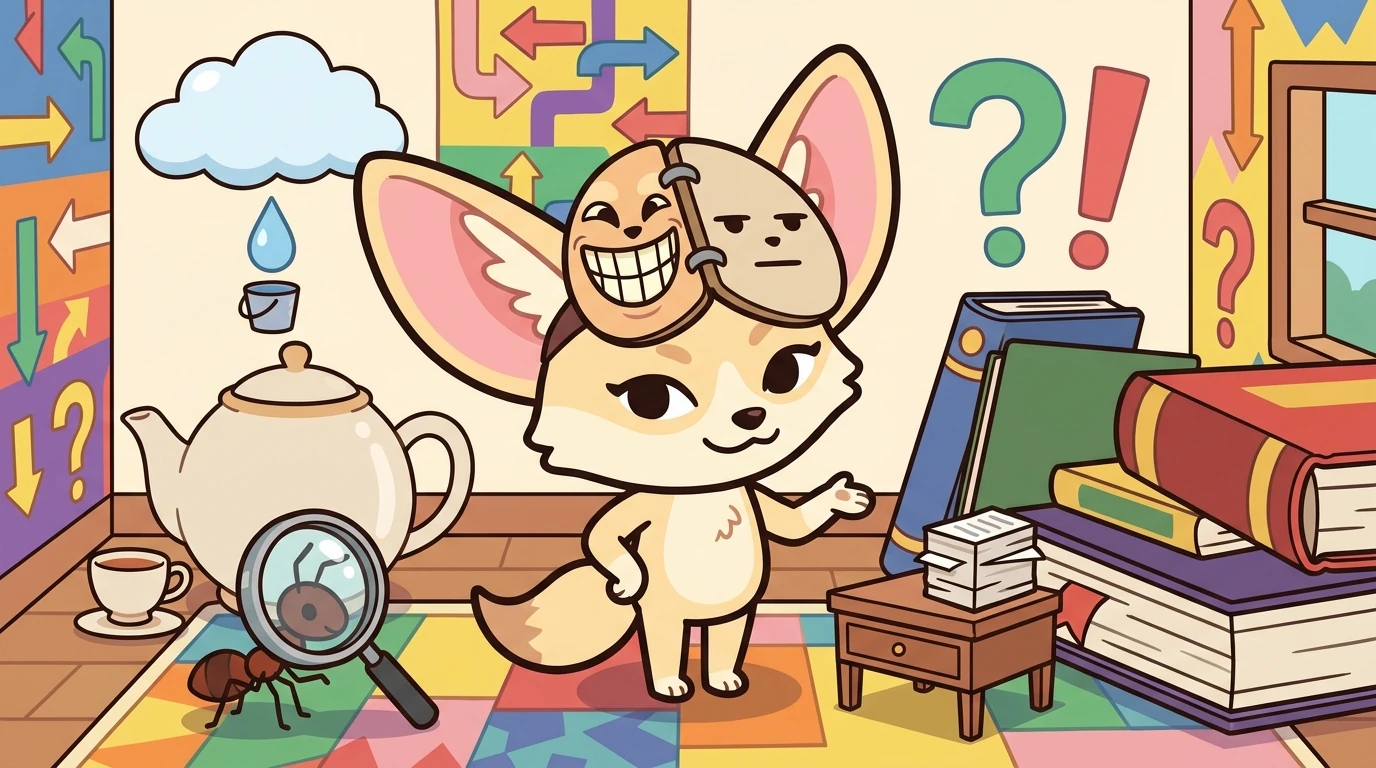
In the corner of the FigureForge studio, a small fennec fox stood in front of a cracked-open window while rain came down in silver sheets, flooding the courtyard into a shallow brown lake. She watched it a moment, then turned to the two younger students sitting on cushions behind her.
"What a beautiful day," Mask said, in a voice so warm and pleased you'd have thought the sun was out.
Pip the badger squinted past her at the storm. "But it's — it's pouring."
"I know." Mask's soft pink ears twitched, delighted. She was small and cream-colored, not the least bit scary, and across her face she wore a half-mask she could flip either way — a huge painted grin on one side, a flat blank stare on the other. Right now she'd tilted it sideways on her head, so the grin sat crooked. "That's the whole point. My words said one thing. I meant the opposite. And you caught it — you looked out the window instead of just trusting my sentence." She crouched to Pip's level. "That gap, between what I said and what I meant, is the thing I chase all day. The words and the meaning don't match. Once you can see that gap on purpose, you can walk right through it."
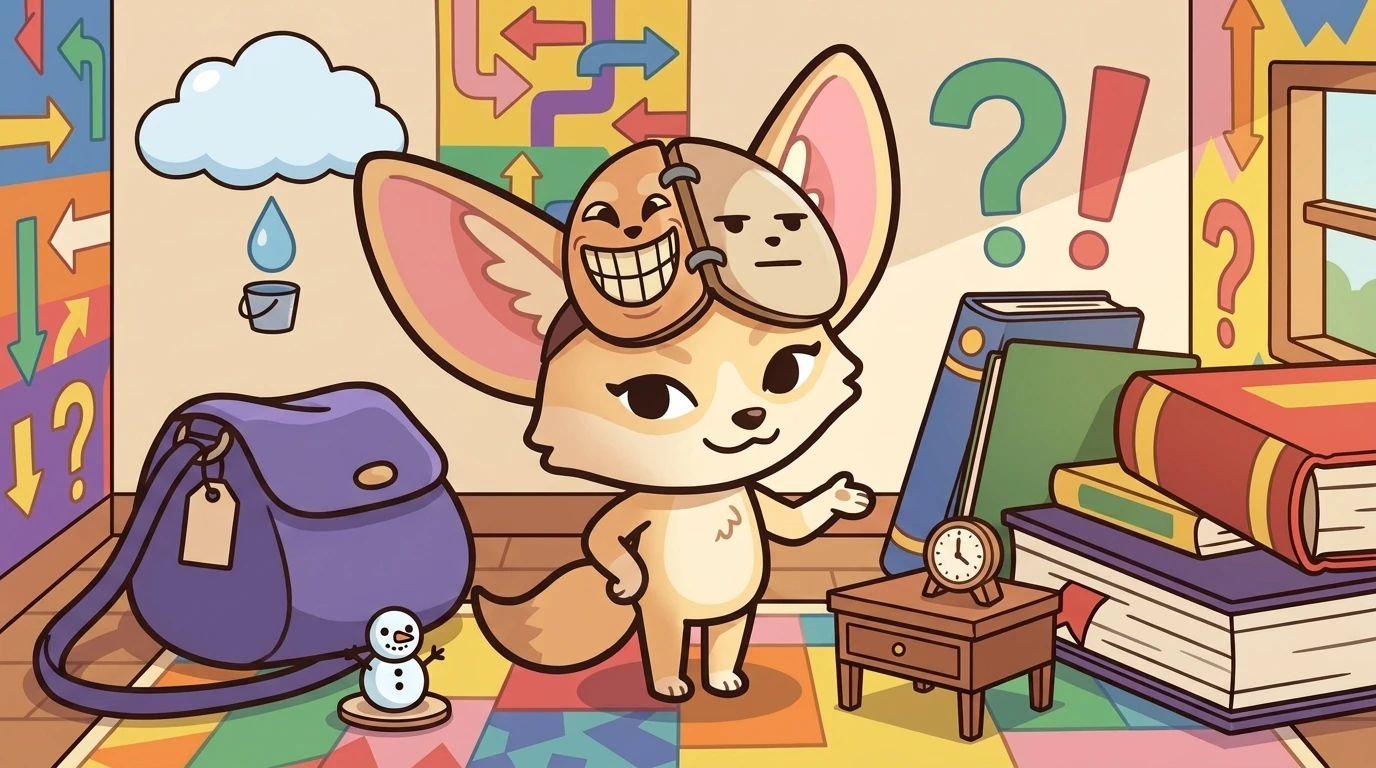
Mask had not learned to love that gap in a classroom. She'd learned it standing backstage in the masked-pageant village where she grew up, a place where whole stories were told through carved wooden faces.
Her family had been mask-makers for generations. She could still smell the wood shavings and lacquer of her grandfather's bench, still see the two kinds of masks hanging there in rows. One kind exaggerated everything — joy-masks with grins so wide they seemed ready to swallow the stage, sorrow-masks with tears the size of plums. The other kind hid everything — smooth, deadpan faces that gave nothing away, so an audience had to lean in and guess.
The first time Mask was allowed to wear a mask in a real play, she made a mistake she never forgot. She wore a grinning joy-mask for a scene that was actually sad, thinking the audience would understand she was being brave. Instead they laughed. Afterward, small and stinging with embarrassment, she asked her grandfather why.
"Because they read the mask, not the fox," he said gently, lifting it off her face. "The mask is one thing. The face underneath is another. When they match, the story is simple. When they don't match —" he set the grinning mask beside her wet, unhappy eyes — "that's where all the interesting stories live. But you have to give the audience enough to know which face is real."
She had carried that sentence her whole life: the mask is one face, the fox is another, and the audience must read both.
When she was thirteen, Mask walked the long muddy path to FigureForge and knocked on the door of Trope's office. It smelled of old parchment and fresh ink. Trope was tall and calm, spectacles balanced low on her nose, and she looked at the small fox for a long, unhurried moment.
"Tell me about exaggeration, and its opposites," Trope said at last. "Hyperbole. Understatement. Irony. People teach them one at a time, in three different weeks. Why should they live together?"
Mask reached up and touched the grinning side of her mask, then the blank side, then tilted the whole thing sideways. Three small gestures.
"Because they're the same trick wearing three costumes," she said. "Hyperbole makes a thing sound far bigger than it is. Understatement makes it sound far smaller. Irony flips it into its opposite. But underneath, every one of them does the identical thing — the words on the surface aren't the meaning the speaker actually holds. The listener has to close the gap themselves, using tone, or the rain out the window, or what they already know." She let her paws fall. "Teach them apart and children think they're three unrelated rules. Teach them together and children learn to listen for the gap. Then all three become obvious at once."
Trope's mouth curved, very slightly. "You are appointed," she said.
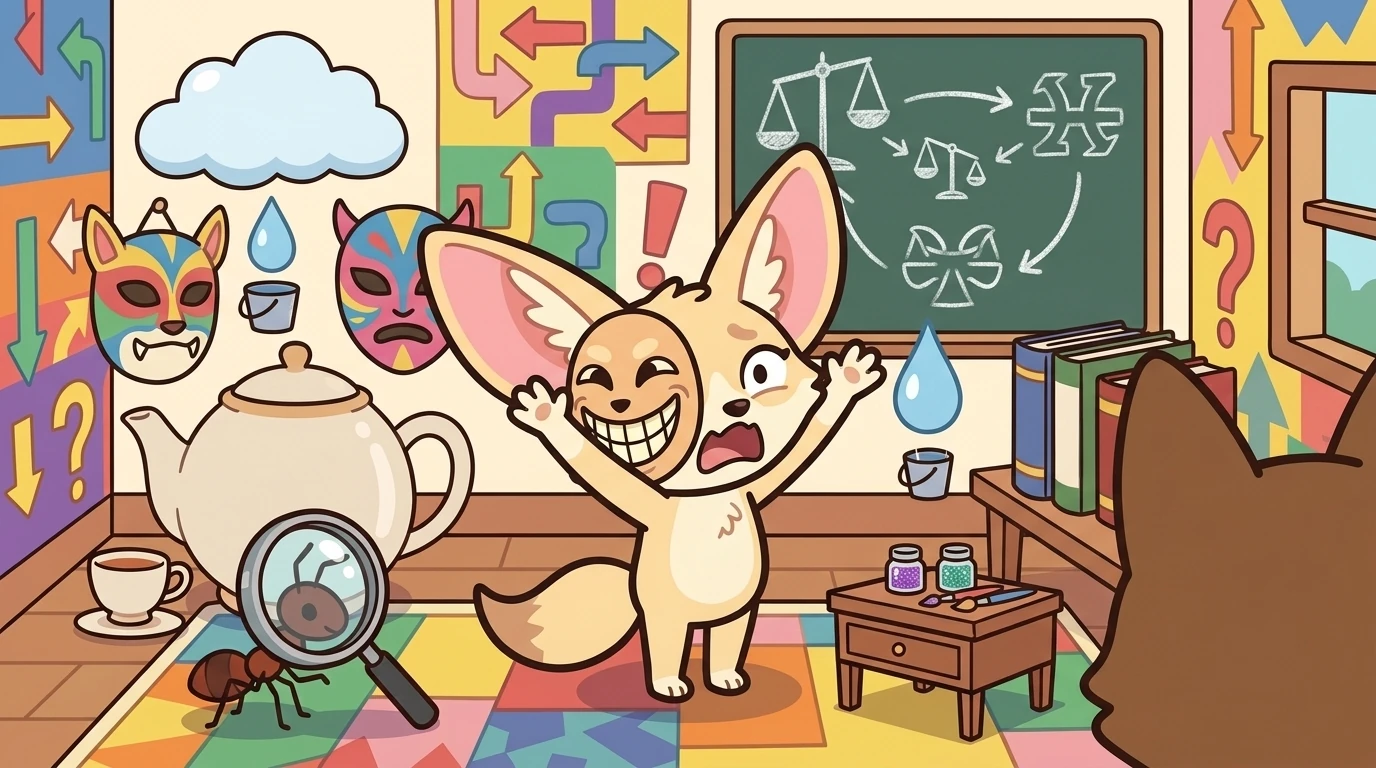
Mask's workshop filled up over the years with makers who wanted to be sure they weren't being fooled — and, quietly, with ones who'd been fooled and felt foolish about it. On one grey afternoon it was Pip the badger and Squeak the squirrel, elbows on the workbench, watching her lift the flip-mask.
She turned the grinning side out first and threw her voice wide and dramatic. "I have an INFINITE amount of homework. INFINITE. I will be doing it until the end of TIME."
Squeak giggled. Pip looked briefly alarmed.
"Don't panic — I have three worksheets," Mask said, dropping the mask. "That's exaggeration. I stretched three into infinity because it feels like infinity when you're tired. The number is a lie; the feeling underneath is true. When the words balloon far past the fact, that's your first flavor of the gap."
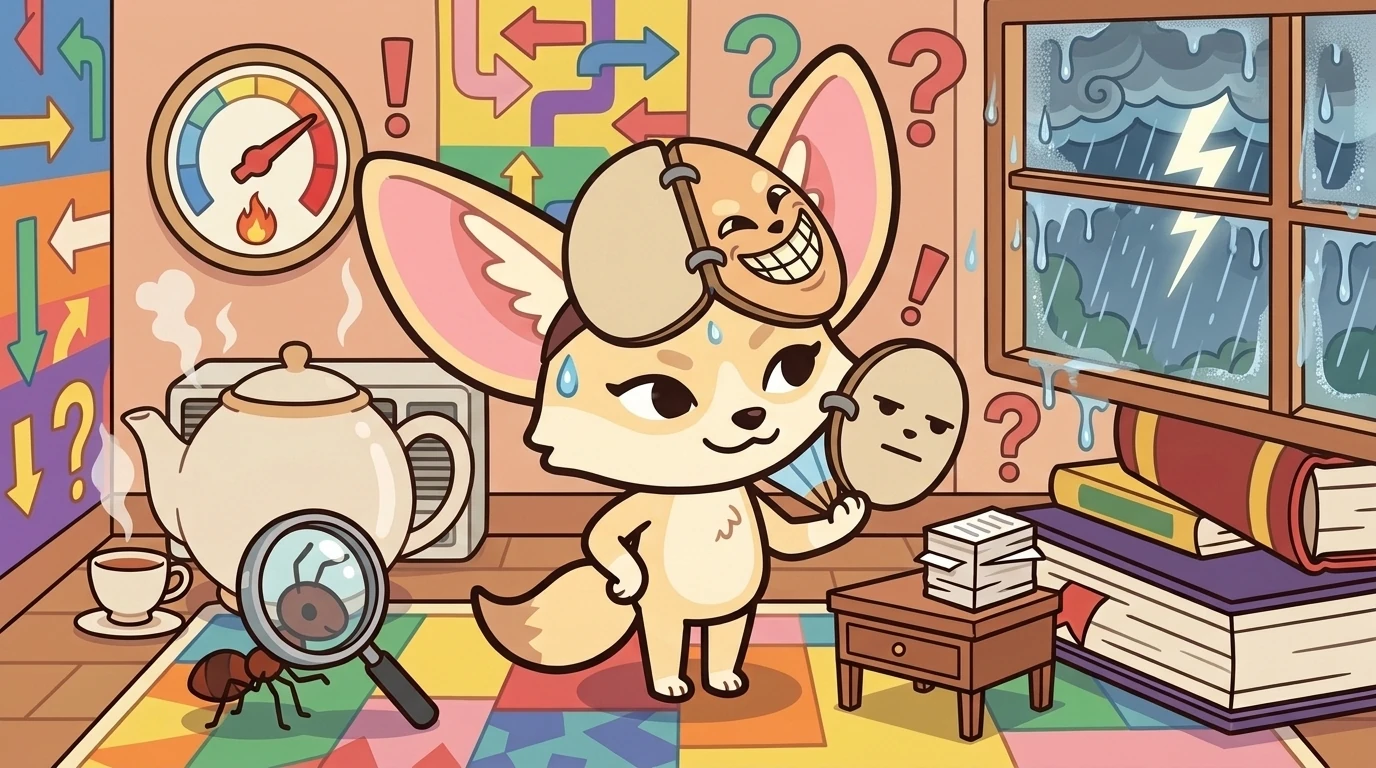
She flipped to the deadpan side and let her voice go flat and small. "It's a tad warm today." The studio's fan had died that morning; the air sat thick and stifling, sweat beading on Pip's brow.
"That's the shrinking version," she said. "I took something enormous and made it sound like nothing. Same gap — I just walked through it the other direction." She tapped the blank cheek. "Big words for a small thing, or small words for a big thing. Both times, the surface doesn't match the truth."
Then she tilted the mask sideways again, the crooked grin she'd worn at the window. "And you already know the third one," she said. "'What a beautiful day.' The words don't shrink or swell — they flip. I said the opposite of what I meant and trusted you to catch it."
"But how do we catch it?" Pip asked. "What if we get it wrong?"
Mask's ears dipped, and her voice softened. "That's the real question, and it matters most in writing, where you can't hear a voice. People miss the flip all the time. That's why some folks add a little mark online — a '/s' — so no one thinks they mean it straight." She looked at them both, serious now. "If you're ever unsure whether someone's flipping the meaning, don't guess and don't decide they're being unkind. Just ask. Asking closes the gap safely. Assuming tears it wider."
Later, when Squeak had gone and only Pip lingered, he picked at the edge of a cushion. "I got teased once," he admitted, not looking up. "Someone said something mean but grinning, like a joke, and I laughed along because I thought I was supposed to — and then everyone laughed at me for not getting that it wasn't a joke. I felt so stupid."
Mask sat down beside him, small and still.
"You weren't stupid," she said. "You were handed a mask with no fox underneath — words with the clues stripped out. Nobody can read a gap they weren't given enough to read." She set her flip-mask face-up between them. "That's why I never teach this as a way to catch people out. The whole point isn't to be clever. It's to notice, kindly, that a person might be feeling one thing and saying another — and to check, gently, before you decide what they meant."
Pip was quiet a moment. Then something in his shoulders came down, a small knot he'd been carrying since that day loosening all at once. He hadn't been slow after all. He'd just been missing the clues, and now he knew to go looking for them. He let out a breath he seemed to have been holding for a long time, and a warm, steady lightness settled in his chest — the plain relief of understanding, at last, a thing that had once made him feel small.
"The mask is the words you say," Mask said softly, resting a paw on the little painted face. "The fox underneath is the truth. Both matter — most of all when they don't match. And you, Pip, are getting very good at reading both." Pip felt the warm lightness in his chest grow a little wider, and for the first time since that day, the word stupid didn't fit him anymore. He just felt seen, and steady, and glad.
The FigureForge ensemble
Mask is part of FigureForge's distributed-narrative cast. Each character embodies a different curricular primitive; together they teach the full subject.
-
Ferry
Metaphor — 'X IS Y' direct comparison; carries meaning across
-

Ripple
Simile — 'X is LIKE Y' softer comparison
-
Knot
Idiom — fixed expressions whose meaning isn't literal
-
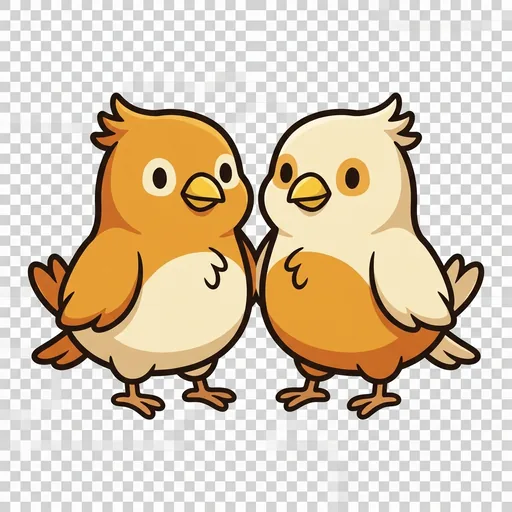
Twin
Analogy — extended comparison / X:Y::A:B parallel mapping
-
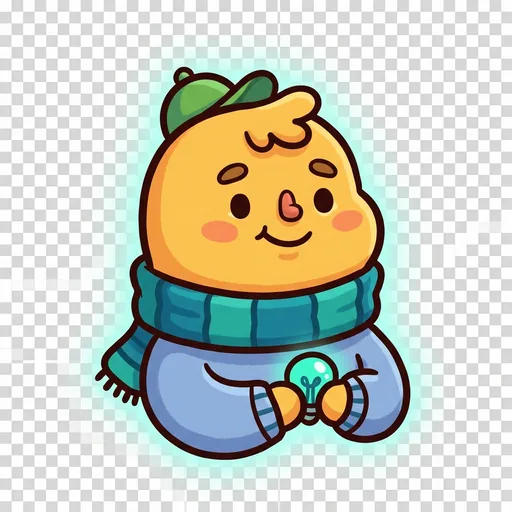
Hum
Personification — non-human takes on human qualities
-
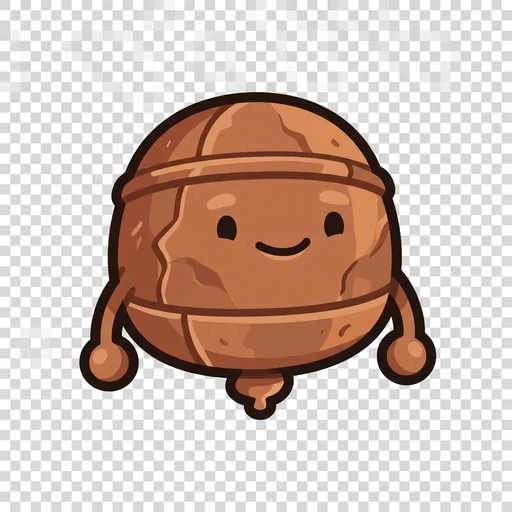
Clang
Onomatopoeia — copper bell-creature whose words carry the noise they name (buzz, splash, crash); the word reaches past the eyes and touches the ears
-
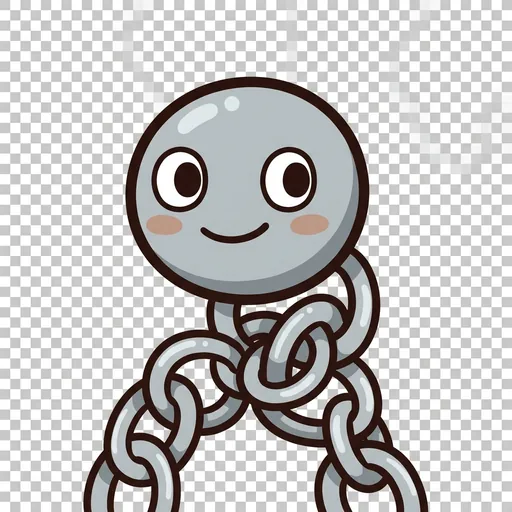
Chain
Alliteration — living-chain creature whose links lock when words share a first sound (big blue balloon); a little is catchy, too much is a tongue-knot
-
Token
Symbolism — quiet creature with a many-pocketed cloak of small objects that stand for big ideas (a dove = peace); shows the meaning instead of saying it
-
Twain
Oxymoron — two-toned creature (one half warm, one half cool) who places two opposite words side by side (bittersweet); the clash says something truer than either alone