
Hum
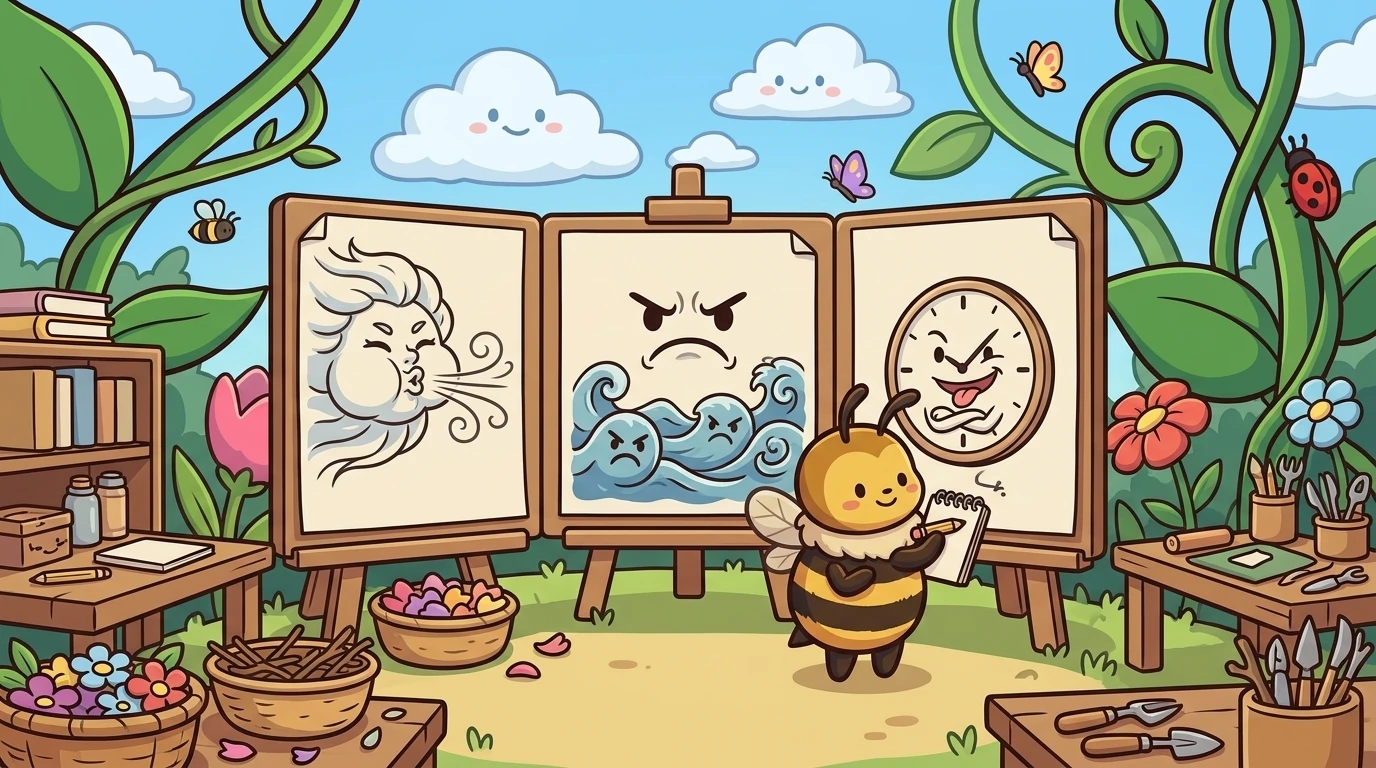
PERSONIFICATION — *non-human things take on human qualities. the wind whispers. the sea is angry. that's hum.*
Press play to listen along. The line being read lights up as you go.
Show full transcript
Loading transcript…
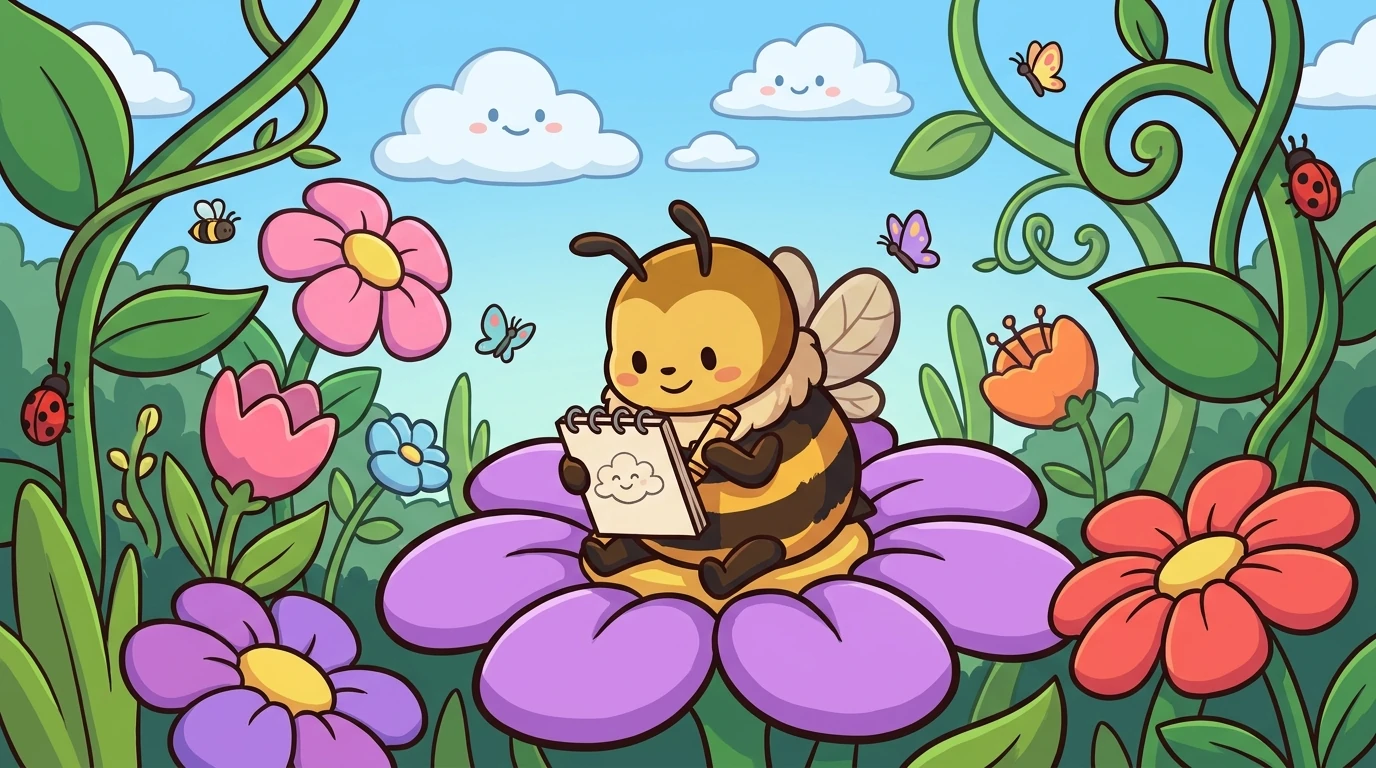
On a low branch at the edge of the meadow, a small bumblebee sat with a drawing pad balanced on her knees, watching the wind bend the tall grass. Hum's stripes were soft gold and black, plush and rounded, and she had no stinger at all — only a stub of charcoal pencil and a habit of narrowing her eyes at things.
She was watching the wind because the wind was doing something. It came in a long, low push, then eased, then pushed again, and the grass leaned and straightened, leaned and straightened, like it was breathing. Hum did not draw the grass. She drew the wind — and she drew it with cheeks puffed round and lips pursed tight, a face blowing hard through a gap in the sky.
"You're not really a person," she told the wind, not unkindly. "You just blow. But look at you. You whisper. You shove. You sigh when you get tired." She held the sketch out at arm's length and smiled. A gust with a face. A push with a mood. "There you are," she murmured. That was the whole trick, right there — take a thing that has no feelings, and catch it in the act of pretending it does.
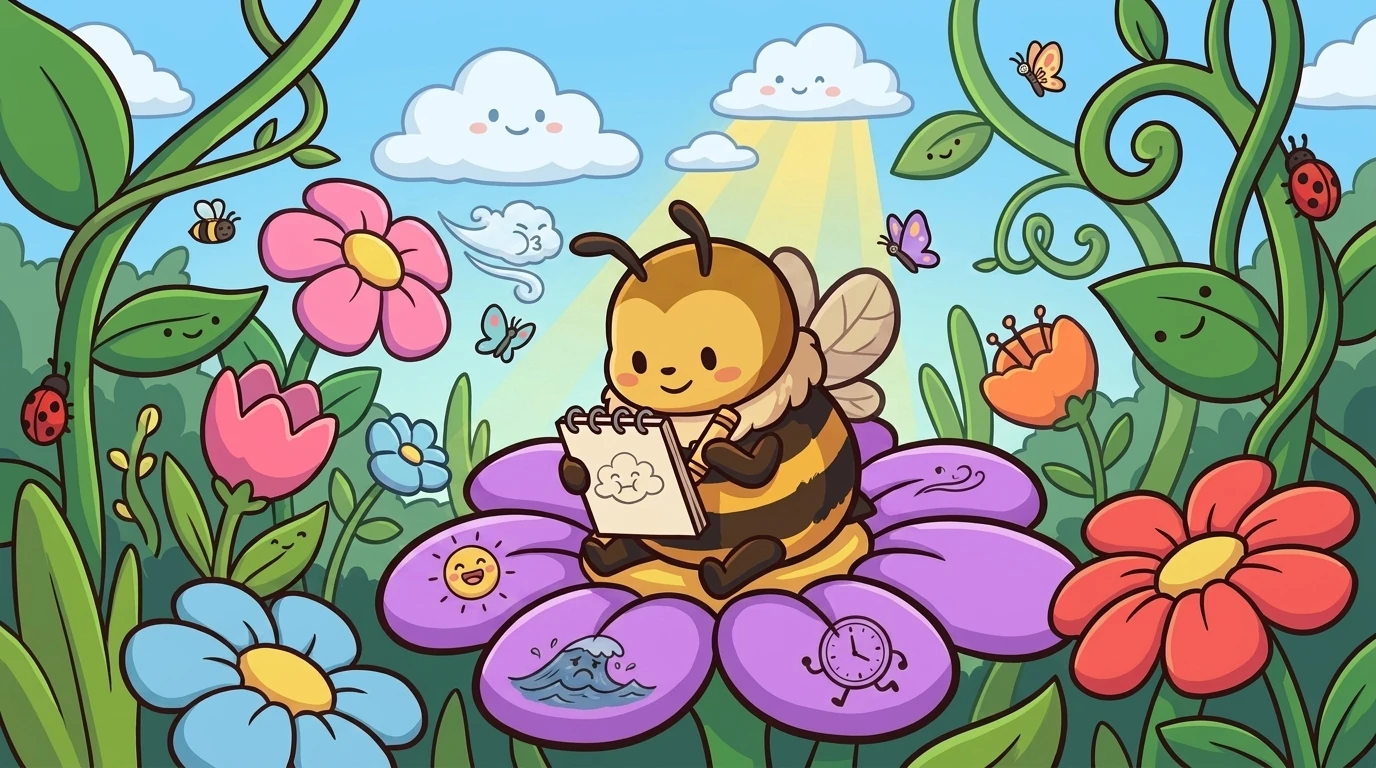
Hum had not always thought this way about the world. When she was small in the meadow-village, she thought a wind was just moving air and a sea was just moving water, and she said so, flatly, the way small bees do.
Her grandmother changed that. Hum's family were flower-singers — bumblebees whose buzzing came out so deep and resonant that the villagers said they "gave voice to the flowers." One evening Hum found her grandmother buzzing over a patch of closed poppies, low and warm, and the petals seemed to answer, swaying open in the dusk.
"The flowers are singing back," little Hum had said, delighted, before she caught herself. "Wait. No. Flowers can't sing."
"No," her grandmother agreed. "They can't." She kept buzzing, soft and slow. "But say it the other way. Say the flowers are singing. Doesn't the whole meadow feel more alive when you do?"
Hum had gone quiet, because it did. Saying the flowers sang made the field feel warm and awake and full of somebody, even though there was no somebody there at all. Her grandmother watched her understand it.
"That's a gift you can give things," she said. "You lend them a feeling they don't have, so people can feel their feeling more. It isn't a lie. It's a kindness. It brings the world to life." Hum carried that sentence out of the village and never once put it down.
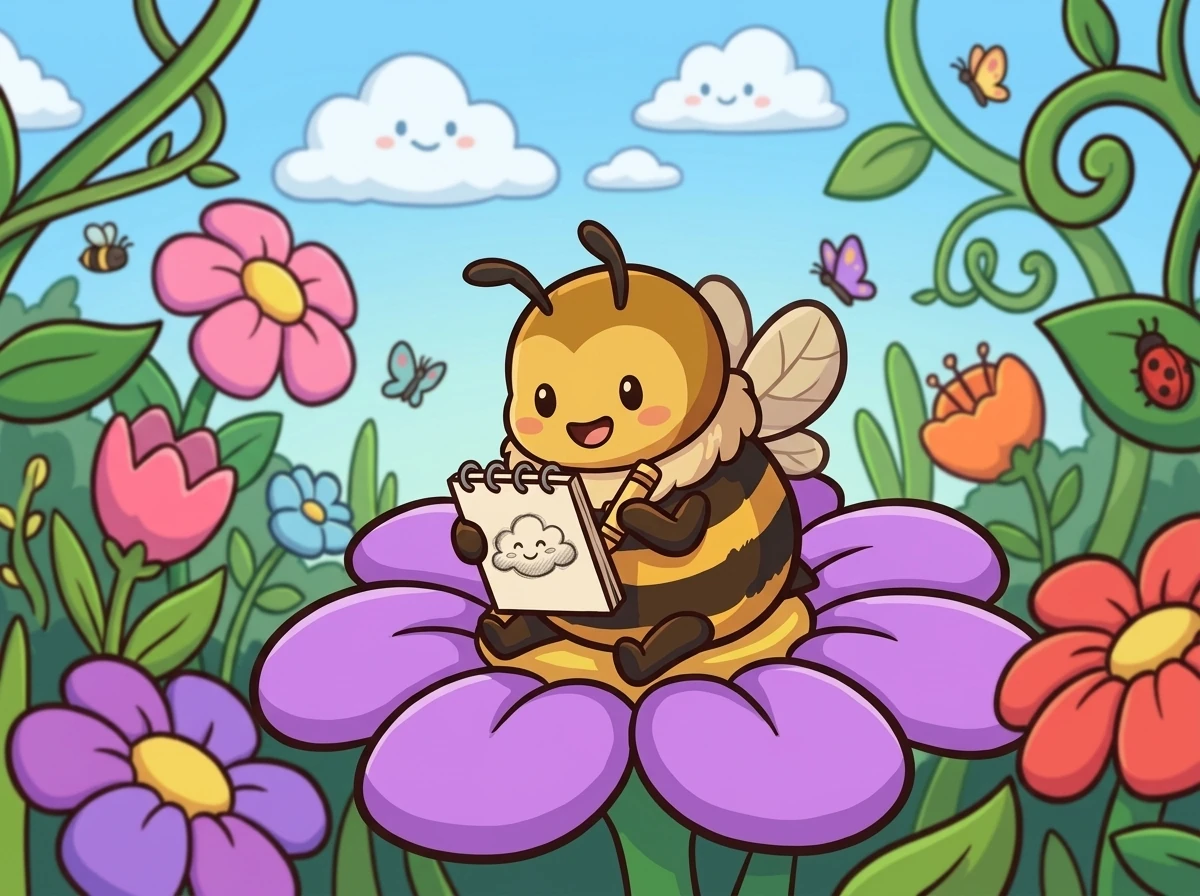
She walked up to FigureForge when she was twelve, drawing pad under one wing, and Trope met her at the gate. He was old and sharp-eyed, and he asked new arrivals exactly one question.
"What is personification, young Hum?"
Hum didn't fumble for a definition. She flipped her pad open to the puff-cheeked wind and turned it so he could see. "It's this," she said. "A wind that doesn't feel anything — but I drew it blowing on purpose, like it wants to knock your hat off. Non-human things wearing human feelings." She tapped the page. "The wind whispers. The sea is angry. Say it that way and the reader stops just seeing the weather and starts feeling it."
Trope studied the sketch for a long moment — the round cheeks, the mischief in the pursed lips. "And why would a writer want that?"
"Because 'the sea is choppy' is a fact," Hum said. "'The sea is angry' is a feeling. People remember the feeling." She shrugged her small striped shoulders. "It makes things that can't feel a single thing feel alive."
Trope nodded once. "You are appointed."
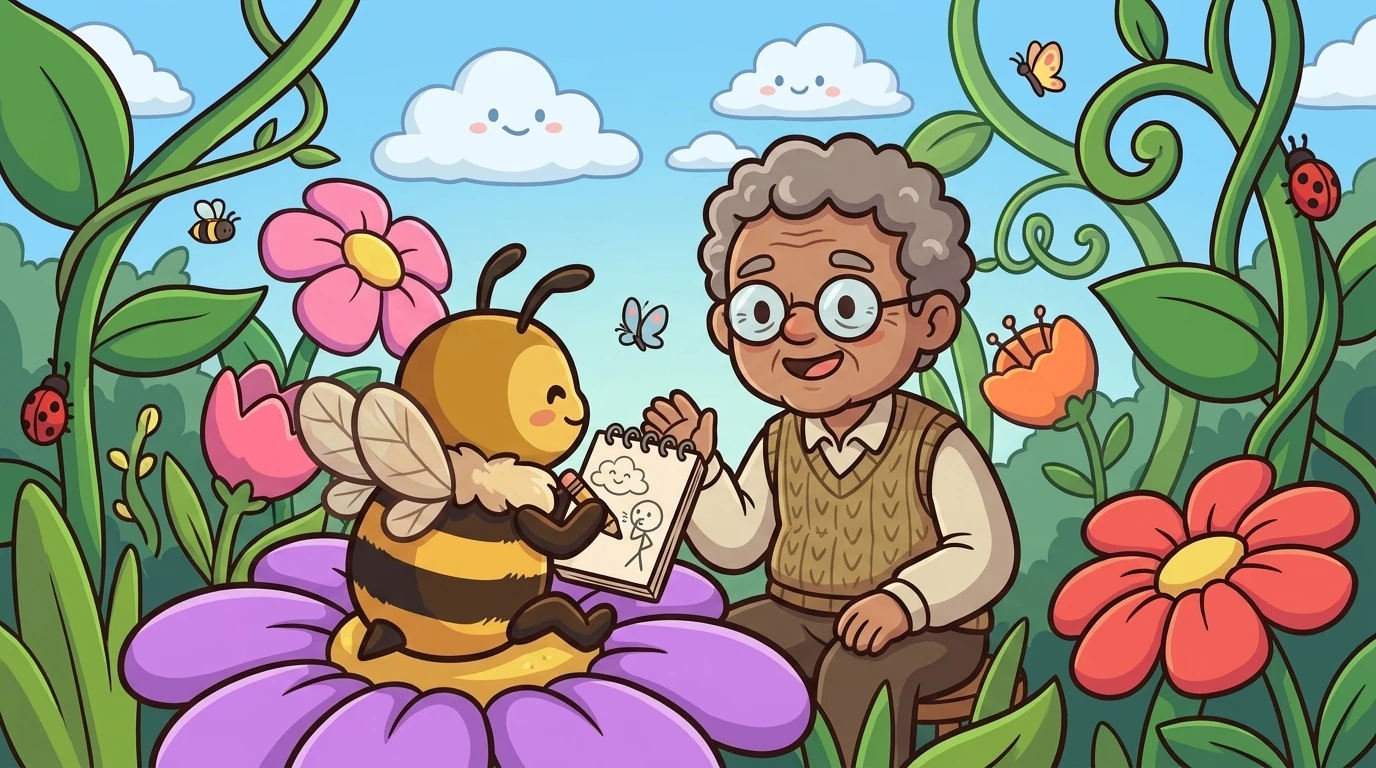
Hum's workshop was a bright corner hung with her sketches, and makers came to her stuck. One afternoon a boy dropped onto the stool with a poem crumpled in his fist. "My writing's flat," he said. "The teacher says it's 'just describing the storm.' But I did describe the storm. It rained. It was windy. What else is there?"
"Read me the flat line," Hum said.
"'The storm was very strong and there was a lot of rain,'" he read, and winced.
Hum smoothed a fresh sheet and drew, fast — a thundercloud with a scowling brow and fists of rain. "Watch," she said. "Your storm doesn't feel anything. It's just pressure and water. So lend it something. Give it a human verb." She wrote beneath the sketch: The storm raged. "Raged. That's a person's word. Storms don't rage — people rage. But now your reader feels the storm's temper."
The boy leaned in. "So I just... find things that can't feel, and give them a feeling word?"
"That's the whole detective trick," Hum said. "Human verb, non-human thing. 'The leaves danced.' Leaves can't dance. 'The shadow crept.' Shadows can't creep. Every time you catch one, you've caught me." She underlined raged twice. "One warning, though. Don't do it to everything. If your rain sighs and your door groans and your pencil weeps, all in one sentence, the reader stops believing you. Save it for where you want them to feel something. A little goes far."
The boy uncrumpled his poem and, above it rained, wrote the rain hammered like it had something to prove. He read it back and actually laughed.
Later, when the workshop had emptied, the boy lingered at the door with a quieter thing on his mind.
"Isn't it kind of a lie, though?" he said. "The wind doesn't whisper. The sea isn't angry. I'm making it up."
Hum turned to a page near the front of her pad — the poppies her grandmother had buzzed to, sketched from memory, petals tipped like they were listening. She looked at it a while before she answered.
"You're not lying about the wind," she said. "You're telling the truth about the person hearing it. When you write the wind whispered, you're really saying I felt like it was speaking to me. When you write the clock is mocking me, you're saying I feel behind and I feel it in my chest." She closed the pad gently. "The feeling was always real. You just handed it to something outside you so somebody else could feel it too."
The boy stood with that, and something in him eased — the worry that he'd been faking, that his writing was a trick with nothing under it, quietly let go. His shoulders came down. He looked at the sketch of the listening flowers and felt a warm, settled gladness rise in his chest, the plain relief of knowing that the feeling he'd been carrying had a place to go now, and that it counted. He breathed out slow. He didn't say anything. He didn't need to.
The FigureForge ensemble
Hum is part of FigureForge's distributed-narrative cast. Each character embodies a different curricular primitive; together they teach the full subject.
-

Ferry
Metaphor — 'X IS Y' direct comparison; carries meaning across
-

Ripple
Simile — 'X is LIKE Y' softer comparison
-

Knot
Idiom — fixed expressions whose meaning isn't literal
-
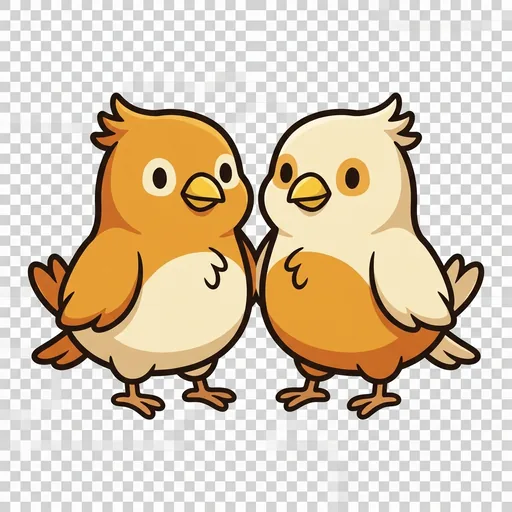
Twin
Analogy — extended comparison / X:Y::A:B parallel mapping
-

Mask
Hyperbole + understatement + irony cluster — say one thing, mean another
-

Clang
Onomatopoeia — copper bell-creature whose words carry the noise they name (buzz, splash, crash); the word reaches past the eyes and touches the ears
-
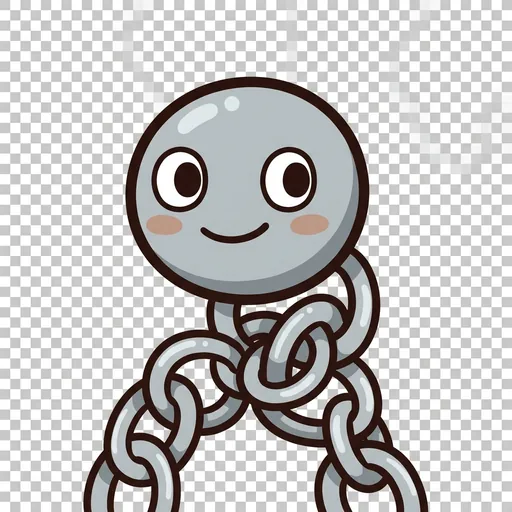
Chain
Alliteration — living-chain creature whose links lock when words share a first sound (big blue balloon); a little is catchy, too much is a tongue-knot
-

Token
Symbolism — quiet creature with a many-pocketed cloak of small objects that stand for big ideas (a dove = peace); shows the meaning instead of saying it
-

Twain
Oxymoron — two-toned creature (one half warm, one half cool) who places two opposite words side by side (bittersweet); the clash says something truer than either alone