Ripple
SIMILE — *X is LIKE Y. softer comparison. ripples-outward instead of bold-identification.*
Press play to listen along. The line being read lights up as you go.
Show full transcript
Loading transcript…
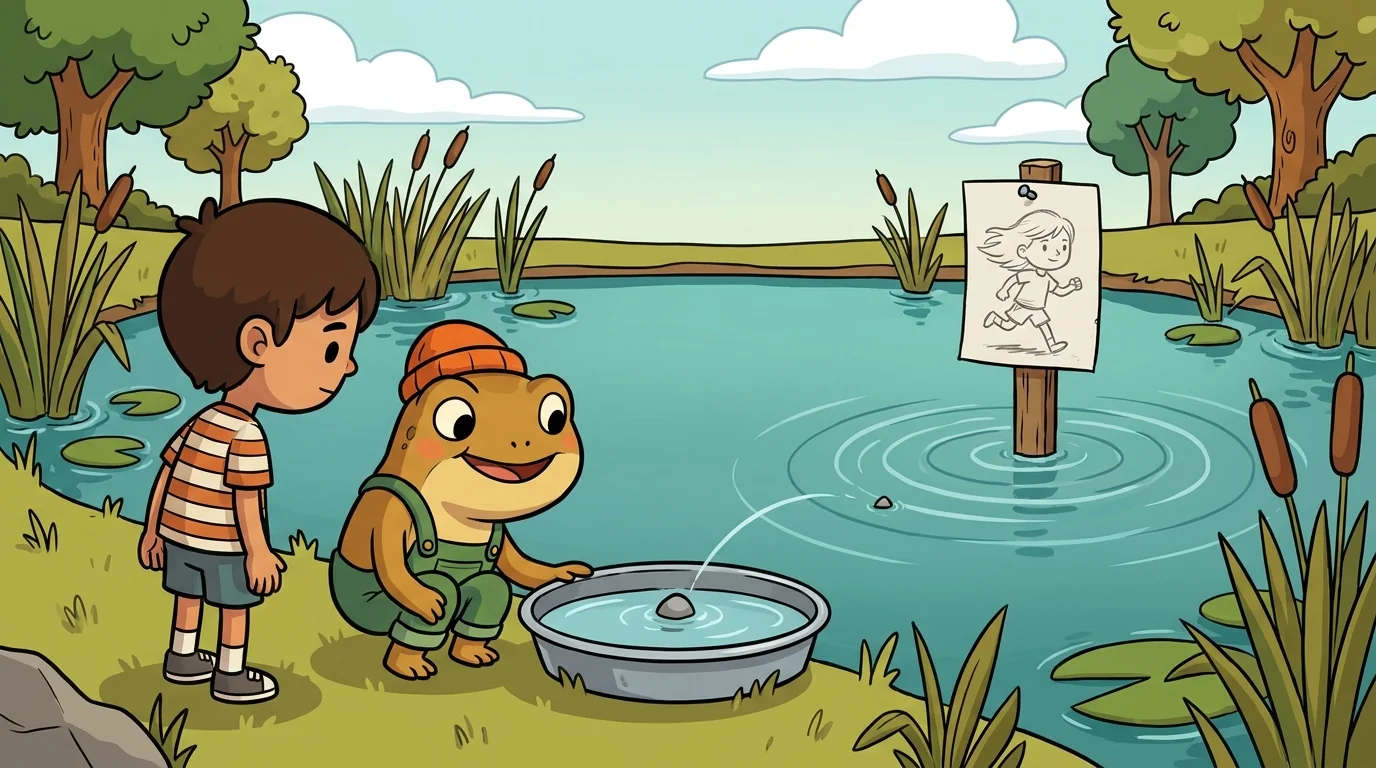
At the edge of the still pond, a pond-skater tween named Ripple crouched over a shallow pan of water and held a pebble just above the surface, waiting the way you wait before you say something you mean.
Then she let it fall. The rings spread out — one, then another, then another — sliding across the water toward a drawing she'd pinned to the far bank. It was a sketch of a girl mid-run, hair flung back, one foot lifted off the ground. Ripple watched the rings reach the paper's edge without wetting it, and she smiled, because that was the whole thing, right there, in a pan the size of a dinner plate.
"Watch what the words do," she said to the boy beside her. She had warm-cream skin and faint blue bands circling her long, soft legs, and her eyes were the deep blue of water with the sun behind it. She tapped the sketch. "You could write she is a storm. Bold. It grabs the whole page and won't give it back." She let the rings settle flat. "Or you could write she runs like a storm. Softer. Do you feel the difference? One of them swallows her. The other one only points."
The boy squinted at the drawing, then at the water. "The first one's louder."
"The first one becomes the storm — the girl disappears into it. The second one just reaches toward the storm and comes back, and the girl stays a girl the whole time." She dropped a second pebble, and the rings pushed out again, touching the paper's edge and leaving it dry. "That's a ripple. It travels from one thing to another, connects them for a heartbeat, and lets them both stay exactly themselves. That little word — like — is the whole trick. A simile. My favorite quiet kind of magic."
The boy watched the water go still, thinking harder than he'd expected to.
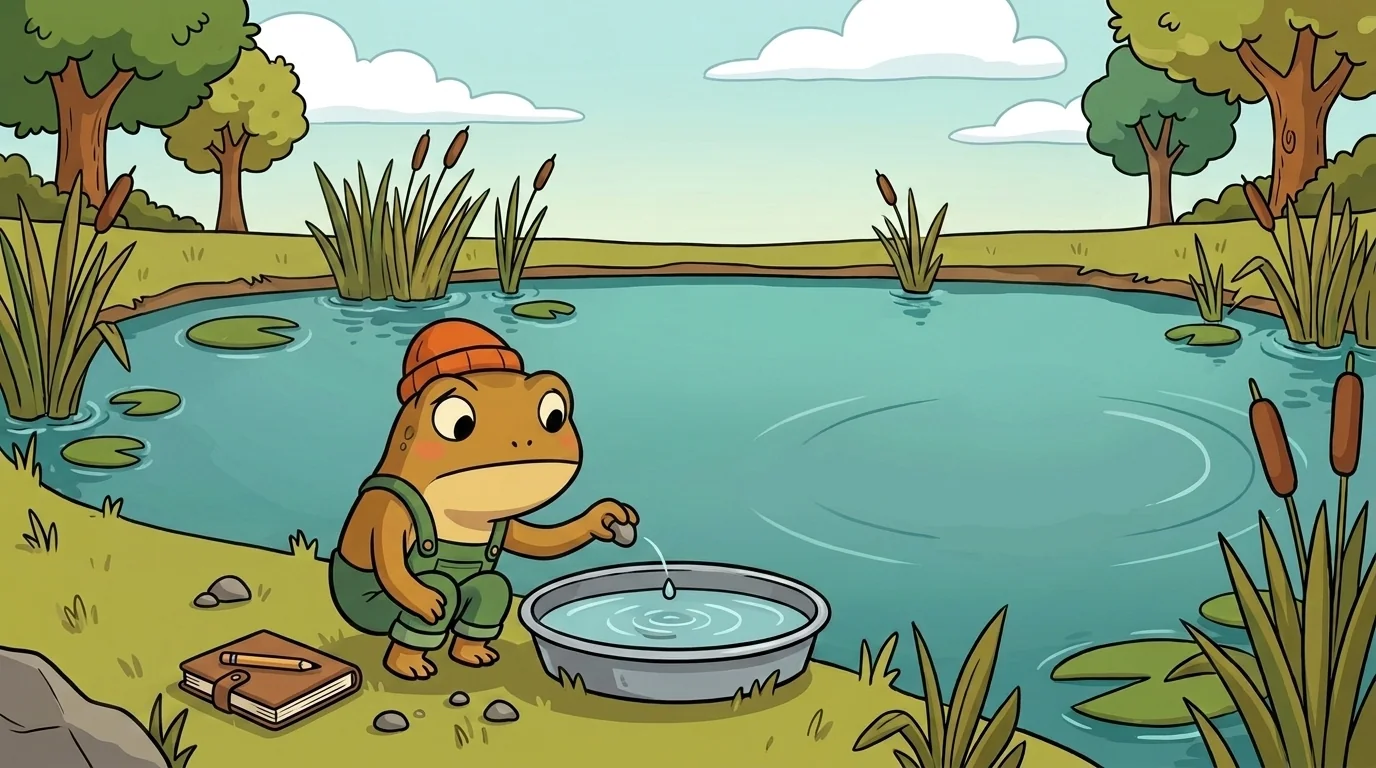
Ripple had grown up reading ripples before she could read a single word.
Her family were the ripple-readers of the pond village — the ones who could tell a coming storm from the way the surface bent and doubled, who knew a heron had landed by a single flutter, who could read a stranger wading the far shallows in a slow spreading wave. Her grandmother taught her by pointing, patient as weather. That ring means wind. That double-wave means someone's crossing. Read the surface and you'll know a thing before the sky admits it.
But the day Ripple remembered most sharply was the day she tried to draw the pond and couldn't.
She had sat on the bank for hours, and every line came out wrong. The pond wasn't a flat blue disk. It wasn't a mirror — mirrors don't breathe. It wasn't glass — glass doesn't carry a heron's landing all the way to the reeds. Each time she decided the water was one of those things, a hot, cramped tightness climbed up under her ribs, the specific misery of a truth sitting right in front of you that you keep saying wrong.
Her grandmother settled beside her and studied the ruined drawing for a long, unhurried while.
"You keep trying to say the pond is something," she said at last. "But it isn't a mirror. It isn't glass. So every time you decide it is, a small part of you knows you've lied — and that's the tightness. That's the thing pinching you."
Ripple nodded, wretched.
"So stop deciding what it is." Her grandmother traced a slow ring on the surface with one finger. "Say what it's like. The water moves like a slow breath. It shines as bright as a coin dropped in the shallows. You don't have to trap it, child. You only have to stand beside it and point." She let the ring fade. "A ripple never once pretends to be the shore. It only ever reaches toward it."
Ripple tried again, careful this time. The pond ripples like breathing. And the tightness under her ribs let go all at once — not because the line was clever, but because it was finally, honestly true.
She walked to FigureForge at twelve, trembling in the legs but steady in the eyes, because a place that studied how to draw and describe the whole living world ought to understand the gentlest way to hold one thing up beside another.
Trope, the mentor who ran the studios, met her at the gate. Trope did not ask her to recite anything, or to prove she was clever, or to stand up straight. Trope asked one question, the way the mentors here always did — one question, and then silence to fill.
"What is a simile?"
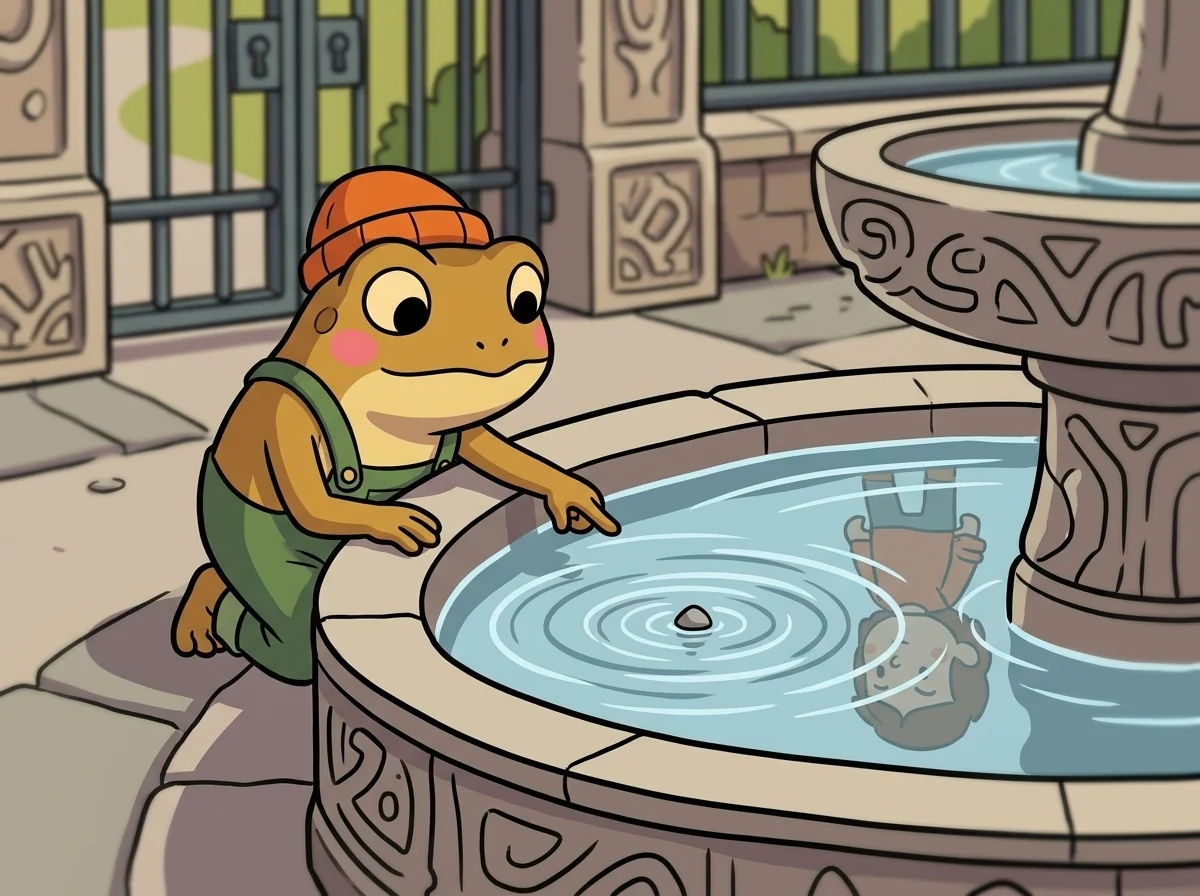
Ripple didn't answer with a speech. She knelt at the entrance fountain, chose a pebble, and dropped it in. The rings spread outward across the water toward Trope's rippling reflection on the far rim.
"That," she said, pointing at the moving surface. "The pebble is one thing. Your reflection is another. The ripple travels between them and holds them together for a moment — using like, using as — but it never, ever makes them the same. Two things, still separate, leaning on each other for one breath." She watched the last ring dissolve against the stone. "The moment the ripple pretends to be the shore, it isn't a ripple anymore. It's a flood."
Trope watched the water go flat. "You belong here," Trope said, and that was all, and it was enough.
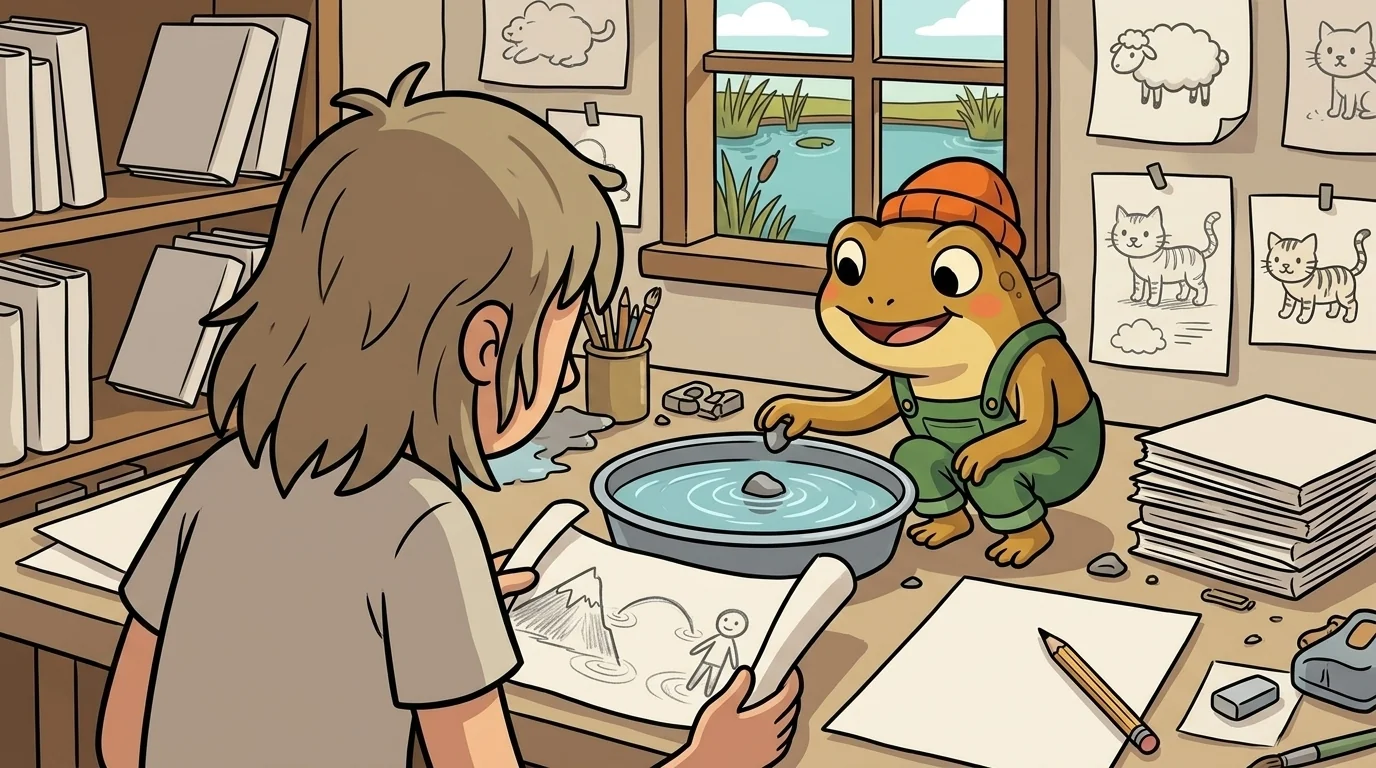
Ripple's studio always smelled of wet paper and pond water, and there was always a shallow pan waiting on the workbench.
A girl came in one grey afternoon, slumped and stuck, a half-finished drawing crushed in her fist. She'd been trying to describe her own character in the margin. "I wrote he is a mountain," she said, "but it's a lie. He's not a mountain. He's just — big, and quiet, and steady, and now the whole sentence feels fake and I hate looking at it."
Ripple knew that feeling in her bones — the hot, cramped, I-said-it-wrong tightness. She'd worn it on a riverbank a long time ago.
"Come here." She dropped a pebble into the pan. "Where does the ripple travel?"
"Outward. Toward the edge."
"Does the pebble turn into the edge?"
The girl watched. "...No. They stay separate."
"Right. So don't turn your friend into a mountain and lose him. Just let the comparison ripple toward one." Ripple slid the girl's pencil back across the bench. "Add a single word. He is like a mountain — big, quiet, steady. Or he stands as steady as a mountain. Now read it back to yourself and check your ribs."
The girl scratched the word in. Read it. And her shoulders came down a full inch, without her deciding to let them. "It's... true now. He's still him. I'm just pointing at the mountain instead of drowning him in it."
"That's the tell," Ripple said, tapping the water so it trembled. "Like or as. Two small words, and they're the signal-flags every single time — brave like a lion, light as a feather, quiet as a snowfall. A metaphor grabs the whole thing and merges. A simile only reaches. Softer. Sometimes truer. Both are good — they're just different tools for different days." She flicked one last pebble in and watched the rings run out. "And you never once have to lie to make a thing vivid. You only have to stand beside it and point."
The girl laughed, surprised out of her slump, and drew three careful rings around her character just for the feeling of it.
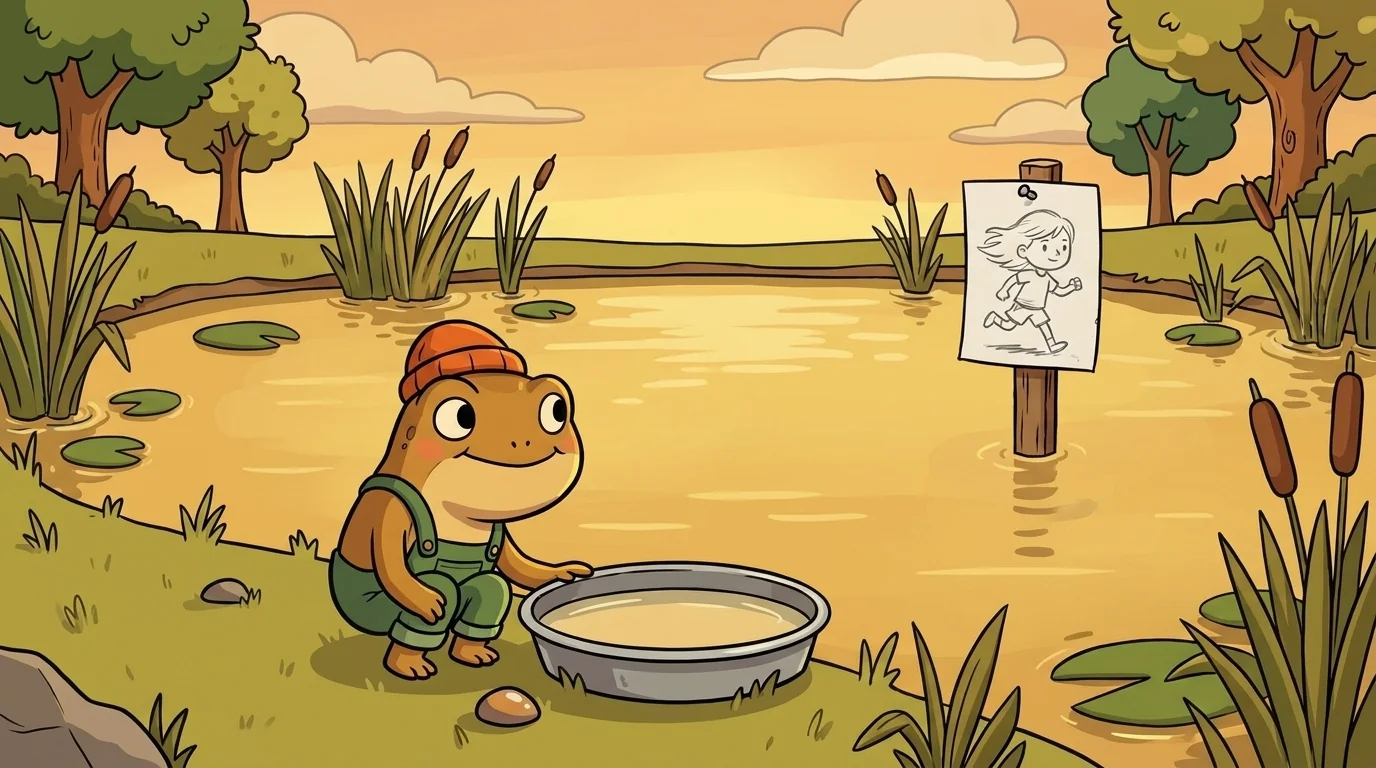
Later, when the studio had gone quiet and gold with evening, the girl lingered at the door with one more question, gentler now, almost shy.
"When you use like instead of just saying it is," she asked, "doesn't it feel weaker? Like you weren't brave enough to commit?"
Ripple thought about the pond that refused to be a mirror, and the hot tightness that had let go the instant she stopped forcing it to be something it wasn't.
"It felt that way to me too, once," she admitted, watching the last light lie flat on the still water. "I thought softer meant scared. But then I noticed the strangest thing — the softest comparison was the one that finally felt honest. I wasn't trapping the water into being glass. I was standing next to it, pointing at what it reminded me of, and letting it stay itself." She turned from the window. "There's a real relief in that. You don't have to decide a person is the whole storm and swallow them whole. You can just say they move like one, and let them keep their own name."
The girl nodded slowly and slipped out into the dusk. Ripple stayed by the pan a while, one soft leg resting at the water's rim. She didn't say the last part out loud, but she felt it move through her the way a ring moves out across a pond after the pebble is long gone — warm, unhurried, settling into the loose gladness of a thing finally said the right way. The gentlest way to say a thing is sometimes the truest, she thought, and her chest went easy and open, you reach toward it, you don't swallow it, and everyone gets to stay exactly who they are. Somewhere under her ribs, where the old tightness used to live, there was only quiet water now, going flat and calm and glad.
The FigureForge ensemble
Ripple is part of FigureForge's distributed-narrative cast. Each character embodies a different curricular primitive; together they teach the full subject.
-

Ferry
Metaphor — 'X IS Y' direct comparison; carries meaning across
-
Knot
Idiom — fixed expressions whose meaning isn't literal
-
Twin
Analogy — extended comparison / X:Y::A:B parallel mapping
-

Hum
Personification — non-human takes on human qualities
-

Mask
Hyperbole + understatement + irony cluster — say one thing, mean another
-
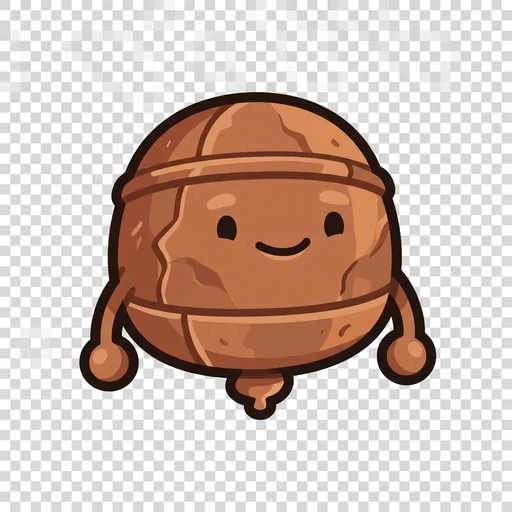
Clang
Onomatopoeia — copper bell-creature whose words carry the noise they name (buzz, splash, crash); the word reaches past the eyes and touches the ears
-
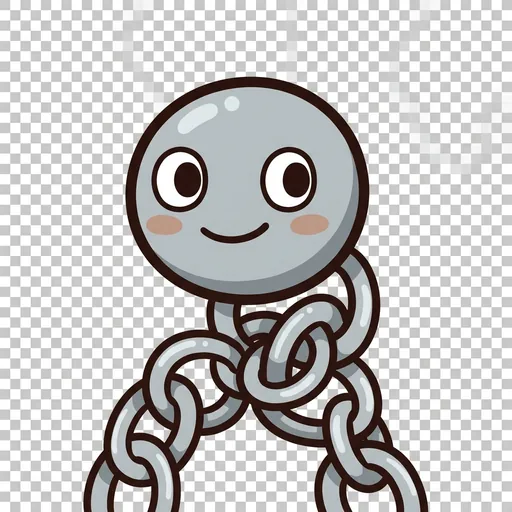
Chain
Alliteration — living-chain creature whose links lock when words share a first sound (big blue balloon); a little is catchy, too much is a tongue-knot
-
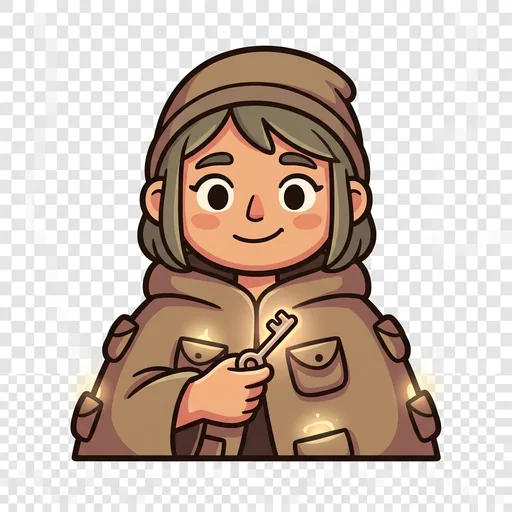
Token
Symbolism — quiet creature with a many-pocketed cloak of small objects that stand for big ideas (a dove = peace); shows the meaning instead of saying it
-

Twain
Oxymoron — two-toned creature (one half warm, one half cool) who places two opposite words side by side (bittersweet); the clash says something truer than either alone