
Breath
BREATH — the body's tempo. nasal default. box when stressed.
Listen along — Breath
Loading audio…
Press play to listen along. The line being read lights up as you go.
Show full transcript
Loading transcript…
Chapter 4 — Breath and the Tempo Underneath Every Movement
The other panda cubs were racing, and Breath was losing on purpose.
Breath is a small panda, round and soft and quietly strong, with warm cream fur and charcoal patches around his eyes. While the others tore around the bamboo grove gasping through their mouths, Breath jogged along at the back, mouth closed, breathing slow and easy through his nose, belly rising and falling.
He crossed the finish line last. He also crossed it not even a little bit out of breath.
“How are you not wheezing?” panted a cub named Fen, hands on her knees, chest heaving.
“Nose,” Breath said simply, tapping the side of his snout. “The body’s tempo. Nasal default. Box when stressed.” He breathed in slow through his nose to show her, his belly puffing out. “You were breathing through your mouth, fast and shallow. That tells your body there’s an emergency. Mine thinks everything’s fine.”
Fen frowned. “But breathing just… happens. You can’t change it.”
Breath smiled. “That’s what everybody thinks. It’s the biggest secret nobody knows. How you breathe changes how your whole body feels. And you can learn it, like anything else.”
Breath grew up in the thick bamboo, in a family of famously slow, steady breathers. They were the pandas who kept the whole village calm.
When he was little, thunderstorms scared him. He’d lie awake with his heart hammering and his breath coming in quick little gulps, and the faster he breathed the more scared he got, in a loop he couldn’t climb out of.
One stormy night his uncle sat beside him in the dark. “Match me,” his uncle said softly. “In through your nose — one, two, three, four. Now hold — one, two, three, four. Now out — one, two, three, four. Hold again — one, two, three, four.”
They breathed the slow square together, around and around. And something strange happened. Breath’s heart stopped racing. His shoulders came down from around his ears. The thunder was still there, but it didn’t own him anymore.
“See?” his uncle whispered. “Your breath sets the tempo for your whole body. Slow breath, slow heart, quiet mind. You just told your body it was safe — without saying a word.”
Breath lay there feeling the calm spread all through him, and he thought: I did that. With just my breath. He never forgot it.
When he was twelve, Breath walked to FitQuest to learn everything he could.
His mentor was named Brio, and she asked him one question at the door. “What can breath do?”
Breath sat right down on the floor, closed his eyes, and showed her. In through the nose — four counts. Hold — four. Out — four. Hold — four. He did it three slow times while she watched, and by the third round his shoulders had dropped and his whole body had gone loose and easy.
He opened his eyes. “It’s the tempo underneath everything,” he said. “Slow it down and the body follows. Nose for everyday. The square when you’re scared. And you always breathe out when you push or lift, never hold it in.”
Brio’s face went warm. “Most kids never learn their breath is theirs to steer. Welcome, Breath. This is your workshop.”
The next morning Breath’s workshop was full of nervous kids, because a big test was coming up in the burrow school.
“Watch this,” Breath said. He walked a slow circle, breathing only through his nose. “Steady. My belly does the work — feel yours rise when you breathe in? My body reads that as everything’s okay.”
The kids tried it, paws on their bellies.
Then Breath sat down. “Now the square, for when you’re scared. In through your nose — count with me — one, two, three, four. Hold — two, three, four. Out — two, three, four. Hold — two, three, four.”
A jittery cub named Pim did it with him, three times through. Halfway through the second square, Pim’s fidgeting stopped.
“My heart slowed down,” Pim said, amazed. “It was going so fast about the test and now it’s just… normal.”
“That’s it,” Breath said. “That’s your own body calming your own body. Nobody can take that away from you. You’ve got it forever now.”
Then he padded to the wall and did a slow push-up against it. “Last one — the most forgotten one. Watch my breath.” As he pushed away from the wall he breathed out, long and slow. As he came back in, he breathed in. “Breathe out when you push or lift. Never hold it in — holding it makes you dizzy and weaker. Your breath is the quiet partner in every single move you make.”
The kids lined up at the wall and practiced, out on the push, in on the return, a whole row of slow steady breathing.
When the workshop emptied, Pim lingered by the door.
“I get so scared before tests my whole body shakes,” Pim admitted. “I thought I just had to feel like that.”
Breath sat down beside the cub. “You never have to just feel like that. You’ve got a tool now, right in your own chest. Slow breath in through your nose, long breath out. Do it a few times. Your body listens.”
Pim tried it — one slow breath in through the nose, one long breath out. Then another. The shaking that had been humming under the surface all day began, very gently, to fade.
Breath closed his own eyes and took one slow breath with him. His belly rose, then softened. His shoulders let go. A warm, steady calm settled all through him, the way it does when you finally slow down and everything inside you feels quiet and safe.
“Feel that?” he said softly. “That good, easy calm — that’s your breath taking care of you. You carry it everywhere. It’s always yours.”
Pim’s shoulders dropped the rest of the way down, and for the first time all day the cub’s breathing went slow and easy on its own.
The FitQuest ensemble
Breath is part of FitQuest's distributed-narrative cast. Each character embodies a different curricular primitive; together they teach the full subject.
-

Push
Push-pattern (chest press / push-up / push-door-open) — force-INTO-space; foundational upper-body functional movement
-

Hinge
Hip-hinge pattern (deadlift / picking-up-groceries) — BENDING-AT-THE-HIP-not-the-spine; anti-back-pain primitive
-
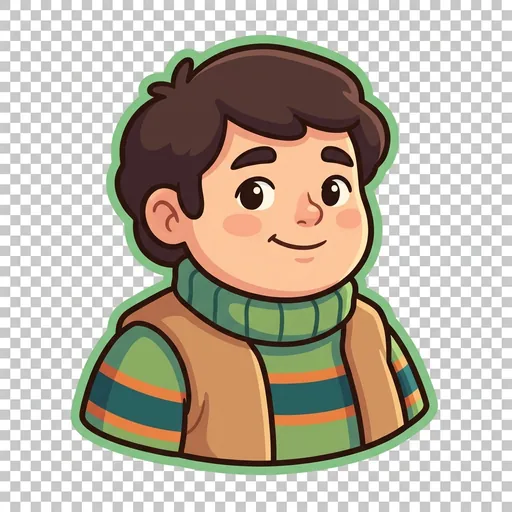
Brace
Core-stability bracing — internal-armor NEVER visible six-pack; no crunches; standing dead-bug demonstrations
-

Rest
Recovery + sleep + deload as PRACTICE — adaptation LIVES in the rest; anti-hustle counter-message