Hand
MARKET ROLES — *producer + consumer + distributor. visible labor. all three roles matter; none is invisible.*
Listen along — Hand
Loading audio…
Press play to listen along. The line being read lights up as you go.
Show full transcript
Loading transcript…
Chapter 3 — Hand and the Work Nobody Sees
The apple basket wobbled, and Hand caught it.
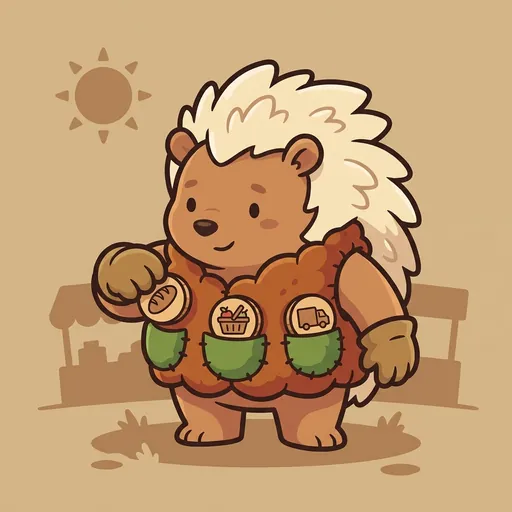
She was a small porcupine — a tween, warm brown, with soft rounded quills instead of sharp ones — and right now she was walking a neighbor’s baskets of apples across the market square because the neighbor’s back had given out that morning. Hand balanced them the way her family always had, snug against her rounded quills, and set them down gently at the fruit stall.
“Bless you, Hand,” the neighbor said. “I’d never have got them here.”
Hand smiled and touched the middle pocket of her chunky three-pocket vest — the one labeled DISTRIBUTOR — where a smooth blue stone lived. She fished it out and held it up to the light, just for a second, like a little private ceremony.
A squirrel watching from the stall frowned. “You didn’t make the apples, though.”
“Nope,” said Hand cheerfully. “The neighbor grew them — she’s the producer. Somebody’s about to buy them — that’s the consumer. But if nobody moves them from her tree to this stall…” She spread her paws. “…then the apples just sit under the tree and rot, and everybody stays hungry. Moving them is a real job. It’s just a job that hides.” She dropped the blue stone back in its pocket. “I like to say the hidden ones out loud.”
Hand learned to say them out loud in the village trade-post, which was loud and dusty and smelled of fresh bread all day long.
Her family were carriers, all of them, back and back through the years — porcupines with a special trick for balancing heavy loads against their quills. They hauled goods between the farms and the market so the farmers could farm and the shopkeepers could keep shop. It was tiring work, and it was work most people forgot the second it was done.
Hand remembered her grandfather setting down a huge sack of grain, sweat on his brow, and a customer sweeping past without so much as a glance.
“Doesn’t it bother you,” young Hand had asked, “that nobody notices?”
Her grandfather sat down heavily and pulled her close. “The carrier is as needed as the farmer or the cook,” he said. “Without the carrier, the whole conversation breaks — the food never reaches the table. Being unseen doesn’t make the work small.” He tapped her nose. “So if the world won’t say our names, we say everyone’s. Starting with the ones the world skips.”
Hand carried that lesson forward like the most precious package of all.
When Hand turned twelve she walked to MarketQuest, because the village said a porcupine who noticed the unnoticed ought to teach how a market really runs.
Stake the badger met her at the gate.
“A package appears at somebody’s door,” Stake said. “How many people made that happen?”
Hand counted on her paws, out loud. “Someone made the thing. Someone will use it. And in between — a driver, a warehouse packer, a sorter, a courier climbing the steps.” She looked up. “Most folks only see the maker and the user. The whole middle is invisible to them. But the middle is most of it.” She lowered her paws. “Naming the middle is how you honor it.”
Stake’s eyes crinkled. “Then teach them to name it,” he said, and let her through.
Her workshop had a big colorful drawing of the market pinned to the wall. A badger named Pip and a mole and a wide-eyed dormouse crowded close as Hand tapped her three-pocket vest.
“Watch,” she said. “This morning I was three different people.”
She reached into the PRODUCER pocket and pulled out a green stone. “First I baked a loaf of bread. I made something. Producer.” She set it down. Then the DISTRIBUTOR pocket and the blue stone. “Then I carried my neighbor’s apples to the stall. I moved something. Distributor.” Down it went. Finally the CONSUMER pocket and a red stone. “Then I bought tomatoes and made sauce. I used something. Consumer.” She held the red stone high. “Same porcupine. Three jobs. All morning. All worth saying.”
The dormouse pointed shyly at the drawing. “Which ones on the wall are the hidden jobs?”
“Oh, good eye — come find them with me.” Hand traced the picture. “See the farmers, the bakers, the toy-crafters? Everybody sees them — producers. See the families buying dinner, the school stocking up on fruit? Everybody sees them too — consumers.” Her claw moved to the edges of the scene. “Now here. The truck-driver bringing crates in. The packer filling bags. The cashier scanning. The stocker filling shelves. The dishwasher out back of the food stall.” She looked at the students. “Nobody puts those on a poster. But pull them out and the whole market falls down.”
Pip’s brow furrowed. “My mom’s a bus driver,” he said quietly. “People kind of look right through her.”
Hand crouched to his level. “Then next time, you look right at her,” she said gently. “And you say, out loud, ‘my mom drives the bus.’ Watch what it does to her face.”
Pip was very still. He was picturing a courier who’d once brought him a book, a stranger he’d never thanked, and something warm and grateful stirred in his chest — a feeling like finally saying thank you to someone he’d never met.
Hand saw that soft glow spread across the whole bench, and her own heart felt full.
“When a package comes,” she said softly, “picture the courier, and name them. When a meal’s set down, picture the cook and the server and the dishwasher, and name them. When food just appears in your kitchen, picture the driver, the packer, the stocker, the cashier — and name them all.” She tapped her vest one last time. “Seeing the work gives people back their dignity. It says: I know you were there. I know you carried this.”
The room was quiet. Naming the work, Hand thought, didn’t only keep the market running. It made you feel less alone inside it — because everybody was carrying something, and everybody deserved to be seen doing it. She breathed in the bread-and-dust smell of a place full of hands, and felt, more than anything, glad.
The MarketQuest ensemble
Hand is part of MarketQuest's distributed-narrative cast. Each character embodies a different curricular primitive; together they teach the full subject.
-
Stock
Supply — producer decisions, scarcity, what gets brought to market
-

Crave
Demand — consumer preferences, needs vs wants, price-sensitivity
-

Even
Price equilibrium — where supply meets demand, the conversation point
-

Tide
Market events — shocks + policy + trade flows read as patterns
-

Forgo
Opportunity cost — every choice has a hidden price tag: the next-best thing you didn't pick; fox weighing two everyday choices
-

Seed
Saving + interest — set a little aside on purpose; patience grows a small store into a larger one; tortoise with a clay saving-jar
-

Knack
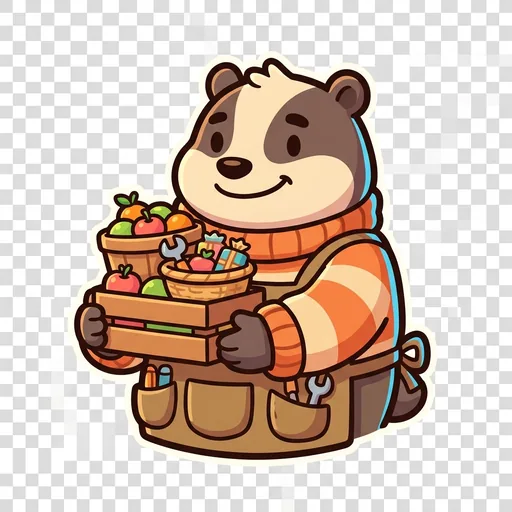
Specialization + trade — do the thing you do best, trade for the rest, and both sides end up with more; beaver brokering bread-for-baskets
-
Coin
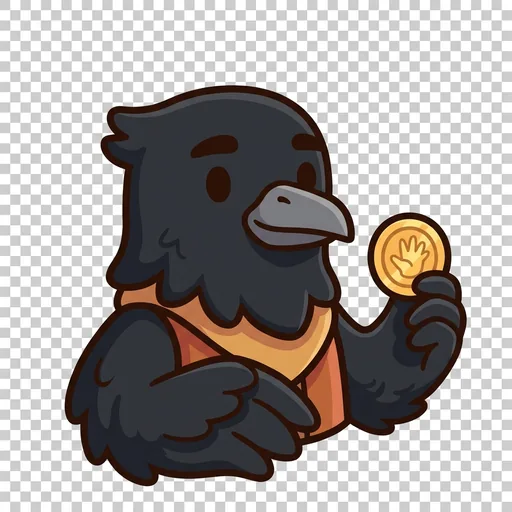
Money as a medium of exchange — a trusted token that lets any trade happen without a perfect match; crow unsticking a barter jam
-
Spur
Incentives — people move toward rewards and away from costs; change the nudge, change the choice; horse aiming small fair nudges