
Stock
SUPPLY — *producer decisions; what gets brought to market; scarcity-and-abundance matter.*
Listen along — Stock
Loading audio…
Press play to listen along. The line being read lights up as you go.
Show full transcript
Loading transcript…
Chapter 1 — Stock and the Choice to Bring It to Market
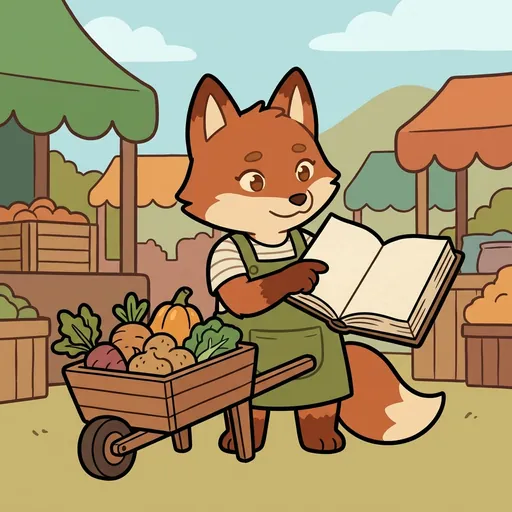
The wheelbarrow squeaked. Stock heard it a mile off, the way you hear your own name. She braced her small russet paws on the handles and pushed, and thirty baskets of tomatoes rolled with her down the hill toward the market square, red and heavy and smelling like warm summer. Her green apron pockets bulged. In one of them rode the ledger — a fat, dog-eared book she had written in every single week since she was old enough to hold a pencil.
At the bottom of the hill she stopped, wiped her forehead, and did the thing she always did. She counted. She had grown thirty baskets. She had chosen thirty. She could have grown twenty, or fifty, or none at all and slept in. Every basket in that wheelbarrow was a decision she had made weeks ago, with dirt under her claws, betting on sun and rain she couldn’t see coming.
“Morning, Stock,” called the bean farmer next door, unloading his own crop.
“Morning,” said Stock. “How many did you bring?”
“Forty. Good week for beans.” He grinned. “You?”
“Thirty.” She patted a basket. “The wilt took two rows.” She said it plainly, no shame in it, and rolled her squeaky wheelbarrow into her stall.
Stock had learned to count that way in the river-valley village, in her grandmother’s garden, long before she ever saw a market square.
Her family were garden-keepers, all of them, back and back through the years. They grew apples in rows and tomatoes on stakes, and every summer some things came up gold and some things came up nothing. Stock could still remember the summer the frost came late and killed half the seedlings. She had been very small. She had cried into her grandmother’s apron, sure they had done something wrong.
Her grandmother had knelt down in the frost-bitten dirt and held Stock’s chin. “What we bring depends on many things, little fox,” she said. “It depends on the season. It depends on the soil. It depends on whether your old bones can dig this year. Bringing less is not a shame. It is just how it is.” She kissed the top of Stock’s head. “We do our best inside what we’re given. And then we let it be enough.”
Stock had held onto that the way you hold onto a warm stone in your pocket all winter.
When Stock turned twelve she walked to MarketQuest, wheelbarrow and ledger and all, because the village said a fox who understood why things came to market ought to teach it.
An old badger named Stake met her at the gate. He looked at her tomatoes. He looked at her ledger. Then he asked her one question, the way mentors do.
“When less shows up at market,” Stake said, “whose fault is it?”
Stock thought of her grandmother in the frost. She looked down at her own small, strong hands, still stained green from the vines. “Nobody’s,” she said. “The producer decides what to bring — but she decides inside a season, and a body, and a run of luck she didn’t pick. Less isn’t a failure. It’s a Tuesday after a bad week.”
Stake’s whiskers lifted in something like a smile. “Then you’d better teach it that way,” he said, and let her through.
Her workshop smelled like tomato leaves and old paper. A young rabbit and a mole and a spiky little hedgehog crowded onto the benches, and Stock heaved her ledger open on the table with a thump.
“Come look,” she said, and they did.
She pointed a claw at a row of numbers. “Last week — thirty baskets. Sold twenty-seven.” She flipped the page. “This week.” Her claw moved down. “Twenty-five. Two rows caught a wilt. See the leaves I drew? They went yellow.” She tapped a small sad sketch of a curling leaf. “Next week, if I’m honest, maybe twenty.”
The hedgehog frowned. “So you did worse.”
“Did I?” Stock tilted her head. “I planted the same. I watered the same. I got up at the same dark hour. A sickness came for my tomatoes that I couldn’t see and couldn’t stop.” She let that sit. “Is a farmer bad because a wilt came?”
The hedgehog looked at the yellow leaf a long moment. ”…No,” he said, quieter.
“No,” Stock agreed. She slid her claw over to another column. “Now watch this. Fewer tomatoes — so my asking-price went up a little. Not because I turned greedy overnight. Because when a thing gets scarce, it costs a touch more to let it go. That’s the whole trick of a market: how much shows up, meeting how many hands reach for it.” She smiled at them. “You’ll meet Crave next. She’s all about the reaching hands. I’m the showing-up.”
She closed the ledger gently. The three students were quiet, and the hedgehog had leaned back against the bench like something tight in him had eased.
Stock felt it in her own chest too — that warm, settled thing. She thought of her grandmother’s garden, the good seasons and the frost-bitten ones, all those years of trying. There had been no shame in any of it. Only care, done as well as care could be done inside the weather you were handed.
“What gets brought to market is a choice,” she said softly, mostly to herself now. “Made with care. Made inside limits.” She breathed out, all the way down to her toes, the way you can only breathe when you know your best is allowed to be enough. She hoped the kids felt it too. It felt, she thought, like being trusted. Like being let off a hook you never should have been on.
The MarketQuest ensemble
Stock is part of MarketQuest's distributed-narrative cast. Each character embodies a different curricular primitive; together they teach the full subject.
-

Crave
Demand — consumer preferences, needs vs wants, price-sensitivity
-

Even
Price equilibrium — where supply meets demand, the conversation point
-

Hand
Market roles — producer + consumer + distributor, visible labor
-

Tide
Market events — shocks + policy + trade flows read as patterns
-

Forgo
Opportunity cost — every choice has a hidden price tag: the next-best thing you didn't pick; fox weighing two everyday choices
-
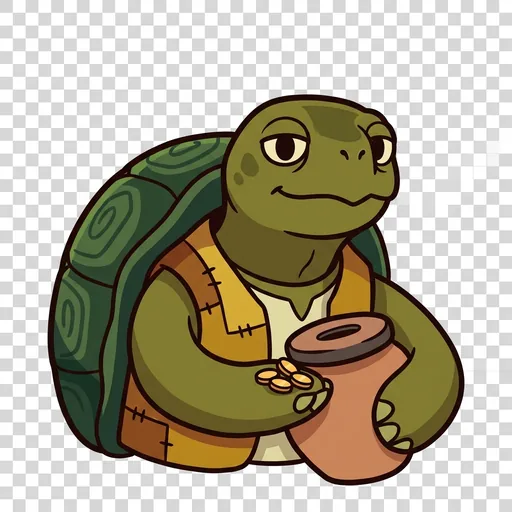
Seed
Saving + interest — set a little aside on purpose; patience grows a small store into a larger one; tortoise with a clay saving-jar
-

Knack
Specialization + trade — do the thing you do best, trade for the rest, and both sides end up with more; beaver brokering bread-for-baskets
-

Coin
Money as a medium of exchange — a trusted token that lets any trade happen without a perfect match; crow unsticking a barter jam
-
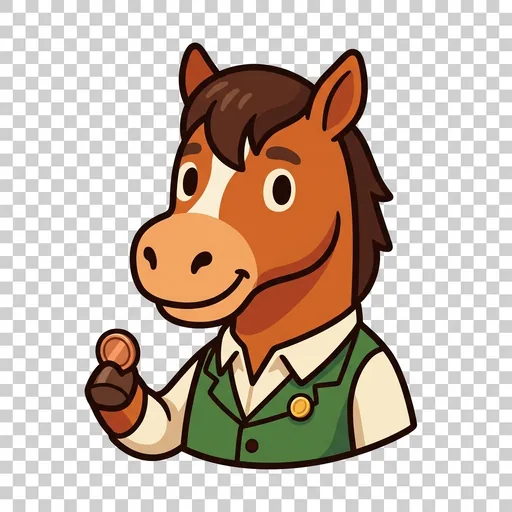
Spur
Incentives — people move toward rewards and away from costs; change the nudge, change the choice; horse aiming small fair nudges