Aha
AHA — patient frame-finding. "I don't get it yet" is a productive cognitive state.
Listen along — Aha
Loading audio…
Press play to listen along. The line being read lights up as you go.
Show full transcript
Loading transcript…
Chapter 2 — Aha and the Productive “Not Yet”
The riddle had been on the canopy chalkboard for eleven minutes, and Aha had not written a single word.
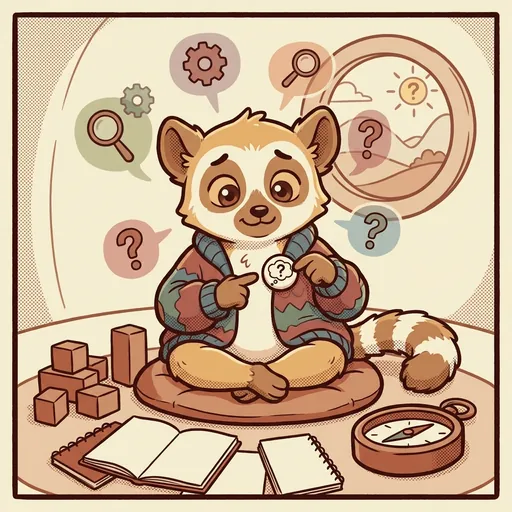
He was a small lemur in a cardigan two sizes too big, and he sat very still under the words A man pushes his car to a hotel and tells the owner he is bankrupt. Why? His big soft eyes moved across the sentence, then away, then back. A younger lemur swung down beside him.
“You’re just staring at it,” she said.
“I’m swinging,” said Aha. He tapped the pin on his cardigan. It read: I don’t get it yet. “Watch. Real car, real hotel — that branch doesn’t hold. So I let go of it. I try another.” His tail flicked. “This is the part everybody skips. They think staring means stuck. Staring means I’m still swinging between branches, looking for the one that takes my weight.”
He had learned that in the tree where he was born, high in the canopy village.
His family were frame-shifters. Everyone said it like it was a compliment about jumping, and it was, partly — they could leap from limb to limb without looking down. But the leaping was the small part. The real part was what his grandmother did at dusk, when a cousin came home crying because a knot-puzzle wouldn’t come undone.
“Show me the branch that didn’t hold,” Grandmother would say. Not the answer. The wrong try. And the cousin would show her, and Grandmother would nod like the wrong try was a gift. “Good. Now you know one branch that isn’t it. Keep both — the one that broke and the one that will hold. Both are the puzzle.”
Aha used to think the point was to be right fast. Watching Grandmother, he understood it was the opposite. The point was to stay in the air a little longer than felt comfortable, and not panic while you were up there.
When he was twelve he climbed down out of the canopy and walked to RiddleRealm, and an old mentor named Cryptic met him at the edge of the village.
Cryptic didn’t ask if Aha was clever. He set a folded slip of paper on a stone and waited.
Aha unfolded it, read it, and — for a long moment — said nothing at all. His ears went back. Then, slowly, they came forward again.
“I don’t have it,” Aha said. “But my brain’s warm. I can feel it working. Give me the wrong tries too — I’ll keep them.”
Cryptic almost smiled. “Most everyone who sits on that stone tells me the answer or tells me they’ve failed. You told me you’re in the middle.” He gestured up at the canopy. “The middle is the whole job. Go be the one who makes staying in the middle feel safe.”
His workshop was a round room with a chalkboard and too many cushions, and it filled up with kids who had already decided they were bad at this.
Aha wrote the car-and-hotel riddle on the board and turned around. Pencils went into mouths. One boy, Fen, put his head down on the table.
“Don’t do that yet,” said Aha, kneeling by him. “Where are you right now — in the puzzle?”
“Nowhere,” Fen mumbled. “I’m just dumb.”
“You’re not nowhere.” Aha tapped his own pin. “You’ve got a real car and a real hotel in your head. That’s a branch. Push on it. Does it hold?”
Fen frowned at the board. “It’s weird. Nobody pushes a car to a hotel to say they’re broke.”
“So the branch cracked.” Aha said it warmly, like Fen had done something clever, because he had. “You just cleared one wrong idea out of the way. That’s not nothing. That’s the first real move.” He looked around the room. “Anybody feel that little nothing-fits feeling right now?”
Hands, cautiously, went up.
“Good. That feeling is your brain trying frames. It is not you failing. Now — what if it isn’t a real car?”
A girl by the window went very still. “It’s a game,” she said. “It’s — the little metal car. In Monopoly.”
Aha wrote it out under the riddle. “He pushed his game-piece car onto a hotel square. And he didn’t have the money to pay.” He set the chalk down. “See what happened? Nobody in this room got smarter in the last two minutes. Somebody just let go of one branch and caught another.”
Later, when the room had emptied, Fen hung back at the door.
“I still feel stupid when I don’t get it right away,” he admitted.
Aha didn’t rush to fix it. He sat down on a cushion so they were eye to eye. “The people in stories who snap their fingers and solve everything — they aren’t real, Fen. Real solving has a middle. The middle feels like I don’t get it yet. And that part —” he touched the pin one more time ”— that’s not the shame part. That’s the working part.”
Fen thought about that. “And when it finally clicks?”
For the first time all afternoon, Aha grinned. “You’ll feel it right here.” He pressed a paw to his own chest. “A little warm rush, like landing a jump you weren’t sure you’d make. That feeling is your brain telling you the waiting was worth it.” He watched Fen’s shoulders come down from around his ears. “Go on. And next time you’re stuck — notice you’re not stuck. You’re swinging.”
The RiddleRealm ensemble
Aha is part of RiddleRealm's distributed-narrative cast. Each character embodies a different curricular primitive; together they teach the full subject.
-

Twist
Wordplay riddles — puns, homophones, semantic misdirection (fair-trick framing)
-
Reckon
Math + number riddles — sequences, hidden constraints, numeric patterns
-
Pan
Visual + spatial riddles — picture puzzles, perspective rotation
-
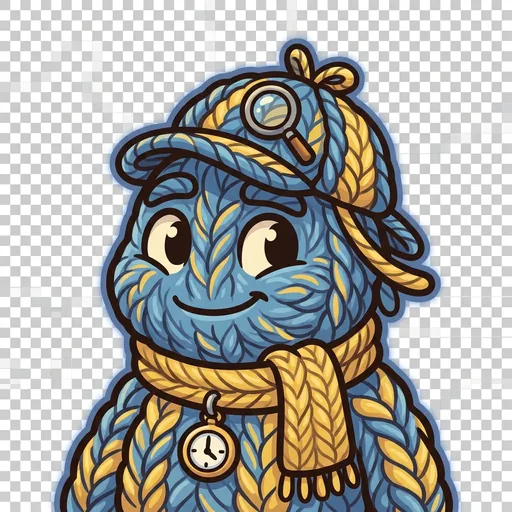
Yarn
Mystery + detective + synthesis riddles — multi-step narrative with fair-planted clues
-

Veil
'What am I?' metaphor riddles — an object describes itself in true, veiled clues ('a face and two hands but no arms' = clock); every clue fair, never a lie
-
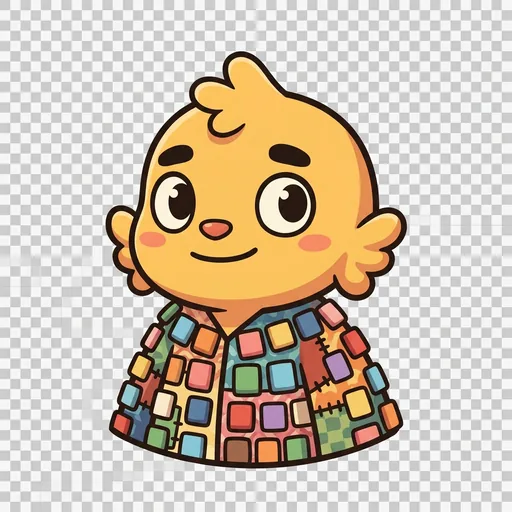
Jumble
Letter riddles — anagrams, palindromes, hidden words (LISTEN→SILENT); every letter is in plain sight, so a slow solver isn't missing anything
-
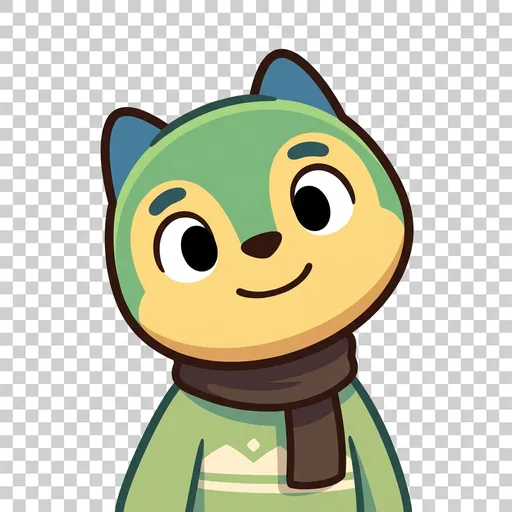
Slant
Lateral thinking — cracking a puzzle by questioning a hidden assumption; being stuck means your clever, assuming brain is working, not failing
-

Cobble
Riddle-making — building your own riddle backward from the answer; a riddle is a gift not a gotcha, so every clue stays true and findable
-
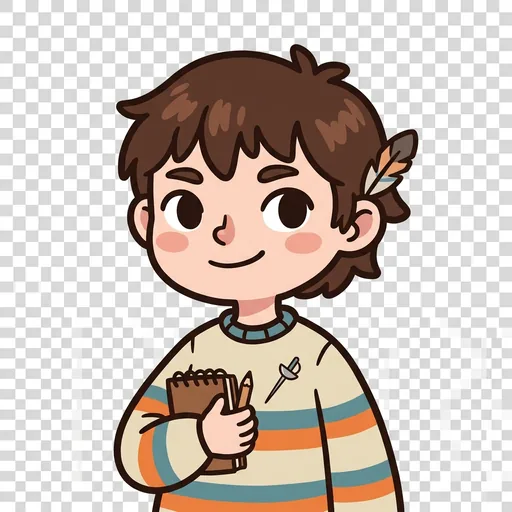
Feint
Trick questions — the misdirection hides in how the question is asked ('Moses on the ark'); the cure is slow down and read every word, not 'be smarter'