Wonder
WONDER — *"I don't know yet" is the START of knowing. trust calibrated to evidence.*
Listen along — Wonder
Loading audio…
Press play to listen along. The line being read lights up as you go.
Show full transcript
Loading transcript…
Chapter 5 — Wonder and the Honest “I Don’t Know Yet”
The three loudest voices at the desert market that morning all wanted Wonder to be sure of something, and she wasn’t.
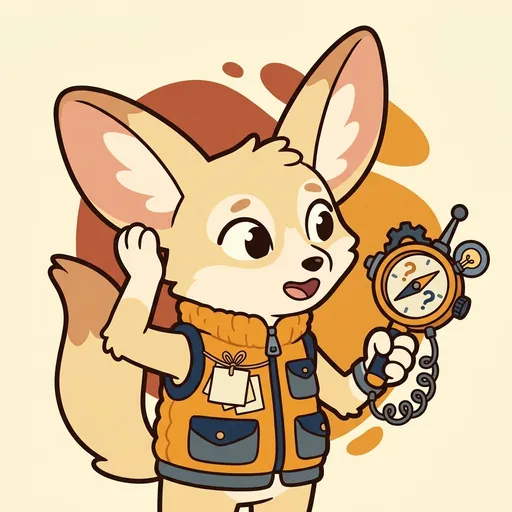
Wonder was a fennec fox, small and cream-colored, with ears so big they seemed to catch every sound in the valley. She stood at the edge of the market with those ears tilted, listening. One trader was shouting that the wells were drying because of a curse. A second was shouting that the first was a liar and everyone was a liar. A third pulled her sleeve and whispered that only he knew the real reason, and it was a secret.
Everyone around her was picking a side, fast. Believe it all. Believe none of it. Or believe the secret-keeper.
Wonder didn’t pick. She reached into her vest — a chunky investigator’s vest with a great many pockets — and took out a small card. On it, in plain letters, were three words: I don’t know yet.
She held the card the way you’d hold a lantern. “I haven’t seen the wells,” she said, mostly to herself. “I don’t know why the water’s low. Not yet.” The three voices got louder around her, but the hot, hurried feeling in her chest went quiet. The card gave her somewhere honest to stand while she found out more.
Wonder learned to stand there from her family, who were desert foxes with enormous ears and endless patience.
When she was small, she’d been a rusher. She’d hear one thing and believe it completely. Then she’d hear the opposite and swing all the way over. She was exhausting to walk with, her father used to say, because she was certain of a new thing every hundred steps.
One evening he took her out past the last tents, where the sky turned every color at once. “Close your eyes and tell me what you hear,” he said.
“Nothing,” Wonder said. Then, after a moment: “Wind.” Then: “A beetle. And — someone singing, very far off. And water, somewhere under the sand.”
Her father smiled. “You heard nothing first,” he said. “Then you kept your ears open, and the truth came in a little at a time.” He tapped one of her big ears, gently. “The ear that listens longer hears more. The one who’s already sure hears less.”
That was the night Wonder understood. Saying I don’t know yet wasn’t giving up. It was keeping her ears open so the truth had time to arrive.
When Wonder was twelve, she made the long walk to the Truth Tribune, the smooth tall rock where her mentor waited. Veritas had a calm, deep voice, and she asked Wonder the hardest question of all.
“A story comes to you,” Veritas said. “You can’t check it. The proof isn’t clear. What do you do?”
Wonder didn’t rush — which was itself the answer. She held up her card. “I say ‘I don’t know yet,’” she said. “And then I start looking for how much proof there is. If the proof is strong and comes from places I can check, I trust it a lot. If there’s no proof, I trust it a little. And if new proof shows up, I’m ready to move.”
“Some people say ‘it’s definitely true’ the second they hear it,” Veritas said.
“That’s believing everything. It gets you tricked.”
“And some say ‘they’re all lying, nobody can know anything.’”
Wonder’s ears flattened, just a little. “That one’s the trap that scares me most,” she said. “Because once you believe nobody can be trusted, a person only has to whisper ‘here’s the real secret’ — and you’ll swallow it whole. Believing nothing and believing anything end up in the same ditch.”
Veritas was quiet a long moment. “You’ll be the last of the five,” she finally said, “and the strongest guard against the stories that trap people. Keep your ears open.”
In Wonder’s workshop, a boy named Reed came in looking gray and tired. He’d found a story online that said grown-ups were hiding the truth about everything, and now he didn’t know what to believe, and he felt sick.
“Everything’s a lie,” Reed said. “So what’s even the point?”
Wonder sat down next to him and didn’t argue. She just tilted her ears toward him. “That sounds heavy to carry,” she said. “Let’s not decide the whole world right now. Let’s take one thing.” She set her I don’t know yet card on the table between them. “Pick something the story claimed.”
“It said the town council never fixes the east road on purpose.”
“Okay. Do we know that yet?”
Reed opened his mouth, then closed it. ”…No.”
“Good. That’s honest.” Wonder pulled out a little dial from her pocket, a curiosity-tracker, and set it in the middle. “Now — is there any way to check it? Records we could read? People we could ask? The road itself we could go look at?”
Reed thought. “We could… just go look at the road.”
“Then we’re not stuck,” Wonder said gently. “We don’t have to believe it and we don’t have to swear it’s a lie. We just go find out. One true thing at a time. That’s not giving up on the world, Reed. That’s the opposite. It means the truth is still findable.”
Reed let out a long breath. The gray look started to lift.
Before Reed left, he asked the question students always asked at the end.
“Isn’t it embarrassing to keep saying ‘I don’t know yet’? Everyone else sounds so sure.”
Wonder’s ears did a small, amused twitch. “The sure ones are usually the ones who stopped listening,” she said. “Being sure feels strong for about a minute. Then a new fact walks in and knocks you over, because you built a wall instead of a door.”
She looked out toward the desert, where the far-off singing had started up again. “Curious lasts longer than certain,” she said. “You stay a little unsure, you keep your ears open, and the truth comes in a piece at a time — from the wells, from the road, from whatever you can actually check.”
Reed nodded slowly. He noticed his shoulders had come down; the sick, spinning feeling was gone. What was left was quieter and steadier — the calm of standing on I don’t know yet and knowing it was solid ground, not a hole.
The TruthQuest ensemble
Wonder is part of TruthQuest's distributed-narrative cast. Each character embodies a different curricular primitive; together they teach the full subject.
-

Claim
Claim-identification — what EXACTLY is being asserted? distinguish claim from opinion from feeling from prediction
-

Weigh
Credibility-evaluation — who's in a position to KNOW? what stake? calibration not verdict (shared design language with DebateForge Weigh)
-
Trace
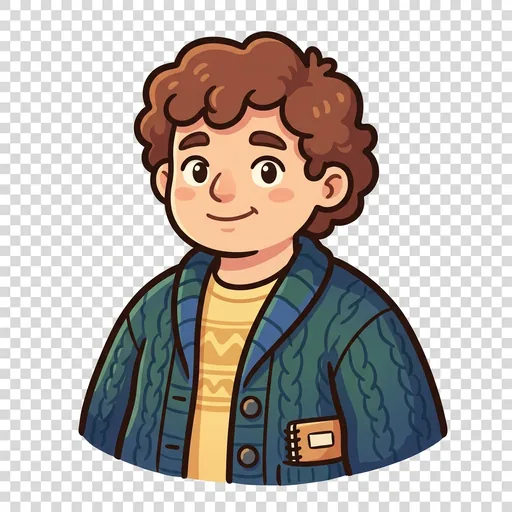
Evidence-traceback — where does this claim ORIGINATE? what's the chain? open four tabs; follow it back
-
Update
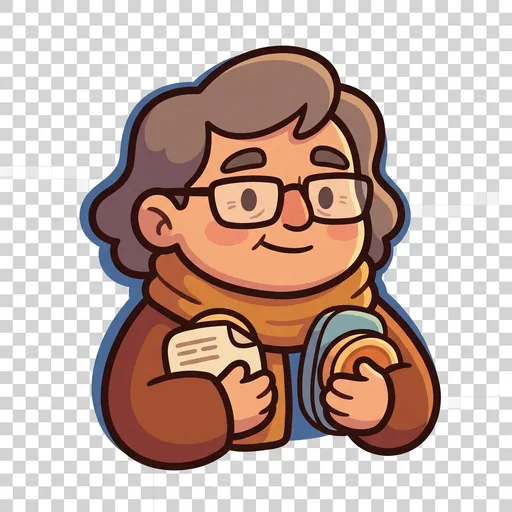
Belief-revision — being WRONG is how knowledge MOVES; visibly carry old-guess and new-guess as data (shared design language with DebateForge Yield)