Ratchet
RATCHET — *go forward freely; lock when you try to slip back.* A ratchet is a toothed wheel with a little catch (a pawl) that lets it turn one way but stops it from turning back. It holds your progress so nothing you've gained slips away — click by click.
Press play to listen along. The line being read lights up as you go.
Show full transcript
Loading transcript…
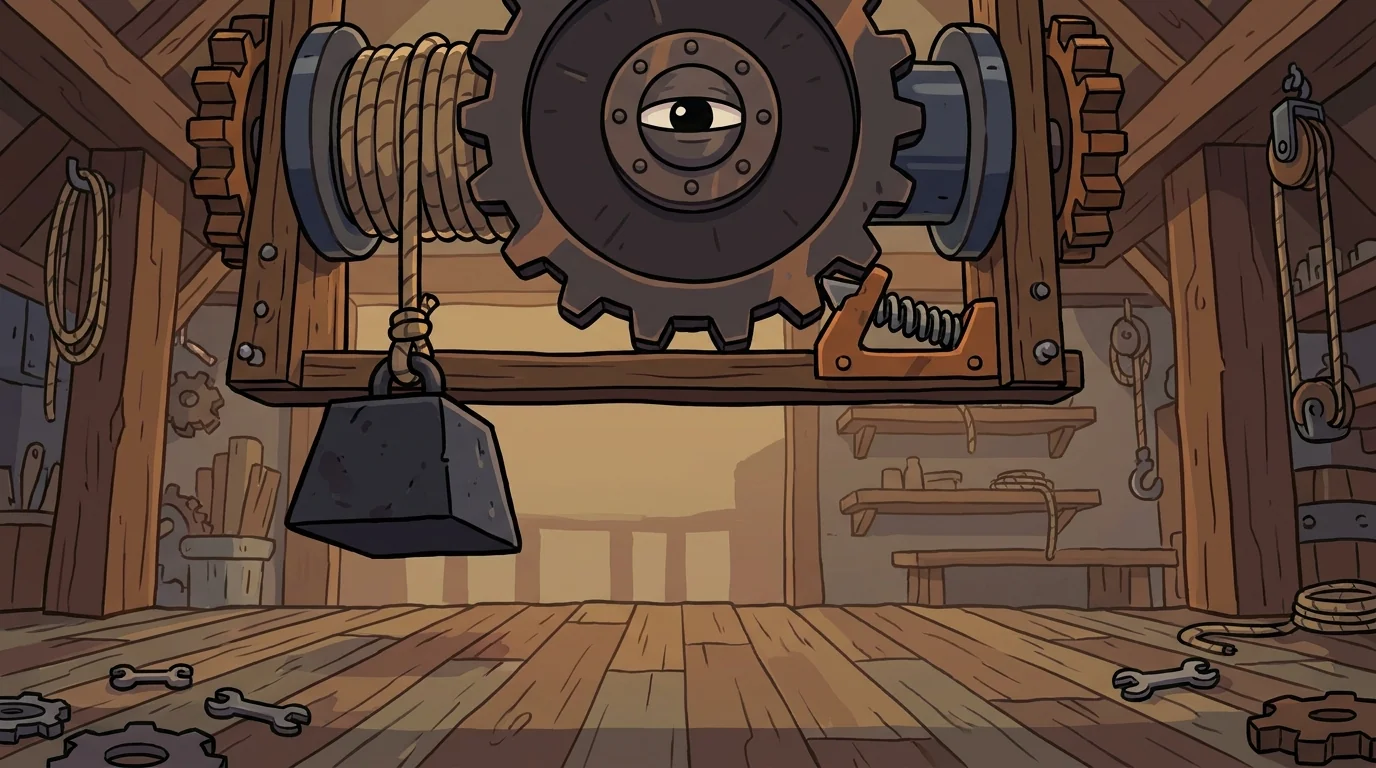
At the top of the workshop winch, a heavy iron load hung on a rope — and it was not falling. It should have plunged the moment the winch-hand let go. Instead it simply hung there, held, while a dark toothed wheel gripped the rope-drum and a small spring-loaded catch wedged tight against one slanted tooth.
Ratchet held the whole load without straining, its single steady eye calm at the hub. "The winch-hand pulled this up all morning, a little at a time," it said. "Then they went to rest. And here it stays, right where they left it — not slipping back an inch." A breeze tugged the load; the catch pressed harder into its tooth and refused to give. "Go forward freely, I always say. Lock when you try to slip back. What's been gained, I keep."
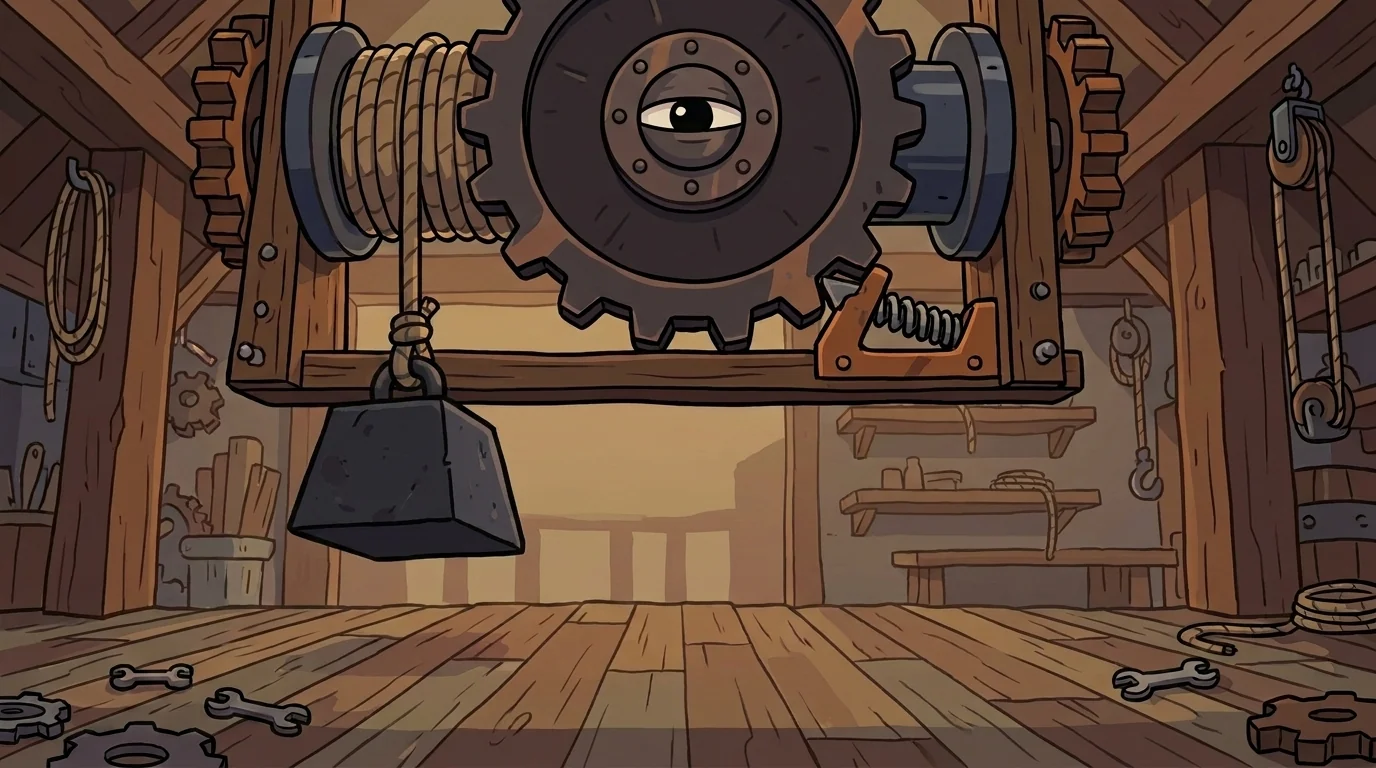
Once, Ratchet had lived at the top of a well, on the crank that hauled up the bucket. The person turning the crank could only pull so far before their arms tired — and if the crank had spun freely, the full bucket would have plummeted straight back down the moment they paused for breath.
But Ratchet's catch clicked over each slanted tooth as the bucket rose — click, click, click — and the instant the crank tried to spin backward, the catch jammed and held. So the tired hauler could stop, shake out their arms, rest as long as they liked, and the bucket waited patiently, not sinking a hair.
That was the moment young Ratchet found its purpose. It did none of the lifting itself — the person's arms did that. Ratchet's whole gift was making sure every bit of that lifting stayed. When the old well was capped over, the workshop unbolted Ratchet from the crank, oiled its catch, and gave it a place on the winch.
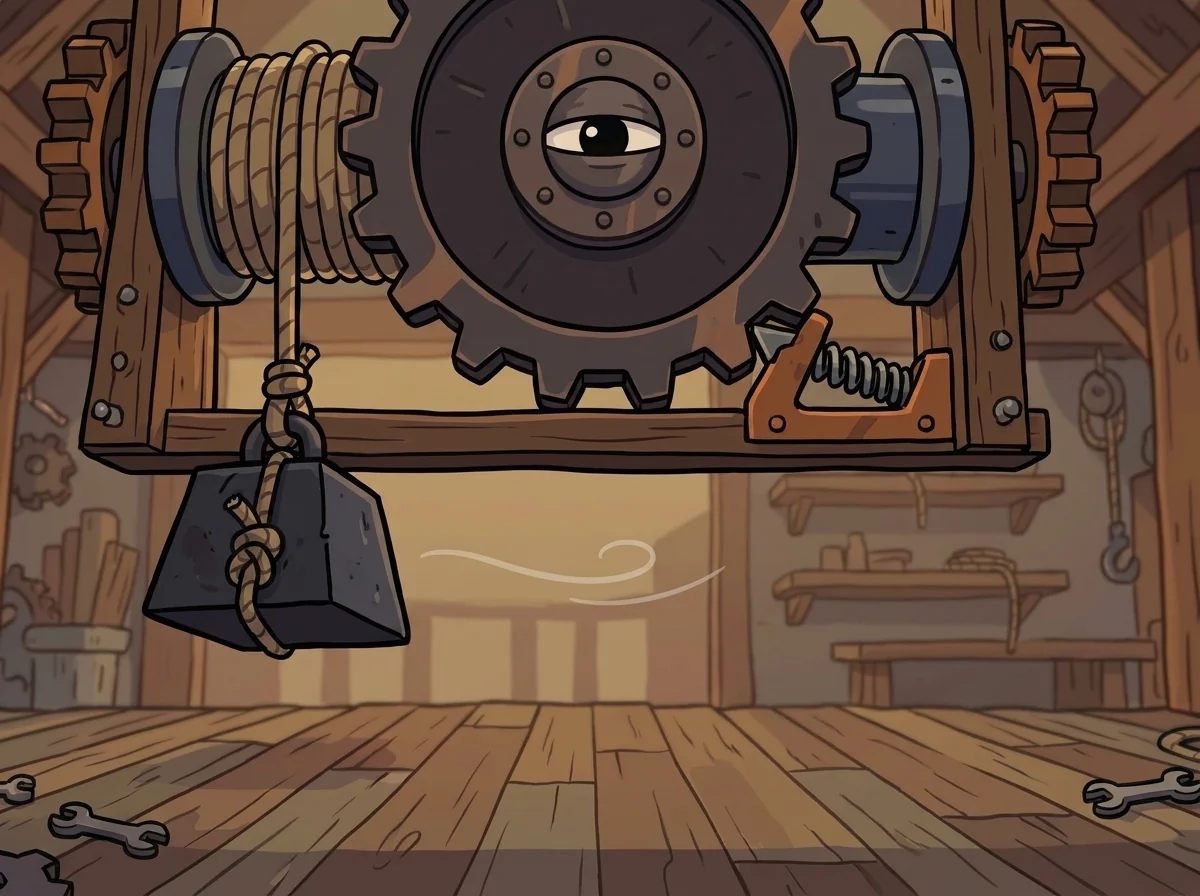
The first day at the workshop, Cog rolled up to watch the toothed wheel hold its heavy load.
"Show me what you do," Cog said.
Ratchet let the winch-hand turn it forward — click, click — then strained hard the other way and held fast, the catch biting a tooth. "Forward, my catch slides right over the teeth, easy as anything," Ratchet said. "Backward, it wedges and stops dead. I don't do the hauling — I make sure the hauling doesn't come undone. Pull a little, rest, pull a little more, rest again, and the load only ever goes up. Never down."
Cog gave a firm, approving turn. "You guard what's gained," it said, and rolled aside.
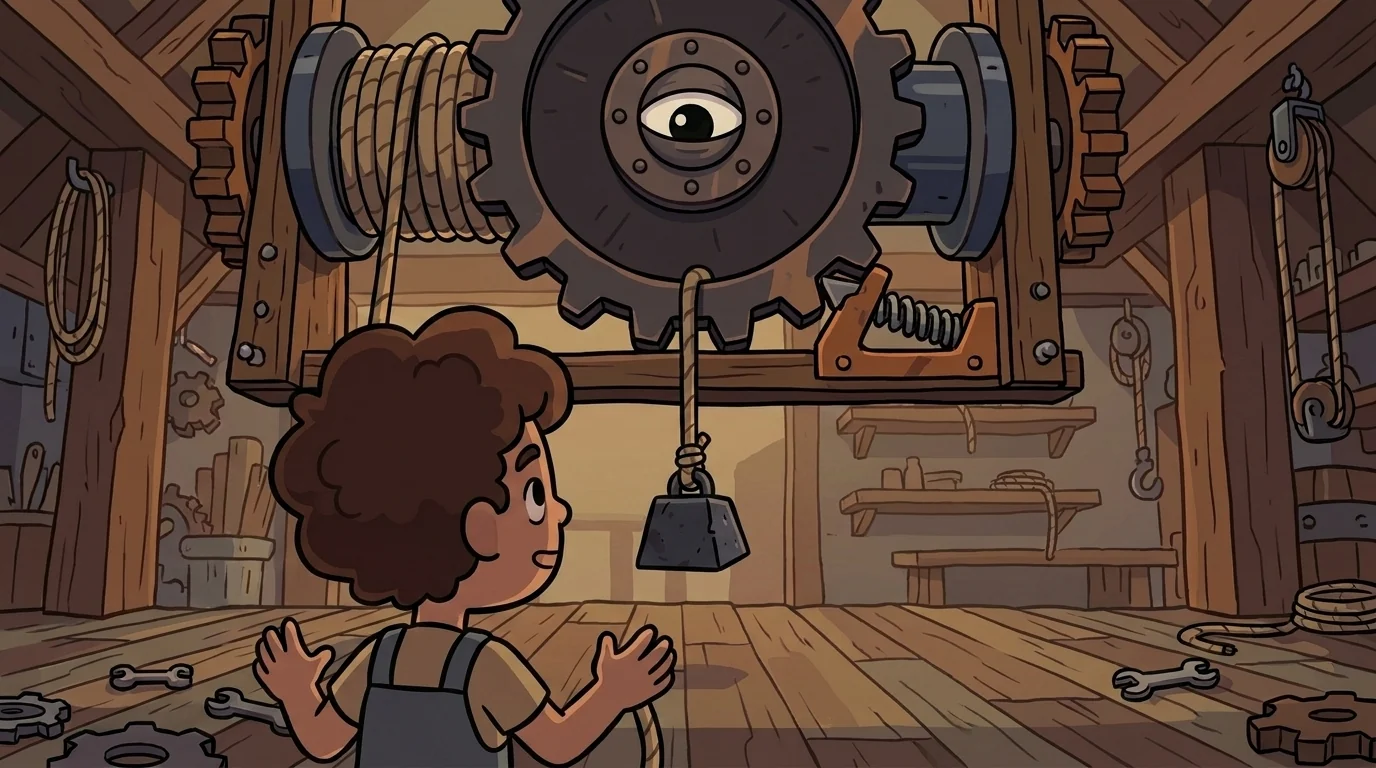
An apprentice named Pip tied a small weight to a rope wound around Ratchet's drum and began pulling it up, hand over hand.
"Pull me forward," Ratchet said. Pip pulled — click, click, click — and the weight rose in little jumps, one for each tooth. "Now let go and rest," Ratchet said. Pip hesitated, sure the weight would crash down the second he opened his hands. He let go anyway. The weight didn't move. The catch had dropped into a tooth and locked it exactly where it was.
Pip stared. "It just… stayed."
"You can rest without losing your work," Ratchet said. "Every click locked in a little bit of progress. Pull, rest, pull, rest — and each rest keeps everything you'd gained." Pip hauled the weight higher, stopping whenever his arms tired, and every single time the catch held and nothing slipped. Grinning, he set down the rope halfway and let his hands drop. The weight hung, patient and safe, waiting for him.
"A wrench clicking a bolt tighter, a seatbelt catching when you tug it, a zip-tie pulling snug — all the same idea," Ratchet said. "Forward, free. Backward, locked. You never carry the whole load at once. Just add one click at a time, and trust me to hold the rest."
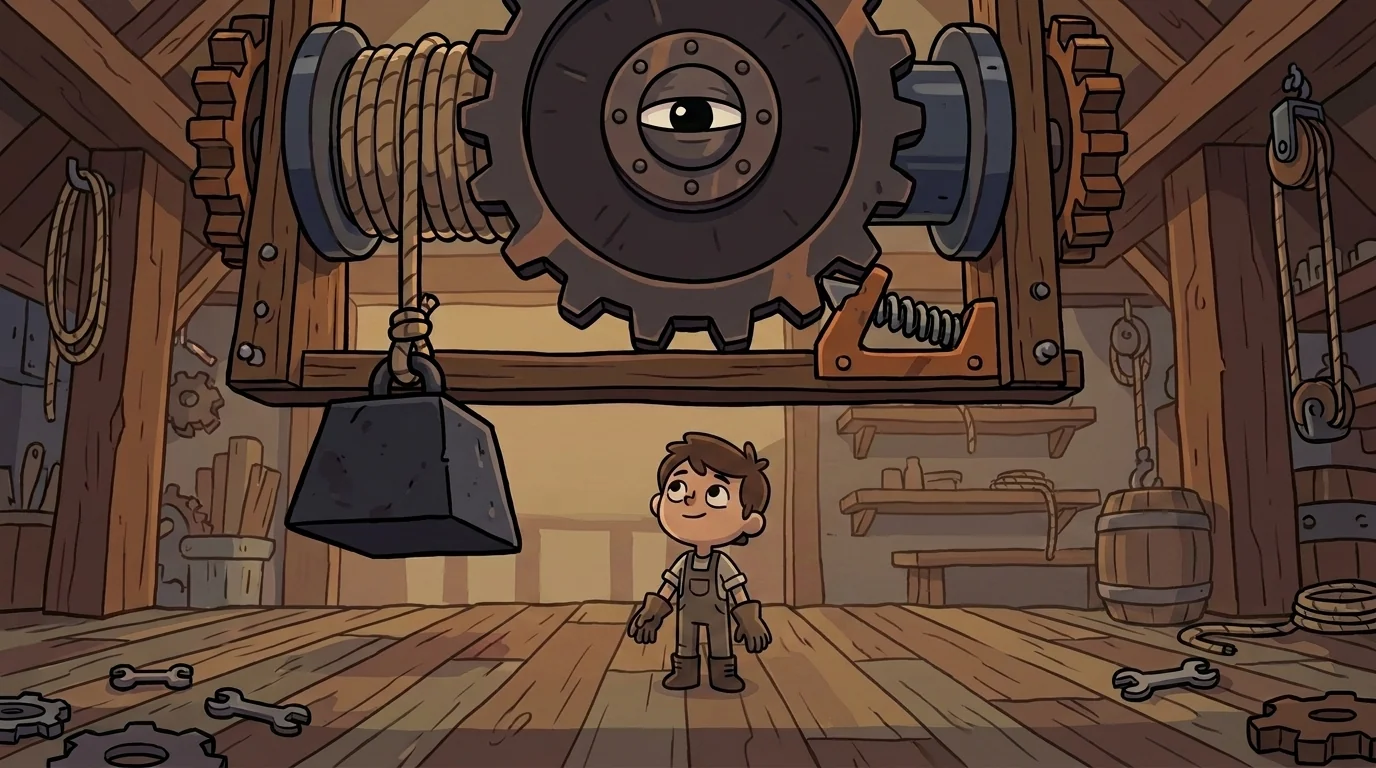
When the weight reached the top, Pip clicked the rope one last notch and let go for good, hands loose at his sides. The load stayed put, held safe.
"There's a real comfort in it, isn't there," Ratchet said quietly. "You don't have to keep gripping. You don't have to worry it'll all come undone the moment you stop. Small wins, locked in, adding up — click by click — and none of them able to slip away."
Pip flexed his tired hands and felt the tightness in his shoulders let go all at once, the way it does when you finally set down something heavy you've been carrying. He hadn't realized how braced he'd been against the fear of the whole load crashing back down. Now it just… rested. And so did he. He looked up at the weight hanging safe and steady, and a warm, settled ease spread through him — the quiet relief of knowing that everything he'd worked for was held, and couldn't be lost.
The MachineForge ensemble
Ratchet is part of MachineForge's distributed-narrative cast. Each character embodies a different curricular primitive; together they teach the full subject.
-
Pry
Lever — push longer to lift heavier; the trade between force and distance
-
Hoist
Pulley — pull down here and watch it go up there; redirecting force
-
Ramp
Inclined plane — climb the long slow way; less force, same work
-
Spoke
Wheel-and-axle — one turn of the hub, many turns of the rim
-
Auger
Screw — round and round becomes step and step; spiral inclined plane
-
Cleave
Wedge — push forward and split it apart; force concentrated to a sharp edge
-
Pinion
A gear train: meshing teeth trade turning-speed for turning-force and pass the motion along, faster or stronger as you choose.
-
Flex
A spring: bend it to store your push, let go and it gives every bit back — energy held, then returned.
-
Lobe
A cam: a spinning shape with a bump that turns steady spinning into a repeating push, like a music box keeping a beat.